Tbilisi Hidden Gems: Chronicle of Georgia, Turtle Lake & Dry Bridge Market
Tbilisi's Old Town draws every visitor, and rightly so. But the city hides extraordinary places that most tourists walk past or never hear about — a Soviet-era monument that rivals anything in Rome, a hilltop lake where Tbilisians swim and barbecue, a flea market selling the remnants of empire, and a cable car that soars over a park to a hilltop fortress.
These gems are scattered across the city but all accessible by metro, Bolt, or a short walk. Most cost nothing or next to nothing.

Chronicle of Georgia (History Memorial)
On a hill overlooking the Tbilisi Sea (a reservoir northeast of the city), 16 massive stone pillars rise 35 metres into the sky, carved with scenes from Georgian history, biblical narratives, and portraits of kings and queens. Designed by sculptor Zurab Tsereteli, the monument was begun in 1985 and never officially completed — which adds to its raw, unfinished power.
The scale is staggering. Each pillar is carved with intricate reliefs — closer inspection reveals scenes from the life of Christ, Georgian military victories, and mythological figures. The lower sections have a small chapel with frescoes. The hilltop setting offers panoramic views of the reservoir and the Caucasus foothills.
Almost no tourists visit. To get there, take a Bolt (GEL 8-12 from the Old Town) or Bus 60 from Isani metro station. Entry is free. Allow 1-2 hours including the drive. Best visited in late afternoon when the stone glows warm in low sunlight.
Dry Bridge Market
Spanning the dry bed of the former Vere River near the Baratashvili Bridge, the Dry Bridge Flea Market is Tbilisi's most atmospheric shopping experience. Soviet military medals, oil paintings (some genuinely good), vinyl records, silver jewellery, antique cameras, samovars, daggers, and curious relics from Georgia's past spread across blankets and tables daily.
The market operates every day but is best on weekends when more vendors appear. Prices are low and negotiable — Soviet pins for GEL 2-5, small oil paintings for GEL 20-80, cloisonne enamel jewellery for GEL 15-50. The vendors are characters — many are artists or retired professionals selling family collections. Browsing is free and endlessly fascinating. Bring cash; no card payments.
Turtle Lake (Kus Tba)
A small lake on the Mtatsminda ridge above the city, Turtle Lake is where Tbilisians go to escape the summer heat. A cable car from Vake Park (GEL 2 each way, uses metro card) rises over the forest to the lakeshore. Alternatively, drive or hike (45 minutes from Vake Park, steep but shaded).
The lake is ringed by restaurants, a public beach (free entry, basic facilities), and walking trails through the surrounding forest. On weekends, families picnic, swim, and barbecue around the shoreline. The water is clean enough for swimming in summer. Cafe Littera, one of Tbilisi's best restaurants, sits in the Writers' House at the foot of the Vake Park cable car (GEL 40-70 per person) — combine the two.
The lakeshore trail (30 minutes loop) offers views back over the city through the pine trees. In autumn, the surrounding forest turns gold and red. Almost entirely local — tourists rarely make the effort to reach it.
Betlemi Quarter
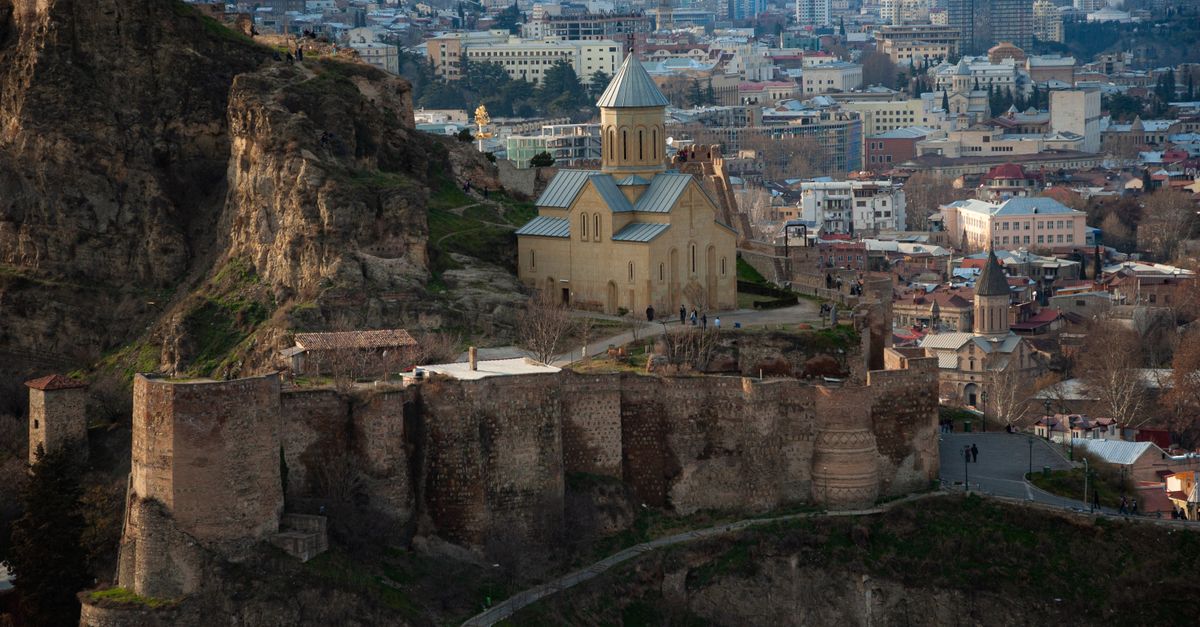
The Betlemi Quarter is the oldest residential area in the Old Town, climbing steeply from the river toward Narikala Fortress. The streets are too narrow for cars, the houses lean at alarming angles, and the atmosphere feels medieval. Betlemi Church, at the top of the quarter, is a tiny 5th-century structure with a courtyard that overlooks the city.
The quarter has been partially restored with artist studios, small galleries, and one or two wine bars opening in formerly abandoned houses. Walking through the alleys — past cats on doorsteps, laundry hanging between balconies, and grapevines growing up stairwells — is the most atmospheric experience in Tbilisi. No tour groups, no souvenir shops, just living history.
Enter from Botanikuri Street near the sulfur baths and climb upward. The walk takes 30-45 minutes including stops. Wear sturdy shoes — the cobblestones are uneven and steep.

Rike Park Cable Car
The cable car from Rike Park to the Narikala Fortress area (GEL 2.50 each way, metro card) is well-known, but few tourists continue beyond the fortress to explore the ridge. Walk south along the fortress walls and descend through the botanical garden's upper trails to discover viewpoints that are completely off the tourist circuit.
The botanical garden itself (GEL 4) is underrated — a 128-hectare garden with a waterfall, tropical greenhouses, and shaded pathways along a river gorge. In summer, it is the coolest spot in the city. In autumn, the colours rival any European garden. The lower exit brings you out near the sulfur baths — creating a natural loop from Rike Park.
Other Hidden Spots
Mtatsminda Park
A Soviet-era amusement park on the city's highest ridge, accessible by funicular (GEL 5 return) from Chonkadze Street. The rides are secondary to the views — the observation wheel (GEL 5) offers 360-degree panoramas of Tbilisi, the mountains, and the Tbilisi Sea. The funicular ride itself, through a steep tunnel and over the forest, is an experience. Best at sunset.
Aghmashenebeli Avenue
The renovated boulevard south of the river has become Tbilisi's most attractive commercial street — tree-lined, pedestrianised in sections, and lined with restored 19th-century facades. Cafes, wine bars, and restaurants serve locals rather than tourists, and prices reflect this. The Barbarestan restaurant (reconstructed 19th-century recipes) sits on this avenue. Walk the full length (30 minutes) and compare it to the tourist-heavy Rustaveli Avenue.
Deserter Bazaar Underground
Below the main Dezerter Bazaar near Station Square, a warren of underground stalls sells spices, dried fruits, cheese, and preserved foods. The vendors are primarily from rural Georgia — Kakhetian cheese makers, Svanetian spice sellers, and Imeretian honey producers. Prices are the lowest in Tbilisi and the quality is excellent. Buy svanetian salt (GEL 3-5), dried fruit leather (tklapi, GEL 2-5), and fresh sulguni cheese (GEL 8-12/kg) as gifts.
| Hidden Gem | Cost (GEL) |
|---|---|
| Chronicle of Georgia | Free |
| Dry Bridge Market (browsing) | Free |
| Turtle Lake cable car (return) | GEL 4 |
| Betlemi Quarter walk | Free |
| Botanical Garden | GEL 4 |
| Mtatsminda funicular (return) | GEL 5 |

Tbilisi's hidden gems are truly hidden — not because they are secret, but because the Old Town is so immediately compelling that most visitors never venture beyond it. The Chronicle of Georgia alone justifies the Bolt ride. Add Turtle Lake, the Betlemi Quarter, and the Dry Bridge Market, and you have a city that reveals new layers with every visit.
Hidden Dining
Tbilisi's restaurant scene has exploded since 2015, but the best eating still happens away from the Old Town wine-and-khachapuri circuit that tourists follow. Georgian cuisine is rich, generous, and deeply regional — what you eat in a Kakhetian family-run spot in Isani bears almost no resemblance to the polished Adjarian cuisine at a Rustaveli Avenue restaurant targeting expense accounts.
Machakhela on Aghmashenebeli Avenue is the city's most consistently good traditional restaurant — enormous portions of properly made khinkali (GEL 1.20 each), lobiani (bean-stuffed bread, GEL 8), and chanakhi (lamb and vegetable casserole in clay pot, GEL 22). The dining room is always full of Tbilisi families, the service is brisk rather than refined, and a full meal with wine costs GEL 30-45 per person. Avoid the Old Town branches of the same name — they've gone tourist.
For churchkhela and fresh churchkhela-adjacent sweets, walk past the tourist shops selling the hard, wax-covered tourist version and find the basement market level of Dezerter Bazaar. Here, Kakhetian vendors sell fresh-made churchkhela (GEL 5-8 for a string of walnut-and-grape-must sausages) still soft, genuinely different from the dried souvenir versions. The flavours vary by grape variety — look for the darker Saperavi-dipped ones.
Café Littera, in the Georgian Writers' Union garden on Machabeli Street, deserves separate mention: it occupies a genuinely beautiful 19th-century building with a summer garden, serves refined versions of Georgian classics using local seasonal ingredients, and prices are higher than average (GEL 40-70 per person) but entirely justified. The tkemali-glazed duck and the walnut-stuffed aubergine rolls (badrijani nigvzit) are flawless. Book ahead for dinner in summer.
For late-night food that is entirely hidden from tourists, the Didube bus terminal area has 24-hour canteens serving railway workers and early-morning market vendors. A plate of lobio (stewed kidney beans in clay pot with mchadi cornbread) costs GEL 6, and the clientele is 100% Georgian. It is not a romantic setting, but it is completely real — the Tbilisi that runs on before the city wakes up.
3-Day Tbilisi Itinerary → Tbilisi Food Guide →