3-Day Tbilisi Itinerary: Old Town, Sulfur Baths & Mtskheta
Tbilisi is the city travellers tell their friends about. Georgia's capital is ancient, chaotic, beautiful, and absurdly cheap — a place where crumbling Art Nouveau balconies hang over cobblestone streets, sulfur baths have operated since the 13th century, and wine flows from clay vessels buried underground. Three days covers the essential Tbilisi and includes a day trip to Georgia's spiritual capital.
This itinerary explores the Old Town on Day 1, the modern city and cultural quarter on Day 2, and the ancient churches of Mtskheta on Day 3. Walking is the best transport — most attractions cluster within a 2-kilometre radius.

Old Town, Narikala Fortress & Sulfur Baths
Morning: Old Town Walking (9:00 AM - 12:00 PM)
Start at Meidan Square in the heart of the Old Town. The cobblestone streets radiate outward through a neighbourhood of leaning timber houses with ornate carved balconies. Walk Shardeni Street — the most photogenic strip of cafes and galleries. Continue to the Sioni Cathedral (free entry), the seat of the Georgian Orthodox Church, with frescoes dating to the 19th century.
The Anchiskhati Basilica (free), a few blocks north, is Tbilisi's oldest surviving church — 6th century, rebuilt multiple times but retaining its original plan. The Bridge of Peace — a modernist glass pedestrian bridge designed by Michele De Lucchi — connects the Old Town to Rike Park across the Mtkvari River. Love it or hate it, it is unmissable.
Afternoon: Narikala Fortress (12:30 PM - 2:30 PM)
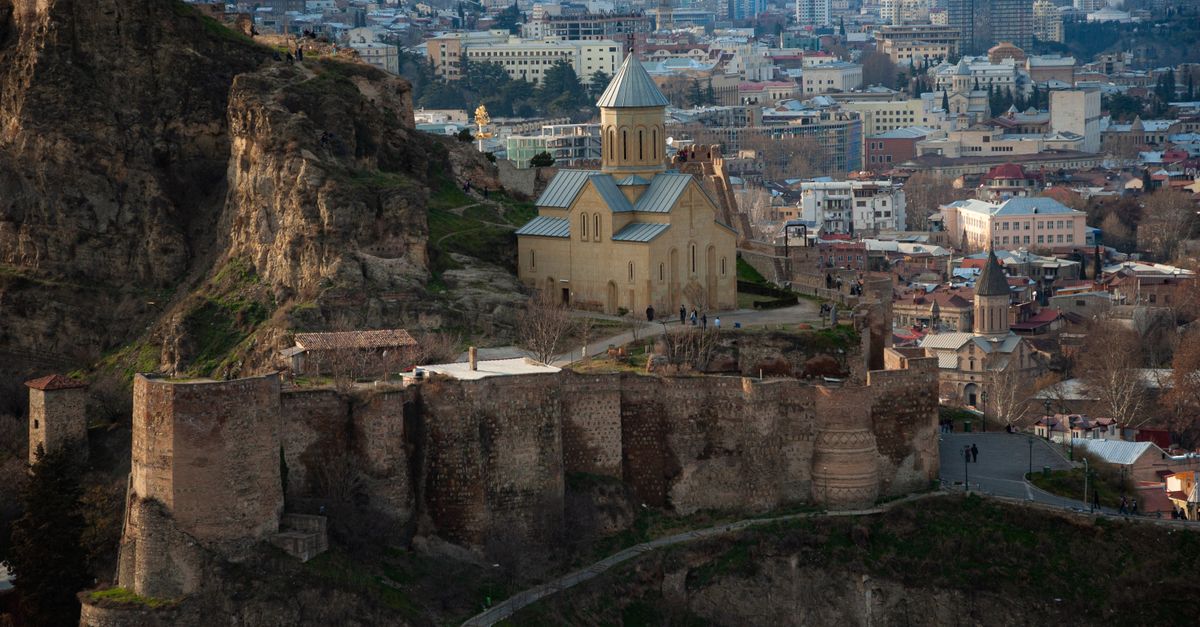
Take the cable car from Rike Park (GEL 2.50 each way, uses the metro card) to the Narikala Fortress, a 4th-century citadel overlooking the entire city. The views from the fortress walls are Tbilisi's best — the Old Town, the river, modern Tbilisi, and the Caucasus Mountains in the distance. The Mother of Georgia statue (Kartlis Deda) stands nearby, holding a sword in one hand and wine in the other.
Walk down from the fortress through the botanical garden (GEL 4 entry) — a peaceful detour with a waterfall and shaded paths. The descent brings you to the sulfur bath district, Abanotubani.
Evening: Sulfur Baths (4:00 PM - 6:00 PM)
Tbilisi's sulfur baths have operated since the city's founding — legend says King Vakhtang I discovered the hot springs while hunting and founded the city around them ("Tbilisi" derives from "tbili" meaning warm). The brick-domed bathhouses of Abanotubani offer public (GEL 5-15) and private rooms (GEL 50-150 per hour for 2-4 people).
Chreli Abano and Royal Bath are the most popular for tourists. Orbeliani Baths (the blue-tiled facade) is the most photogenic exterior. A private room with hot sulfur pool, cold plunge, and optional scrub (GEL 30-50 extra) is the best experience. Book the private room — public baths are functional but lack atmosphere.
Rustaveli Avenue, National Museum & Fabrika
Morning: Rustaveli Avenue & National Museum (9:30 AM - 12:30 PM)
Rustaveli Avenue is Tbilisi's grand boulevard — a tree-lined promenade with the Parliament building, opera house, and national museum. The Georgian National Museum (GEL 15 entry) houses the Treasury — a stunning collection of pre-Christian gold artefacts from Colchis (the land of the Golden Fleece). The Soviet Occupation Hall documents Georgia's experience under Soviet rule. Allow 2 hours for the highlights.
Walk the avenue and duck into the courtyards — Tbilisi's hidden yards often conceal street art, tiny cafes, and vine-covered staircases. The Rustaveli Theatre, the Kashveti Church (a pale sandstone replica of the Samtavisi Cathedral), and the old Parliament building (site of the 1989 Soviet crackdown) line the route.
Afternoon: Fabrika & Marjanishvili (1:30 PM - 5:00 PM)
Fabrika is a converted Soviet sewing factory now operating as a hostel, co-working space, and creative hub in the Marjanishvili district. The courtyard has bars, food stalls, a tattoo parlour, and vinyl shops. The street art on Fabrika's exterior walls is some of the best in Tbilisi. Entry to the courtyard is free — grab a beer (GEL 5-8) and people-watch.
Walk through Marjanishvili — a neighbourhood in transition with galleries, experimental restaurants, and wine bars opening in former Soviet apartment buildings. The area has an energy similar to Berlin's Neukölln ten years ago.

Mtskheta & Jvari Monastery Day Trip
Full Day: Mtskheta (9:00 AM - 3:00 PM)
Mtskheta, Georgia's ancient capital, sits 20 kilometres north of Tbilisi at the confluence of the Mtkvari and Aragvi rivers. It is a UNESCO World Heritage Site and the spiritual centre of Georgian Christianity. Take a marshrutka (shared minibus, GEL 1) from Didube station or a Bolt taxi (GEL 15-20 each way).
Start at Jvari Monastery (6th century), perched on a hilltop overlooking the river confluence. The setting is extraordinary — the simple stone church framed by mountains and the meeting of two rivers below. This is where Saint Nino erected the cross that converted Georgia to Christianity in 337 AD. Jvari is 3 kilometres from Mtskheta town — taxi (GEL 5-8) or a steep 30-minute walk.
In Mtskheta town, visit Svetitskhoveli Cathedral (free entry), an 11th-century masterpiece that is the seat of the Georgian Orthodox Church. Legend says Christ's robe is buried beneath the cathedral. The interior frescoes and the carved stone crosses are remarkable. The Samtavro Monastery nearby (free) houses the graves of King Mirian and Queen Nana, the first Christian rulers of Georgia.
| Activity | Cost (GEL) |
|---|---|
| Narikala cable car (return) | GEL 5 |
| Botanical Garden | GEL 4 |
| Sulfur bath (private room, 1hr) | GEL 80-150 |
| National Museum | GEL 15 |
| Mtskheta marshrutka (return) | GEL 2 |
| Meals per day (mid-range) | GEL 30-60 |
| 3-day estimated total | GEL 350-600 |

Tbilisi is the kind of city that makes you reconsider your travel priorities. It is beautiful without being precious, ancient without being museum-like, and cheap without feeling compromised. Three days reveals the surface. Many travellers extend their stay, and some never quite leave.
Seasonal Highlights
Tbilisi rewards visitors in every season, but each time of year brings a distinct city. Understanding the seasonal rhythm helps you choose the right time for your style of travel — and helps you avoid the specific miseries that each season also brings in equal measure. Georgia's calendar is dense with festivals and agricultural events tied closely to the Orthodox Christian calendar and the wine harvest cycle.
Spring (April–June) is Tbilisi's most photogenic season. The chestnut trees that line Rustaveli Avenue and the plane trees in Vake Park come into full leaf, the Botanical Garden below Narikala reaches peak bloom, and daytime temperatures settle into a pleasant 18–24°C. Easter (Orthodox, typically one to two weeks after Western Easter) is the city's most significant religious celebration — the midnight candlelight procession from the Sameba Cathedral is extraordinary and free to witness. The Tbilisi Open Air festival in late May brings international acts to Saburtalo district. Hotel prices are mid-range and availability is generally good except around Orthodox Easter weekend.
Summer (July–August) is hot (32–38°C), busy with regional tourists, and concentrated at the higher-altitude resort of Bakuriani (2.5 hours by train, GEL 12) where Georgians escape the city heat. In Tbilisi itself, the cultural calendar peaks with Tbilisoba — the city's founding festival — and a range of open-air concerts in Rike Park. The Mtkvari River embankment between the Peace Bridge and the Old Town becomes a social hub after dark when temperatures drop to 22°C. Rooftop bars in the Fabrika area charge GEL 8–15 for cocktails and stay open until 3am.
Autumn (September–November) is the season most Georgians consider the best time to visit. The harvest (rtveli) runs from late September through October, when every family with vineyard connections travels to Kakheti to help pick grapes. Winemakers along the Alazani valley open their cellars for tasting from October — a day trip to Sighnaghi (2.5 hours by marshrutka from Didube, GEL 8) during harvest season includes spontaneous winery visits and churchkhela (walnut-and-grape candy) sold from roadside stalls. The autumn foliage in the Botanical Garden and around Turtle Lake turns gold and red through late October.
Winter (December–February) brings snow to Tbilisi several times per season, transforming the carved wooden balconies into scenes from a Chekhov story. The sulfur baths are most appealing in cold weather — a private room at Chreli Abano on a January evening is among the most satisfying experiences in the city. New Year (Alilo) involves a traditional procession on January 7th (Orthodox Christmas) through the streets of the Old Town with singers and gift-givers in traditional dress. Hotel prices drop by 30–40% from November through February outside of the New Year period, making winter the best value time to visit.
Tbilisi Food Guide → Tbilisi on a Budget →