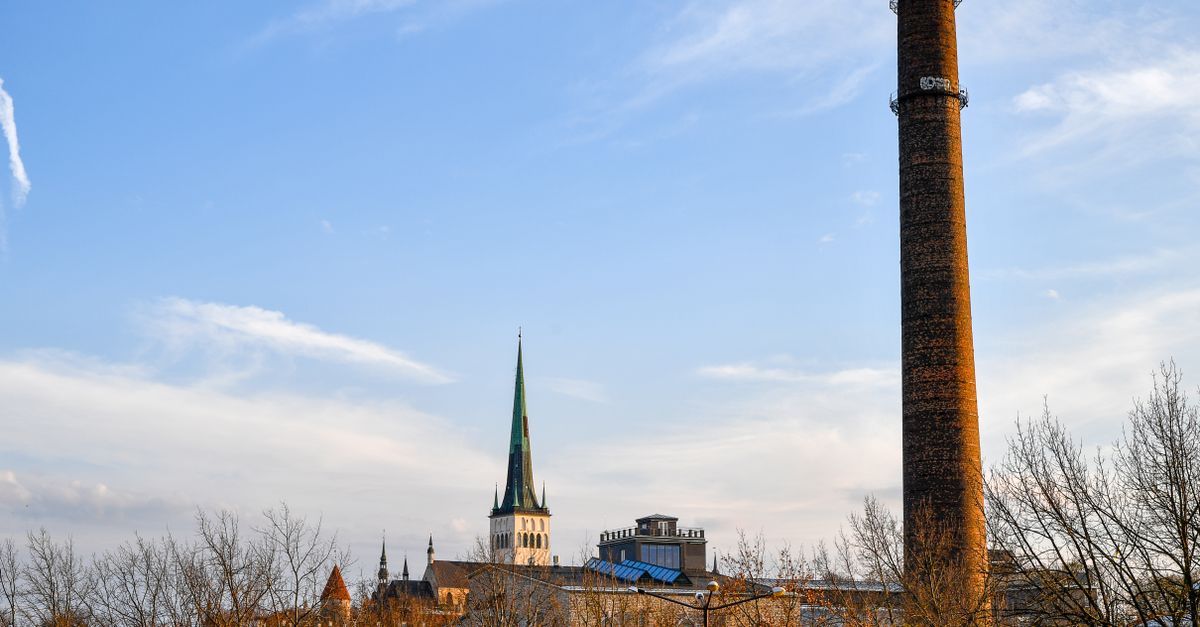
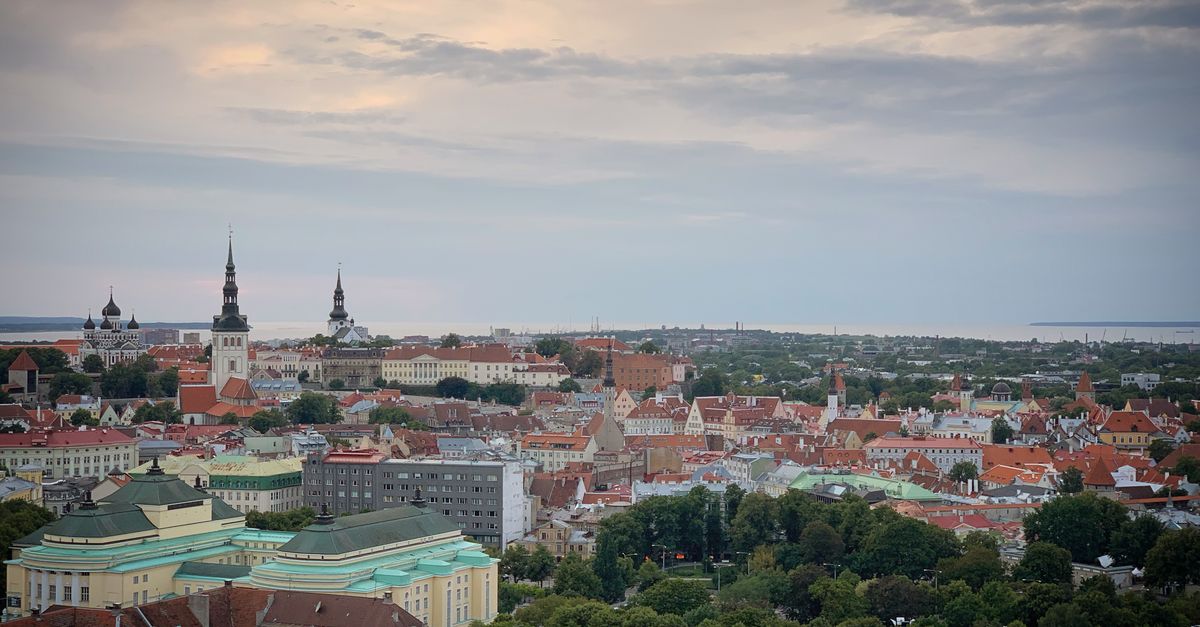
Tallinn is the most beautiful medieval city in northern Europe and one of the most underrated capitals in Europe generally. The Old Town — a UNESCO-listed walled city with a completely intact medieval street plan — attracts 4 million tourists a year, and on the main commercial streets (Viru, Pikk) it shows. But Tallinn is also a city of 450,000 with extraordinary digital infrastructure (the country invented Skype and implemented e-residency), a creative neighbourhood in Telliskivi that is one of the finest in the Baltics, and a coastline of extraordinary variety — from the Rocca al Mare open-air museum to the Pirita bay where the 1980 Olympic sailing was held.
This guide is for the traveller who has already walked the medieval walls and wants to know why there's an extraordinary contemporary art centre in a former power station, where Tallinn's best natural wine bar is hidden, and why the Soviet-era districts north of the Old Town are more interesting than they look. It's also for someone who wants to understand that the Estonian relationship to their own history — the Soviet occupation, the singing revolution, the rapid transition to digital democracy — is one of the most interesting civic stories in contemporary Europe.
Tallinn is excellent value by Western European standards. The food scene is genuinely good, the accommodation is affordable, and the city's combination of medieval architecture, contemporary culture, and extraordinary natural setting on the Gulf of Finland makes it one of the finest three-day city breaks in Europe.
1. Toompea Dawn Walk
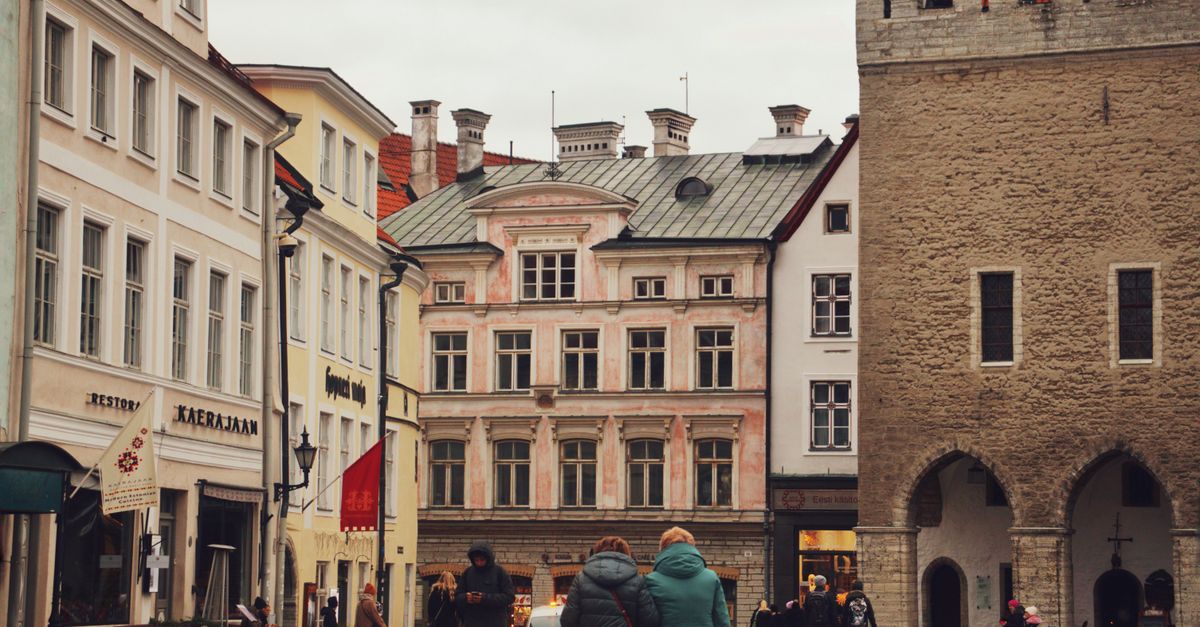
Toompea (the cathedral hill above the lower Old Town) is where Tallinn's Old Town begins in earnest — the hilltop enclosure with the Alexander Nevsky Cathedral, the ancient castle (now the Estonian Parliament), and three viewpoints looking north over the lower town rooftops to the Gulf of Finland. At dawn — from about 5am in June, 7am in October — the mist lies in the lower town lanes, the tiled rooftops catch the first light, and the occasional church spire emerges from the white. There are no tourists at this hour, which itself seems impossible given the density of the afternoon crowd.
The ascent to Toompea from the lower Old Town takes five minutes by the short stepped lane (Pikk jalg — "Long Leg") or a slightly gentler approach via Lühike jalg ("Short Leg" — paradoxically the longer route). The hilltop has been occupied since pre-historic times; the medieval castle on the western edge is the origin point of Estonian statehood. The Alexander Nevsky Cathedral (1894, Russian Orthodox, built at the height of the Russification period) is the most dramatic building on the hill — its onion domes rising against the sky are one of Tallinn's defining images.
The three viewpoints on Toompea — the Patkuli viewing platform (most dramatic, looking north over the rooftops), the Kohtuotsa platform (wider view, more tourists), and the less-known view from the Toom-kooli street — are all free. Come at dawn and come back at sunset — the northern light in Tallinn is extraordinary, shifting from blue-grey to gold with enormous rapidity. The cathedral opens at 8am; the Estonian Parliament (Riigikogu) building is visible from outside and occasionally open for guided tours on advance booking (free, in Estonian/English, check the Riigikogu website).
The Dominican Monastery ruins on the north side of the lower Old Town (€5 admission, open May–September) are one of Tallinn's finest free explorations — a ruined 13th-century monastery partially restored, with extraordinary carved stone details, a small museum of medieval stonework, and a garden that is completely peaceful on a weekday morning. The guided tours (daily at 11am and 2pm, included in admission) give excellent context for the Dominican's role in medieval Baltic trade and religious life.
2. Telliskivi Creative City
Telliskivi Creative City is Tallinn's answer to the question of what to do with abandoned Soviet industrial buildings — a complex of former railway workshops and maintenance buildings converted from 2009 onward to a creative district of restaurants, studios, galleries, a vintage market, and the finest collection of independent businesses in Tallinn. It's 1.5 kilometres north of the Old Town, serves entirely Estonian and Baltic visitors rather than cruise-ship tourists, and is the finest expression of Tallinn's contemporary identity available in a single afternoon visit.
The complex opened its first tenants in 2009 and now has more than 400 businesses — the mix is coherent: design studios alongside restaurants, a superb natural wine bar next to an artisan chocolate maker, a theatre company adjacent to a CrossFit box. The Saturday flea market (10am–4pm, April–October) is the finest in Tallinn — vintage Estonian design, Soviet-era collectibles (excellent propaganda posters, Soviet cameras, enamel mugs), handmade crafts, and clothing. Arrive by 10:30am for the best selection.
Walk northwest from the Old Town along Pärnu Maantee for 15 minutes, or take the tram (line 1 or 2 from the Old Town) to the Balti Jaam stop and walk 5 minutes. The main entrance is signed on Telliskivi 60a. Free to enter the complex at any hour; individual businesses have their own hours. The restaurant Põhjala Taproom (Estonian craft brewery, open from noon) has the finest craft beer in Tallinn and a menu of Estonian snacks — the Põhjala Baltic Porter (€4 per 0.33L) is extraordinary.
The street art throughout the Telliskivi complex is the best in Estonia — a rotating programme of commissioned works by Estonian and international artists covers every available wall surface. The curated approach gives it a coherence that most street art districts lack. The Fotografiska Tallinn (a branch of the Stockholm photography gallery, admission €12–18 depending on current exhibition) is in the complex and has the highest quality photography shows in the Baltic States — the programme typically includes one international photographer and one Baltic photographer in simultaneous exhibitions.
3. Kalamaja Neighbourhood
Kalamaja (literally "fish house") is the neighbourhood immediately west of Telliskivi — a grid of early 20th-century wooden houses painted in pastels and earth colours that is the most beautiful residential neighbourhood in Tallinn. It was the fishermen's and workers' quarter, and its wooden architecture (distinctively Estonian, almost entirely absent from the medieval Old Town) has survived because the neighbourhood was too poor to modernise and too peripheral to develop. The result is one of the finest collections of early 20th-century wooden urban housing in the Baltic states.
The houses are the key attraction — typically two-storey, with decorated eaves, wooden window frames painted in contrasting colours, and small gardens behind wooden fences. The colours are extraordinary: pale blue beside mustard yellow beside forest green beside white, each house making an individual statement within a coherent street aesthetic. Photography here is an overwhelming temptation; the neighbourhood is patient with it.
Walk north from Telliskivi along Kotzebue tänav and into the Kalamaja grid. The entire neighbourhood is walkable in 45 minutes end-to-end. The Kadriorg square at the northern end of Kalamaja (not to be confused with the Kadriorg palace park) has a small neighbourhood café and the best view of the combined neighbourhood roofline from any single point. The neighbourhood bar Tops is on Kotzebue and serves Estonian craft beer and simple food in a converted wooden house — the terrace in summer is one of the finest places to sit in Tallinn on a warm evening.
The Estonian Maritime Museum at Lennusadam (Seaplane Harbour, €10 admission; open Tuesday to Sunday 10am–6pm, summer daily) is in a remarkable 1916 concrete shell structure on the Kalamaja waterfront — one of the finest examples of early reinforced concrete construction in Europe. The museum holds the extraordinary Lembit submarine (British-built 1937, used by the Soviet and then Estonian navy), historic seaplanes visible from the historic slipways, and an interactive maritime history section. The building alone is worth the admission.
4. Noblessner Quarter
Noblessner is the newest neighbourhood in Tallinn — a former Russian imperial submarine manufacturing yard on the Kalamaja waterfront that closed in 1917 and sat abandoned for decades. The development of Noblessner began in 2012 and is still ongoing: a mix of luxury apartments, creative businesses, restaurants, and the preserved 1910–17 industrial architecture that gives the neighbourhood a physical character unlike anywhere else in the city. The Admiraltejskaja restaurant in the old submarine factory hall is one of the finest restaurants in Tallinn.
The industrial buildings of the original submarine yard — brick and concrete structures of the early 20th century — are being progressively converted to mixed uses. The submarine bunker (accessible from the waterfront, free) is a concrete vault of extraordinary scale and atmosphere. The Floating Hotel — a converted barge — is moored at the waterfront and serves as both accommodation and a café-bar with extraordinary Gulf of Finland views. The Noblessner waterfront promenade is the finest in Tallinn, looking north across the harbour to the Tallinn Bay and the Helsinki ferry route.
Walk north from the Lennusadam Seaplane Harbour along the waterfront for 10 minutes to reach Noblessner. The entrance to the main development is marked by the submarine bunker. The entire complex is freely accessible for walking; the restaurants and businesses have individual opening hours. Admiraltejskaja (in the main submarine factory hall, open Tuesday to Saturday 6pm–midnight) serves contemporary Estonian cuisine in an industrial space of extraordinary atmosphere — the beams, the vaulted brick ceiling, the dim lighting — dinner runs €30–50 per head. Book one week in advance for weekend tables.
The Tallinn Creative Hub (Loomelinnak, adjacent to Noblessner) is a development of smaller creative businesses — craft studios, design offices, a vinyl record shop — in a former industrial complex that dates from the Soviet period. The contrast with the imperial-era Noblessner architecture provides a compressed industrial archaeology lesson. The vinyl shop (Sound Studio) on the ground floor of the main building has the finest selection of Estonian and Soviet-era records in Tallinn — rock, pop, folk, and the extraordinary Estonian choral tradition, all available at €5–15 per record.
5. Rocca al Mare Open-Air Museum
The Estonian Open-Air Museum at Rocca al Mare, 9 kilometres west of the city on a forested peninsula, contains 78 historic Estonian farm buildings relocated from rural communities — the full social range of Estonian rural life from the 17th to the 20th centuries. The museum is open year-round; in winter the snowy farm buildings are among the most beautiful things in Estonia; in summer the working demonstrations (threshing, weaving, bread baking) are excellent. The adjacent beach is the finest swimming accessible from Tallinn by public transport.
The museum was established in 1957 (the building collection predates the opening by a decade — the Soviets were, paradoxically, rigorous about Estonian heritage preservation as long as the heritage was rural rather than urban nationalist). The 78 buildings cover farmsteads, windmills, a schoolhouse, a tavern, and a manor house, arranged in the forest in thematic groupings. The summer demonstrations include rye bread baking in a traditional oven (the finished bread is sold at the museum shop for €4 per loaf and is extraordinary).
Take bus 21 from the Balti Jaam bus station — journey approximately 25 minutes. Open year-round; winter hours reduced (check website). Summer admission €10; winter €7. The beachfront at Rocca al Mare (Stroomi beach, free, immediately adjacent to the museum) is a 1-kilometre stretch of sand with calm, shallow water — the finest swimming beach accessible by public transport from central Tallinn. The combination of museum visit and beach afternoon makes for the finest family day available from the city. The museum café serves excellent Estonian home cooking at honest prices (soup €4, main €8–12).
The museum's annual midsummer celebration (June) and Christmas market (December) are the finest traditional holiday events in Tallinn. The midsummer event recreates the traditional Estonian jaanipäev — midsummer night, bonfires, traditional games, folk dancing, and the singing that characterises Estonian celebrations. The Christmas market at the museum is more intimate and more authentically Estonian than the touristy Old Town Christmas market: real crafts, real food, real Estonian prices. The traditional Estonian sauna experience offered at the museum (advance booking required) includes a 17th-century smoke sauna building — the finest sauna building in Estonia accessible to the public.
6. Kadriorg Palace and Park
Kadriorg is Tallinn's finest park — a formal Baroque garden and palace complex 2 kilometres east of the Old Town, built by Peter the Great after his Baltic conquest in 1710 as a summer residence and now housing the Estonian Art Museum's foreign collection (Kadriorg Art Museum) and the Museum of Estonian Decorative and Applied Art in the converted stables. The Kumu Art Museum, 500 metres from the palace, is the finest purpose-built art museum in the Baltic States. The combination of Baroque park + two museums + the extraordinary KUMU building makes Kadriorg one of the finest half-day experiences in the city.
The Kadriorg palace (1718–1736, designed by the Italian architect Niccolo Michetti) is the only Baroque palace in Estonia — a relatively modest but perfectly proportioned pink and white building with a formal garden on the southern side and the extraordinary Koidula Garden on the northern side. The interior (Estonian Art Museum foreign collection — Dutch, Flemish, German, and Russian paintings from the 16th–20th centuries) is well-presented; admission €8, open Tuesday to Sunday 10am–5pm (Wednesday until 8pm).
Take tram 1 or 3 from the Old Town to the Kadriorg stop. The park begins immediately at the tram stop. The Baroque formal garden can be walked in 30 minutes; the larger English-landscape section takes another hour. The KUMU Art Museum (admission €10; open Tuesday to Sunday 11am–6pm, Thursday until 8pm), 5 minutes walk from the palace, is the architectural centrepiece — a 2006 building by Pekka Vapaavuori embedded into a sandstone hill above the park, with seven floors of Estonian art from the 18th century to the present. The permanent collection is the finest presentation of Estonian fine art history in any single building.
The park is free and open at all hours. The Song Festival Grounds at the eastern edge of Kadriorg (a 10-minute walk from the palace) are an important pilgrimage site for Estonians — the amphitheatre that holds the Song Festival (Laulupidu), held every five years (next 2027), is a place of profound national significance. The 1988 Song Festival, during which 300,000 people gathered to sing together for Estonian independence, is the foundational moment of the "Singing Revolution." The amphitheatre is open for visits when no event is scheduled; the view from the singing stand across the Tallinn Bay is extraordinary.
7. Medieval Towers and City Walls
Tallinn's medieval city walls are the best-preserved in northern Europe — 1.9 kilometres of the original wall survives, with 26 of the original 46 towers still standing. Most visitors photograph the Viru Gate from outside; fewer walk the full wall circuit, which gives access to the wall-top walkway between several tower sections and views down into the lower Old Town and out toward the sea that no street view provides. The tower complex near Nunne tänav (Fat Margaret Tower and the towers along the western wall) is the most impressive section.
The city wall was begun in the 14th century when Tallinn was Reval — the most important Hanseatic trading city in the eastern Baltic. The Hanseatic League funded the wall construction because the city's commercial wealth justified the military protection. The towers bear names that reveal their defensive logic: Kiek in de Kök ("Peek into the Kitchen" — the tower from which the guards could see over the city rooftops into the lower courtyard buildings). The Kiek in de Kök Tower is now a museum (€8 admission; open Tuesday to Sunday 10am–6pm) with excellent views of the Old Town from the upper levels.
The wall walkway between Kiek in de Kök and the Nunne Tower (free, open May–September, Tuesday to Sunday 11am–5pm) covers approximately 200 metres and gives the most dramatic walking experience on the walls. The towers along this section are remarkably intact — the stone of the 15th-century construction still showing the original tool marks. The views from the wall-top look south over the Old Town rooftops and north toward the Gulf of Finland. Come at 11am when it opens to have the walkway almost to yourself.
The bastion tunnels below the wall (Bastionite käigud, accessible from the Kiek in de Kök museum, included in admission) are a complex of 17th-century Swedish underground passages built to resist siege artillery — more than 550 metres of tunnels extending under the Old Town, with chambers used as powder stores, artillery batteries, and later as air raid shelters in the Second World War. The guided tour (30 minutes, departure times noted at the museum entrance) is the finest underground experience in Tallinn and is genuinely thrilling in the smaller passages.
8. Lahemaa National Park Day Trip
Lahemaa, 70 kilometres east of Tallinn, is Estonia's largest national park — a 725-square-kilometre protected landscape of coastal forest, bog, and rocky coastline on the Gulf of Finland. The park contains several restored Baroque manor houses, a series of fishing villages with traditional boat-building culture, and the extraordinary Viru bog walk — a 3.5-kilometre boardwalk trail through a raised bog landscape of sphagnum moss, bog pools, and extraordinary wide-sky views. Day-tripping from Tallinn is excellent and the park is completely uncrowded by western European standards.
The Palmse Manor (18th-century Baroque, restored 1970–1985) is the park's finest building — a complete manor complex with the main house, stables, distillery, and formal garden preserved as a museum. The park visitor centre is at Palmse; the introductory exhibition is free and excellent. The Viru bog walk begins 3 kilometres from Tallinn on the E20 highway (accessible by bus from Tallinn's Balti Jaam station — the 150 or 151 bus to Aegviidu, change for Viru bog stop, approximately 1.5 hours). The boardwalk is free and open at all hours.
The drive from Tallinn takes 1 hour via the E20. The Altja fishing village (20 kilometres northeast of Palmse) is the finest of the park's coastal villages — a cluster of traditional Estonian wooden fishing houses on a rocky cove, with a swing-set, a traditional tavern (Altja Kõrts, excellent smoked fish and rye bread), and a complete sense of rural Estonian life that has survived into the 21st century. The walk from Altja along the coastal trail west toward Võsu (5 kilometres) gives the finest coastal scenery in the park.
The Lahemaa park accommodation options include converted manor guesthouses, village B&Bs, and camping in the forest. A night in the park (staying at Palmse or Altja) gives access to the dawn and dusk wildlife activity that a day trip misses — moose (põder) are regularly seen on the forest tracks in the early morning, white-tailed eagles nest in the coastal zone, and the bog at dawn (a 30-minute walk from the park caravan site) is one of the finest natural experiences accessible from Estonia's Baltic coast.
9. Old Town Food and Drink Beyond the Tourist Street
Tallinn's Old Town has an extraordinary concentration of tourist-oriented restaurants with Viking-themed menus and cruise-ship pricing. The alternative is one street away: the neighbourhood of Vanalinn has a set of genuinely excellent restaurants serving Estonian and Baltic food at honest prices for a clientele that is equal parts tourists who've done their research and actual Tallinn residents. The key is avoiding Viru tänav and Pikk tänav (the two main tourist arteries) and exploring the parallel lanes.
Rataskaevu 16 on the street of the same name is widely considered the finest traditional Estonian restaurant in the Old Town — a small dining room in a medieval building serving wild mushroom soup, elk carpaccio, and juniper-smoked pork belly at prices (€12–18 main course) that reflect the quality without requiring a mortgage. Book 2–3 days in advance for weekend dinner. The wine list is outstanding for a restaurant of this price level, with excellent Georgian and natural wine selections alongside Estonian producers.
The Leib (Lai tänav 7) is the finest bread-focused restaurant in Tallinn — a café-restaurant that makes its own rye bread daily and builds its menu around it, with soups, cold platters, and warm open sandwiches of extraordinary quality. Lunch runs €8–14 per person. The bread alone is extraordinary. The adjoining bread shop sells the loaves to take away (€4). For coffee, the Caffeine coffee bar on Pikk tänav is the finest specialty coffee shop in the Old Town — single-origin espresso €3, filter coffee €4.
The evening street-food tradition in Tallinn is the corn seller on the Old Town square in summer — grilled corn on the cob, €2 each, eaten while walking. The freshly baked languste bread rolls from the overnight delivery van at the Viru Gate (arrives 5am daily) are sold warm to the early risers for €1 each — the finest breakfast available in the Old Town without sitting down. The Estonian tradition of eating outdoors in every weather condition (there is no bad weather, only bad clothing) is observable in the Old Town year-round: people sit outside in October with coats and blankets, in January with thermal layers, never letting the climate win.
10. Pirita Beach and Convent
Pirita, 4 kilometres northeast of the Old Town on the Gulf of Finland coast, was the sailing venue for the 1980 Moscow Olympics — the extraordinary aquatic facility built for the event is still standing and still functional, giving Pirita a slightly Soviet-monumental character that is fascinating by historical context. The beach itself (sandy, 500 metres long, the finest near Tallinn) is free and open year-round; the ruins of the 15th-century St Brigitta Convent behind the beach are among the finest medieval ruins in Estonia.
The St Brigitta Convent was founded in 1407 by the Birgittine Order and destroyed by Russian forces in 1577 during the Livonian War. The ruins — the shell of the great church, with the west gable standing almost complete with its magnificent Gothic window tracery — are among the finest pieces of medieval architectural remains in the Baltic States. A new convent building adjacent to the ruins was completed in 2001 and houses a small community of Birgittine nuns who run a small guesthouse and conduct tours of the ruins (€5; open Monday to Saturday 9am–5pm, Sunday noon–5pm).
Take bus 1A or 34 from the Old Town to the Pirita stop (25 minutes). The beach is immediately north of the bus stop. The convent ruins are 5 minutes walk south. The beach café (seasonal, June–August) serves the standard Baltic beach food — smoked fish, cold beer, ice cream — at prices that reflect a neighbourhood beach rather than a tourist beach. The Olympic sailing centre building (closed to the public, but the exterior is worth seeing for its extraordinary Soviet brutalist architecture) is visible from the beach promenade.
The Tallinn Botanical Garden, 1 kilometre west of the convent ruins at Kloostrimetsa tee 52, is the finest botanical collection in Estonia — 4,500 plant species, extraordinary glasshouses (including an excellent tropical greenhouse with bananas and coffee trees), and 120 hectares of outdoor gardens open from April to November (€6 admission). The rock garden and the rose garden are the outdoor highlights; the cactus and succulent greenhouse is the indoor equivalent. The garden café serves excellent Estonian home baking and coffee. The garden is quiet on weekday mornings and is one of the finest places in Tallinn to spend a peaceful morning away from the Old Town crowds.