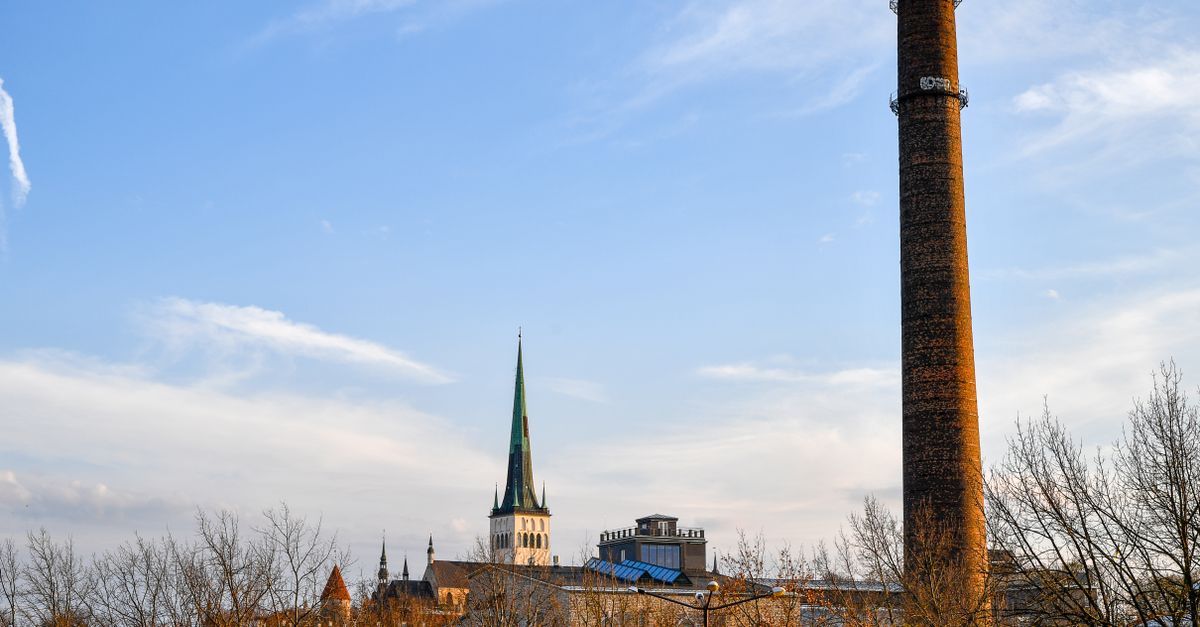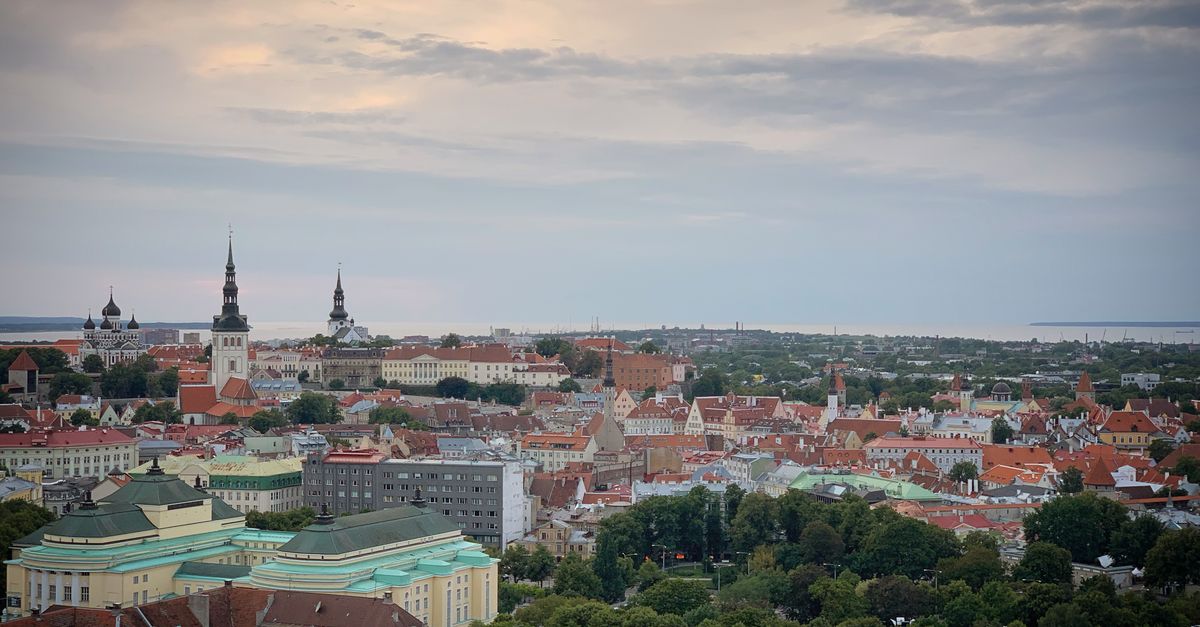
Tallinn is the best-preserved medieval capital in Northern Europe, and arriving for the first time carries the particular jolt of a city that seems to have slipped through history intact. The limestone walls of the Old Town (Vanalinn) still ring the 13th-century core. Toompea Hill — where Danish crusaders built their fortress in 1219 and where the Estonian parliament sits today — still dominates the skyline from the same position it has occupied for 800 years. Estonia was under Soviet occupation from 1940 to 1991, and the contrast between the medieval Old Town, the Soviet apartment blocks visible on the city's edges, and the gleaming glass offices of Europe's most digitally advanced nation creates an urban texture found nowhere else. For first-timers, the key is logistics: Tallinn is small, walkable, and easy — but knowing a few specifics about the Old Town's geography, the transit system, and Estonian social culture makes everything smoother from the first hour.
Before You Arrive
Visa and Entry
Estonia is a full Schengen member. Citizens of EU/EEA countries, the United States, Canada, Australia, New Zealand, and most other developed nations enter visa-free for up to 90 days within any 180-day period. Your passport must be valid for the duration of your stay; EU citizens may also enter with a national identity card. If you need a Schengen visa, apply through the Estonian Embassy or consulate in your country — Estonia's consular services are efficient and transparent. ETIAS, the EU electronic travel authorization system for previously visa-exempt visitors from non-EU countries, was in rollout phase as of 2025 — check the official ETIAS website (travel-europe.europa.eu) for current implementation status and whether your nationality requires registration before travel.

Currency
Estonia adopted the euro on January 1, 2011 and has used it since. You will not encounter Estonian kroon — it was fully withdrawn from circulation over a decade ago. Card payment is the dominant mode of transaction in Estonia: contactless payment works at supermarkets, restaurants, transit validators, market stalls, and most street-food vendors. Cash remains useful for smaller market purchases and some older establishments in the Old Town, but you will rarely find yourself needing it. ATMs (Swedbank, SEB, LHV) are widely available and dispense euros at standard international rates. Notify your bank before travel to avoid blocks on foreign transactions.
SIM Card and Connectivity
Estonian mobile networks (Elisa, Tele2, Telia) offer prepaid tourist SIMs from the airport arrivals hall and from Tele2 and Elisa retail stores in Viru Shopping Center (directly adjacent to the Old Town entrance). A data SIM with 10-30 GB costs EUR 10-20. EU residents with an EU-issued SIM can roam in Estonia without surcharge under EU roaming regulations. Download the Bolt app (transport and scooters), the Tallinn Transport app (real-time transit), and Google Maps (pre-download Tallinn for offline use) before arrival.
Medieval Old Town Logistics
Tallinn's Vanalinn is divided into Upper Town (Toompea — the hill, Estonian parliament, viewing platforms, Alexander Nevsky Cathedral, Dome Church) and Lower Town (the merchant quarter, Town Hall Square, guild halls, and most restaurants). The two are connected by several gates and stairways; Pikk jalg (Long Leg) and Lühike jalg (Short Leg) are the main pedestrian connections. Cobblestone streets are uneven throughout — flat shoes or walking shoes with ankle support are genuinely necessary, especially after rain. The Old Town walls form a roughly walkable perimeter about 2.5 km in circumference. Cars are permitted on some Old Town streets but most of the interior is pedestrian-priority. Navigation by compass and landmarks (Oleviste tower, Alexander Nevsky domes, the Town Hall spire) is easier than by address.
Getting from the Airport
Lennart Meri Tallinn Airport (TLL) is compact and modern — baggage claim and customs typically take 15-25 minutes for international arrivals. The airport sits 4 km from the Old Town, which makes it one of the closest major city airports to its city center in Europe.

Tram Line 4 is the correct first choice for almost all arrivals. The tram stop is immediately outside the arrivals terminal exit — you cannot miss it. Tram 4 runs every 12-15 minutes from approximately 6 AM to midnight, connects to the Viru Square stop (the main square at the entrance to Old Town) in 15 minutes, and costs EUR 1.50 per journey (tap contactless bank card directly on the validator or use the Pilet app to purchase in advance). This is genuinely seamless and there is no faster or more direct route for most travelers.
Bus Line 2 also serves the airport and runs to the city center via a slightly different route, taking 20-25 minutes. Same EUR 1.50 fare. It's an alternative if the tram stop is crowded during peak times, but tram 4 is more frequent and more convenient for Old Town-bound travelers.
Taxi and Bolt — the taxi rank outside arrivals is well-organized, and Estonian airport taxis are metered by law. The fare to Old Town is EUR 7-12 depending on traffic. Order via the Bolt app for upfront pricing and typically EUR 1-3 lower fares than metered taxis. At EUR 8, a Bolt ride is reasonable if you have heavy luggage or are arriving late at night — otherwise, the tram is significantly better value and nearly as fast.
No Airport Bus — there is no dedicated express airport bus or train in Tallinn. Tram 4 is the equivalent: direct, frequent, and reliable. Do not let taxi touts near arrivals persuade you otherwise — the tram is the right choice and costs EUR 1.50.
Getting Around
The Old Town and immediately surrounding neighborhoods are entirely walkable — most first-timers spend their first two days in Tallinn without using public transit at all, because the distances between major sights are measured in 5-15 minute walks. For the outer neighborhoods (Kalamaja, Telliskivi, Kadriorg, the Open Air Museum), the tram and bus network is cheap and efficient.

Tram Lines 1 and 2 run from Balti Jaam (Baltic Station) through the city center to Kadriorg Park and Kadriorg Palace — covering the essential tourist corridor in a single route. Tram 4 connects the airport to Viru Square. Fare: EUR 1.50 per journey by contactless card validation directly on the tram validator, or EUR 4 for a 24-hour day pass.
Trolleybuses and Buses extend coverage to Kalamaja, Telliskivi, and outer residential districts. For most visitors on a 2-3 day itinerary, trams plus walking covers everything. Buses are most useful for reaching the Estonian Open Air Museum (tram to Balti Jaam, then bus 65) or the Pirita coastal district.
Bolt Scooters and E-bikes — the Estonian-founded Bolt platform offers electric scooters and bikes from multiple locations across the city. The rates (EUR 0.50 unlock + EUR 0.15/minute) make a scooter the fastest way to move between Kalamaja, Old Town, and Telliskivi. Download the Bolt app and register before arrival.
Walking remains the definitive Tallinn transit mode for Old Town exploration. The medieval street plan was designed for pedestrian traffic, not vehicles, and the cobblestone lanes, hidden courtyards, and defensive towers reward aimless wandering in a way that no transit system can replicate. Allocate time for unplanned exploration — some of Tallinn's best discoveries (a baroque courtyard behind a medieval gate, a café in a 15th-century cellar, a tower staircase with harbor views) are found by following curiosity rather than a map.
Where to Base Yourself
Tallinn's neighborhoods each have distinct character, and your choice shapes what kind of city you experience. The Old Town is the obvious default, but the adjacent neighborhoods offer better value and a more authentic sense of the contemporary city.

Old Town (Vanalinn) is where first-time visitors naturally gravitate — the medieval streets, proximity to all major sights, and atmospheric surroundings make it the obvious base. Hotels inside the walls tend toward boutique character: Hotel Telegraaf (EUR 130-220 per night), Hotel St. Petersbourg (EUR 110-180), Schlössle Hotel (EUR 160-280). The trade-off is that Old Town restaurants and bars carry a tourist premium of 20-40% over identical quality in surrounding neighborhoods. If you're here for 2 nights or fewer, Old Town is the right call for maximum atmosphere and walkability.
Kalamaja is Tallinn's most interesting neighborhood for independent-minded travelers — a former working-class maritime district turned creative hub, with wooden vernacular houses painted in pastels, the best independent coffee shops in the city, and the Balti Jaam Market on its doorstep. Tram 2 connects Kalamaja to the Old Town Viru gate in 10 minutes. Accommodation skews toward Airbnb apartments (EUR 45-75 per night for a studio) and small guesthouses. The tradeoff: you'll use transit or walk 20 minutes to Old Town attractions, but you'll eat and drink at genuinely local prices.
Telliskivi Creative City surrounds a converted Soviet-era factory complex now housing galleries, studios, food trucks, bars, and event spaces. It sits between Kalamaja and the Balti Jaam rail terminal. Guesthouses and Airbnb apartments here average EUR 50-80 per night. This is the right base if you're visiting during one of Tallinn's creative events (Tallinn Music Week, Tallinn Architecture Biennale, ARS — various cultural festivals) — the neighborhood is the event hub.
Local Culture & Etiquette
Estonian Reserve
Estonians are Northern European in temperament — reserved, private, and not given to demonstrative public sociability. The classic Estonian stereotype is a person who considers any communication beyond strict necessity to be either showboating or suspicious. This is an exaggeration, but it captures something real. Shop assistants will not greet you effusively. Service staff will not check in on your table repeatedly. Fellow pedestrians will not make eye contact or acknowledge your presence. None of this is hostility — it is a cultural preference for quiet self-containment that extends to how Estonians prefer to be treated themselves.

Directness and Honesty
Estonian communication is direct to a degree that can startle people accustomed to more hedged social interaction. "Is this good?" will get an honest assessment, not a reassuring one. Instructions will be stated plainly without softening. If a service is poor, an Estonian employee will acknowledge it factually rather than apologizing effusively. This cultural directness extends to business: Estonian entrepreneurs and institutions are known across Europe for their lack of bureaucratic hedging — the country invented e-government precisely because Estonians find unnecessary process annoying.
Digital-First Society
Estonia is the world's most digitally advanced government — citizens can vote, pay taxes, register businesses, and access all government services online. This ethos extends to everyday life. Pay by contactless card everywhere. Use apps rather than queuing at counters. E-receipts and digital tickets are standard. If an Estonian business has an app, using it is always faster than the physical alternative. Tallinn was the birthplace of Skype (2003) and Bolt (2013), and the city's infrastructure reflects the assumptions of people who designed digital systems for daily life rather than as supplements to physical processes.
Personal Space
Similar to other Northern European cultures, Estonians maintain significant personal space in public settings. Queue respectfully without crowding. Sit in alternate seats on empty public transit when possible. Don't stand close to strangers in enclosed spaces without reason. The general rule: observe what Estonians around you are doing and calibrate to match.
Tipping
Service workers in Estonia receive living wages — tipping is appreciated but not expected or required. Rounding up to the nearest euro or adding 5-10% at a sit-down restaurant is standard for good service. Never tip at supermarkets, kiosks, or fast-casual counters. The awkward moment of refusing to tip does not exist in Estonian culture the way it does in American-influenced service contexts.
Common Mistakes to Avoid
Spending all your time in Old Town and not exploring beyond the walls. The medieval Old Town is spectacular, but staying exclusively within the walls means experiencing only one layer of Tallinn. Kalamaja, Telliskivi, and the Kadriorg district show you the contemporary city — the creative businesses, the vernacular wooden architecture, the places where Tallinn residents actually live and eat. Walk through the Old Town gates toward Kalamaja on your second day, and the city reveals a completely different character.
Eating all meals in Town Hall Square restaurants. The terrace restaurants directly on Raekoja Plats are priced at maximum tourist-capture rates. Walking one block in any direction consistently drops prices 20-30%. Leib Resto, Pegasus, and the restaurants along Suur-Karja Street offer better food at better prices in settings that are still atmospheric and central. The Old Town has excellent restaurants — just not on the square itself.
Hailing a taxi on the street near Old Town rather than using Bolt. Some Tallinn taxis operating without meters near tourist areas charge unregulated rates. The Bolt app (founded in Tallinn, the company operates ethically) gives upfront pricing and drivers who cannot deviate from it. For any taxi journey in Tallinn, open the app. The per-km rates are among the lowest in the EU.
Underestimating how uneven the cobblestones are. Tallinn's Old Town cobblestones are picturesque and genuinely hard on ankles. Heels are impractical. Thin-soled fashion trainers become uncomfortable after a few hours. If you're planning a full day on foot — which most visitors do — wear shoes with proper sole cushioning and ankle coverage. Cobblestones also become slippery when wet: rain-wet Tallinn limestone has a low friction coefficient that surprises most visitors.
Forgetting that Estonia is not just the Old Town. Tallinn Airport's arrival corridor has a large poster showing only the medieval skyline. Guidebooks typically allocate 80% of their coverage to Vanalinn. This distortion causes many visitors to miss the Kumu Art Museum (genuinely world-class), the Estonian Open Air Museum (one of the best folk architecture museums in Europe), and the modern Telliskivi design culture that represents the other side of what Estonia is. Allocate at least one half-day to something beyond the medieval walls.
Arriving in summer without accommodation booked. Tallinn receives a disproportionate volume of cruise ship and ferry-day-trip visitors in July and August, filling Old Town hostel dormitories and budget hotels weeks in advance. Unlike many European destinations where last-minute availability exists, Tallinn's limited quality budget accommodation books out early. Reserve at least 3-4 weeks ahead for summer visits, more for any August weekend.
Missing the Suomenlinna-equivalent island excursion. While Tallinn lacks a direct equivalent to Helsinki's Suomenlinna, Naissaar Island in Tallinn Bay offers an unusual day trip — a Soviet military installation on a forested island, accessible by summer ferry from Tallinn harbor. Alternatively, the Pirita coastal district (tram 1 toward the sea) has a ruined medieval convent (Pirita Klooster, EUR 3) and a beach promenade that represents a completely different Tallinn. Don't leave without seeing at least one piece of the coast.