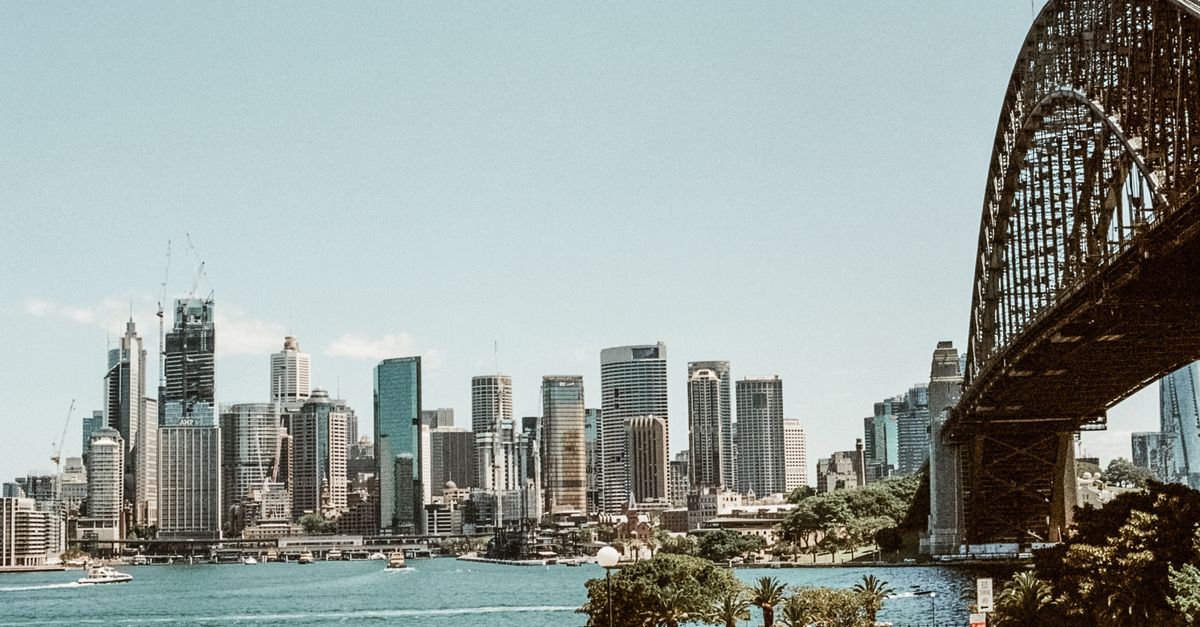
Sydney's tourist trail is well-worn — Opera House, Harbour Bridge, Bondi Beach, The Rocks. These are genuinely great, but they represent a narrow slice of a city that extends far beyond the harbour's edge. The places where Sydney reveals its character are quieter, less photographed, and often accessible by the same ferries and trains that take you to the famous landmarks.
These five hidden gems are where locals go when they want to escape the tourist crowds — and each one offers an experience that the standard itinerary misses entirely.

1. Cockatoo Island — Convict History on the Harbour
Cockatoo Island is the largest island in Sydney Harbour and the only one where you can camp overnight — sleeping in a harbourside tent with the city skyline twinkling across the water. But even as a day visit, the island is one of Sydney's most fascinating and least crowded attractions.
The island's history spans convict-era imprisonment, a colonial grain store, and a major shipyard that built and repaired naval vessels through two world wars. The ruins of the convict barracks, the massive empty dry docks, and the rusting industrial machinery create an atmosphere that is part museum, part post-apocalyptic film set. A free self-guided audio tour (download at the wharf) explains each site.
The island also hosts major art installations — it was a Biennale of Sydney venue — and occasional outdoor cinema events. Take the ferry from Circular Quay (Wharf 5, A$7.65 with Opal, 25 minutes). The island is free to enter. Bring a picnic — there is a small cafe but it is overpriced. On weekends, the island is peaceful enough to spend an entire afternoon exploring.
2. Wendy's Secret Garden — A Hidden Harbour Oasis
On the north shore of the harbour, beneath the approach to the Harbour Bridge, lies a garden that most Sydneysiders do not even know exists. Wendy's Secret Garden was created by Wendy Whiteley, the wife of Australian artist Brett Whiteley, who spent decades transforming a neglected rail corridor into a lush, rambling garden of native plants, winding paths, and harbour views.
The garden cascades down the hillside from Lavender Bay to the waterfront, with benches tucked into alcoves overlooking the water. The Opera House and city skyline are visible through the foliage. There are no signs, no fences, no entry fee — just a gate off Clark Road in Lavender Bay that opens into what feels like a secret world.
Combine it with a visit to Luna Park (the entrance with its iconic face is visible from the garden) and the short walk along the Lavender Bay foreshore to Milsons Point station. The garden is a ten-minute walk from Milsons Point station (one stop from the city on the North Shore line). Best visited in early morning or late afternoon when the light through the harbour is golden.
3. Paddington Markets — Saturday Local Culture
Every Saturday from 10 AM to 4 PM, the grounds of Paddington Uniting Church on Oxford Street fill with over 150 stalls selling handmade jewellery, vintage clothing, local art, leather goods, ceramics, and artisan food. Unlike the tourist-oriented markets at The Rocks, Paddington Markets are where Sydney's creative community actually sells their work.
The quality is high — many stallholders are professional artists and designers using the market as their primary retail space. Prices reflect the handmade quality (jewellery from A$30, art prints from A$20, leather bags from A$80) but are significantly below gallery or boutique retail.
After browsing, walk down Oxford Street through Paddington's Victorian terrace houses — the cast-iron lacework balconies are some of the most photogenic streetscapes in Sydney. Continue to Five Ways, a charming intersection of five streets with independent bookshops, wine bars, and cafes. Bus 333 from the city or a 20-minute walk from Kings Cross station. The markets are free to enter.

4. Watsons Bay — The Quiet Harbour
While tourists crowd Bondi and Manly, Watsons Bay sits quietly on the southern headland of the harbour entrance, offering a small sandy beach, dramatic cliff-top walks, and one of Sydney's most iconic fish and chip shops — all accessible by a scenic ferry ride.
Take the ferry from Circular Quay to Watsons Bay (A$7.65, 25 minutes) and disembark at the wharf where the harbour beach begins. Eat fish and chips at Doyles on the Beach (A$22-30 for fish and chips, waterfront seating) or the more affordable Watsons Bay Hotel beer garden (mains A$20-28) with harbour views.
Walk south to The Gap — dramatic sandstone cliffs where the harbour meets the open Pacific. The cliff-top path continues to South Head, the southern jaw of the harbour entrance, with views across to North Head and Manly. The Heritage Lighthouse at South Head (1858) is one of the oldest in Australia. The walk from Watsons Bay to South Head and back takes about an hour and is entirely free.
Return by ferry at sunset for views of the city skyline turning golden — arguably the most beautiful ferry ride in Sydney, and it is covered by your Opal card.
5. Barangaroo Reserve — Harbour Parkland and Aboriginal Heritage
Barangaroo Reserve is Sydney's newest harbourside park — a 6-hectare headland of sandstone and native plantings built on a former container terminal on the western edge of the CBD. The park is named after Barangaroo, a powerful Aboriginal woman of the Cammeraygal clan who resisted British colonisation.
The reserve is designed to reflect the harbour's pre-colonial shoreline, with rough-cut sandstone blocks mimicking natural rock formations and 75,000 native trees and shrubs creating a bushland atmosphere minutes from the office towers. Walking paths wind along the waterfront with views of the Harbour Bridge, Goat Island, and Balmain.
Free guided Aboriginal cultural tours run regularly, explaining the significance of the site to the Gadigal people and the story of Barangaroo herself. The adjacent Barangaroo South precinct has restaurants and bars, but the reserve itself is free, open, and uncrowded — a striking contrast to the frenzy of Circular Quay just a 15-minute walk east.
Access from Wynyard station (10-minute walk) or Barangaroo ferry wharf. The park is open sunrise to sunset. Combine it with a walk through the historic streets of Millers Point — terraced cottages from the 1830s tucked behind the modern waterfront — for a glimpse of Sydney before the skyscrapers.

6. Hidden Dining — Where Sydney Actually Eats
Sydney's celebrated dining scene — the waterfront restaurants at Quay, the hatted kitchens of the CBD — represents one version of the city's food culture. The more interesting version is hidden in inner-west terraces, Korean-Vietnamese strip malls in Strathfield, and late-night noodle shops in Haymarket that have no website and no Yelp presence. These are the places that sustain Sydney's enormous migrant communities and reward the visitors who follow the signs of a packed parking lot and a handwritten menu board.
Spice Alley (Kensington Street, Chippendale) is Sydney's best-designed secret — a pedestrian laneway behind the Old Rum Store lined with eight hawker-style stalls serving Malaysian, Vietnamese, Thai, and Korean street food. Bao buns, laksa, Korean fried chicken, and pad kra pao are all around A$14–18. The stalls are run by established Sydney restaurateurs rather than food-court operators, which explains why the quality sits well above typical food-court standards. The laneway is covered, lit by fairy lights, and free to walk through. It's a ten-minute walk from Central Station.
In Strathfield, 20 minutes by train from the CBD, a dense concentration of Korean and Vietnamese restaurants on The Boulevarde and Church Street serve food calibrated entirely for the local diaspora community. Korean BBQ at Chungdam (mains A$18–28, BYOB on weekdays) uses proper charcoal grills and marinated short ribs that arrive raw at the table; the banchan side dishes are included and refilled without asking. Vietnamese pho shops on Church Street open at 7 AM and close when the broth runs out, typically around 2 PM, for A$13–15 a bowl.
The Inner West villages of Newtown and Enmore hide some of Sydney's best independent restaurants behind unpromising facades. Oscillate Wildly (275 Australia Street, Newtown) is a seven-table, 35-seat restaurant with a single nightly tasting menu (A$130 per person, BYO) in a room with mismatched furniture and handwritten menus — no website, reservations by phone only. It is Sydney's most quietly beloved restaurant and consistently harder to book than the waterfront showpieces. Mamak (15 Goulburn Street, Haymarket) serves Malaysian roti canai (A$8.50) freshly made at the front window — the queue on Saturday nights stretches to the corner and moves fast.
For Sydney's best Greek food, leave the expensive tavernas of Darling Harbour and head to Marrickville (20 minutes from the CBD by bus) where the Hellenic Club on Addison Road serves grilled octopus and lamb kleftiko to a 90% Greek-heritage crowd on Sunday afternoons (mains A$22–30). The surrounding streets have Greek bakeries selling spanakopita and kourambiedes at A$3–4 a piece. The atmosphere — elderly men playing backgammon, families three generations deep at lunch — is the antithesis of tourist dining.
Late-night hunger is best solved in Haymarket — Sydney's Chinatown district, which borders the southern end of the CBD. The Sussex Centre Food Court and Capitol Square operate until midnight or later, with roast duck rice (A$13–15), hot pot, and Taiwanese scallion pancakes available when everything else has closed. The Golden Century restaurant (393 Sussex Street) is the city's most famous late-night institution — live seafood tanks, Cantonese banquet cooking, and a kitchen that runs until 4 AM on weekends, feeding everyone from chefs finishing their shifts to clubbers redirected by hunger.
Discover more of Sydney. See our 3-Day Sydney Itinerary and read the Sydney Food Guide on JustCheckin.


