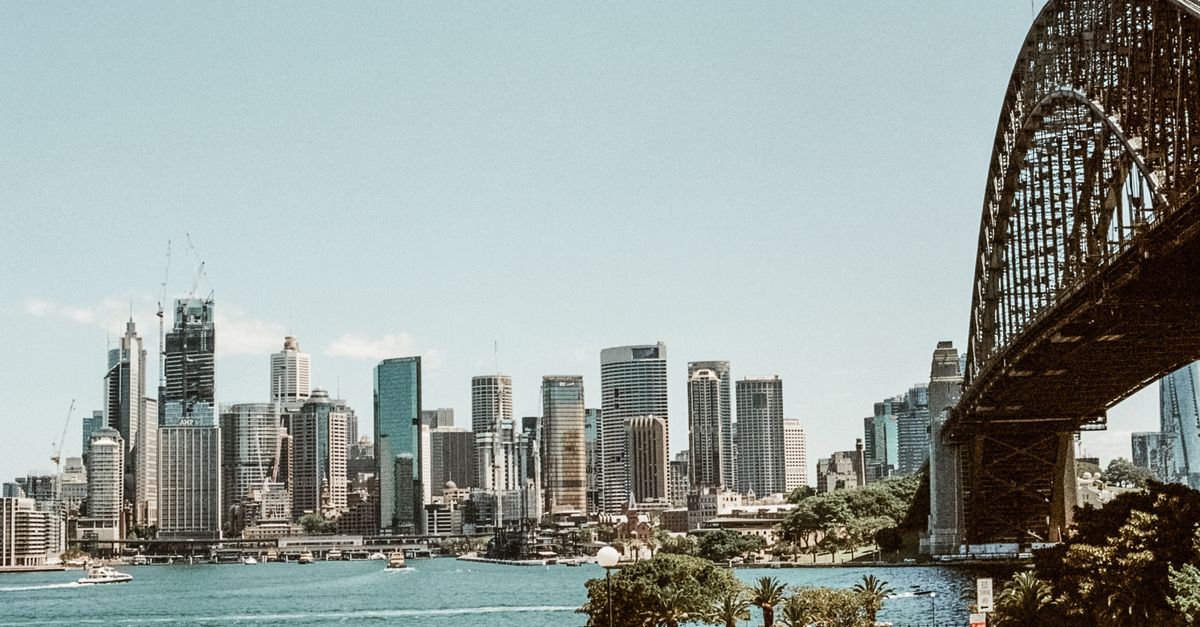
Sydney is deceptively large. The harbour, the beaches, the national parks, and the sprawling suburbs stretch across an area larger than London, and the distances between attractions can surprise visitors who expect a compact city. But the transport system is solid, the locals are genuinely friendly, and the city's greatest attractions — its beaches, harbour walks, and outdoor culture — are largely free.
This guide covers the practical essentials every first-timer needs: how to get from the airport, how to navigate the Opal system, what to pack, and the cultural norms that will help you blend in.

Getting to the City
Airport to CBD
Sydney Kingsford Smith Airport (SYD) is only 8 km from the CBD but charges a steep Airport Link station access fee of A$15.56 on top of the regular train fare, making the total trip to Central Station about A$18.70. The train takes 13 minutes and runs every 10 minutes.
Budget alternatives: take bus 400 to Mascot or Green Square station, then train without the airport surcharge (total A$4-5). Airport shuttle buses like Ready2Go cost A$18-20 to CBD hotels. Uber and Didi run A$25-40 to the CBD depending on traffic and time of day. Taxis cost A$45-55.
Arriving by Cruise Ship
Ships dock at the Overseas Passenger Terminal at Circular Quay — you literally step off the ship into the heart of Sydney with the Opera House visible. No transfer needed.
Getting Around
Opal Card — Tap On, Tap Off
The Opal card is Sydney's contactless transit card. It works on trains, buses, ferries, and light rail. Tap on when you board and tap off when you exit — failure to tap off results in maximum fare charges. Buy a physical card at convenience stores and newsagents or use a digital Opal card on your phone.
Key pricing: daily cap A$17.80 (A$8.90 Sundays). Off-peak travel (after 9:30 AM weekdays, all day weekends) is 30% cheaper. After 8 paid journeys per week, remaining trips are half price. International contactless credit cards work on the network too but do not receive the weekly discounts.
Ferries
Sydney's ferries are public transport, not tourist boats — they go to genuine destinations (Manly, Taronga Zoo, Watsons Bay, Cockatoo Island) at Opal card prices. The Manly Ferry (A$7.65, 30 minutes from Circular Quay) is one of the world's great commuter journeys. All ferries depart from wharves at Circular Quay — check the wharf number on digital signs.
Trains and Buses
Trains cover the CBD, inner suburbs, and longer distances (Blue Mountains, airport). Buses fill the gaps — especially to beaches like Bondi (bus 333) and Coogee (bus 353). The light rail runs from Circular Quay through Chinatown to the inner west. Google Maps integrates perfectly with Sydney transit for real-time route planning.

Practical Essentials
Currency
Australian Dollar (A$). Approximately A$1.55 = US$1. Australia is nearly cashless — contactless card payment (tap and go) works almost everywhere, from restaurants to market stalls to buses. Some places are card-only. ATMs are at every bank and shopping centre. Carry A$50-100 in cash for the rare cash-only situation (some market stalls, parking meters).
Tipping
Tipping is not expected in Australia. Restaurant staff are paid a living wage (minimum A$23.23/hour). Some restaurants include a card payment surcharge of 1-1.5% — this is not a tip, it is a processing fee. At fine dining restaurants, a 10% tip is appreciated but never required. Taxi drivers do not expect tips. Hotel porters may receive A$2-5 but it is optional.
Sun Protection
This is not optional advice — it is essential. Australia has the highest rate of skin cancer in the world. The UV index in Sydney regularly exceeds 11 (extreme) in summer, and sunburn can occur in as little as 15 minutes.
Wear SPF 50+ broad-spectrum sunscreen, reapplied every 2 hours. Wear a hat and sunglasses. The Australian "Slip, Slop, Slap, Seek, Slide" campaign means: slip on a shirt, slop on sunscreen, slap on a hat, seek shade, slide on sunglasses. Take this seriously — even on overcast days, UV rays penetrate cloud cover. Buy sunscreen at any chemist (Priceline, Chemist Warehouse) for A$10-15.
Weather and When to Visit
Sydney's seasons are reversed from the Northern Hemisphere. Summer (December-February) brings temperatures of 25-35°C with occasional bushfire smoke. Autumn (March-May) is ideal — warm days, cool evenings, golden light. Winter (June-August) is mild at 8-17°C. Spring (September-November) is pleasant with occasional rain.
The ocean is swimmable from November to April (water temperature 20-24°C). Winter ocean swims are for locals with wetsuits. Peak tourist season is December-January (school holidays, Christmas). The quietest months are May-June and September-October.
Dangerous Wildlife
Sydney's wildlife reputation is exaggerated but not entirely undeserved. At beaches, swim between the red and yellow flags — lifeguards patrol for rip currents and occasionally sharks. Bluebottle jellyfish (Portuguese man o' war) wash up on east-facing beaches after easterly winds — their sting is painful but rarely dangerous. Funnel-web spiders exist but encounters are extremely rare in urban areas. Snakes are almost never seen in the CBD or beaches. Use common sense — do not stick hands into rockpools, shake out shoes left outside, and stay on marked paths in bushland.

Where to Stay
Best Areas for First-Timers
Circular Quay/The Rocks puts you at the harbour hub — Opera House, ferries, and The Rocks markets on your doorstep, but accommodation is the most expensive in the city. CBD/Chinatown is central with good transport links and the most dining options. Surry Hills is the brunch and cafe capital — walkable to the CBD. Bondi suits beach lovers willing to bus 35 minutes to the city.
First-Timer Mistakes
Underestimating Distances
Sydney is not a walking city in the way that London or Paris are. Bondi to Manly is a 90-minute journey involving bus, train, and ferry. The Blue Mountains are two hours by train. Plan one area per half-day rather than trying to cover the entire city in a single day.
Ignoring the Inner West
Most tourists stay in the CBD and harbour area and miss the inner west suburbs — Newtown, Enmore, Marrickville, Glebe — where the food is better, cheaper, and more diverse. Take the train one stop to Newtown on your last evening for King Street's restaurant strip.
Paying for Views
The Sydney Tower Eye costs A$26, but free views from the Harbour Bridge walkway, Mrs Macquarie's Point, and the North Head lookout at Manly are equally spectacular. Save your money for experiences that cannot be replicated for free.
Essential Apps & Resources
Sydney is an exceptionally well-connected city for the digitally prepared traveler. Having the right apps installed before you land — ideally with offline data downloaded — eliminates most of the friction that catches first-timers off guard.
Transport NSW (free, iOS and Android) is the official public transport app for Sydney. It provides real-time arrival information for buses, trains, ferries, and light rail, and integrates journey planning across all modes with live disruption alerts. Set it up before arrival and download the Greater Sydney offline map. The app also links directly to your Opal card balance. Google Maps works well for Sydney transit but the Transport NSW app is more reliable for ferry timetables and bus route details.
Service NSW is worth downloading if you plan to drive — it handles digital licenses, road tolls registration, and parking permits. Sydney has an extensive toll road network (the M2, M5, M7, M8, and Eastern Distributor are all tolled) and toll cameras photograph every vehicle. If you rent a car, your rental company handles tolls automatically, but verify this before driving.
For dining, Zomato and Google Maps reviews are the most reliable local sources for restaurant recommendations. OpenTable handles reservations at mid-range and fine dining restaurants. Walk-ins are common at most Sydney restaurants except on Friday and Saturday evenings, when popular spots book out weeks ahead.
HealthDirect is Australia's free government health advice service — available as an app and a 24-hour phone line (1800 022 222). If you feel unwell, call before visiting an emergency department. For non-emergency doctor visits, HotDoc lists same-day GP appointments across the city. A GP consultation without Medicare (Australia's public health system, available only to residents) costs A$80-150 out of pocket. Travel insurance is essential for covering this.
Sydney's free WiFi network covers the CBD, Circular Quay, and major transport hubs under the CityofSydney network. Connection is straightforward — select the network, accept terms, and you're online. For better connectivity, Optus and Telstra prepaid SIM cards (A$30-40 for 30 days with 30-50GB data) are available at airport convenience stores and major supermarkets. Show your passport for registration.
For events and what's on, Time Out Sydney (timeoutsydney.com.au) publishes weekly guides to free events, outdoor cinema, festivals, and pop-up markets. The City of Sydney events calendar (cityofsydney.nsw.gov.au/events) lists free activities across parks, libraries, and public spaces — there is almost always something happening on weekends that costs nothing to attend.
Ready to go? See our 3-Day Sydney Itinerary and compare hotel prices in Sydney on JustCheckin.