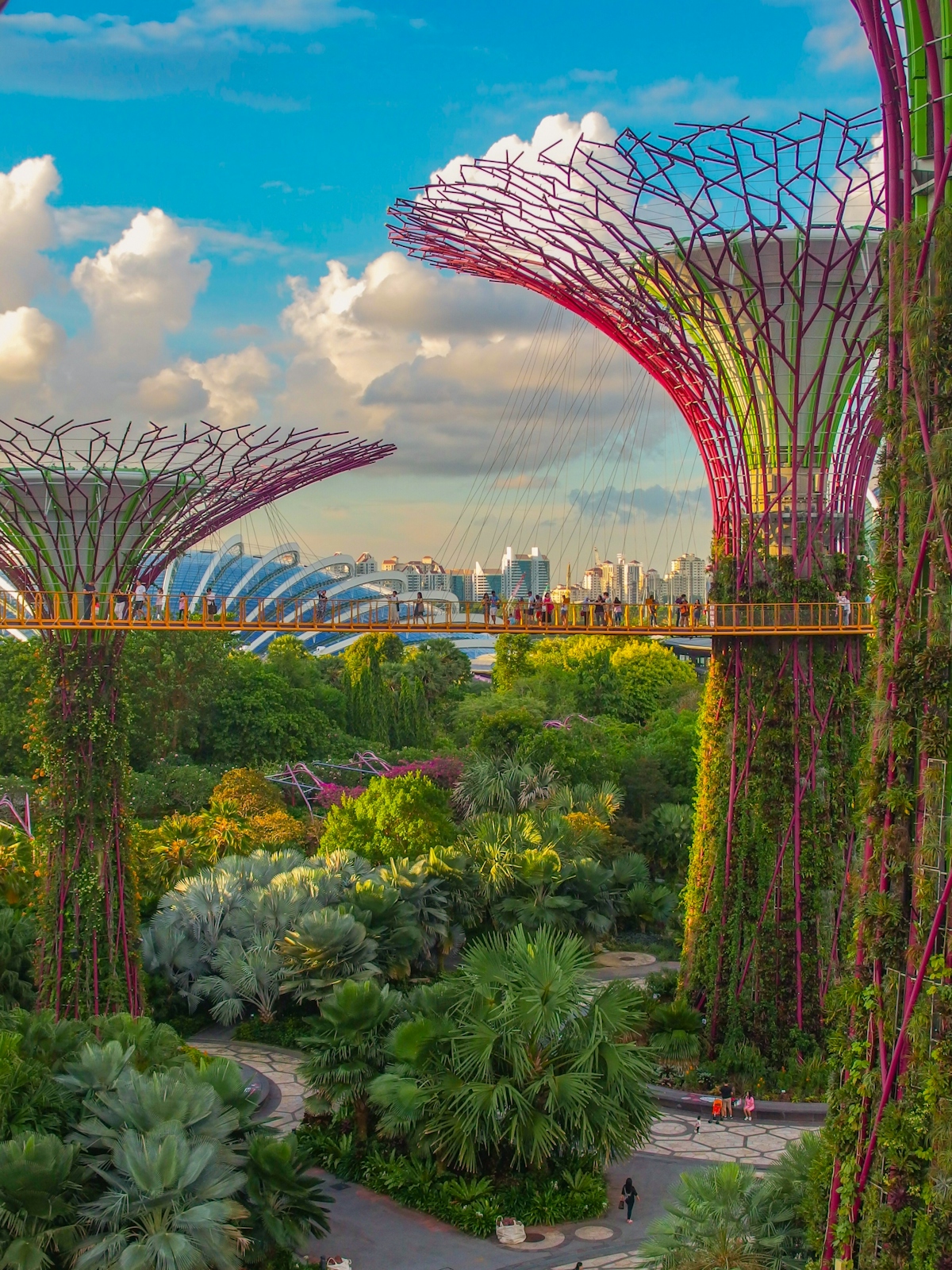
Singapore is a city that should not exist. A swampy island at the tip of the Malay Peninsula with no natural resources, no hinterland, and no particular reason for being — and yet it has become one of the wealthiest, cleanest, safest, and most meticulously engineered cities on earth. In just sixty years since independence, Singapore has transformed itself from a colonial trading post into a vertical garden of supertrees and skyscrapers, a place where a Michelin-starred meal costs S$6 at a hawker stall and where the fine for chewing gum is not a myth but a genuine point of national pride.
The city is a masterwork of controlled diversity — Chinese, Malay, Indian, and Eurasian cultures layered over a British colonial framework, producing a food scene that is arguably the greatest in Asia, architecture that ranges from Peranakan shophouses to Marina Bay's futuristic skyline, and a civic order so thorough that jaywalking feels like an act of rebellion.
Three days in Singapore is tight but remarkably rewarding because the city is compact, the public transport is world-class, and the density of extraordinary experiences per square kilometer is unmatched. This itinerary covers the iconic landmarks, the cultural neighborhoods, the hawker centers that define Singaporean life, and the practical details that will keep you comfortable in a city where the temperature never drops below 24 degrees Celsius and the humidity is a permanent 80 percent.
Every price has been verified in Singapore dollars (S$), every route tested, and the schedule accounts for the heat — you will learn quickly that Singaporeans have arranged their entire civilization around the principle of staying cool.

Marina Bay & Gardens by the Bay
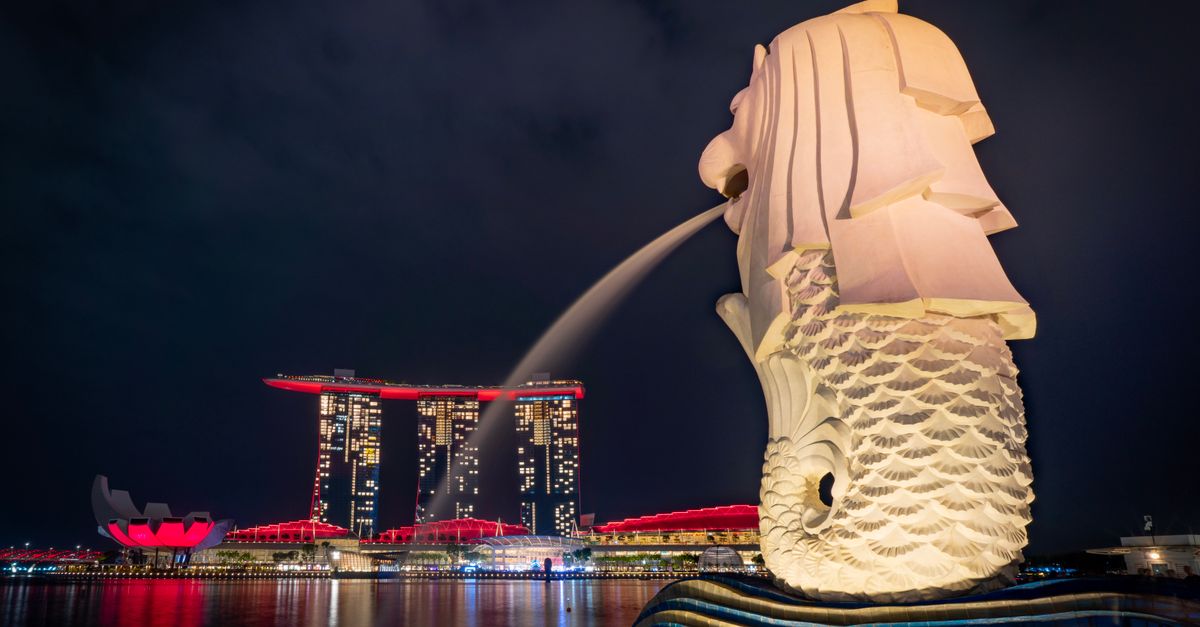
Morning (8:30 AM): Start at the Merlion Park, Singapore's most recognizable landmark — a half-lion, half-fish statue that spouts water into the bay like a mythological fire hydrant. The original 8.6-meter Merlion has been here since 1972 and represents Singapore's origins as a fishing village (the fish tail) and its original name Singapura, meaning "lion city" in Sanskrit (the lion head).
It is gloriously kitschy, everyone takes the same forced-perspective photo of the water arc going into their mouth, and you absolutely must do it too. The park offers the classic postcard view of the Marina Bay Sands hotel across the water — those three towers topped by a surfboard-shaped SkyPark are Singapore's architectural calling card.
The area around the Merlion is beautifully maintained, with the Fullerton Hotel (a former post office from 1928) providing a grand colonial backdrop. Walk along the waterfront promenade toward the Esplanade — Theatres on the Bay, a performing arts center with a distinctive durian-shaped exterior (the Singaporeans themselves call it "the durian") that houses a concert hall with acoustics rivaling the world's best.
Mid-Morning (10:00 AM): Cross the Helix Bridge — a pedestrian bridge designed to resemble the structure of DNA, with a latticed stainless steel canopy that is particularly photogenic — and walk to Gardens by the Bay, Singapore's S$1 billion garden masterpiece that opened in 2012 on 101 hectares of reclaimed land. The outdoor gardens are free and spectacular in their own right — the Supertree Grove, a cluster of 25-50 meter tall vertical gardens wrapped in over 200 species of plants, is the most photographed feature.
But the ticketed conservatories are where Gardens by the Bay becomes truly extraordinary. A combined ticket for the Cloud Forest and Flower Dome costs S$32 for adults (S$18 for children).
Enter the Cloud Forest first — the moment you walk through the doors, you are hit by a 35-meter indoor waterfall cascading down a mountain covered in tropical orchids, ferns, and pitcher plants. The temperature drops dramatically (it is maintained at 23-25 degrees, a blessed relief from the heat outside), and a series of aerial walkways carry you around and through the cloud mountain at dizzying heights.
The displays explain climate change and the fragile ecosystems of tropical highlands — it is educational, beautiful, and genuinely thrilling when you are walking on a glass-bottomed skywalk 35 meters up. The Flower Dome, the world's largest glass greenhouse, recreates Mediterranean, semi-arid, and subtropical climates under a column-free glass roof that spans 1.2 hectares.
The seasonal flower displays change throughout the year — over 32,000 plants from every continent are displayed in landscapes ranging from Australian outback to South African succulent gardens. Allow 2-2.5 hours for both conservatories combined.
Lunch (12:30 PM): Take the MRT to Raffles Place and walk to Lau Pa Sat (18 Raffles Quay), one of Singapore's most famous hawker centers housed in a stunning octagonal Victorian cast-iron structure built in 1894 as a wet market. The building was shipped in pieces from Glasgow, Scotland, and is a national monument.
Inside, dozens of hawker stalls serve Singapore's greatest hits at worker's canteen prices. Essential orders: chicken rice (S$4-6), char kway teow (S$5-7), nasi lemak (S$4-6), and popiah (fresh spring rolls, S$2-3).
In the evening, the outdoor Boon Tat Street closes to traffic and becomes Satay Street — rows of satay vendors grilling skewers of marinated chicken, mutton, and beef over charcoal — but for lunch, the indoor stalls are the draw. The stall names rotate, but follow the queues — Singaporeans are militant about food quality, and a long line is the most reliable indicator of a good stall.
Total lunch cost: S$8-12 for a feast.
Afternoon (2:30 PM): Return to Marina Bay for the Marina Bay Sands SkyPark Observation Deck (S$26 for adults, S$20 for children). The SkyPark sits 200 meters above the city atop the three hotel towers and offers a 360-degree panorama that stretches from the shipping lanes of the Strait of Singapore to the towers of Johor Bahru in Malaysia across the causeway.
On a clear day, you can see the Indonesian islands of the Riau Archipelago. The infinity pool that everyone has seen on Instagram is reserved for hotel guests only (room rates start at S$600/night), but the observation deck provides essentially the same view.
The best time to visit is late afternoon — you get both the daylight panorama and the beginning of the sunset. After descending, explore the Shoppes at Marina Bay Sands — a luxury shopping mall built around an indoor canal where you can take a sampan (boat) ride through the mall for S$15.
It is absurdly extravagant, which is very Singapore. The ArtScience Museum (S$19-24 depending on exhibition), housed in the lotus-shaped building at the base of the towers, hosts excellent rotating exhibitions — the permanent "Future World" exhibition by TeamLab is particularly impressive.
Evening (7:30 PM): Return to the waterfront for the Spectra light and water show at Marina Bay — a free 15-minute spectacle of fountains, lasers, projected images, and music that takes place nightly at 8:00 PM and 9:00 PM (with an additional 10:00 PM show on Fridays and Saturdays). The best viewing spot is from the Event Plaza in front of the Shoppes at Marina Bay Sands, or from the Merlion Park across the bay.
The show is genuinely impressive — the water jets shoot 12 meters high while lasers create patterns across the spray, and the music ranges from orchestral to electronic. After the show, walk along the waterfront to the Helix Bridge for night views of the illuminated skyline.
For dinner, head to Makansutra Gluttons Bay, an open-air hawker center on the Esplanade waterfront with perhaps the best location of any food court in the world — eat satay, oyster omelet, and barbecued stingray (a Singaporean specialty, S$12-15) with the Marina Bay skyline twinkling before you.
Chinatown, Little India & Kampong Glam
Morning (8:30 AM): Take the MRT to Chinatown station and begin at the Buddha Tooth Relic Temple and Museum (288 South Bridge Road), a magnificent five-story Tang Dynasty-style temple that was completed in 2007 at a cost of S$75 million. Admission is free.
The temple is named for what is claimed to be a tooth of the Buddha, recovered from a collapsed stupa in Myanmar and now housed in a 420-kilogram solid gold stupa on the fourth floor. Whatever your views on relics, the temple itself is extraordinary — the main prayer hall gleams with gold leaf and thousands of Buddha figurines, the rooftop garden features a 4.5-meter prayer wheel that is the largest in Southeast Asia, and the museum floors display a serious collection of Buddhist art and artifacts from across Asia.
Shoes must be removed at the entrance, and shoulders and knees should be covered (sarongs are available to borrow for free if needed). Allow 45-60 minutes for a thorough visit.
The morning is the best time, when monks are chanting in the prayer hall and the incense smoke drifts through golden light.
Mid-Morning (10:00 AM): Walk through Chinatown's streets, which preserve a fascinating layering of old and new Singapore. The shophouses on Pagoda Street, Temple Street, and Trengganu Street — two and three-story buildings with ornate facades, tiled facades, and covered walkways called "five-foot ways" — are among the last surviving examples of Singapore's pre-war architecture.
Many have been restored and repurposed as boutique hotels, bars, and galleries, but the traditional businesses endure too — Chinese medicine shops with drawers of dried herbs, goldsmiths, and tea merchants. Stop at the Chinatown Heritage Centre (S$18) for a deeply affecting recreation of the cramped living conditions that Chinese immigrants endured in these shophouses during the 1950s — entire families in spaces the size of a parking spot, separated by curtains and wooden partitions.
It provides crucial context for understanding modern Singapore's obsession with housing and order. For mid-morning fuel, stop at one of the traditional coffee shops (kopitiam) for kopi — Singaporean-style coffee brewed with a cotton sock filter, roasted with butter and sugar, and served strong and sweet with condensed milk.
A cup costs S$1.50-2.50 and is utterly addictive.
Lunch (11:30 AM): Eat at Chinatown Complex Food Centre (335 Smith Street), the largest hawker center in Singapore with over 260 stalls spread across two floors. This is where Singaporeans eat, not tourists — the ground floor is a wet market selling live seafood, the second floor is a maze of hawker stalls, and the prices are rock-bottom.
The star stall is Hong Kong Soya Sauce Chicken Rice & Noodle — formerly the world's cheapest Michelin-starred meal at S$2 a plate (now S$3.80 after the Michelin fame, still absurdly cheap). The chicken is silky, the soy sauce glaze is fragrant with star anise and cinnamon, and it remains one of the best things you will eat in Singapore.
Also try the char kway teow (flat rice noodles stir-fried with dark soy sauce, prawns, cockles, lap cheong sausage, and bean sprouts over high wok heat, S$4-5) and bak chor mee (minced pork noodles, S$4). The etiquette is simple: find a table first (use a tissue packet to reserve it — this is the Singaporean custom, known as "choping"), then queue at the stalls you want.
Afternoon (1:30 PM): Take the MRT two stops to Little India (station: Little India or Farrer Park). The sensory shift from Chinatown is immediate and dramatic — the air smells of jasmine garlands, turmeric, and incense; Tamil music spills from shops selling gold jewelry and silk saris; and the street-level energy is louder, more colorful, and more chaotic than anywhere else in Singapore.
Start at Tekka Centre (665 Buffalo Road), Little India's main hawker center and wet market. The wet market downstairs is a sensory spectacle — butchers, fishmongers, and flower sellers crammed into a covered space that feels closer to Chennai than anywhere in Southeast Asia.
Upstairs, the hawker stalls serve Indian and Malay food at prices that border on charitable: a plate of briyani (S$5-7), roti prata with fish curry (S$2-3), and teh tarik (pulled tea, S$1.50) make this one of the best-value hawker centers in the city. Walk to the Sri Veeramakaliamman Temple (141 Serangoon Road), a Hindu temple dedicated to the goddess Kali that has served Singapore's Indian community since 1855.
The gopuram (entrance tower) is a kaleidoscope of painted Hindu deities — Shiva, Brahma, Vishnu, and hundreds of attendant figures. Entry is free, but remove your shoes and remain respectful during prayer times.
The interior is rich with incense, marigold garlands, and the sound of temple bells.
Late Afternoon (3:30 PM): Walk or take the MRT one stop to Kampong Glam (station: Bugis), Singapore's Malay and Arab quarter. This is the oldest urban quarter in Singapore — Sultan Hussein Shah's istana (palace) was here before Raffles arrived.
The neighborhood centers on the magnificent Sultan Mosque (Masjid Sultan), originally built in 1824 and rebuilt in its current Indo-Saracenic form in 1932. The golden onion dome is Singapore's most distinctive religious landmark.
The mosque is free to enter outside of prayer times — non-Muslims should enter through the side entrance, and robes are available for those who need to cover up. The prayer hall, with its enormous crystal chandelier and carpet woven in Saudi Arabia, is serene and beautiful.
After the mosque, explore Haji Lane — Singapore's narrowest street, now a vibrant lane of independent boutiques, vintage shops, street art, and hipster cafes squeezed into pre-war shophouses. The murals and graffiti here are among Singapore's best — the entire lane is essentially an open-air gallery.
Arab Street itself is lined with textile shops selling batik, Persian carpets, and basket ware. Stop at Maison Ikkoku (20 Kandahar Street) for a masterfully crafted cocktail (S$22-28) in a beautifully restored shophouse, or at Zam Zam (697 North Bridge Road), a legendary murtabak shop that has been operating since 1908 — their mutton murtabak (a stuffed, pan-fried flatbread, S$7-10) is one of Singapore's essential eats.
Evening (6:30 PM): Return toward the city center for dinner. For an unforgettable experience, take the MRT to Clarke Quay and walk along the Singapore River to Boat Quay, a curved row of restored shophouses facing the river.
The restaurant scene here is touristy but atmospheric. For something more authentic, head to Newton Food Centre (500 Clemenceau Avenue North), a large open-air hawker center that was featured in the film Crazy Rich Asians.
The stalls here are excellent for seafood — barbecued sambal stingray (S$12-15), satay (S$0.70 per stick, order 10-20), and fried carrot cake (S$4-5, not actually made with carrots — it is fried cubes of radish cake with egg and sweet dark soy sauce). Be aware that Newton is slightly more expensive than neighborhood hawker centers, and some stalls may try to upsell tourists on large seafood platters — check prices before ordering and stick to the stalls with posted menus and long local queues.
Sentosa Island & Orchard Road
Morning (9:00 AM): Dedicate today's first half to Sentosa Island, Singapore's purpose-built resort island connected to the mainland by road, monorail, cable car, and a pedestrian boardwalk. The Sentosa Express monorail (S$4) departs from VivoCity mall (MRT: HarbourFront).
You have three main options for the day, depending on your interests and budget.
Option A: Universal Studios Singapore (S$81 adults, S$61 children). Southeast Asia's only Universal Studios park features 28 rides across seven themed zones, including the Battlestar Galactica dueling roller coasters (the tallest in Southeast Asia at 42.5 meters), the Transformers 3D ride, and the Revenge of the Mummy indoor coaster. The park is relatively compact compared to the US parks, which means you can cover everything in 5-6 hours without rushing.
Arrive at opening (10 AM) and head to the back of the park first — Sci-Fi City and Ancient Egypt are the most popular zones, and doing them first while crowds build at the entrance saves significant queue time. The Express Pass (S$50-80 depending on the day) lets you skip queues on most major rides and is worth it on weekends and holidays.
Option B: S.E.A. Aquarium (S$43 adults, S$33 children). One of the world's largest aquariums, with over 100,000 marine animals across 49 habitats. The centerpiece is the Open Ocean habitat — a 36-meter-wide, 8.3-meter-tall viewing panel (the largest in the world when it opened) that frames a mesmerizing blue void of manta rays, leopard sharks, and enormous groupers drifting past. There is a deliberate meditative quality to standing before this panel — people sit on the floor and stare for twenty minutes, thirty minutes, losing themselves in the blue.
The Shark Seas section houses over 200 sharks, and the coral garden habitats are exquisitely designed. Allow 2-3 hours for a thorough visit.
Option C: Free Sentosa. If you prefer to save your budget, Sentosa has excellent free beaches — Palawan Beach is the most popular, with a suspension bridge to a small islet that is technically the southernmost point of continental Asia. Siloso Beach has a more lively vibe with beach bars and volleyball.
The Sentosa Boardwalk from VivoCity is a pleasant 700-meter walk that is itself free. The Fort Siloso (free admission) is a preserved British coastal fort from the 1880s, with tunnels, gun emplacements, and exhibits on the fall of Singapore during World War II — it is a sobering contrast to the resort atmosphere and a genuinely interesting historical site.
Lunch (1:00 PM): Eat on Sentosa at the Malaysian Food Street in the Resorts World complex, which recreates a Penang street food hawker setting with stalls serving Hainanese chicken rice, laksa, satay, and nasi lemak at reasonable prices (S$6-12 per dish). Or return to the mainland and eat at VivoCity's food court, which has a strong selection of hawker-style stalls at lower prices than Sentosa.
Afternoon (3:00 PM): Take the MRT to Orchard Road (station: Orchard), Singapore's 2.2-kilometer shopping boulevard. Even if shopping is not your primary interest, Orchard Road is worth walking for the sheer scale of consumption on display.
The street is lined with enormous malls — ION Orchard (high-end international brands and an excellent basement food court), Ngee Ann City (home to Takashimaya and Singapore's largest Kinokuniya bookstore, which stocks an extraordinary range of English-language books on Asia), and 313@Somerset (mid-range brands and local designers). The air conditioning alone makes it a welcome afternoon refuge.
If you need a break from retail, walk five minutes to the Singapore Botanic Gardens (MRT: Botanic Gardens) — a UNESCO World Heritage Site that is one of only three tropical gardens on the heritage list. The gardens are free and immaculately maintained, with 82 hectares of primary rainforest, sculpted gardens, and swan-filled lakes. The National Orchid Garden (S$5) contains over 1,000 orchid species and is the finest orchid collection in the world — Singapore's national flower, the Vanda Miss Joaquim, is the star.
Evening (6:30 PM): For your final Singapore dinner, head to Newton Food Centre (if you did not visit last night) or, for a more local experience, take the MRT to Old Airport Road Food Centre (51 Old Airport Road), widely considered Singapore's best hawker center by locals. The stalls here are legendary: Lao Fu Zi Fried Kway Teow for char kway teow (S$5), Toa Payoh Rojak for rojak (a salad of fruits, vegetables, dough fritters, and tofu in a thick sweet shrimp paste sauce, S$4), and Dong Ji Fried Hokkien Prawn Mee for Hokkien mee (thick yellow noodles fried with prawns, squid, and pork lard in a prawn-shell stock, S$5-6).
After dinner, take the MRT back to Marina Bay for one final walk along the waterfront — Singapore at night, all illuminated glass and reflected light, is a fitting farewell image.

Budget Breakdown (Per Person, 3 Days)
| Category | Budget (S$) | Mid-Range (S$) | Luxury (S$) |
|---|---|---|---|
| Accommodation (3 nights) | S$150 | S$450 | S$1,800 |
| Food & Drinks | S$60 | S$150 | S$500 |
| Transport (MRT/bus) | S$15 | S$30 | S$100 |
| Activities & Entry Fees | S$32 | S$120 | S$300 |
| Total 3 Days | S$257 | S$750 | S$2,700 |
Essential Practical Tips
Weather and What to Wear
Singapore is 1 degree north of the equator, which means there are no seasons — just hot (30-34°C), slightly less hot (27-30°C in the evening), and raining. The heaviest rainfall occurs from November to January during the northeast monsoon, but showers can strike any day of the year, usually in intense 30-60 minute bursts in the afternoon.
Dress for heat and humidity: lightweight, breathable fabrics (cotton and linen), comfortable walking shoes that can handle wet surfaces, and always carry a compact umbrella or poncho. Sunscreen is essential even on overcast days — the UV index at the equator is brutal.
Malls and MRT stations are aggressively air-conditioned (often 18-20°C), so carrying a light cardigan or layer for indoor spaces prevents the jarring hot-cold transitions from becoming uncomfortable.
Money and Costs
Singapore uses the Singapore dollar (S$), which trades at roughly S$1.35 to US$1. The city accepts cards almost everywhere — even most hawker stalls now have PayNow QR codes. However, carrying S$50-100 in cash is wise for older hawker stalls and small shops.
ATMs are everywhere, and Changi Airport has competitive currency exchange counters. Singapore is expensive for accommodation and attractions but remarkably cheap for food — a hawker center meal costs S$4-8, while a restaurant meal runs S$25-60.
Alcohol is heavily taxed and is the biggest budget trap — a beer at a bar costs S$12-18, and cocktails run S$20-30. Buy alcohol at duty-free on arrival (2 liters per person) or from supermarkets (beer from S$3 per can) to keep costs reasonable.
Safety and Etiquette
Singapore is one of the safest cities in the world — violent crime is virtually nonexistent, and petty theft is rare. Women can walk alone at any hour in any neighborhood without concern.
The biggest "dangers" are sunburn, dehydration, and accidentally breaking one of Singapore's famously strict rules. Beyond the well-known bans, be aware that feeding pigeons is illegal (S$500 fine), connecting to someone else's WiFi without permission is technically a criminal offence, and nude behavior visible from a window (even in your hotel room) is an offence under the Miscellaneous Offences Act.
In practice, enforcement against tourists for minor infractions is rare, but the rules about littering, smoking in prohibited areas, and MRT food/drink are genuinely enforced. Respect religious sites by removing shoes, covering shoulders and knees, and staying quiet during prayer times.
Tipping is not expected or practiced in Singapore — a 10% service charge and 7% GST are automatically added to restaurant and hotel bills.
Singapore Food Guide: Hawker Centers and Must-Try Dishes Southeast Asia Budget Travel Guide Singapore Shopping Guide