Singapore is the city that works. In a region where traffic is chaos, infrastructure creaks, and bureaucracy moves at its own pace, Singapore functions with a precision that borders on the uncanny.
The MRT runs on time. The streets are clean — genuinely, spotlessly clean. The food is extraordinary and absurdly cheap.
The airport has been voted the world's best so many times that the award has become routine. And the city itself, despite being smaller than most people realize (just 50 kilometers east to west), packs in a density of experiences — cultural, culinary, architectural, natural — that rivals cities ten times its size.
But Singapore also operates under a social contract that surprises many first-time visitors. The rules are real. The fines are enforced.
Chewing gum is genuinely restricted. Jaywalking will cost you. And the cultural expectations around behavior in this multi-ethnic, multi-religious society are detailed and specific.
None of this makes Singapore rigid or unfriendly — in fact, the result is a city that feels remarkably safe, welcoming, and easy to navigate, even for solo travelers and families with young children. This guide covers everything you need to know for your first visit: the visa situation, the costs (which are more manageable than Singapore's expensive reputation suggests), the neighborhoods that match your interests and budget, the cultural dos and don'ts, and the practical details about transport, food, and connectivity that make Singapore one of the easiest cities in Asia to visit — once you understand how it operates.
Before You Go — Visa, Currency, and Connectivity
Visa and Entry Requirements
Singapore has a generous visa-free policy for most nationalities. Citizens of the US, UK, EU, Australia, Canada, Japan, South Korea, and many other countries can enter visa-free for up to 30 days (some nationalities get 90 days).
Your passport must be valid for at least six months from the date of entry. Indian passport holders require an e-visa, which can be applied for online through the Immigration and Checkpoints Authority (ICA) website — processing is typically fast, within 1-3 working days.
Since 2024, Singapore has introduced electronic arrival cards, replacing the old paper immigration forms. Complete the SG Arrival Card online (via the ICA website or MyICA app) within three days before your arrival — it's free and takes about five minutes.
Immigration at Changi Airport is fast and efficient, with automated e-gates available for many nationalities. Budget 15-20 minutes to clear immigration on a typical arrival.
Currency and Money
The Singapore dollar (SGD) trades at approximately 1.35 to 1 USD. Singapore is expensive by Southeast Asian standards but not by global city standards — it's cheaper than London, New York, or Tokyo for most everyday expenses, and dramatically cheaper for food (thanks to the hawker centre culture). Credit and debit cards are accepted everywhere, from luxury hotels to neighborhood coffee shops.
Contactless payment (Visa payWave, Mastercard contactless, Apple Pay, Google Pay) is universal — Singapore is one of the most cashless societies in Asia. However, carry S$50-100 for hawker centres (many stalls are cash-only, though this is changing), wet markets, and smaller traditional shops.
ATMs are readily available and charge minimal fees. The NETS payment system is Singapore's local cashless standard, increasingly accepting foreign cards as well. Tipping is not expected or customary in Singapore — most restaurants add a 10% service charge to the bill automatically, and no additional tip is needed.
At hawker centres, there is no tipping at all.
SIM Card and Connectivity
Singapore's three main operators — Singtel, StarHub, and M1 — all offer tourist SIM cards at Changi Airport. The Singtel hi! Tourist SIM is the most popular, starting at S$15 for a card with 100 GB of local data valid for 7 days, plus international calling minutes.
StarHub and M1 offer similar packages at competitive prices. SIM cards are available at the airport arrivals hall (look for the telco counters or 7-Eleven stores) and at most convenience stores across the city.
You'll need your passport for registration. Singapore's mobile coverage is excellent — 4G and 5G coverage blankets the entire island. Free WiFi (Wireless@SG) is available in most public spaces, MRT stations, malls, and government buildings.
Honestly, Singapore's connectivity is so comprehensive that a tourist SIM is almost optional if you're comfortable relying on WiFi — but having mobile data makes navigation and ride-hailing significantly more convenient.
Best Time to Visit
Singapore sits almost on the equator, meaning the weather is consistently hot and humid year-round: expect temperatures of 25-32°C every single day, with humidity regularly exceeding 80%. There is no bad time to visit in terms of temperature — it's always hot.
The driest months are February through April, when rainfall is at its lowest and you're less likely to encounter the heavy afternoon downpours that characterize the rest of the year. The wettest months are November through January, during the northeast monsoon, when sudden intense rainstorms can drop heavy rain for an hour or two before clearing.
These storms rarely last all day and shouldn't deter you from visiting — just carry an umbrella or ducking into one of the city's endless malls during a downpour is practically a local sport. June and July are the months affected by the regional haze from Indonesian forest fires, which can reduce air quality significantly.
Check the PSI (Pollutant Standards Index) readings before booking a June-July trip if air quality is a concern. Major events worth timing your visit around include Chinese New Year (January/February, spectacular celebrations in Chinatown), the Singapore Food Festival (July), and the Formula 1 Singapore Grand Prix (September, the world's first night street race).
Changi Airport — An Attraction in Itself

Changi Airport has been voted the world's best airport so many times that listing the awards becomes tedious. What matters is what this means for you as an arriving visitor: the airport itself is worth at least an hour of exploration.
The crown jewel is Jewel Changi Airport, a massive glass dome connecting Terminals 1, 2, and 3 that houses the Rain Vortex — the world's tallest indoor waterfall at 40 meters, cascading through a lush tropical garden. The waterfall is free to view and genuinely stunning, especially during the evening light and sound show.
Jewel also contains a canopy park (admission S$5-26 depending on attractions), walking trails through indoor forests, over 280 shops, and a vast food court with some of Singapore's best hawker stalls. Beyond Jewel, the airport terminals themselves offer free movie theaters (Terminal 2 and 3), a swimming pool and jacuzzi (Terminal 1 transit area, free for transit passengers), a butterfly garden (Terminal 3, free), a sunflower garden, and art installations throughout.
If you have a layover at Changi, do not sit at your gate staring at your phone. This airport is an attraction, and it's free.
Getting from the Airport to the City
Changi Airport is in the east of Singapore, about 20 kilometers from the city center. The MRT (Mass Rapid Transit) is the cheapest and most reliable option: take the East-West Line from Changi Airport station directly to the city.
The journey to City Hall (for the Colonial District, Marina Bay) takes about 30 minutes; to Chinatown about 35 minutes; to Little India about 40 minutes with one transfer. The fare is S$2-3 depending on destination.
Trains run from approximately 5:30 AM to 11:30 PM. Use a Singapore Tourist Pass (S$22 for a 1-day pass, S$29 for 2 days, S$34 for 3 days) for unlimited MRT and bus travel, or simply tap your contactless credit/debit card at the gates — Singapore's transport system accepts foreign contactless cards directly.
Taxis from Changi to the city center cost S$20-40 depending on time of day and destination, with a S$3-5 airport surcharge. The journey takes 20-35 minutes depending on traffic.
Grab (the dominant ride-hailing app in Singapore) costs a similar amount and can be slightly cheaper during off-peak hours. For most visitors, the MRT is the clear winner: it's cheap, fast, air-conditioned, and drops you exactly where you need to be.
Where to Stay — Neighborhood Guide
Chinatown
Singapore's Chinatown is a compact, walkable district packed with history, food, and culture. The streets are lined with restored shophouses — colorful two-story buildings from the colonial era — many of which have been converted into boutique hotels, hostels, and restaurants.
The Chinatown Heritage Centre tells the story of the early Chinese immigrants, the Buddha Tooth Relic Temple is architecturally stunning, and the hawker centres here (Chinatown Complex Food Centre, Maxwell Food Centre, and Hong Lim Market) are legendary. Hotels range from excellent hostels at S$25-50 per dorm bed to mid-range boutique hotels at S$120-200 per night.
The Chinatown MRT station puts you on the North-East and Downtown lines with easy connections everywhere. The neighborhood is lively during the day and atmospheric at night, with the Chinatown Food Street offering outdoor dining under decorative lanterns.
Best for: budget and mid-range travelers who want central access, great food, and cultural atmosphere.
Little India
One of Singapore's most vibrant and colorful neighborhoods, Little India is a sensory overload of flower garlands, spice shops, temple bells, Bollywood music, and some of the cheapest and most authentic food in the city. Tekka Centre, the neighborhood's main hawker centre, serves outstanding Indian, Malay, and Chinese food at remarkably low prices — a full meal for S$3-5 is entirely normal.
The Sri Veeramakaliamman Temple on Serangoon Road is one of Singapore's oldest Hindu temples, and the surrounding streets are packed with sari shops, gold jewelry stores, and traditional Indian grocery shops. Hotels are among the cheapest in central Singapore: budget options start at S$60-80 per night, and excellent mid-range hotels run S$100-160.
The area is well connected via Little India and Farrer Park MRT stations. The atmosphere is lively and slightly chaotic by Singapore standards — which means it's still perfectly organized by any other city's standards.
On Sunday evenings, the neighborhood fills with South Asian migrant workers on their day off, creating a festive street atmosphere. Best for: budget travelers, food enthusiasts, and visitors who want Singapore's most culturally immersive neighborhood.
Bugis and Kampong Glam
The area around Bugis MRT station combines the Arab Quarter (Kampong Glam) with its stunning Sultan Mosque, Haji Lane (a narrow street of independent boutiques, cafes, and street art), and Bugis Street (a massive, affordable shopping market). The neighborhood has a youthful energy, with good mid-range hotels at S$100-180 per night and several well-regarded hostels.
The National Library and several museums are within walking distance, and the area is a 10-minute walk from Marina Bay. Haji Lane is one of Singapore's most photographed streets, with colorful murals and trendy cafes.
Kampong Glam's Arab Street has traditional textile shops, perfume stores, and Middle Eastern restaurants. Best for: younger travelers who want culture, street art, and a central location with character.
Marina Bay
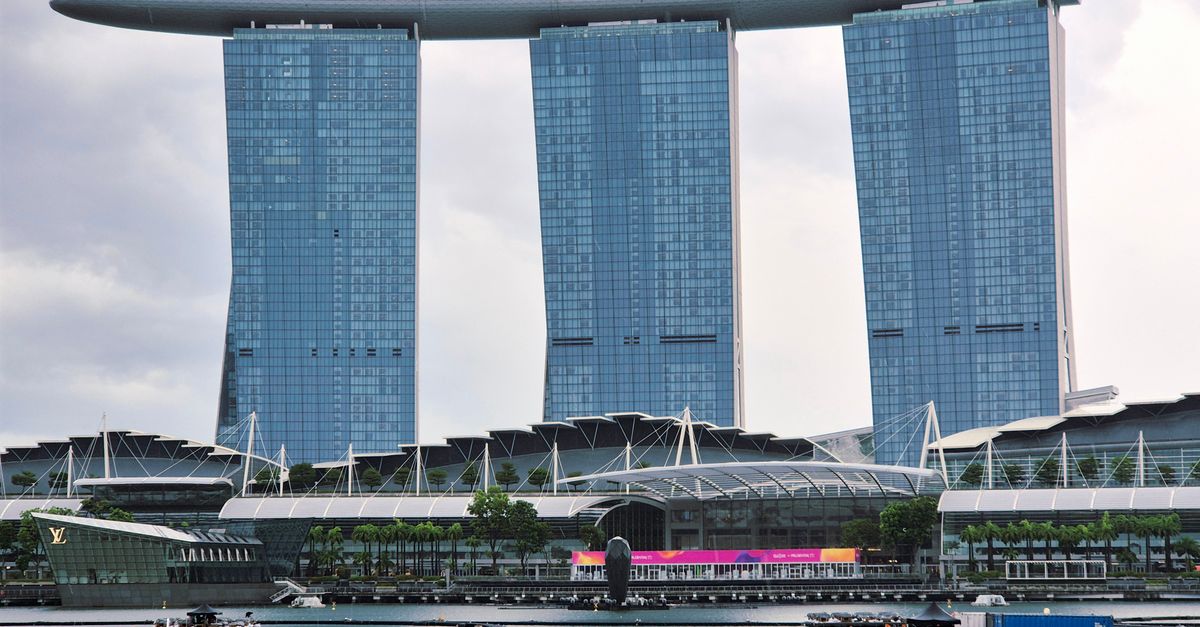
The postcard neighborhood: Marina Bay Sands, the ArtScience Museum, Gardens by the Bay, and the Merlion are all here. Hotels in this area are predominantly luxury properties (Marina Bay Sands itself starts at S$400+ per night, and other options like the Ritz-Carlton and Mandarin Oriental are similarly priced).
The area is spectacular to look at and walk around, but it's more of a business and tourism district than a neighborhood with character. Dining is largely hotel-based and expensive (though the food courts inside the malls are surprisingly affordable).
Best for: luxury travelers who want the iconic Singapore views and don't mind paying for them.
Top 10 Must-See Experiences
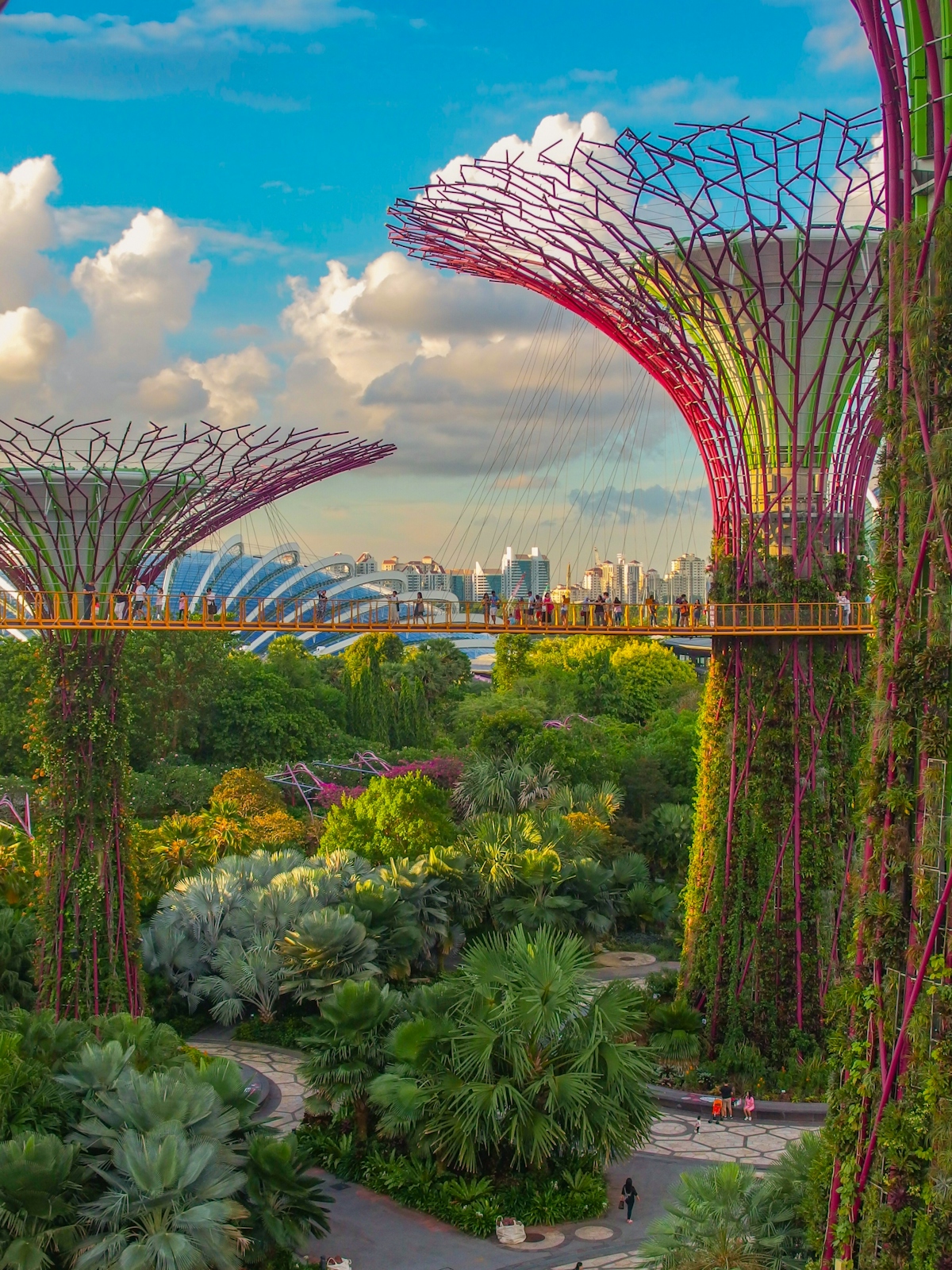
1. Gardens by the Bay — Singapore's most ambitious green project: a 101-hectare garden complex featuring the iconic Supertree Grove (18 tree-shaped vertical gardens up to 50 meters tall), the Cloud Forest (a 35-meter indoor waterfall inside a cooled conservatory), and the Flower Dome (the world's largest glass greenhouse).
The Supertree Grove is free to walk through; the OCBC Skyway connecting two Supertrees costs S$14. The two conservatories (Cloud Forest and Flower Dome) cost S$32 combined. The Supertree light show (Garden Rhapsody) runs twice nightly at 7:45 PM and 8:45 PM and is free.

2. Hawker Centre Crawl — Singapore's hawker centres are the beating heart of the city's food culture, and a crawl through the best ones is a must-do experience. Start at Maxwell Food Centre (try Tian Tian Hainanese Chicken Rice, S$5-6), continue to Chinatown Complex Food Centre (the largest hawker centre in Singapore, with over 260 stalls), and finish at Lau Pa Sat (a stunning Victorian cast-iron market building in the CBD).
The entire crawl costs under S$20 for multiple dishes and gives you a better understanding of Singapore's culture than any museum.
3. Marina Bay Sands SkyPark — The rooftop observation deck of Singapore's most iconic building offers 360-degree views of the city, the strait, and the Indonesian islands beyond. Entry: S$26 for the observation deck.
Hotel guests have access to the famous infinity pool, but non-guests can only visit the observation deck. Visit at sunset for the best lighting, and stay for the Spectra light and water show at the bay (free, nightly at 8 PM and 9 PM).
4. Singapore Botanic Gardens — A UNESCO World Heritage Site and one of the finest tropical gardens in the world. The 82-hectare gardens are free to enter and contain primary rainforest, swan lakes, a ginger garden, and walking trails that feel like a jungle escape in the middle of the city.
The National Orchid Garden (S$5 entry) within the Botanic Gardens houses over 1,000 orchid species and is one of the most beautiful garden spaces in Southeast Asia. The gardens are a 5-minute walk from Botanic Gardens MRT station.
5. Sentosa Island — Singapore's resort island, connected to the mainland by monorail, cable car, or a pedestrian boardwalk. Attractions include Universal Studios Singapore (S$81 adult), the S.E.A.
Aquarium (S$41), Adventure Cove Waterpark (S$38), Skyline Luge (S$25-50), several beaches, and the Sentosa Nature Discovery trails. A full day on Sentosa easily fills itself, and the island is worth visiting even just for the free beaches and the scenic cable car ride (S$35 round trip from Mount Faber).
6. Chinatown Heritage Centre — A beautifully restored museum inside three original shophouses that recreates the living conditions of early Chinese immigrants to Singapore — cramped cubicles, opium dens, and the harsh realities of coolie life.
Entry: S$18. Small but powerful, this museum provides essential context for understanding Singapore's identity and the immigrant experience that built the nation. Combine with a walking tour of Chinatown's temples and food centres.
7. National Gallery Singapore — Housed in the former Supreme Court and City Hall buildings, this gallery contains the world's largest public collection of Southeast Asian art, spanning from the 19th century to the present.
Entry: S$20 for international visitors. The building itself is architectural heritage, and the rooftop offers excellent views of the Padang and Marina Bay. The gallery frequently hosts major international exhibitions alongside its permanent collection.
8. Pulau Ubin — A small island off Singapore's northeast coast that preserves the kampong (village) atmosphere that defined Singapore before its transformation into a modern city-state. Take a bumboat from Changi Point Ferry Terminal (S$4 each way, 15-minute crossing) and rent a bicycle (S$8-15 for the day) to explore dirt trails through coconut groves, mangroves, and abandoned quarries.
Chek Jawa Wetlands, on the island's eastern tip, is a pristine coastal boardwalk through mangroves and seagrass beds. Pulau Ubin has no cars, no malls, and no air conditioning — just nature, old wooden houses, and a glimpse of Singapore's past.
9. Night Safari — The world's first nocturnal zoo, set in a tropical forest where over 900 animals from 100 species are exhibited in naturalistic habitats lit by subtle moonlighting. The tram ride through the park (included in the S$55 entry fee) is the main experience, but the walking trails offer closer encounters with some animals.
The Creatures of the Night show (included, multiple nightly sessions) demonstrates animal behaviors and conservation work. Combine with the adjacent Singapore Zoo (S$48) and River Wonders (S$40) for a full day of wildlife.
10. Clarke Quay — Singapore's riverside entertainment district, with restored warehouse buildings housing restaurants, bars, and clubs along the Singapore River. The atmosphere is lively, the drinks are expensive by Singapore standards (S$15-25 for cocktails), but the riverside setting is beautiful and the energy is infectious.
For a more affordable experience, get a drink at one of the bars and simply walk along the river, which is beautifully lit at night. The nearby Robertson Quay offers a quieter, more upscale alternative with excellent restaurants.
Etiquette — The Fines Culture and Beyond

The Rules Are Real
Singapore's reputation as a "fine city" is not a joke — there are actual financial penalties for behaviors that would barely merit a raised eyebrow elsewhere. Chewing gum is restricted: you cannot import it (exceptions for dental or nicotine gum from a pharmacy), and selling it is prohibited.
The rationale: gum on MRT doors and seats was causing maintenance problems and delays. Littering carries a fine of S$300 for first offense, rising to S$1,000 for repeat offenders, and persistent litterers can be sentenced to community service (the highly visible Corrective Work Order, picking up trash in a bright vest).
Jaywalking (crossing a road within 50 meters of a designated crossing) is a S$50 fine. Smoking is prohibited in most indoor and many outdoor spaces, including within 5 meters of building entrances, at bus stops, and in parks — fines of S$200-1,000.
Eating and drinking on the MRT is prohibited and enforced: S$500 fine. Taking durian (the notoriously pungent tropical fruit) on public transport or into most hotels and malls is prohibited.
The point here is not that Singapore is a police state — it's that the rules are clearly posted, consistently enforced, and accepted by the population as the price of living in a city that functions this smoothly. As a visitor, simply follow the posted rules and you'll have zero issues.
Multi-Cultural Sensitivity
Singapore is a multi-ethnic society — Chinese (76%), Malay (15%), Indian (7.5%), and others — and the government maintains a careful balance between these communities. Each community's major religious and cultural festivals are public holidays, and the neighborhoods (Chinatown, Little India, Kampong Glam) preserve distinct cultural identities.
When visiting temples, mosques, or churches, dress modestly and remove shoes where indicated. At Hindu temples, remove shoes and avoid touching religious statues or offerings. At mosques, non-Muslims can usually visit outside prayer times but should cover arms and legs (robes are often provided).
The racial harmony that Singapore maintains is a point of national pride, and casual racial remarks or stereotyping, even intended as jokes, are taken very seriously. Singlish (Singapore English, blending English with Malay, Mandarin, Tamil, and Hokkien words and grammar) is the informal lingua franca and a source of national identity.
You'll hear "lah," "lor," "can," and "shiok" constantly. Don't try to imitate it — just enjoy it.
Safety — The Safest City in Asia
Singapore consistently ranks as the safest city in Asia and one of the safest in the world. Violent crime is exceptionally rare, and petty crime (pickpocketing, theft) is uncommon even by developed-world standards.
Women can walk alone at night in virtually any neighborhood without concern. The MRT is safe at all hours of operation. Taxis and Grab rides are metered and regulated.
Scams targeting tourists are rare — Singapore does not have the scam culture that exists in some other Southeast Asian cities. The main safety consideration is the heat: Singapore's equatorial climate means heat exhaustion is a real risk, especially for visitors from cooler climates.
Drink water constantly (water fountains are everywhere and tap water is safe to drink), wear sunscreen, and duck into air-conditioned spaces regularly. The sun's UV intensity at the equator is significantly higher than in temperate climates, and sunburn happens fast. Medical care in Singapore is world-class but expensive for non-residents — travel insurance is essential.
Government hospitals (SGH, NUH, Tan Tock Seng) are excellent and more affordable than private hospitals for non-emergency care.
Essential Apps for Singapore
MyTransport.SG — The official transport app from the Land Transport Authority. It provides real-time bus arrival times at every bus stop in Singapore, MRT maps with service status, and a journey planner that covers buses, MRT, and walking.
The bus arrival feature alone is essential, as Singapore's bus network is extensive but the routes can be confusing without real-time information.
Grab — The dominant ride-hailing app in Singapore and all of Southeast Asia. Grab covers car rides, shared rides, and food delivery. Pricing is transparent and typically competitive with metered taxis.
The app also shows estimated arrival times and lets you track your driver in real time. Keep a credit card linked for cashless payment.
Chope — Singapore's leading restaurant reservation app. Many popular restaurants in Singapore require or strongly recommend reservations, especially on weekends. Chope covers everything from casual dining to fine dining, and you earn Chope-Dollars (loyalty points) with each reservation that can be redeemed for dining vouchers.
Essential for any restaurant that isn't a hawker centre.
Google Maps — Works excellently in Singapore, with accurate public transport directions, walking routes, and restaurant information. The app integrates with Singapore's bus system to show real-time arrival information directly in the map interface.
Klook — A Hong Kong-based activity booking app that consistently offers the best prices on Singapore attractions, often 10-20% below walk-up prices. Book Gardens by the Bay, Sentosa attractions, zoo tickets, and food tours through Klook for savings and skip-the-queue access.