Mexico City — Budget Guide
Budget Guide

Mexico City on a Budget — How to Visit Without Breaking the Bank

Mexico City is one of the world's great bargain capitals. A metro ride costs MXN 5 ($0.30). World-...

🌎 Mexico City, MX 📖 6 min read 💰 Budget budget Updated Jul 2026

Mexico City on a Budget: MXN 800-1,200 Per Day ($45-70)

Mexico City is one of the world's great bargain capitals. A metro ride costs MXN 5 ($0.30). World-class museums are free on Sundays. Street tacos cost MXN 15. A city that rivals Paris and Tokyo for cultural depth charges a fraction of either.

The key insight: Mexico City's best experiences are often its cheapest. The taco stand beats the restaurant. The free park outshines the paid attraction. The MXN 5 metro delivers you to neighborhoods that guided tours charge MXN 1,500 to visit.

Mexico City metro station entrance with orange line signage and pedestrians
The metro — MXN 5 takes you anywhere in a city of 22 million. Efficient, extensive, and absurdly cheap by any global standard.

Accommodation

Hostels: MXN 250-500 ($15-29) per night

Mexico City has excellent hostels concentrated in Roma, Condesa, and the Centro Historico. Hostel Home in Roma Norte and Hostel Mundo Joven Catedral downtown consistently deliver clean dorms with social atmospheres. Private rooms at hostels run MXN 700-1,200 ($41-70) — often better value than budget hotels because they include common areas, kitchens, and organized activities.

Hotels: MXN 600-1,500 ($35-88) per night

The Centro Historico offers the best hotel value — colonial buildings converted into budget hotels with rooftop terraces and central locations. Hotel Catedral and Hotel Isabel are institutions near the Zocalo with rooms from MXN 800 ($47). In Roma/Condesa, expect MXN 1,200-2,000 ($70-118) for comparable quality.

Airbnb: MXN 500-1,200 ($29-70) per night

Entire apartments in Roma, Condesa, and Juarez start at MXN 600 ($35) per night. Having a kitchen saves MXN 200+ daily on breakfast and snacks. The Juarez neighborhood offers Roma/Condesa proximity at lower prices — it's the value sweet spot.

Food: Eating Like a Local

Breakfast: MXN 30-80 ($2-5)

Skip cafe breakfasts. A panaderia visit for pan dulce and cafe de olla costs MXN 30-50 ($2-3). For a hot breakfast, market fondas serve chilaquiles (fried tortilla strips in salsa with cream, cheese, and chicken) for MXN 50-80 ($3-5). These portions are enormous and will carry you to lunch without snacking.

Lunch: MXN 60-100 ($4-6)

The comida corrida (fixed lunch menu) is Mexico's greatest deal. Between 1 PM and 4 PM, restaurants across the city serve a multi-course meal — soup, main course, rice and beans, agua fresca, and often dessert — for MXN 60-90 ($4-5). These are full, balanced meals that working Mexicans eat daily. Look for handwritten signs reading "Comida Corrida" or "Menu del Dia."

Dinner: MXN 60-150 ($4-9)

Street tacos are dinner. Four tacos al pastor (MXN 60-80), a quesadilla from a market stand (MXN 25-40), elotes (MXN 25-35). A full evening of street food rarely exceeds MXN 150 ($9). For sit-down dining, Roma Norte restaurants average MXN 200-400 ($12-24) per person.

Food Item Typical Price (MXN) USD
Street taco MXN 15-25 $0.90-1.50
Comida corrida (full lunch) MXN 60-90 $4-5
Tamale from street vendor MXN 15-20 $0.90-1.20
Cafe de olla (traditional coffee) MXN 20-30 $1.20-1.80
Beer at cantina MXN 35-60 $2-3.50
Mezcal pour MXN 50-100 $3-6

Transportation

Metro: MXN 5 ($0.30)

Twelve lines covering 226 km make the metro the backbone of budget travel. Buy a rechargeable card at any station — single rides are MXN 5 regardless of distance. The system runs from 5 AM (6 AM Sundays) to midnight. Rush hour (7-9 AM, 6-8 PM) is intensely crowded — the first two cars are reserved for women and children during peak times.

Metrobus: MXN 6 ($0.35)

Bus rapid transit lines complement the metro. Line 1 runs the length of Avenida Insurgentes (the longest avenue in the world) and connects Roma, Condesa, and Coyoacan. Requires a separate rechargeable card (MXN 16 for the card, load credit separately). Faster and less crowded than the metro for north-south trips.

Uber: MXN 40-150 ($2.50-9)

Uber is ubiquitous and affordable by international standards. A ride from Roma to the Centro Historico costs MXN 40-60 ($2.50-3.50). Use Uber for late-night travel, trips to outer neighborhoods, or when carrying valuables. Always confirm the plate number before getting in.

Chapultepec Park in Mexico City with trees and walkways filled with people
Chapultepec Park — 686 hectares of free green space containing museums, a castle, a lake, and a zoo. The city's best free attraction.

Free and Cheap Activities

Always Free

Chapultepec Park covers 686 hectares with walking paths, a boating lake, and the Chapultepec Zoo (free). The Zocalo and surrounding historic streets are an open-air museum of colonial and pre-colonial architecture. Every Sunday, Paseo de la Reforma closes to cars and opens to cyclists, runners, and walkers — a 15 km carless boulevard through the city center.

The Coyoacan neighborhood is free to wander — cobblestone streets, the plaza, the Viveros de Coyoacan nursery-park, and the Frida Kahlo house exterior (the museum charges entry). Roma Norte's Art Nouveau mansions and street art are best explored on foot.

Free on Sundays

Every government museum and archaeological site is free on Sundays. This includes the Museo Nacional de Antropologia (normally MXN 90), Templo Mayor (MXN 90), Chapultepec Castle (MXN 90), and dozens of smaller museums. Plan your Sunday around the museum you most want to visit and arrive at opening — lines form by 10 AM at popular sites.

Cheap Activities

Activity Regular Price Budget Tip
Museo Nacional de Antropologia MXN 90 ($5) Free on Sundays
Templo Mayor MXN 90 ($5) Free on Sundays
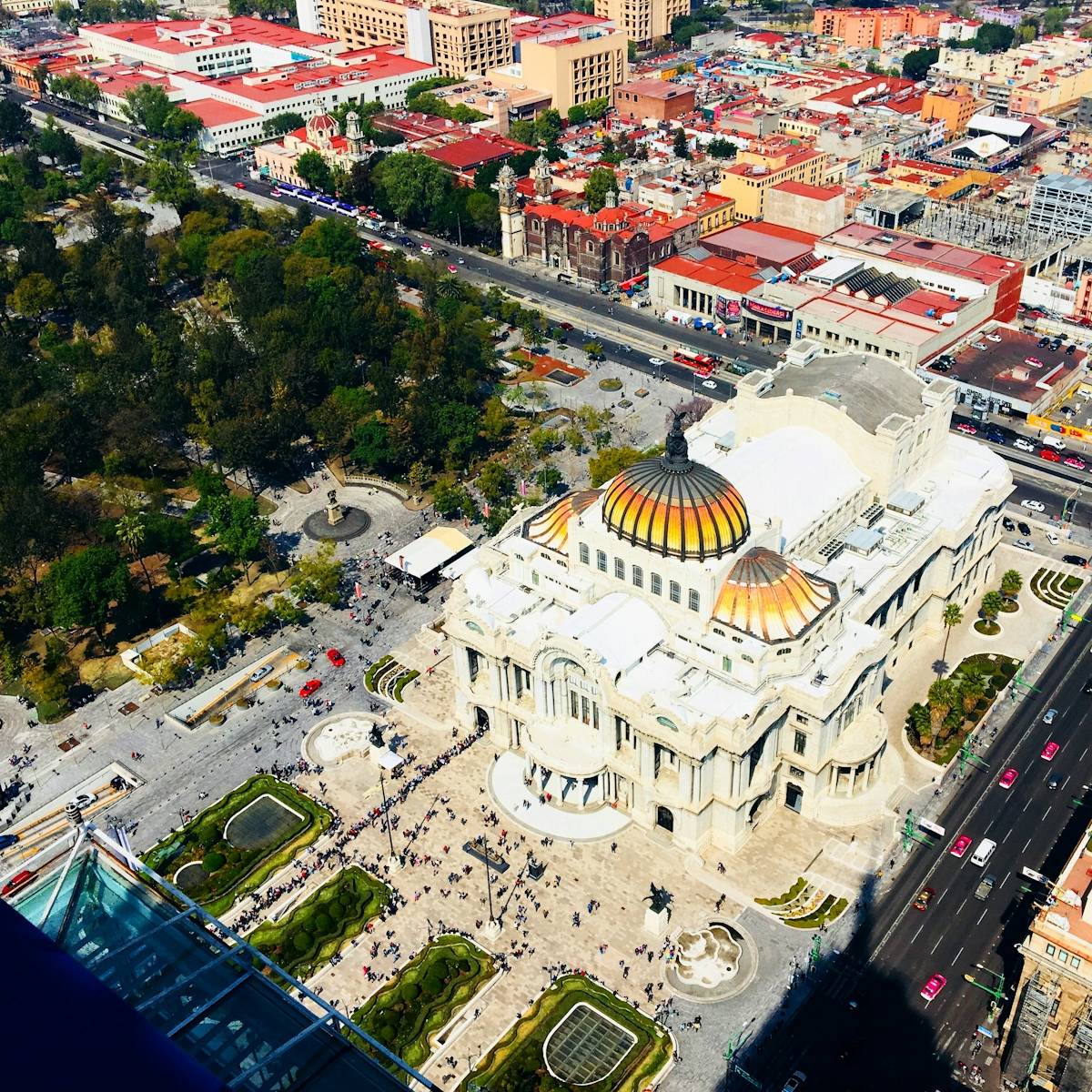
Palacio de Bellas Artes MXN 80 ($5) Free on Sundays
Teotihuacan (self-guided) MXN 90 + MXN 120 bus RT Free entry on Sundays, bus same price
Xochimilco trajinera MXN 500/boat/hour Split with other travelers (fits 12-15)
Ecobici bike rental MXN 110/week Best value transport for Roma/Condesa
Sunday Strategy: Plan your most expensive museum visits for Sunday when they're free, and use weekdays for free activities like parks and neighborhood walks. This alone saves MXN 300-500 ($18-29) per trip.

Daily Budget Breakdown

Category Budget (MXN 800/day) Comfortable (MXN 1,200/day)
Accommodation MXN 300-400 (hostel dorm) MXN 500-700 (private room/Airbnb)
Food MXN 200-250 (street food/markets) MXN 350-450 (mix of restaurants)
Transport MXN 20-40 (metro/metrobus) MXN 60-120 (metro + occasional Uber)
Activities MXN 100-200 (1-2 museums) MXN 200-350 (museums + events)
Mexican street food market with colorful stalls selling tacos and quesadillas
Market fondas — where comida corrida feeds you a multi-course meal for MXN 60-90. The best budget dining in any world capital.
Money Saving: Withdraw pesos from ATMs attached to banks (Scotiabank, HSBC, Banamex) to avoid standalone ATM surcharges. Always decline the "convert to your currency" option — it adds 5-8% in hidden fees. Carry cash for markets, street food, and metro cards.

Mexico City on a budget isn't a compromise — it's often the superior way to experience the city. The metro takes you everywhere. The street food is legendary. The museums are free on Sundays. At MXN 800-1,200 per day, you're spending less than a budget day in most European capitals while accessing a deeper, richer cultural experience. For the next budget capital, explore Bogota on $40 a day.

JC
JustCheckin Editorial Team
Researched, written, and verified by travel experts. Last updated Jul 07, 2026.
COMPLETE MEXICO CITY TRAVEL GUIDE

Everything you need for Mexico City

Daily Budget — Mexico City

Typical traveller costs · All figures in USD

🎒
$45
Budget/day
🏨
$110
Mid-range/day
$350
Luxury/day

💱 Mexican Peso (MXN) - 1 USD is approximately 17 MXN

Culture & Etiquette

👗
Dress Code
While Mexico City is generally modern and casual, it's respectful to dress modestly when visiting churches or more traditional neighborhoods. This means covering shoulders and knees. For everyday sightseeing, comfortable walking shoes are essential, and layers are recommended as temperatures can fluctuate throughout the day.
🤝
Local Customs
Greetings are important; a handshake is common, and close friends might hug or kiss on the cheek. 'Por favor' (please) and 'gracias' (thank you) go a long way. Punctuality is more relaxed than in some Western cultures, especially in social settings. Tipping is customary in restaurants (10-15%), for hotel staff, and tour guides.
⚠️
Watch Out For
Be aware of common scams like the 'overcharging taxi' (use official sitio taxis or ride-sharing apps), 'broken meter' (insist on the meter or agree on a price beforehand), 'distraction theft' (pickpockets working in pairs), and 'fake police' demanding money. Keep valuables secure and be wary of unsolicited help.
Dos & Don'ts
Do: Be polite and patient. Learn a few basic Spanish phrases. Be open to trying local food. Do not: Be loud or disruptive in public. Assume everyone speaks English. Take photos inside churches without permission. Haggle aggressively in formal shops (bargaining is more common in markets).
👩
Solo Female Safety
Mexico City is generally safe for solo female travelers, but standard precautions apply. Stick to well-lit, populated areas, especially at night. Avoid walking alone late at night in unfamiliar neighborhoods. Trust your instincts; if a situation feels uncomfortable, leave. Share your itinerary with someone back home. Use reputable transportation.
🏳️‍🌈
LGBTQ+ Notes
Mexico City is one of the most LGBTQ+-friendly cities in Latin America. Same-sex marriage is legal nationwide. The Zona Rosa is a well-known LGBTQ+ neighborhood with many bars, clubs, and cafes. While generally accepting, it's always wise to be aware of your surroundings, especially in less tourist-oriented areas.
📷
Photography
Photography is generally allowed in public spaces. However, avoid photographing military installations, government buildings, and people without their explicit permission. Inside churches, photography may be restricted or prohibited, especially during services. Always look for signage or ask if unsure.

Getting Around Mexico City

✈️
Airport Transfer
The most convenient way from Mexico City International Airport (MEX) to the city center is by authorized airport taxi, costing around 300-400 MXN for a one-way trip to most central areas. Alternatively, the Metro Line 5 connects directly to the airport, offering a much cheaper option at 5 MXN per ticket.
🚇
Public Transport
Mexico City boasts an extensive and affordable public transportation system, primarily consisting of the Metro (subway) and Metrobús (bus rapid transit). A single Metro ride costs 5 MXN, and Metrobús fares are also very low, making them excellent options for budget-conscious travelers.
📱
Taxi & Ride Apps
Uber and Didi are the most popular and reliable ride-sharing apps in Mexico City, offering competitive prices and the convenience of cashless payments. Always ensure the driver's name and car details match the app before starting your journey.
🛵
Rental Tips
Renting a car in Mexico City is generally not recommended due to heavy traffic, complex road systems, and parking challenges. If you do opt to rent, ensure you have an international driving permit and are comfortable navigating dense urban environments.
🗺️
Getting Around
Utilize apps like Google Maps or Citymapper for real-time navigation on public transport and walking routes. Be aware that traffic can be very heavy, especially during peak hours (7-10 AM and 5-8 PM), so factor in extra travel time for longer distances.

Frequently Asked Questions

It is generally not recommended for tourists to drink tap water in Mexico City. While locals may be accustomed to it, visitors can experience stomach upset. Stick to bottled water for drinking, brushing your teeth, and making ice cubes. Many restaurants will use purified water for ice, but it's always good to confirm if you're concerned.
For affordable data and calls, consider purchasing a local SIM card from providers like Telcel, AT&T Mexico, or Movistar. You can buy them at convenience stores (like Oxxo), official brand stores, or the airport. Telcel generally has the widest coverage. Look for prepaid tourist packages which are easy to activate.
Mexico City uses Type A and Type B electrical outlets, the same as in the United States and Canada. The standard voltage is 127V with a frequency of 60Hz. Most modern electronics (laptops, phone chargers) are dual-voltage and will work fine, but older appliances or hair dryers might require a voltage converter.
While many areas are lively and safe, it's best to exercise caution when walking at night. Stick to well-lit, populated areas, especially in tourist zones like Roma Norte, Condesa, or Polanco. Avoid walking alone in unfamiliar or poorly lit neighborhoods. Using ride-sharing apps or taxis is recommended for getting around after dark.
Bargaining is common and expected in traditional markets (mercados) and with street vendors. However, it is not practiced in established shops, department stores, restaurants, or hotels. For markets, start by offering about 50-70% of the initial asking price and negotiate respectfully from there.
Tipping is customary. In restaurants, tip around 10-15% for good service (check if a service charge is already included). Tip hotel bellhops and housekeeping staff a small amount (e.g., 20-50 pesos). Tour guides and drivers also appreciate tips. It's a way to show appreciation for good service.
Ride-sharing apps like Uber and Didi are widely available and generally safe and convenient. For taxis, it's best to use authorized 'sitio' taxis or hail them from official stands. Avoid hailing random taxis on the street, especially at night. Always confirm the fare or ensure the meter is running.
Be aware of common scams like the 'wrong change' scam (where a cashier shortchanges you), the 'broken taxi meter' scam (where the driver inflates the fare), or overly friendly strangers offering unsolicited help or tours. Trust your instincts and be polite but firm if you feel uncomfortable.
Mexico City has an extensive public transportation system. The Metro is very efficient and affordable for covering long distances. For shorter trips or areas not well-served by the Metro, consider Metrobús (bus rapid transit), local buses, or ride-sharing apps. Walking is also a great way to explore specific neighborhoods.
Knowing a few basic phrases can greatly enhance your experience. Essential phrases include: 'Hola' (Hello), 'Adiós' (Goodbye), 'Por favor' (Please), 'Gracias' (Thank you), 'De nada' (You're welcome), 'Cuánto cuesta?' (How much does it cost?), 'Dónde está el baño?' (Where is the bathroom?), and 'No entiendo' (I don't understand).
✨ Jiai — Travel AI Open Full →
Hi! I'm **Jiai**. Ask me about hotels, flights, activities or budgets for any destination.
✈️

You're on a roll!

Enter your email for unlimited Jiai access + personalised travel deals.

No spam. Unsubscribe anytime.