3-Day Mexico City Itinerary: Aztec Ruins, World-Class Museums & Pyramids
Mexico City is a capital of 22 million people built on the ruins of the Aztec empire, 2,240 meters above sea level in a valley ringed by volcanoes. It holds more museums than any city in the Americas, serves some of the best food on Earth, and manages to be both ancient and aggressively modern in the same breath.
Three days covers the historic core, the cultural powerhouses of Chapultepec and Coyoacan, and the pre-Aztec pyramids of Teotihuacan. This itinerary groups neighborhoods geographically to minimize metro time in a city that sprawls for 60 km in every direction.

Historic Center: Zocalo, Templo Mayor & Palacio Nacional
Morning: Zocalo & Templo Mayor (9:00 AM - 12:30 PM)
Start at the Zocalo, Mexico City's central plaza and the heart of the nation. This massive square was the ceremonial center of Tenochtitlan, the Aztec capital. The Metropolitan Cathedral (free entry) took 250 years to build and sinks visibly into the soft lakebed — look at the tilting columns inside.
Walk to the Templo Mayor (MXN 90 / $5, free on Sundays). This was the main temple of the Aztec empire, demolished by Spanish conquistadors and buried under colonial buildings. Archaeologists rediscovered it in 1978. The museum displays a stunning 8-ton monolith of the moon goddess Coyolxauhqui and thousands of offerings found during excavation.
Afternoon: Palacio Nacional & Bellas Artes (1:00 PM - 5:00 PM)
The Palacio Nacional (free, bring ID) houses Diego Rivera's massive murals depicting Mexican history from pre-Columbian times through the revolution. The main staircase mural alone took Rivera four years and spans three walls. This is art as political statement — Rivera's vision of Mexico's story is breathtaking in scale and detail.
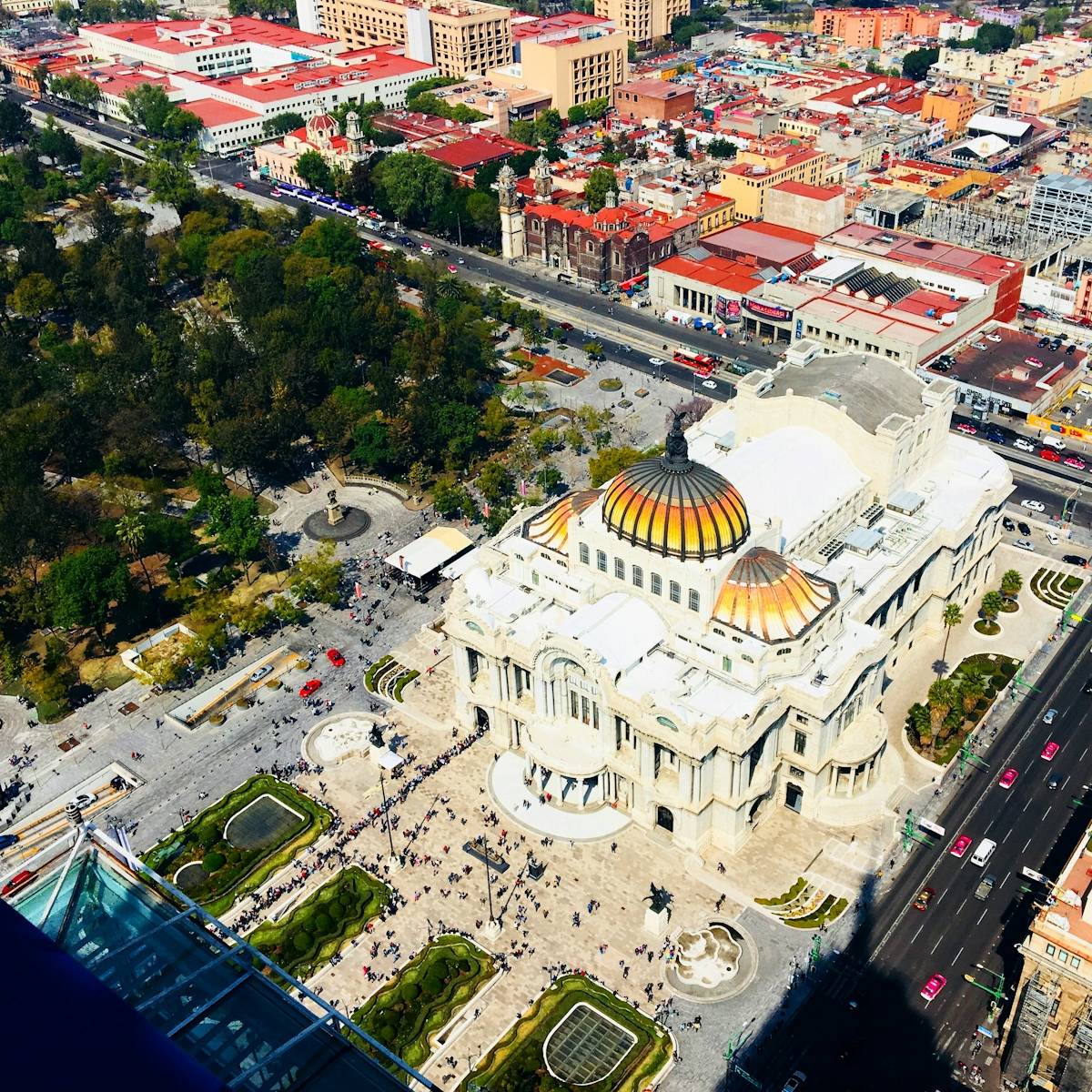
Walk 600 meters west to the Palacio de Bellas Artes (MXN 80 / $5), Mexico's premier art venue. The Art Deco exterior is striking, but inside, Rivera, Orozco, and Siqueiros murals cover the upper floors. The stained glass curtain depicting the Valley of Mexico volcanoes is made from nearly a million pieces of glass.
Lunch at Cafe de Tacuba (since 1912) on Calle Tacuba — enchiladas suizas, tamales, and Mexican hot chocolate in a colonial dining room with hand-painted tiles. Expect MXN 200-350 ($12-20) per person.
Evening: Garibaldi Plaza & Cantina Culture (6:00 PM - 9:30 PM)
Garibaldi Plaza is where mariachi bands gather, competing for hire. The atmosphere is electric — dozens of groups in full traje de charro play simultaneously. Hire a song for MXN 100-200 ($6-12) or just stand and absorb the sound. The Museo del Tequila y el Mezcal (MXN 70 / $4) on the plaza includes a tasting.
End the night at Salon Corona, a classic cantina on Calle Bolivar where tacos and beer flow since 1928. Tacos de canasta (basket tacos) and a cold Victoria cost MXN 80-120 ($5-7).
Chapultepec, UNAM Campus & Coyoacan
Morning: Chapultepec Castle & Anthropology Museum (8:30 AM - 1:00 PM)
Chapultepec Park is the lungs of Mexico City — 686 hectares of forest, lakes, and museums. Start at Chapultepec Castle (MXN 90 / $5), the only royal castle in the Americas, perched on a hilltop with panoramic city views. The murals inside depicting the 1847 battle against American forces are powerful.
Walk downhill to the Museo Nacional de Antropologia (MXN 90 / $5), one of the world's great museums. The Aztec Sun Stone, the massive Olmec heads, the reconstructed Mayan tomb from Palenque — this museum could occupy a full day. Budget 2-3 hours minimum and prioritize the Mexica (Aztec) and Maya halls if time is short.
Afternoon: UNAM Campus (2:00 PM - 4:00 PM)
The Universidad Nacional Autonoma de Mexico campus is a UNESCO World Heritage Site where 1950s modernist architecture meets pre-Hispanic murals. The Central Library is covered entirely in mosaic murals by Juan O'Gorman — millions of colored stones depicting Mexican cosmology. The MUAC contemporary art museum (MXN 40 / $2.50) hosts excellent rotating exhibitions.

Evening: Coyoacan (5:00 PM - 9:00 PM)
Coyoacan is a bohemian neighborhood of cobblestone streets, colonial plazas, and the spirit of Frida Kahlo. The Museo Frida Kahlo (Casa Azul, MXN 270 / $16 — book online, it sells out) displays her paintings, personal belongings, and the house where she lived and died. The garden is intimate and moving.
Coyoacan's main plaza comes alive in the evening. Tostadas from the market (MXN 25-40 each), churros from El Moro's Coyoacan outpost (MXN 70 for a bag), and mezcal at a plaza-side bar. Dinner at Los Danzantes serves contemporary Mexican cuisine with mezcal pairings — MXN 400-600 ($24-35) per person.
Teotihuacan Pyramids — City of the Gods
Morning: Getting to Teotihuacan (7:00 AM - 9:00 AM)
Teotihuacan is 50 km northeast of Mexico City. Take the metro to Autobuses del Norte station (Line 5, MXN 5) and catch a Teotihuacan-bound bus from Gate 8 (MXN 60 / $4, every 15-20 minutes). The ride takes 50-60 minutes. Alternatively, Uber to the site costs MXN 300-450 ($18-26).
Exploring the Ruins (9:00 AM - 2:00 PM)
Teotihuacan was the largest city in the pre-Columbian Americas — 125,000 people at its peak around 450 AD. Entry is MXN 90 ($5). The site sprawls over 83 square kilometers, but the main Avenue of the Dead, Pyramid of the Sun, and Pyramid of the Moon are walkable in 4-5 hours.
The Pyramid of the Sun is the third-largest pyramid in the world — 65 meters tall with 248 steps to the summit. The climb is strenuous at 2,300 meters altitude. Bring water. The view from the top spans the entire ancient city and the surrounding Valley of Mexico.
The Pyramid of the Moon at the avenue's northern end is shorter but sits on higher ground, giving equally impressive views. The Temple of the Feathered Serpent (Quetzalcoatl) at the southern end has the site's best-preserved carvings — serpent heads jutting from the facade.

Afternoon: Return & Roma Norte (3:00 PM - 8:00 PM)
Return to the city by the same bus and spend the late afternoon in Roma Norte, the trendy neighborhood of Art Nouveau mansions, specialty coffee shops, and some of the city's best restaurants. Walk Avenida Alvaro Obregon's tree-lined median and browse the street vendors selling books, art prints, and jewelry.
Dinner at Contramar (no reservations, arrive at 1:30 PM or after 3 PM to avoid the worst wait) for their legendary tuna tostadas and red-and-green grilled fish — MXN 400-600 ($24-35) per person. This restaurant consistently ranks among the best in Latin America.
Getting Around
| Transport | Cost | Best For |
|---|---|---|
| Metro | MXN 5 ($0.30) | Centro, Chapultepec, bus terminals |
| Metrobus | MXN 6 ($0.35) | Reforma corridor, Coyoacan |
| Uber (typical ride) | MXN 50-120 ($3-7) | Night trips, outer neighborhoods |
| Ecobici bike share | MXN 110/week ($6.50) | Roma, Condesa, Reforma on Sundays |
Three days in Mexico City covers the essentials, but this city demands return visits. The food alone could occupy a week. The museums would take a month. For your next trip, add Puebla as a day trip and Xochimilco's floating gardens to go deeper into what makes this capital extraordinary.


