Madagascar is one of the great budget destinations remaining in the world for travellers willing to accept slow roads, occasional discomfort, and the kind of logistical patience that comes naturally to anyone who has spent time in West or East Africa. The fourth-largest island on the planet hosts a degree of biological and cultural strangeness — lemurs, baobabs, an Austronesian-Bantu hybrid culture unlike anything else in the region — that rewards every hour of bumpy taxi-brousse travel. Costs are genuinely low by global standards: a meal at a local hotely runs MGA 5,000-10,000 (USD 1.10-2.20), a guesthouse bed costs MGA 30,000-60,000, and even the most expensive guided lemur excursions cost a fraction of equivalent African safari prices. The catch is time. Madagascar's roads are bad, distances are long, and the famous RN7 route from Antananarivo south to Tulear covers 950 kilometres of pavement that takes three to four days by bus to traverse honestly. Accept that, and the country is one of the cheapest serious adventure destinations on Earth.
Getting There on a Budget
The cheapest international approach to Madagascar is via Nairobi, Addis Ababa, or Mauritius rather than direct from Europe. Kenya Airways from Nairobi to Antananarivo costs roughly USD 350-500 return; Ethiopian Airlines via Addis is similarly priced. Air France direct from Paris to Antananarivo is convenient but expensive at EUR 800-1,200. Air Mauritius via Mauritius offers a mid-priced alternative around USD 500-700 with the option of stopping over at no extra fare cost.

From neighbouring Indian Ocean islands, Air Madagascar and Tsaradia (its domestic subsidiary) operate flights from Reunion (EUR 200-350) and Mauritius (EUR 250-400). These are useful for combining Madagascar with a beach stopover but still expensive relative to local budget realities.
The visa is a significant cost line item. Madagascar charges EUR 35 for stays up to 15 days, EUR 40 for up to 30 days, and EUR 55-70 for 60 days, payable on arrival at Ivato (Antananarivo) Airport in euros, dollars, or by card. The e-visa system at evisamada.gov.mg is now functional and slightly cheaper than visa-on-arrival; pre-applying online avoids airport queues that can extend two hours when multiple international flights land simultaneously.
Once on the island, internal travel is dominated by the taxi-brousse network — converted minibuses and Mercedes Sprinter vans that connect every town along the country's limited paved road network. A taxi-brousse from Antananarivo to Antsirabe (170 km) costs MGA 25,000-35,000 and takes 4-5 hours; Tana to Tulear (950 km on RN7) costs MGA 90,000-120,000 and takes 22-30 hours including overnight stops. Internal flights on Tsaradia connect Tana to Diego Suarez, Nosy Be, Tulear, and Fort Dauphin at fares of EUR 150-300 single — useful for skipping the most punishing road sections but not budget-friendly.
The cotisse shared taxi service offers slightly faster, more comfortable inter-city transport between major hubs (Tana-Antsirabe, Tana-Tamatave) at MGA 35,000-50,000. Worth the small premium over taxi-brousse for the time saved and reduced spinal compression.
Budget Accommodation
Madagascar's budget accommodation runs cheaper than almost any comparable destination. Clean private rooms with en-suite cold-water bathrooms in family-run guesthouses cost MGA 30,000-60,000 (USD 7-13) across most of the country. Antananarivo and tourist hubs run slightly higher; rural taxi-brousse stops can drop to MGA 20,000.

Madagascar Underground (Tsaralalana, Antananarivo, MGA 35,000 dorm, MGA 70,000-90,000 private double) is the country's only proper backpacker hostel and the de facto headquarters of the independent traveller scene in Tana. Communal kitchen, terrace, English-speaking staff who help with taxi-brousse logistics, and a notice board where travellers post lifts and trip-share arrangements south along RN7. Booked solid in July-September; reserve a week ahead.
Sakamanga Hotel (Antananarivo, MGA 90,000-180,000) sits at the budget-mid-range border but earns a mention because its restaurant, bar, and travel desk are the unofficial briefing room for the entire RN7 circuit. Even non-guests use it as a meeting and information point. Its budget annexe rooms are basic but central and walkable to Avenue de l'Indépendance.
Chez Billy (Antsirabe, MGA 40,000-70,000) is the longstanding budget choice in the highland hub four hours south of Tana. Antsirabe is the cleaner, calmer, more pleasant city for adjusting to Malagasy travel rhythms; the climate is cool, the streets are walkable, and the pousse-pousse rickshaws cost MGA 1,000-2,000 per ride.
Mikalo Hotel (Andasibe, MGA 50,000-90,000) provides simple bungalow accommodation a short walk from the entrance to Andasibe-Mantadia National Park, the most accessible lemur-watching destination from Antananarivo. Cheaper budget options exist in Andasibe village itself at MGA 30,000-50,000, often family guesthouses with no signage that local guides will direct you toward.
Chez Maggie (Tulear, MGA 60,000-110,000) at the southern end of RN7 is a long-running French-Malagasy guesthouse with a reliable restaurant and good budget rooms in walking distance of the beach and the route taxi terminal for onward travel to Ifaty and the southern coast.
Eating Cheaply Like a Local
Madagascar has one of the cheapest local food scenes in any country with a proper culinary identity. The hotely — a local lunchroom serving the day's stews over rice — is the institutional foundation of cheap eating across the entire island. A complete hotely meal costs MGA 5,000-10,000 (USD 1.10-2.20) and includes a generous mound of vary (rice, the centrepiece of every Malagasy meal), a stew or grilled meat, and broth.

The classic dishes to seek out are romazava (a beef-and-leafy-greens stew that is effectively the national dish, made with brèdes mafana — a peppery local green that produces a slight tongue-numbing tingle), ravitoto (pounded cassava leaves cooked with pork and coconut milk, dense and satisfying), and akoho sy voanio (chicken in coconut sauce, particularly good on the coast). Grilled masikita (skewered zebu meat) is sold by street vendors in the evening for MGA 1,000-2,000 per skewer and pairs naturally with a THB beer (MGA 5,000-7,000).
For breakfast, the standard local meal is mofo gasy (small rice-flour pancakes cooked in a cast-iron griddle) or mofo akondro (the same with banana), sold from street stalls at MGA 200-500 per piece. A breakfast of three or four mofo gasy with a glass of sweet tea costs MGA 2,000-3,000 — under USD 0.70 — and is a more authentic morning experience than the imported French pastries served at tourist hotels.
Koba — a peanut, banana, and rice-flour cake wrapped in banana leaves and steamed for hours — is the road-trip snack of Madagascar, sold by women at every taxi-brousse stop along RN7 for MGA 500-1,500 per slice. Sweet, dense, and energy-rich for long bus journeys.
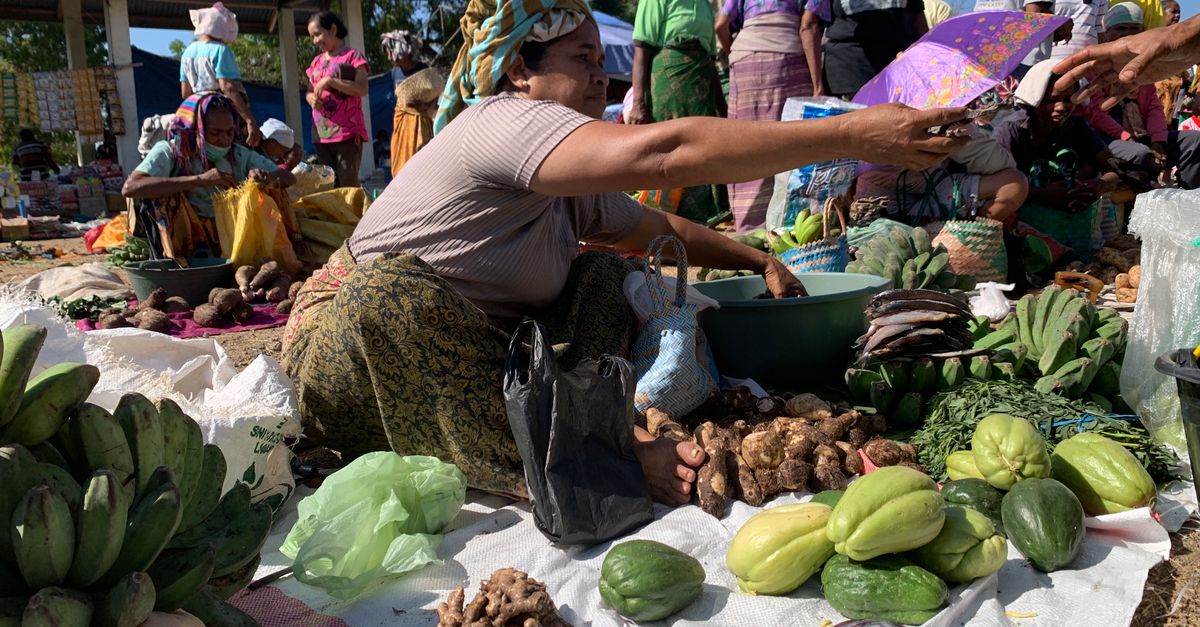
The Analakely market in central Antananarivo and the Friday market in Antsirabe are the best places to assemble cheap self-catered meals — fresh tropical fruit (lychees, mangoes, papaya, custard apples in season), local cheeses from the highland dairies, and bread from the French-influenced bakery tradition that survives in the larger towns.
For a slight upgrade, Restaurant Le Saka at Sakamanga in Tana, Chez Billy in Antsirabe, and the small French-run bistros along RN7 offer set menus around MGA 25,000-40,000 — still inexpensive by international standards and a useful alternative to a third consecutive day of hotely rice-and-stew.
Free & Low-Cost Attractions
Madagascar's headline attractions are not free — wildlife reserves charge meaningful entry fees and require local guides — but they are still extraordinary value compared to equivalent African safari destinations, and the country offers genuinely free experiences alongside the paid wildlife circuit.

Andasibe-Mantadia National Park, the most accessible lemur reserve from Antananarivo, charges MGA 65,000 (about USD 14) for a one-day permit plus a mandatory guide fee of MGA 50,000-80,000 depending on the circuit. For under USD 30 you spend the morning watching the indri — the largest living lemur, whose haunting cathedral-like song is the signature sound of the eastern rainforest. This is the cheapest serious wildlife encounter possible anywhere with this kind of biodiversity.
Lemur Island (Vakôna Forest Lodge, near Andasibe, MGA 30,000) is a small private island where habituated lemurs — primarily brown lemurs and bamboo lemurs — climb directly onto visitors. Ethically borderline (the lemurs are not wild) but immensely popular and budget-friendly.
Isalo National Park (south on RN7, MGA 65,000 entry plus mandatory guide) offers spectacular sandstone canyon hiking through landscapes that look more Utah than Africa, with natural swimming pools in the canyons and ring-tailed lemurs in the cliff-top groves.
The Avenue of the Baobabs outside Morondava is technically free — there is no entry fee for the dirt road lined with the giant Adansonia grandidieri trees that have become the country's most iconic image. The cost is the journey to Morondava, which requires either an internal flight or a punishing bus journey from Tana.
In Antananarivo itself, the Rova (Queen's Palace) ruins on the highest hill of the old city charge MGA 25,000 entry but offer the historical context for everything you'll see elsewhere — the unification of the Merina kingdom, the French colonial period, and the political iconography of independence. The walk up through the old upper town from Avenue de l'Indépendance is free and one of the best urban walks in any African capital.
The Lake Anosy circuit in Tana, the Jardin d'Antaninarenina, and the daily street life along Avenue de l'Indépendance are free urban experiences that reveal more of Malagasy daily life than any paid attraction.
Getting Around on a Budget
Madagascar's domestic transport is dominated by the taxi-brousse — the shared minibus or van that runs between every paired town in the country with sufficient demand. Taxi-brousse stations (gares routières) in major cities are chaotic, polyglot, and the cheapest place on Earth to feel slightly overwhelmed. The Tana north station (for routes to Tamatave and the east) and the south station (for RN7) are separate and located on opposite sides of the city; allow a full hour by taxi to reach them in morning traffic.

Within Antananarivo, the standard urban taxis (small beige Renault 4Ls and Citroën 2CVs are increasingly being replaced by Korean compacts) charge MGA 8,000-15,000 for short cross-city rides. Always agree the price before getting in; meters are not used. The poussepoussse bicycle rickshaws operate in Antsirabe, Diego, and a handful of other towns but not in Tana.
For longer distances, the cotisse shared sedan taxi service (Mercedes-class cars carrying four passengers) is the comfortable upgrade over taxi-brousse on routes like Tana-Antsirabe, costing MGA 35,000 versus MGA 25,000 for the bus and saving roughly an hour of journey time. Worth the small premium.
Walking is genuinely useful in Antsirabe (compact, flat, walkable) and the highland section of Tana (around Antaninarenina and Isoraka districts). Less so in lower Tana, where distances and terrain combine punishingly.
Money-Saving Tips
Madagascar rewards the patient budget traveller with prices that are genuinely cheap by global standards. A few habits stretch the budget considerably further.
Carry MGA cash everywhere. ATMs in Tana, Antsirabe, and the larger RN7 towns work but are unreliable; rural towns may have no ATM at all. Withdraw enough for a week's travel before leaving Tana and store it in multiple stashes. Many guesthouses and all hotelys are cash-only.
Travel by daylight on RN7. The southern road is genuinely scenic — escarpments, villages, baobabs as you approach Tulear — and worth seeing. Overnight buses save accommodation but lose the country's best free attraction: the landscape passing the window.
Eat hotely lunches and reserve restaurant meals for occasional dinners. The price differential between a MGA 8,000 hotely meal and a MGA 30,000 restaurant meal compounds dramatically over a two-week trip. Two hotely lunches a day, restaurant dinner every third night, and total food spend stays well under USD 10 a day.
Share guides. National park guide fees are charged per group, not per person. A solo traveller who joins a group of four at the Andasibe park gate can split the MGA 80,000 guide fee and pay MGA 20,000 instead of MGA 80,000. Wait at the gate for fellow tourists if travelling alone.
Skip internal flights unless time-poor. The Tsaradia network is convenient but expensive (EUR 150-300 single flights) compared to MGA 90,000 for the equivalent road journey. Budget travellers who fly Madagascar end up paying European prices to skip the part of the country that is most worth seeing.
Avoid July-September peak pricing. Shoulder season (April-June, October-November) cuts accommodation rates by 20-30% and reduces taxi-brousse crowding. The weather is comparable; the crowds on lemur trails are smaller.
Bring euros or US dollars in small denominations. Visa fees, some upmarket hotels, and certain national park entries accept (or prefer) hard currency at favourable rates. A stash of EUR 50/100 notes pays the visa on arrival and avoids the airport ATM queue.


