
Leh has become the Himachal Pradesh of the 2020s — the destination that everyone has discovered, the road trip that everyone has done, the monastery photograph that everyone has taken. The Pangong Lake image with the blue water and the brown mountains is now a travel cliché. That's fine; Pangong Lake is extraordinary. But Ladakh — the larger region encompassing Leh district, Kargil district, and the high-altitude valleys branching off the Indus — is vast enough that the tourist circuit covers maybe 5% of the accessible terrain. The other 95% exists in valleys without guesthouses, on passes without chai stalls, and in villages where the monastery festivals happen without a single non-local watching.
The secret geography of Ladakh requires longer time budgets and higher physical fitness than the standard Leh-Pangong-Nubra circuit. But some of the best alternatives are startlingly accessible: a half-day bus from Leh, a 10-km walk on a clear trail, a local shared jeep that runs twice a day. The challenge is not logistics — it's breaking the habit of following the well-worn route. Ladakh rewards deviation from plan in ways that almost no other Indian destination does.
These ten hidden corners of Ladakh and the Leh district range from the genuinely remote to the surprisingly accessible. All of them offer something the standard tourist circuit does not: space, silence, and the sense of being in a landscape that is watching you back.
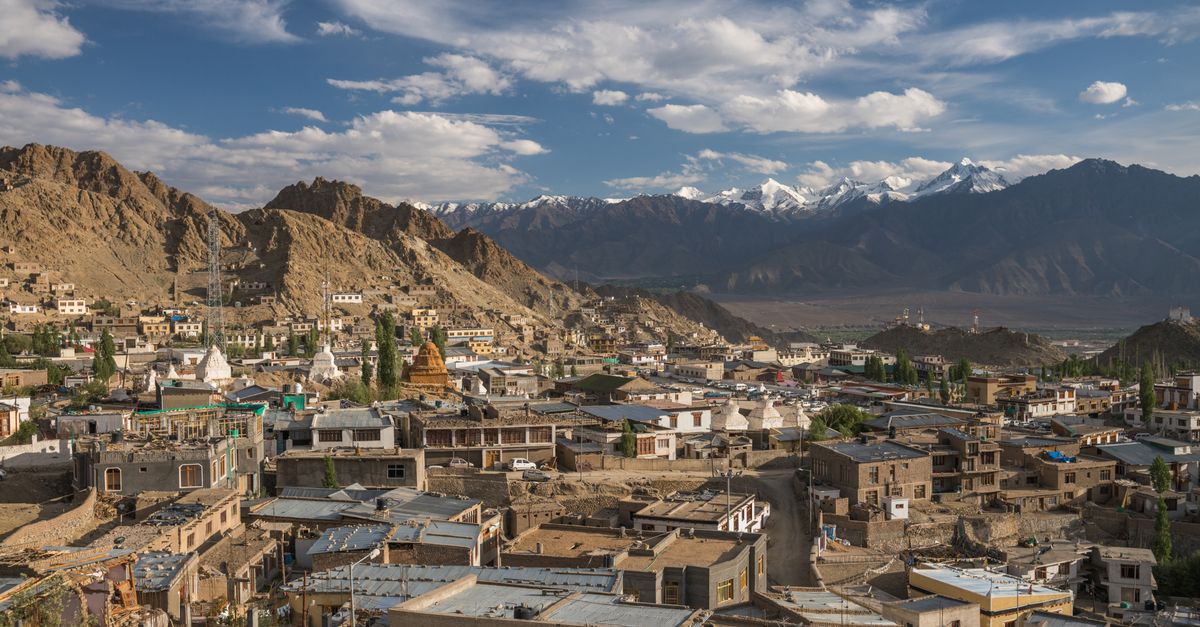
1. Hemis National Park's Snow Leopard Zone
Hemis National Park is India's largest national park by area (4,400 sq km), containing the highest density of snow leopard population in the world. The main park headquarters at Hemis monastery is known; the Rumbak Valley within the park — the primary snow leopard denning and hunting zone — is visited by dedicated wildlife travelers and almost nobody else. Rumbak is a 3-km walk from the Zingchen trailhead (accessible by taxi from Leh in 45 minutes) and supports a small community of shepherds whose sheep constitute the prey base for the snow leopards, creating a complex coexistence story that Hemis National Park's conservation model is built around.
Snow leopard sightings at Rumbak in winter (December to February) are genuinely realistic: visibility is excellent in the snow-covered terrain, the leopards are more active and more visible, and the prey species (bharal, urial) are concentrated on the lower slopes. Sighting rates with a good tracker run at 70-80% over a three-day stay in peak winter season — among the highest reliable sighting probabilities for any big cat in India. Summer sightings are possible but less predictable.
Access Rumbak by taxi from Leh to Zingchen (₹600, 45 minutes), then walk 3 km on a well-marked trail to the valley. Homestays in Rumbak village cost ₹800-1,200 per night including meals. Hire a local tracker (₹1,000-1,500 per day) through the village or through the Snow Leopard Conservancy India Trust — the trackers are predominantly local shepherds who live with the cats year-round. Entry to Hemis National Park: ₹400 per person per day, ₹300 camera fee.
Winter travel to Rumbak requires proper cold-weather gear (temperatures drop to -20°C at night) and a degree of fitness adequate for 3 km at 3,600 metres altitude. Acclimatize in Leh for at least three days before walking to Rumbak. The rewards — a wild snow leopard on the ridge above Rumbak village against a Himalayan skyline, or simply the winter Rumbak valley with its frozen streams and blue sky — are among the finest wildlife and landscape experiences available in India.
2. Tso Moriri Lake
Tso Moriri is the larger, wilder, and less visited sister of Pangong Tso — 170 sq km of high-altitude saline lake at 4,522 metres in the Changthang plateau. The road to Tso Moriri was until recently restricted to foreigners (requiring a permit, now removed) and the infrastructure remains minimal. Korzok village, the only settlement on the lake shore, has 20 homestays that run from June to October. The lake has no boat tours, no electric fence keeping the landscape tidy, no overpriced dhabas. It has about 2,000 visitors per year versus Pangong's 200,000.
The wildlife at Tso Moriri is the real case for going. The lake supports breeding populations of black-necked crane (critically endangered, breeding only on Tibetan plateau lakes), bar-headed goose (highest flying migratory bird), and Brahminy duck. The surrounding grassland is prime kiang (wild ass) territory — herds of 50-100 animals are regularly seen on the plain between Korzok and the lake shore. In the surrounding hills, Tibetan wolf and Pallas's cat are present but rarely seen.
The route from Leh to Tso Moriri runs either via Mahe (summer route) or Chumathang (alternative) — both routes take 5-6 hours. Shared jeeps from Leh's Polo Ground to Korzok run twice weekly (₹600 per seat). Private jeep hire from Leh to Tso Moriri and back: ₹5,000-6,000 for a day trip, ₹8,000-10,000 for overnight. No petrol station between Leh and Korzok — ensure full tank before departure.
Homestays at Korzok charge ₹600-1,000 per night including dinner and breakfast. The breakfast is Changpa nomad style: tsampa (roasted barley flour mixed with butter tea), dried yak meat, and wild rosehip jam. This diet at 4,522 metres is both culturally authentic and functionally excellent for high-altitude energy. The lake shore at dawn, with black-necked cranes calling across the water and the Himalayan peaks reflecting in the completely still surface, is the definitive Ladakh experience that Pangong, for all its beauty, cannot match.
3. Dah Village and the Brokpa Community
Dah village in the lower Indus valley, 163 km west of Leh on the Line of Control road toward Kargil, is one of three villages inhabited by the Brokpa community — a people who claim descent from Aryan warriors who came with Alexander the Great's army and were left behind in this valley. Their claim is archaeologically unverified and probably mythological, but what is verified is that the Brokpa have maintained a distinct ethnic and cultural identity — different language, different dress, different social customs — for at least fifteen centuries. The women wear elaborate floral headdresses with ibex horns and silver ornaments; the men wear a specific woolen hat found nowhere else in Ladakh.
The Brokpa are also the last community in Ladakh maintaining a pre-Buddhist polytheistic tradition alongside the later adopted Buddhism — a syncretism that produces festivals and rituals found nowhere else in the Himalayan world. The Brokpa villages (Dah, Hanu, Biama) are off the standard tourist route, require an Inner Line Permit (free, issued in Leh on the same day), and receive perhaps 500 visitors per year. The landscape of the lower Indus valley they inhabit is also fundamentally different from upper Ladakh — warmer, greener, with apricot orchards and wheat fields that produce a valley agriculture impossible at higher altitudes.
Public buses from Leh to Dah run on Monday, Wednesday, and Saturday (₹180, 5 hours). Private jeep hire from Leh: ₹4,500 return. Inner Line Permit from the DC Office near Polo Ground Leh — free, requires passport copy and photograph, issued same day. Homestays in Dah village: ₹700-1,000 per night including meals. No advance booking system — arrive and ask at the village.
The Brokpa festival of Bonona (August) is when the traditional dress and rituals are most fully displayed and is the ideal time to visit. Outside the festival, the village daily life is the experience: the apricot harvest in July, the wheat threshing in September, the elaborate weaving of the traditional wool garments in winter months. The Brokpa are neither shy nor particularly accustomed to tourists — the interaction depends entirely on approaching with genuine curiosity and appropriate humility.
4. Likir Monastery's Upper Gonkhang
Likir Monastery, 52 km west of Leh on the Srinagar highway, is visited as a day trip by most Leh travelers. The standard visit covers the main assembly hall and the giant Maitreya Buddha statue in the courtyard. What almost no visitor accesses is the upper gonkhang — the protector deity chapel — reached by an unmarked staircase from the monastery's second floor. The gonkhang at Likir is one of the most viscerally impressive Tantric Buddhist spaces in Ladakh: low-ceilinged, smoke-darkened by centuries of butter lamp offerings, filled with deity masks, weapons, and wrapped sacred objects whose full form is not revealed to initiates.
The gonkhang is technically restricted to monastery residents, but the monk who manages the upper floor keys has discretion to admit visitors who show genuine spiritual interest rather than tourist curiosity. The distinction is not always easy to demonstrate, but approaching with a donation (₹200-500), removing shoes without being asked, and requesting permission rather than simply following whoever else is going makes a significant difference. Many travelers who go straight to the gonkhang door are turned away; many who approach the head monk respectfully are invited in.
Likir is on the main Leh-Srinagar highway, accessible by shared bus (₹80, 1 hour) or private taxi (₹1,200 return from Leh). Monastery open 7 AM to 6 PM. Entry ₹50 for the main complex. The monastery guesthouse (₹600 per night) provides an immersive experience — staying overnight means attending the 5 AM morning prayers in the assembly hall and eating with the monks. This is arranged directly at the monastery rather than through a tour agency.
The Likir village below the monastery has maintained traditional Ladakhi agricultural practices including the communal water management system (yulsa) that distributes Himalayan snowmelt between the village fields according to a rotation system managed by elected village elders. Talking to the yulsa manager about how this system works — available through the monastery guesthouse staff who can facilitate translation — reveals a local governance model that predates the Indian state by centuries.
5. Markha Valley Trek's Middle Section
The Markha Valley Trek is one of the most popular treks in Ladakh — a 5-7 day route from Chilling to Hemis through the Markha River valley. The standard trekking tourist completes it with a guide and porters and stays in established campsites. The middle section — the two days between Markha village and Hankar — is the part that rewards independent travel because it passes through the Nimaling plateau at 4,950 metres: a high alpine meadow that in summer (July-August) is covered with Himalayan flowers, grazed by yaks, and occupied by Changpa nomad families who set up seasonal tent camps.
The Nimaling plateau is not technically difficult to reach — it's a long, gradual ascent from Hankar over well-marked trails — but the altitude (4,950 m) means most visitors experience it only briefly before descending. Spending a night at the Nimaling campsite (basic fixed camp, ₹400 per person with basic meals provided by the camp family) means experiencing the plateau at dawn when the light is horizontal and the nomadic yak herds move across the skyline. This is the scene that Ladakh trekking dreams are made of and it's available to any reasonably fit person who allows the time.
The Markha Valley trek starts at Chilling (45 km from Leh, shared jeep ₹300). Alternatively, start from the Zingchen trailhead via the Rumbak valley. No guide required for the main trail — it's well-marked and the villages provide food and basic accommodation throughout. Allow 6-7 days for the full circuit. Camping gear can be rented in Leh for ₹800-1,200 per night per tent. Porter hire: ₹1,800-2,000 per day.
The Nimaling section of the trek passes directly through Hemis National Park territory. Wildlife encounters on the Nimaling plateau include blue sheep (bharal), Himalayan marmot, and occasional golden eagle. Snow leopard pugmarks have been found on the plateau but sightings there are rare. The wildflower meadows in July — purple larkspur, yellow potentilla, white stellaria — are a botanical wealth that requires no wildlife luck to appreciate.
6. Nubra Valley's Turtuk Village
Nubra Valley is on the standard Ladakh tourist circuit — Hunder sand dunes, double-humped Bactrian camels. Turtuk village, at the far end of the Nubra Valley 200 km from Leh, is not. Turtuk was part of Pakistan until 1971, when the Indian Army captured it during the Bangladesh War. The village and its people (the Balti community, ethnically and linguistically distinct from Ladakhi Buddhists) were cut off from the rest of Pakistan overnight. Families that had relatives across what became the Line of Control were separated for fifty years. Some reunifications have occurred since 2003; many have not.
Turtuk is now classified as an Inner Line Permit zone — the permit (free, from DC Leh) allows you to go to Turtuk but not beyond. The village is a micro-ecology of apricot orchards and terraced wheat fields at 3,000 metres altitude — significantly warmer and greener than upper Nubra. The Balti community is Muslim (Ismaili sect), speaks Balti (a Tibetan-derived language with Persian borrowings), and maintains traditional architecture and food culture distinct from the Buddhist Ladakhi communities further south.
From Leh to Turtuk is a 6-7 hour drive on the Shyok River road — shared jeeps from Leh (₹400 per seat, twice daily in summer) or private hire (₹6,000-8,000 return). Inner Line Permit required (free from DC Leh or Khardung La checkpost). Homestays in Turtuk: ₹600-900 including meals. The community has organized its own homestay network accessible through the village sarpanch (headman).
The Turtuk museum (a private collection in the former village headman's house) documents the pre-1971 Balti kingdom history and the experience of the 1971 war from the village perspective. Entry by donation. The headman's family (the Yabgo royal line of Turtuk) maintains the collection and can provide context in Urdu and Hindi. This is one of the finest small-scale oral history collections in the Indian Himalayas and it's available to anyone who visits Turtuk and asks respectfully.
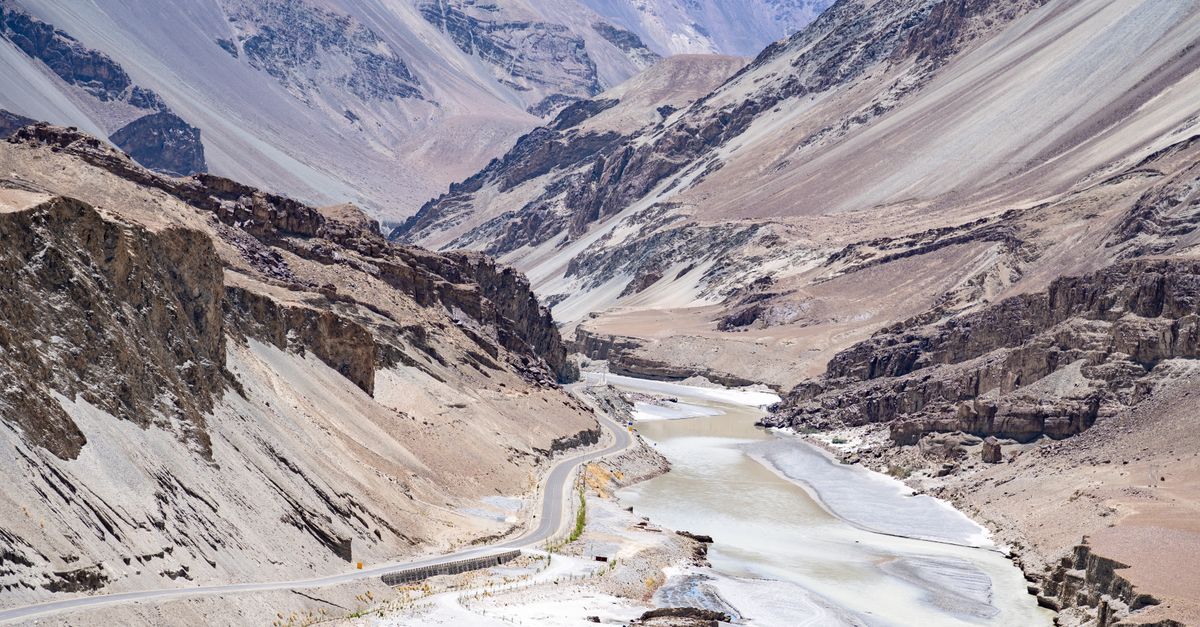
7. Lamayuru Monastery at Full Moon
Lamayuru Monastery, 127 km west of Leh on the Srinagar highway, is one of Ladakh's oldest (founded circa 11th century) and most dramatically situated monasteries — perched above a moonscape of heavily eroded mudstone formations that earned the surrounding valley the name "Moonland." The standard visit is a day trip from Leh on the way to Kargil. The full moon visit — specifically the night of the full moon in summer months when the monastery's white exterior and the Moonland formations below are bathed in lunar light — is something different entirely.
The Lamayuru Valley at full moon is genuinely otherworldly: the eroded mudstone formations (created by geological uplift and river erosion over three million years) glow silver-white under the moon in a way that justifies the Moonland name more convincingly than any daylight photograph. The monastery lights are on for the midnight prayers that Tibetan Buddhist institutions conduct during the lunar full moon. The resident monks — about 150 at Lamayuru — perform ritual pujas that are audible from the valley floor below.
Stay at the monastery guesthouse (₹700-1,200 per night, book ahead) or at one of the small hotels in Lamayuru village. From Leh, Lamayuru is 3 hours by shared bus (₹180) or 2 hours by private taxi (₹2,500). The full moon date calculation is easy — any Tibetan Buddhist calendar or the monastery's own calendar (posted at the main gate) shows it. The Yuru Kabgyat Festival (July) also involves full moon performance — the Cham masked dance at Lamayuru is one of the finest in Ladakh.
The monastery's ancient cave beneath the main assembly hall is said to be the cell where the great 11th-century translator Naropa meditated. The cave is occasionally accessible to visitors through the head lama's permission — a meditation room carved directly into the cliff that the monastery was built upon. Even without cave access, Lamayuru's library (containing Tibetan manuscripts from the 14th century onward) is one of the finest in Ladakh and the librarian monk accepts visitors by appointment.
8. Stok Kangri Base Camp
Stok Kangri (6,153 metres) is one of the highest peaks in Ladakh and the most accessible 6,000-metre summit in India — the standard route from base camp to summit is non-technical (no ropes or ice axes required) in late summer. The base camp at 4,800 metres is the destination for this guide, not the summit: the base camp is a 3-hour walk from Stok village (8 km south of Leh), provides a genuine Himalayan alpine environment with views of the Zanskar range, and requires no technical experience or permit. It's one of the most accessible high-altitude Himalayan base camp experiences in India, and it's almost entirely unvisited by the Leh tourist crowd that's busy queuing at Pangong Lake.
The walk from Stok village to base camp follows the Stok river valley through a gorge that opens progressively as altitude increases. The vegetation transitions from the willow and poplar of the valley floor through high alpine grassland to bare scree at base camp altitude. The snow peaks visible from base camp include Stok Kangri itself, the Zanskar range, and on clear days the distant outline of the Karakoram. Marmots are abundant in the boulder fields below base camp; golden eagle circle the updrafts above the ridge.
Stok village is accessible from Leh by shared jeep (₹80, 20 minutes) from the Polo Ground area. The walk from Stok village to base camp is clearly marked. No permit required for base camp. No guide required for the base camp walk in good weather. Go in July or August for the most comfortable conditions. Water from the Stok river is safe to drink above the main village (carry a filter for insurance).
Day visitors can reach base camp and return to Leh in a single long day (7 AM start, back by 5 PM). Overnight camping at base camp requires bringing your own equipment (rental from Leh: ₹800-1,200 per night) and is dramatically rewarding — the night sky at 4,800 metres without light pollution is one of the most star-dense skies visible anywhere in India. The Milky Way core is directly overhead in July and August.
9. Alchi Monastery's Hidden Frescoes
Alchi monastery, 69 km west of Leh, is sometimes described as Ladakh's most important monastery — a claim backed by the presence of early Tibetan Buddhist frescoes from the 10th-11th century that survived because the monastery was abandoned (and thus undisturbed) for several centuries before rediscovery. The famous paintings in the Dukhang (main hall) and Sumtseg (three-story chorten) are documented in art history. The back rooms — the smaller chapels behind the main structures, accessible only through low doorways and requiring a torch — contain equally extraordinary but less-photographed frescoes in better condition because they've seen less light.
The back chapel at Alchi contains a series of Buddha mandala paintings that retain the full intensity of their original lapis lazuli blue and cinnabar red — colors that have faded in the main hall due to light exposure. The paintings here show the Kashmiri art influence (the monastery was built by Rinchen Zangpo, who brought Kashmiri artists to produce the paintings) more clearly than the more frequently photographed main hall work. The iconographic detail — the subsidiary deities in the mandala borders, the donor portraits at the base of each composition — rewards close examination with a torch.
From Leh, shared buses to Alchi run twice daily (₹130, 1.5 hours). Private taxi: ₹2,500 return. Monastery open 8 AM to 1 PM and 2 PM to 6 PM. Entry ₹50. The key to the back chapel is held by the caretaker monk — request access specifically and frame the request as an interest in the Buddhist art rather than just "seeing everything." Most genuine visitors are given access. Photography of the frescoes is controversial (flash photography causes deterioration); the monastery now prohibits flash. Bring a good quality LED torch.
The village of Alchi adjacent to the monastery is one of Ladakh's most pleasant places to spend a night: the riverside guesthouses on the Indus bank charge ₹500-800 for a room with Indus views, the apple orchards are spectacular in September, and the village dhaba serves a genuinely good Ladakhi dinner of thukpa (noodle soup), momos (dumplings), and butter tea. Spending a night in Alchi rather than day-tripping from Leh is the correct approach and adds two unhurried morning hours at the monastery before the day-trip groups arrive.
10. Zanskar Valley in Spring
Zanskar is the most remote valley in Ladakh — cut off from the rest of the world for six months each winter when the Pensi La pass closes. The access is either the summer road via Pensi La (open June to October) or the famous Chadar Trek in winter (January-February), walking the frozen Zanskar river. What is not famous is Zanskar in early June: the Pensi La opens and for two to three weeks the valley is carpeted in wildflowers from the snowmelt, the river runs at peak volume, and the population — just 13,000 people — is preparing for the summer agricultural season. No tourists have arrived yet. The winter isolation is just lifting. The valley is waking up.
The Zanskar road from Kargil via Pensi La reaches Padum (the valley's only town, population 1,500) in 7-8 hours from Kargil. Padum has basic guesthouses (₹500-800 per night). The valley's monasteries — Karsha (the largest), Phuktal (built into a cliff cave, accessed only by foot), and Stongde — are all open in summer. Phuktal specifically is one of the most dramatically situated monasteries in Asia: a white complex built into the face of a Himalayan cliff above a gorge, accessible by a 2.5-hour walk from the road at Cha village.
From Leh, reaching Zanskar requires going to Kargil first (5 hours by shared bus, ₹250) and then continuing to Padum (7-8 hours, ₹400 by shared jeep on the days they run). Private jeep from Kargil to Padum: ₹5,000. The road is rough and the drive is long and extraordinary — the Pensi La summit view of the Drang-Drung Glacier is one of the finest mountain views in India. Allow at least four days in Zanskar for a meaningful visit.
The Zanskar river rafting season (July-August) is the valley's peak activity period — Class IV-V rapids through a 150-km gorge section are run by adventure companies based in Leh (₹12,000-18,000 per person for a 5-day guided raft). This is serious expedition rafting, not the Rishikesh day-trip variety. The gorge section of the Zanskar is inaccessible by any route except the river itself — the canyon walls rise 500-800 metres directly from the water and the experience of being inside this gorge with no road above and no civilization for 50 km is as close to genuine wilderness as India offers.


