
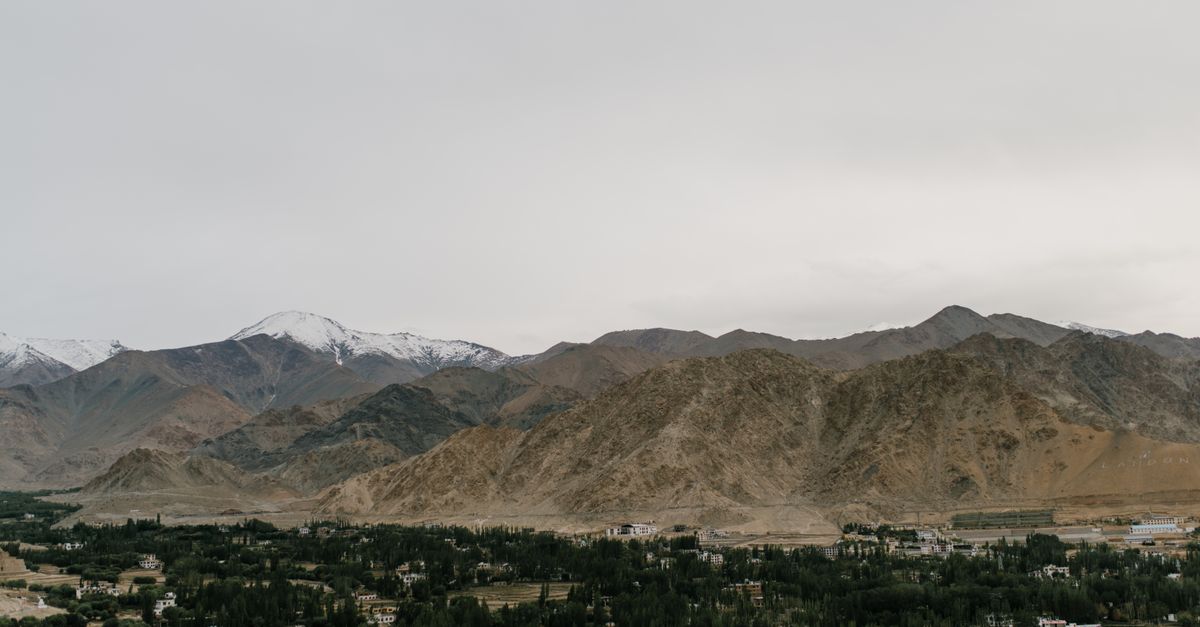
Arriving in Leh Ladakh for the first time is like landing on another planet — a high-altitude desert ringed by 6,000-metre peaks, where Buddhist monasteries cling to cliffsides and the air is thin enough that walking uphill leaves you breathless. At 3,500 metres above sea level, Leh demands more preparation than almost any other destination in India. Get the logistics right before you arrive and the region rewards you with landscapes, culture, and silence that are simply unavailable anywhere else on the subcontinent. Get them wrong and altitude sickness, permit confusion, or a missed flight can derail an expensive trip before it properly begins.
Before You Arrive
No international visa is required to visit Leh Ladakh — the region is part of India's Union Territory of Ladakh, so visitors need only the standard Indian tourist visa. E-visas are available online at indianvisaonline.gov.in for most nationalities at $25-80 USD depending on your passport. Apply at least four days before travel; processing takes 72 hours in most cases. Passport holders from Pakistan, Afghanistan, and China require special approval and should apply through their nearest Indian embassy rather than the e-visa portal.

Indian citizens do not need a visa but do need an Inner Line Permit (ILP) to visit certain restricted border areas, specifically Pangong Tso, Nubra Valley, Tso Moriri, Dah Hanu, and several other zones. Foreign nationals also require this ILP, which is obtained at the District Magistrate's office in Leh or at the permit office near the main post office. Bring your passport, one passport-sized photograph, and copies of your passport photo page and visa. The permit costs approximately INR 100-500 per zone depending on the area. You cannot obtain ILPs from Delhi — they are issued only in Leh itself.
Currency exchange is available in Leh's Main Bazaar at money changers and some banks. The State Bank of India and Punjab National Bank on Main Bazaar exchange foreign currency at reasonable rates. ATMs (SBI, PNB, Axis Bank) are available in Leh town but frequently run out of cash in peak season. Bring sufficient INR cash from Delhi — plan for at least INR 5,000-10,000 per day for a comfortable trip including accommodation, food, and excursions.
SIM cards from Jio, Vi, and most private operators have no coverage in Ladakh outside Leh city. Only Airtel and BSNL function in rural areas. BSNL offers the broadest rural coverage — pick up a BSNL SIM in Delhi or Manali and recharge with at least INR 200 before arrival. Altitude acclimatisation cannot be rushed, negotiated, or medicated away. Plan two full rest days in Leh before undertaking any high-altitude excursion.
Getting from the Airport
Kushok Bakula Rimpochee Airport (IXL) sits at 3,256 metres and is just 3 kilometres south of Leh town centre — one of the most dramatically located airports in the world, ringed by peaks on three sides and requiring a steep approach that makes every landing feel like an achievement. The runway is visible from the roof of your guesthouse in Changspa.

Pre-paid taxis from the airport to Leh town cost INR 250-350 and are available at the official counter inside the arrivals terminal. The journey takes 10-15 minutes. These are the standard option — straightforward, metered, and reliable. Agree on the fare at the prepaid counter inside the building rather than negotiating with drivers outside.
Shared jeeps occasionally wait outside the terminal and charge INR 100-150 per seat when they have a full vehicle. This takes longer due to waiting time and multiple drop-offs but saves money for travellers who are not in a rush and are carrying light bags.
Auto-rickshaws and e-rickshaws do not operate to the airport — Leh's airport road is too steep for three-wheelers. Walking from the airport to Changspa or Main Bazaar takes 25-35 minutes on flat roads at sea level; at 3,256 metres on your first day in Leh, it is inadvisable regardless of how fit you are. Take a taxi and rest immediately upon arriving at your accommodation.
For overland arrivals from Manali, shared jeeps drop passengers at the main taxi stand near Main Bazaar. From Srinagar, shared taxis also terminate at or near the taxi stand. Both journeys arrive in the afternoon — check into your guesthouse, eat a light meal, drink three litres of water, and sleep. Do nothing else on arrival day.
Getting Around the City
Leh town is small enough to navigate on foot. The distance between Main Bazaar and the Changspa guesthouse quarter is about 15 minutes on a flat road. Leh Palace is a 20-minute uphill walk from Main Bazaar. Shanti Stupa requires a 15-minute steep climb from Changspa. On your acclimatisation days, this walking is perfect — gentle enough to not strain your cardiovascular system while getting you oriented.

For distances beyond walking range within the Leh urban area, e-rickshaws are the standard local transport. They ply the main road between Changspa, Main Bazaar, and the area near the hospital for INR 30-60 per short trip. Hail them anywhere on the road — they stop on demand. There are no apps or advance bookings; just wave one down.
For day trips to nearby monasteries — Thiksey (19 km), Hemis (45 km), Stok Palace (15 km), and Shey (15 km) — the main taxi stand on Fort Road is the hub for both private hire and organised shared jeep departures. Private taxis charge INR 1,200-2,500 for standard day-trip circuits. Shared jeeps depart when full (typically 4-6 passengers) at INR 200-500 per seat for destinations up to 50 km away.
Motorcycle rental is available throughout Changspa and Main Bazaar. Royal Enfield 350cc motorcycles rent for INR 1,000-1,800 per day — the standard choice for independent exploration of valleys and passes. Bring your driving licence. Chinese-made Hero and Bajaj bikes are available at INR 600-800 per day but less reliable on high passes.
There is no public bus service between Leh and Pangong Lake or Nubra Valley. All inter-valley travel is by private or shared jeep, motorcycle, or organised tour. HPTDC (Himachal Pradesh Tourism) and J&K Tourism run occasional group tours but these are rare and must be booked in advance.
Where to Base Yourself
Changspa is the neighbourhood of choice for first-time independent travellers. It runs along the western edge of Leh town, a ten-minute walk from Main Bazaar, lined with guesthouses, cafes, and travel agencies. The Indus River is visible from the upper edges of Changspa and the neighbourhood sits beneath Shanti Stupa hill. Guesthouses here include budget options like Yak Tail Hotel (INR 800-1,400) and mid-range properties at INR 2,000-4,000. The pace is slower than Main Bazaar; the crowds are smaller. Best for backpackers, long-stay visitors, and anyone prioritising peace over central convenience.
Old Town Leh, the area around Leh Palace and Namgyal Tsemo Gompa, has a handful of heritage guesthouses in traditional Ladakhi houses with wood-carved window frames and interior courtyards. Stok Palace Heritage Hotel is the grandest option (INR 8,000-15,000 per night) though it is technically 15 km from Leh town in Stok village. Old Town guesthouses cluster between INR 1,500-3,500 and offer a more immersive historic experience. Narrow lanes, prayer wheels, and monastery bells at dawn — this is Leh at its most atmospheric.
Fort Road and Main Bazaar form the commercial heart of Leh, with the widest selection of restaurants, shops, pharmacies, and ATMs. Properties here are more convenient for late-night returns from restaurants and early airport departures. The tradeoff is noise — Main Bazaar is loud from 7 AM to 10 PM with vehicles, traders, and tourists. Hotels in this zone like Hotel Grand Dragon Ladakh (INR 4,500-8,000) cater to tour groups and organised travellers who want hotel-standard facilities.
Local Culture and Etiquette
Ladakh is a predominantly Buddhist region with a significant Muslim minority, particularly in Kargil district and parts of Leh town. The cultural expectations differ from the Hindu-majority plains of India in important ways that first-timers should understand before visiting monasteries and local homes.

Monastery dress code is non-negotiable. Both men and women must cover their shoulders and knees before entering any gompa (monastery). A lightweight shawl or sarong carried in your daypack solves this instantly and weighs almost nothing. Remove shoes before entering prayer halls — you will see designated areas for this. Monks are generally welcoming to respectful visitors; ask before photographing monks or ceremonies. Do not photograph faces without permission. Photography inside prayer halls and in front of specific thangkas is sometimes prohibited — look for signs or ask.
Walk around stupas, mani walls (low walls covered with carved prayer stones), and prayer wheels in a clockwise direction. This is basic Buddhist etiquette and locals notice when tourists walk counter-clockwise. Do not sit on or climb mani walls — they are sacred structures, not benches.
In Ladakhi homes, the kitchen is the most sacred and social room. If invited into a home, always accept the offer of butter tea or regular tea — declining is considered rude. You do not need to finish the cup, but the gesture of acceptance matters. Most guesthouses run by Ladakhi families serve breakfast in a communal kitchen; eating with the family is the norm and part of what makes Ladakhi guesthouses memorable.
Tipping in Leh is appreciated but not expected to the same degree as in tourist-heavy cities. INR 50-100 at the end of a meal at a local restaurant is generous. For a multi-day jeep driver who navigates the high passes, INR 300-500 per day is appropriate. Trek guides and cooks on longer expeditions expect INR 500-800 per day as a tip on top of their agreed fee.
Plastic waste is a severe environmental problem in Ladakh. Carry a reusable water bottle and refill at your guesthouse — most good guesthouses have filtered water available for INR 10-20 per litre. Refuse plastic bags at shops. The Himalayan region's waste infrastructure cannot handle the volume of plastic generated by peak-season tourism.
Common Mistakes to Avoid
Not acclimatising before physical activity is the single most dangerous mistake first-timers make. Flying from sea level to 3,500 metres and then immediately attempting a trek, a motorcycle ride to Khardung La (5,359 m), or a long day trip to Pangong Lake (4,350 m) is a fast route to Acute Mountain Sickness. Two full rest days in Leh, doing nothing more strenuous than a gentle walk to Main Bazaar, reduces AMS risk dramatically. The mountains will still be there on day three.
Forgetting to get Inner Line Permits before leaving Leh town. There are no ILP offices at Pangong Lake, Nubra Valley, or Tso Moriri. Travellers who arrive at checkpoints without permits are turned back without exception. Get your permits from the official office near the Leh post office on your first or second day in town. Processing takes under an hour with the right documents.
Assuming ATMs will always work. In July and August, the SBI and PNB ATMs on Main Bazaar frequently run out of cash or go offline for 12-24 hours at a stretch. There are no ATMs in Nubra Valley or at Pangong Lake. Withdraw a full float of cash before any multi-day excursion — plan on INR 3,000-5,000 per day for a comfortable trip outside Leh town.
Underestimating the cold. Even in peak summer (July-August), temperatures in Leh drop to 5-10°C at night. At Pangong Lake (4,350 m), night temperatures fall below 0°C in September and October. A down jacket, thermal base layers, and a warm hat are not optional — they are required equipment regardless of how warm the daytime forecast looks.
Booking only one or two days in Leh. Ladakh is a destination that rewards time. A four-day trip sees Leh Palace, a monastery or two, and perhaps a day trip to Pangong. A ten-day trip reaches Nubra Valley's sand dunes and Bactrian camels, Tso Moriri's flamingos, the Markha Valley trek, and the zanskar confluence. Visitors who rush invariably regret not staying longer.
Ignoring vehicle conditions on rental motorcycles. Mountain roads in Ladakh are punishing on machinery — brakes, tyres, and fuel levels matter enormously when the nearest mechanic is 80 kilometres away across a 5,000-metre pass. Before renting any motorcycle, check tyre tread, brake responsiveness, fuel level, and whether the rental includes a puncture kit and basic tools. Ask for the shop's emergency phone number explicitly.
Visiting in October or November without checking road status. The Manali-Leh Highway closes around mid-October and the Srinagar-Leh road can close temporarily from early October onward. Only Leh Airport remains open year-round, but flights during the shoulder season are less frequent and more prone to weather cancellations. Travel insurance with flight delay coverage is essential for October visits.


