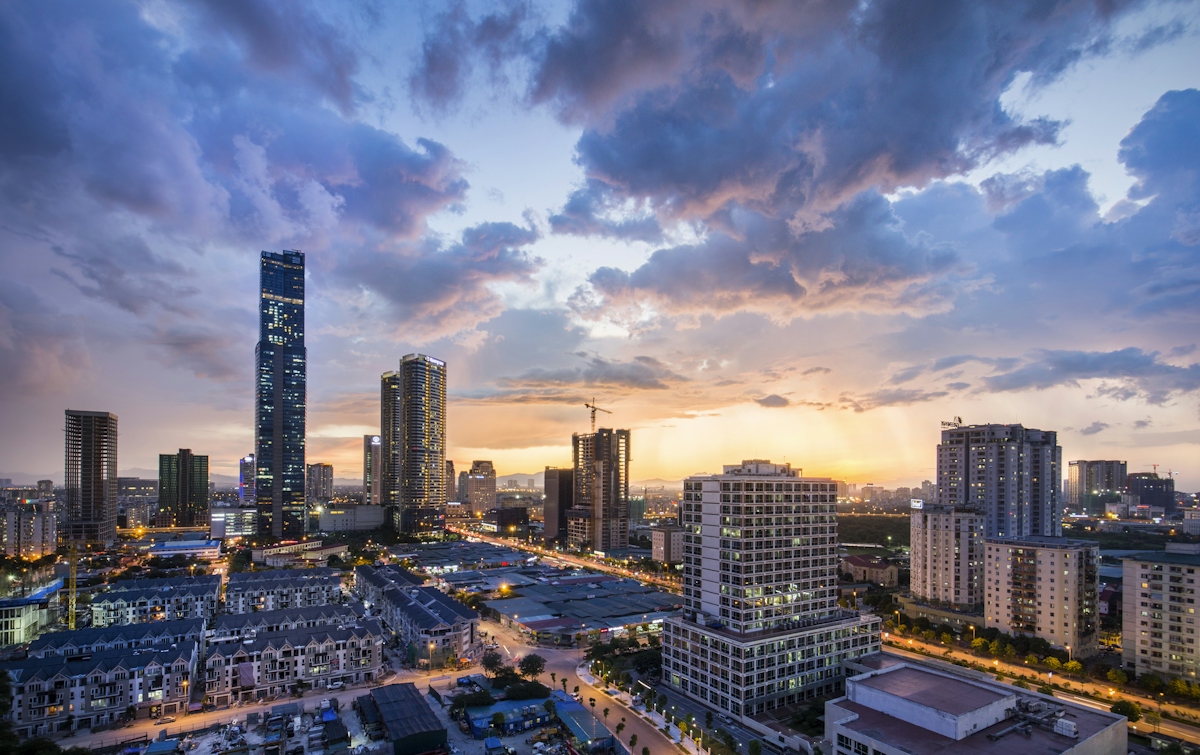
Hanoi's tourist trail is compact and well-defined: Old Quarter, Hoan Kiem Lake, Temple of Literature, Ho Chi Minh Mausoleum. These places are genuinely essential, but the Hanoi that locals love — the one that makes this city one of the most fascinating in Southeast Asia — lives in the neighborhoods, markets, and experiences that most visitors never discover.
From a railway track where trains pass within arm's reach of coffee tables to a pottery village that has been firing ceramics for 500 years, these hidden gems reveal a Hanoi with extraordinary depth. All are reachable by Grab bike in under 30 minutes.

1. Train Street
Hanoi's most surreal attraction: a narrow residential street where the national railway track runs directly between houses, with just centimeters of clearance on each side. Twice daily, a full-size train rumbles through at walking speed while residents press against their doorways and tourists scramble to safety.
The street has become a destination in itself — cafes and small bars have opened along the tracks, serving drinks while you wait for the train. Sit at a table literally on the railway tracks, order a ca phe sua da (VND 30,000), and experience the controlled pandemonium when the horn sounds and the train approaches.
The main Train Street is on Ngo 224 Le Duan and the spur along Tran Phu Street near the Old Quarter. Train times are roughly 3:30 PM and 7:30 PM (weekday schedules — check locally as times shift). Arrive 30 minutes early to secure a seat. The experience is free, though you're expected to buy a drink at one of the cafes.
2. Long Bien Market at Dawn
While tourists sleep, Long Bien Market explodes into life at 2-4 AM beneath the historic Long Bien Bridge. This wholesale market is where Hanoi's restaurant owners and street food vendors buy their daily produce — mountains of tropical fruits, fresh vegetables, live fish, herbs, and flowers hauled in by motorbike and bicycle from farms across the Red River Delta.
Arriving at 4-5 AM gives you the market at peak activity without the 2 AM commitment. The energy is extraordinary: vendors sorting mangoes under fluorescent lights, porters carrying impossible loads on shoulder poles, women in conical hats bargaining over bundles of morning glory. The flower section is particularly stunning — roses, chrysanthemums, and lotus by the thousands.
After the market, walk across Long Bien Bridge itself — the historic cantilever bridge built by the French in 1902 (attributed to Gustave Eiffel's firm). The bridge survived American bombing during the war and still carries train and motorbike traffic. Walking across at dawn, with the Red River and the city awakening below, is one of Hanoi's most memorable experiences. Free.
3. West Lake Cycling
West Lake (Ho Tay) is Hanoi's largest lake — 17 km around the shoreline — and cycling the full loop is one of the best ways to experience the city beyond the Old Quarter. The lakeside road passes through upscale residential neighborhoods, past ancient pagodas, through Vietnamese-French cafe districts, and along stretches of open water where the city skyline reflects at sunset.
Key stops along the route: Tran Quoc Pagoda (free, 6th century, the oldest pagoda in Hanoi, situated on a narrow peninsula), Phu Tay Ho Temple (free, a busy pilgrimage temple at the lake's northern tip), and the cafe strip along Xuan Dieu Street where Hanoi's expatriate community gathers.
Rent a bicycle from your hotel or hostel (VND 50,000-80,000 per day) or use a Grab bike to reach the lake and walk sections. The full loop takes 60-90 minutes by bicycle at a leisurely pace. Sunset is the ideal time — the lake turns golden and the temperature drops to comfortable levels.
4. Bat Trang Pottery Village
Bat Trang is a pottery-making village on the Red River, 13 km southeast of central Hanoi, where artisans have been producing ceramics for over 500 years. The village supplied pottery to Vietnamese royal courts and exported to Japan and Southeast Asia during the 15th-17th centuries.
Today, the village remains a working pottery center with dozens of workshops and kilns. Walk through the narrow lanes and watch artisans shape clay on wheels, hand-paint intricate blue-and-white designs, and load wood-fired kilns. The Bat Trang Ceramic Market sells everything from rough earthenware to fine porcelain — bowls from VND 20,000, decorative vases from VND 100,000, full tea sets from VND 300,000.
Several workshops offer pottery-making experiences (VND 50,000-100,000) where you can shape, paint, and fire your own piece. The results are charming if imperfect. Take Bus 47 from Long Bien bus station (VND 7,000, 30 minutes) or a Grab bike (VND 40,000-60,000). Allow 2-3 hours for the village.
5. Duong Lam Ancient Village
Duong Lam, 45 km west of Hanoi, is Vietnam's first nationally designated ancient village — a cluster of 900-year-old laterite (red stone) houses, communal halls, and pagodas that have survived virtually unchanged since the medieval period. Two Vietnamese national heroes were born here, and the village's history stretches back over a thousand years.
The village entrance fee is VND 20,000 and includes a map. Walk through lanes flanked by red-brown laterite walls, visit the Mong Phu communal house (a masterpiece of traditional Vietnamese architecture), explore the 11th-century Mia Pagoda, and stop at family houses where residents welcome visitors and serve lotus tea.
The village is genuinely rural — chickens wander the paths, farmers tend rice paddies on the outskirts, and the pace of life makes Hanoi feel like another planet. Rent a motorbike for the day (VND 100,000-150,000) or join a guided cycling tour from Hanoi (VND 800,000-1,200,000 including bike, guide, and lunch). Allow a full half-day including travel.
More Under-the-Radar Spots
Hoan Kiem Lake at 5:30 AM
You'll visit the lake during the day, but the pre-dawn experience is something else entirely. From 5:30-6:30 AM, hundreds of locals gather for tai chi, badminton, sword dancing, and aerobics along the lakeshore. The exercises are open — you can join any group, and participants will welcome you with smiles and gestures. Free, atmospheric, and a window into daily Hanoi life that tourists rarely see.
Tay Ho (West Lake) Craft Beer Scene
The Tay Ho area around West Lake has developed a small but excellent craft beer scene. Standing Bar serves Vietnamese-brewed craft ales (VND 60,000-80,000) in a converted shophouse. Furbrew brews on-site with creative Vietnamese ingredients like pandan and lotus. The scene is young, local, and entirely different from the bia hoi tourist circuit.
Vietnamese Women's Museum (VND 40,000)
Often overlooked in favor of the war museums, this well-curated museum in the French Quarter tells the story of Vietnamese women across history — from matriarchal societies to wartime heroines to contemporary artisans. The exhibit on women in the ethnic minorities is particularly moving. Allow one hour. Located at 36 Ly Thuong Kiet, a short walk from Hoan Kiem Lake.

Hanoi's surface is already captivating — the Old Quarter's chaos, the lake's serenity, the food's perfection. But beneath that surface is a city of ancient villages, dawn markets, railway track cafes, and thousand-year-old craft traditions that make it one of the most layered cities in Asia.
What Most Visitors Miss
Hanoi's tourist circuit is well-mapped, but the city's true character emerges in experiences that most visitors pass right by — often literally. The French Quarter's tree-lined boulevards, the bia hoi corner culture of the Old Quarter, and the quiet pagoda courtyards a single block from the main sightseeing drag all reward travelers who slow down and look slightly sideways from the obvious.
The 36 Streets of the Old Quarter are typically experienced as a chaotic shopping zone, but each street historically specialized in a single trade — Hang Bac for silver, Hang Ma for paper votive offerings, Hang Thiec for tin goods. Hang Ma Street (Street of Paper Votive Goods) is one of the most photogenic and least visited: shops sell elaborately crafted paper replicas of houses, motorbikes, smartphones, and entire wardrobes to be burned as offerings for the deceased. The craftsmanship is extraordinary and browsing costs nothing.
The Bach Ma Temple, on the corner of Hang Buom Street in the Old Quarter, is one of Hanoi's oldest temples (founded in the 9th century) and regularly overlooked by visitors a hundred meters away on the main shopping streets. The small compound contains an ancient wooden horse statue connected to the legend of Hanoi's founding. Incense burns constantly, monks move quietly through the courtyard, and the atmosphere is entirely different from the tourist-facing Temple of Literature. Entry is free.
St. Joseph's Cathedral, Hanoi's Gothic neo-medieval church built in 1886, is most visited when the surrounding plaza is busy with coffee drinkers and photographers. But enter the cathedral itself on a quiet weekday morning and the atmosphere shifts entirely — stained glass filtering light through the nave, elderly Vietnamese women in prayer, and the sounds of the city replaced by near-silence. Free to enter during opening hours. The narrow streets immediately behind the cathedral — Nha Tho and Nha Chung — have Hanoi's best independent boutiques and cafe culture, significantly more local in character than the tourist-facing streets of the Old Quarter.
Ready to explore? Find hotels across Hanoi on JustCheckin.