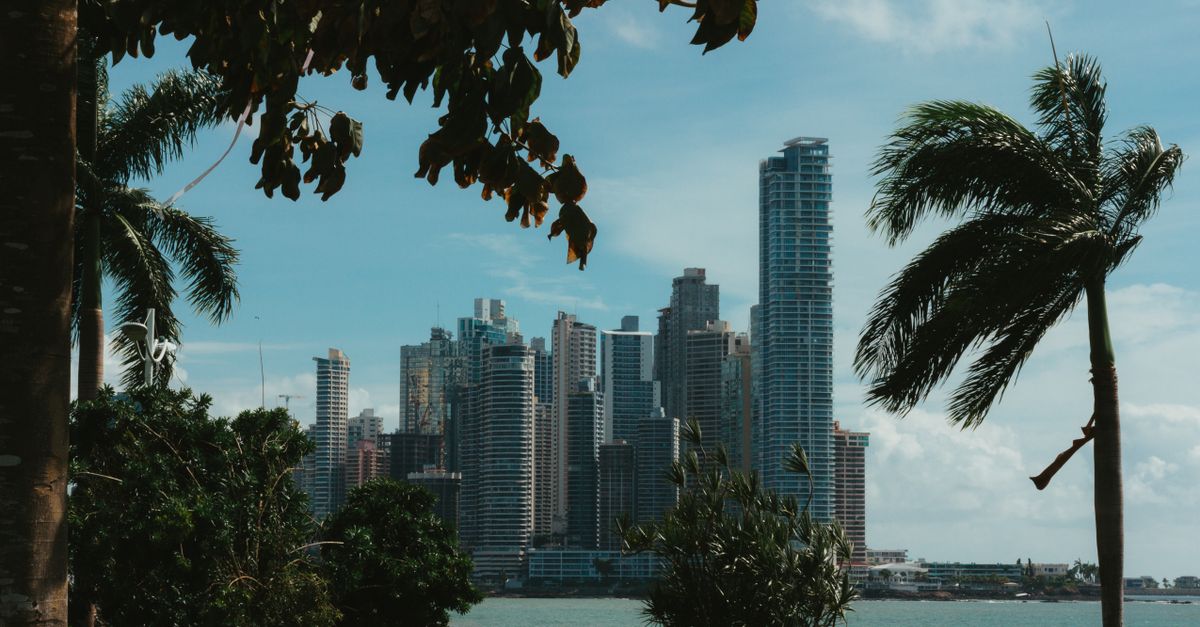
Panama City confounds first-time visitors because it is two cities stacked on top of each other. The first is the high-rise financial centre — a forest of glass towers along Avenida Balboa and Punta Pacifica that gives the skyline its Miami-like silhouette. The second is Casco Viejo, the 17th-century colonial quarter built after the original Panama City was burned by the pirate Henry Morgan in 1671, now restored, UNESCO-listed, and one of the most photogenic urban landscapes in Central America. Connecting them is the Cinta Costera promenade, the Metro line, and a four-kilometre bay walk that takes 90 minutes if you stop for ceviche at the Mercado de Mariscos. Add the Canal — the engineering monument that rewrote global trade and still raises and lowers ships eight metres in a single lock cycle — and you have a first-time itinerary that needs three days minimum to do justice to. This guide covers the practical groundwork: visa rules, the dollarised economy, the Tocumen Airport transfer, neighbourhood selection, cultural cues, and the seven mistakes that catch first-timers off guard. Panama City is easier than most Latin American capitals to navigate; the friction points are predictable and avoidable with the right preparation.
Before You Arrive
Most Western travellers — citizens of the United States, Canada, the United Kingdom, the European Union, Australia, and New Zealand — receive a 180-day tourist entry on arrival in Panama with no advance visa required (Panama is more generous than its neighbours; Costa Rica and most of Central America cap stays at 90 days). The immigration officer at PTY may ask for proof of onward travel and proof of funds (USD 500 or a credit card with capacity); both are occasionally enforced and worth having ready as screenshots. Your passport must be valid at minimum the duration of your stay; six months from entry is the safer buffer that some airlines require for boarding.

Panama uses two currencies in parallel — the Panamanian Balboa (PAB) and the US Dollar (USD). Both are pegged 1:1 and circulate as legal tender; in practice, the country uses US dollar bills for everything (the Balboa exists only as coins). This is the most practically useful detail of Panama travel — no currency conversion app, no exchange office visits, no bank withdrawal calculations. ATMs across the city dispense USD bills in USD 10, 20, and 50 denominations. Banco General, Banistmo, and BAC Credomatic ATMs charge low or no foreign withdrawal fees on most cards.
For SIM cards, Panama's main carriers are Más Móvil, Digicel, and Tigo. Prepaid SIMs are sold at PTY arrivals (look for the kiosks past customs) and at any of the major shopping malls — USD 8-15 for a SIM with 30 days of data, your passport required for activation. eSIM users can buy Airalo or Holafly Panama plans for USD 9-22 before arrival, which is the easier option for short trips. WhatsApp is the universal messaging app; download it before arrival if you don't have it.
Panama is a tropical country with two seasons — dry season (December to April) and green season (May to November). Dry season is the high tourist season with lower humidity, reliable sunshine, and higher hotel prices. Green season has predictable afternoon thunderstorms (typically 1-4pm) but otherwise hot, humid days with cheaper accommodation. Pack lightweight cotton or quick-dry clothes, a rain shell for green season, sandals and one pair of comfortable walking shoes, and DEET-based insect repellent. Casco Viejo's cobblestones are uneven; flip-flops are not the right footwear. The city is hot — 28-34°C year-round — and surprisingly humid; pack twice the t-shirts you think you need. Pharmacies (Arrocha, Metro Plus) stock everything you might forget at standard prices and stay open late.
Getting from the Airport
Tocumen International Airport (PTY) sits 25 kilometres east of central Panama City — the trip takes 35-50 minutes by car in normal traffic and 60-80 minutes during morning or evening rush hour. Three transfer options cover almost all travellers.

The cheapest option is the Corredor Sur Express bus, which runs from the airport's bus terminal (downstairs from arrivals — follow signs) to the Albrook Bus Terminal in central Panama City for USD 1.25. The bus runs roughly every 15-30 minutes from 5am to 10pm. From Albrook, the Metro Line 1 connects to Casco Viejo (Cinco de Mayo station, then a 15-minute walk down Avenida Central) and to Bella Vista / El Cangrejo (Iglesia del Carmen station) at USD 0.35. Total trip cost USD 1.60 plus the Rapi-Pass card (USD 2). The bus has luggage space and air conditioning.
Uber from PTY runs USD 18-28 to most central neighbourhoods depending on time and traffic — roughly half the official taxi price. The Uber pickup zone is signed at the arrivals exit; expect 5-15 minutes for a driver to reach you. This is the easiest and most flexible option for travellers with multiple bags, late arrivals, or a preference for door-to-door service.
Official taxis from the airport's regulated rank charge fixed rates by zone — expect USD 30-45 to Casco Viejo, Bella Vista, or El Cangrejo. The drivers are licensed and reliable, the cars are air-conditioned, and the rate is locked in advance. Best choice for travellers arriving late at night with luggage who don't want to wait for an Uber.
Travellers heading directly out of Panama City should know that international buses to Costa Rica (Tracopa, Panaline) leave from Albrook Bus Terminal, not from the airport — take the public bus to Albrook and connect there. Domestic flights to Bocas del Toro, David, and the San Blas islands run from Albrook Marcos A. Gelabert Airport (PAC), a separate domestic-only airport beside the bus terminal. Don't confuse the two airports; book carefully.
Getting Around the City
Panama City has the only metro system in Central America and it is genuinely useful for tourists. Metro Line 1 runs north-south through the city's main spine — Albrook (the bus terminal) to San Isidro via Cinco de Mayo (the closest stop to Casco Viejo, with a 15-minute walk down Avenida Central) and Iglesia del Carmen (the closest stop to El Cangrejo and Bella Vista). Metro Line 2 runs east toward the airport. Each ride costs USD 0.35, paid via the Rapi-Pass card (USD 2 for the card plus minimum balance). Buy the card at any Metro station ticket office.

The MetroBus network covers everything the Metro doesn't reach, including the Amador Causeway, the Biomuseo, the residential areas, and the suburbs. Same Rapi-Pass card, fares USD 0.25-1.25 depending on route. Use Google Maps or Moovit to plan routes; Panama's bus numbers are confusing for first-timers and the system has no English-language signage.
Uber is the standard option for door-to-door travel and is the easiest way to get around the city for visitors. Fares within central Panama City run USD 4-9, with surge pricing during rush hours and Friday/Saturday nights. Uber works at night, in the rain, and from any address — strongly recommended over yellow taxis for first-time visitors who don't speak Spanish.
Yellow taxis rarely use meters; agree the fare before getting in. Casco Viejo to Bella Vista runs USD 5-8 typically; to the airport USD 30-40. The drivers are mostly honest but the negotiating-without-Spanish step adds friction that Uber eliminates.
Casco Viejo itself is small and entirely walkable — the colonial quarter is roughly four blocks by six blocks, and you'll cover the major plazas, churches, and viewpoints in a 90-minute loop. Avenida Central, the pedestrianised commercial street that connects Casco Viejo to the centre, is also walkable end-to-end in 20 minutes if the heat is manageable.
Where to Base Yourself
Panama City has three neighbourhoods that make sense for first-time visitors, each with a different character and price range.

Casco Viejo is the colonial old town — UNESCO-listed, walkable, full of restored 17th-19th century buildings, restaurants, rooftop bars, and the city's most photogenic streets. Hotel prices reflect the neighbourhood's status: boutique hotels USD 130-280 per night, mid-range USD 80-130, hostels USD 17-25 per dorm bed and USD 55-85 for private doubles. Choose Casco Viejo if you want to be in the prettiest part of the city, walk to most cultural attractions, and pay for the location. The compromise is distance from the modern centre; Bella Vista and El Cangrejo are USD 4-7 by Uber.
Bella Vista is the modern Banking District just north of the centre — high-rise hotels, glass towers, a strong international restaurant scene along Calle Uruguay, and easy Metro access (Iglesia del Carmen is the local station). Hotel prices: international chains USD 90-200, boutique USD 70-130, hostels USD 14-22 per dorm bed. Choose Bella Vista if you want a modern hotel at a fair price, easy Uber access to Casco Viejo, and the buzz of a working financial district. The neighbourhood is safe to walk during the day and reasonably so at night.
El Cangrejo is the residential district immediately north of Bella Vista, with affordable mid-range hotels, the city's best concentration of casual restaurants (Latin American, Asian, fusion), and a more local feel than the high-rise zones. Hotel prices: USD 65-130 for mid-range hotels, USD 40-70 for budget hotels. Choose El Cangrejo if you want value, walking access to good restaurants, and a base 10-15 minutes by Uber from Casco Viejo.
Other neighbourhoods to know: Punta Pacifica (luxury high-rise hotels with bay views, USD 180-450, far from Casco Viejo by walking standards), Albrook (around the bus terminal and mall, convenient for early bus departures, character-free), and Amador Causeway (the man-made causeway with the Biomuseo and several beach-resort-style hotels, isolated from the city core).
Local Culture & Etiquette
Panama is a Latin American country with a strong international business culture — the Canal, the banking sector, and the maritime trade have produced a population that is more bilingual, more multicultural, and more international than most of its Central American neighbours. Spanish is the official language; English is widely spoken in tourist zones, hotels, and the financial district. A few Spanish phrases (buenos días, gracias, por favor, la cuenta) materially improve interactions.

Panamanians (called Panameños) are warm and direct in conversation — more direct than Costa Ricans, less formal than Colombians. Greetings are firm handshakes between men, a single cheek kiss between women or between a man and woman who know each other socially. First names are used quickly; titles (Don, Doña, Señor) are respectful for older people or in formal settings.
Tipping follows US-influenced norms in Panama — 10% is standard at restaurants, 15-18% for excellent service, and most upscale establishments add a 10% service charge automatically (look for "servicio" on the bill before tipping again). Hotel housekeeping USD 1-2 per day, taxi drivers don't expect tips but rounding up is appreciated, tour guides USD 5-15 per person per day depending on group size. The 7% ITBMS sales tax is added to most restaurant bills and is separate from the tip.
Dress in Panama City is more formal than in beach destinations. The financial district especially is full of people in business attire; tourists in shorts and tank tops in Bella Vista or central Panama City look out of place. Casco Viejo is more relaxed but still tilts to long trousers/dresses for evening dining. Churches require covered shoulders and trousers/skirts to the knee. The dress code at upscale restaurants and rooftop bars in Casco Viejo and Punta Pacifica is "smart casual" — clean shirt, long trousers, closed shoes for men.
Panama's indigenous cultures — the Guna (also spelled Kuna), the Emberá, the Wounaan, the Ngäbe-Buglé — have strong cultural identities and protected territories. The Guna in particular run the San Blas Islands as an autonomous region and have specific rules for visitors (no nudity, no camping without permission, photography with consent only). Buying a mola (the layered-appliqué textiles that are the Guna's most famous craft) is a meaningful way to support the community, but verify you're buying authentic work — the central handicraft markets in Panama City stock authentic and fake versions side by side.
Common Mistakes to Avoid
The mistakes first-timers repeat in Panama City are predictable and mostly come from underestimating the city, mishandling the Canal experience, and misjudging which neighbourhoods are safe at which hours. The following seven errors are the most common.
1. Going to Miraflores Locks at the wrong time. The Canal locks have a transit schedule — ships travel northbound (Pacific to Atlantic) in the morning roughly 7am-noon and southbound in the afternoon roughly 2-6pm. Visitors who arrive at Miraflores at 12:30pm see the locks empty and wonder what the fuss was about. Check the official Canal website's schedule the day before and time your visit for active transits, ideally arriving an hour before the wave starts.
2. Walking from Casco Viejo into El Chorrillo at night. Casco Viejo is gentrified and safe; the immediate area west and north of it (El Chorrillo, parts of Santa Ana) has genuine safety problems. The transition is sharp — three blocks north of the Plaza Mayor and the streetscape changes. Stay within Casco Viejo proper after dark, take an Uber to Bella Vista or back to your hotel, and don't walk between neighbourhoods at night.
3. Skipping the Mercado de Mariscos. The seafood market is one of the city's best experiences — USD 1.50 ceviche cups, second-floor lunch restaurants, and a proper working market atmosphere. First-timers who follow the high-rise hotel route never see it. Visit in the morning (before noon) when the market is busiest and freshest; the area becomes uncomfortable after the market closes around 5pm.
4. Underestimating the Canal expansion experience. Many visitors go to Miraflores expecting the original 1914-built locks but find that the major modern shipping uses the new Cocoli Locks (Pacific side) and Agua Clara Locks (Atlantic side), built in 2016 and capable of handling Neopanamax ships up to 366 metres. The new locks are more impressive engineering than the originals. Agua Clara on the Atlantic side is less crowded and offers better viewing; check whether your interest is the historical Miraflores or the modern Cocoli/Agua Clara before booking.
5. Confusing Tocumen Airport (PTY) with Albrook Airport (PAC). Tocumen is the international airport east of the city; Albrook is the small domestic airport beside the bus terminal in the centre. Domestic flights to Bocas del Toro, David, and San Blas leave from Albrook, not Tocumen. Travellers who get this wrong can lose a half-day of trip time and the cost of an unrefundable flight.
6. Not buying a Rapi-Pass on day one. The Metro and MetroBus systems require the Rapi-Pass card; cash is not accepted on either. Travellers without one end up taking USD 5-9 Ubers for trips that should be USD 0.35 Metro rides. The card is USD 2 plus minimum balance, sold at any Metro station, and the savings on a four-day trip exceed USD 30.
7. Believing the Panama hat is Panamanian. The "Panama hat" is, despite the name, originally Ecuadorian — woven from toquilla palm in the Ecuadorian highlands and sold in bulk through Panama during the canal-construction era, hence the misleading name. Visitors who buy a "real Panama hat" at Casco Viejo souvenir shops are usually buying an Ecuadorian-made hat at a tourist mark-up. If authenticity matters, buy in Cuenca, Ecuador; if you just want a nice hat as a souvenir, the Mercado de Artesanías near Avenida Cuba sells the same hats at honest prices.