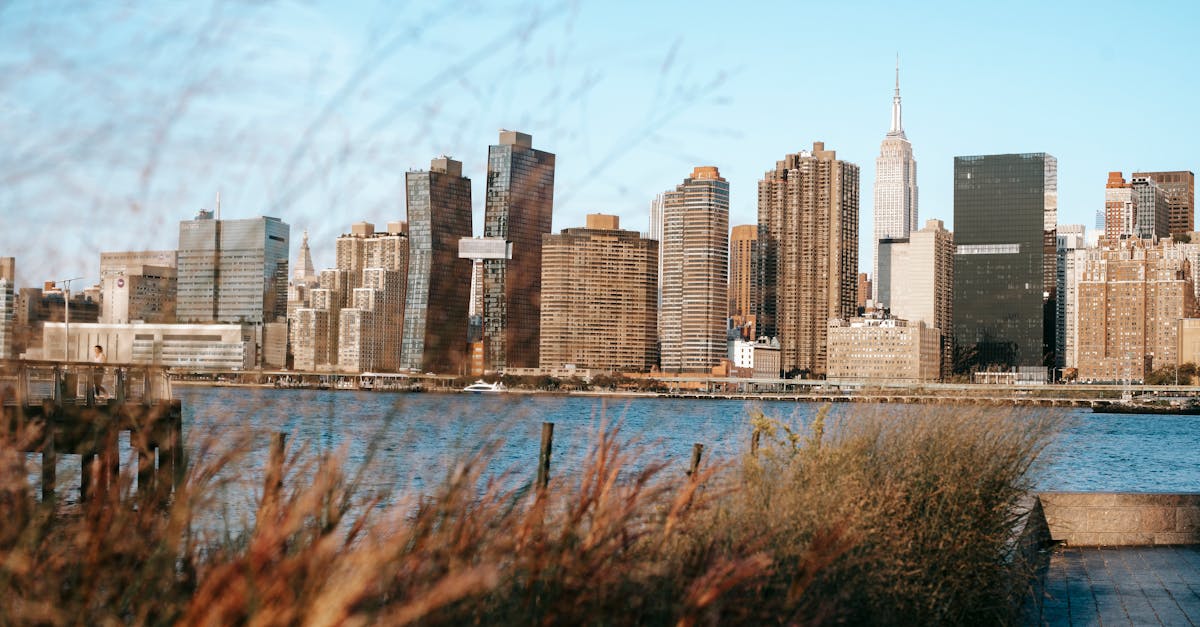
New York First-Timer Guide: Everything You Need to Know
New York moves fast and assumes you already know the rules. The city won't slow down for you, but it will reward you once you understand how it works. This guide covers the practical essentials — airport transfers, subway navigation, tipping culture, neighbourhood layout, and safety — so you can hit the ground running instead of standing confused at a MetroCard machine in Penn Station.

Airport to Manhattan: JFK, Newark & LaGuardia
JFK: The AirTrain ($8.25) connects to the subway system at Jamaica station (for the E/J/Z trains to Midtown) or Howard Beach station (for the A train to Downtown). Total cost to Manhattan: $11.15 (AirTrain + subway). Travel time: 60-75 minutes depending on your destination. Fixed-rate yellow taxis to Manhattan cost $70 plus tolls and tip (expect $85-95 total). Uber and Lyft run $55-90 depending on traffic, time of day, and surge pricing.
Newark (EWR): The AirTrain ($8.25) connects to NJ Transit trains at Newark Liberty International station. A train to Penn Station costs $15.25 total and takes 45 minutes. This is the smoothest airport transfer if your hotel is in Midtown. Taxis cost $80-100 plus $17.50 in tolls and surcharges. Newark is often cheaper to fly into but slightly more complicated to reach by public transit.
LaGuardia (LGA): No direct train connection yet. Take the free Q70 LaGuardia Link bus to the 7 train at Jackson Heights, then ride the subway into Manhattan ($2.90 total, 50-60 minutes). Taxis run $35-55 to Midtown. LaGuardia is geographically closest to Manhattan but has the worst public transit access of the three airports. Ride-shares are often the best deal here at $25-40.
The Subway Decoded
The NYC subway looks hopelessly complicated on the map but follows a clear logic once you understand three things. Numbers (1, 2, 3, 4, 5, 6, 7) and letters (A, B, C, D, E, F, G, J, L, M, N, Q, R, W, Z) each run fixed routes. Lines are colour-coded on maps (blue, red, green, etc.), but New Yorkers reference the letter or number, never the colour. Say "take the A train," not "take the blue line."
Uptown means north (toward Central Park and Harlem). Downtown means south (toward the Financial District and Brooklyn). Express trains skip many stops while local trains stop at all of them — on the subway map, a solid white dot means all trains stop there, while a black dot means local trains only. Check which train your station serves before descending. Tap a contactless card or phone to pay ($2.90 per ride). The weekly OMNY cap is $34 for unlimited rides.
Tipping Culture: The 20% Rule
Tipping in the US is not optional and not a bonus for exceptional service — it's how service workers earn most of their income. Servers, bartenders, and delivery workers rely on tips because the legal minimum wage for tipped workers is far below the standard minimum wage. Not tipping is considered deeply disrespectful.
Restaurants: 18-20% on the pre-tax total is standard. Most receipts show suggested tip amounts; 18% is the minimum for acceptable service, 20% for good service, 25% for exceptional. Bars: $1-2 per drink at the bar, or 18-20% on a running tab. Taxis and ride-shares: 15-20%. Coffee shops: $1 for counter service or skip it — the tip jar is genuinely optional. Hotels: $2-5 per night for housekeeping (leave cash on the pillow with a note), $1-2 per bag for bellhops. Delivery: 15-20% minimum, more in bad weather.
Neighbourhoods and Navigation
Manhattan's grid system makes navigation simple once you know the pattern. Streets run east-west and are numbered (1st Street to 220th Street, going north). Avenues run north-south and are also numbered (1st Avenue to 12th Avenue, going west), though some have names (Lexington, Madison, Park, Broadway). Twenty north-south blocks equal roughly one mile. Broadway cuts diagonally across the entire grid.
Key neighbourhoods for tourists: Midtown (Times Square, Rockefeller Center, Central Park South), Lower Manhattan (Wall Street, Battery Park, 9/11 Memorial), Greenwich Village/West Village (restaurants, jazz, quiet brownstone streets), East Village/Lower East Side (bars, cheap eats, nightlife), SoHo/NoLiTa (shopping, galleries), and Chelsea (High Line, Chelsea Market, galleries).

Safety Basics
Manhattan, Brooklyn's main tourist neighbourhoods (Williamsburg, DUMBO, Park Slope, Brooklyn Heights), and most of Queens are very safe at all hours. Millions of people walk the streets after midnight — this is one of the world's most 24-hour cities. Common sense applies: keep your phone in your pocket on subway platforms, don't flash cash, stay aware of your surroundings.
Times Square is safe but chaotic — ignore costume characters who demand aggressive tips for unsolicited photos. Subway stations are well-covered by cameras and generally safe. Avoid empty subway cars late at night (there's usually a reason they're empty — ride in the conductor's car, marked by a black-and-white striped sign on the platform). If something feels wrong, trust your instinct and move to a busier area.

Essential Apps & Connectivity
Download the MTA app (official NYC transit) for real-time subway arrivals and weekend service change alerts — this alone will save you from standing on the wrong platform. Citymapper is excellent for multi-modal routing. Google Maps works well for walking directions and restaurant reviews. For food recommendations, The Infatuation app is curated by local critics and far more reliable than Yelp for NYC.
Most US carriers offer affordable prepaid SIM plans. T-Mobile sells tourist SIMs at JFK and Newark for $30 (3 weeks of data). Free Wi-Fi is available in most cafés, all Starbucks locations, and across the NYC subway system (all underground stations have free Wi-Fi via Transit Wireless). Street-level cell service can be spotty in parts of Midtown due to building density, but subway Wi-Fi is reliable.
Before You Go
New York rewards preparation. Most of the friction first-timers encounter — overpriced museum tickets, sold-out shows, hours-long queues, and hotel sticker shock — is entirely avoidable with modest advance planning. Here is what to sort before you board the plane.
Book accommodation early, especially for summer and major events. New York hotel rates are among the highest in the world, and the gap between early and last-minute booking is dramatic — often $100+ per night for the same room. The sweet spots for price and location are Midtown West (close to everything, direct subway access), Long Island City in Queens (15-minute subway ride to Midtown, 25–40% cheaper), and Crown Heights or Prospect Heights in Brooklyn (40 minutes from Midtown, vibrant neighborhoods, significantly cheaper). Avoid Times Square hotels unless the location is specifically important to you — prices are highest, noise is constant, and you are surrounded by tourist infrastructure rather than actual city life.
Sort your transit strategy before landing. The MetroCard is being phased out in favor of OMNY — a contactless tap payment system. Any credit or debit card with contactless capability works directly on the subway turnstiles and bus readers at $2.90 per ride, with a weekly cap of $34 for unlimited rides. You do not need to buy a separate transit card. Apple Pay and Google Pay work at every turnstile. The MetroCard machines at airports still exist but are unnecessary unless you specifically need a student or reduced-fare card.
Reserve the experiences that require it. The 9/11 Memorial Museum ($29 adults), One World Observatory ($44), and top-tier restaurants require advance tickets or reservations. Katz's Deli does not take reservations but has predictably short queues on weekday afternoons. The Statue of Liberty ferry and Ellis Island are heavily subscribed in summer — book tickets at least two weeks ahead through the National Park Service website ($24 including both sites). The ferry from Battery Park to Staten Island (free, 25 minutes each way) gives you the same skyline view for nothing.
Check the weather and pack for it honestly. New York in summer (June–August) is genuinely hot and humid — temperatures regularly reach 32–38°C with humidity that makes light clothing essential and underground subway platforms unbearable. Carry water and a portable fan. Winter (December–February) brings genuine cold, wind chill, and occasional snowstorms — a proper coat, hat, and gloves are not optional. The in-between seasons (March–May, September–November) are the city at its most livable: mild weather, lower hotel rates, and more relaxed energy.
Get a basic data plan sorted. US carriers require a US number for most prepaid plans. T-Mobile offers a Tourist Plan (from $30 for 3 weeks) sold at their airport stores at JFK and Newark. Google Fi works internationally and activates seamlessly. Many visitors simply rely on subway Wi-Fi (available at all underground stations) and hotel Wi-Fi without a local SIM — this is viable but requires more planning for navigation between connected zones.