Nassau is, for many North American travellers, their first experience of the Caribbean — a 50-minute flight from Miami, a familiar currency, a friendly English-speaking population, and an entire economy oriented toward making your visit smooth. This is both the city's greatest strength and the source of most first-timer mistakes. The cruise-port version of Nassau — the duty-free jewellery shops, the diamond promotions, the staged tours, the USD 8 hamburgers at chain restaurants — is real but is also less than 5% of the city. The actual Nassau is more interesting: a working capital of an island nation with its own music, food, history, and sharp social inequality between the cruise-tourism coast and the residential neighbourhoods that sit a single hill behind it. This guide gets first-time visitors past the cruise façade, through the practicalities of arriving and getting around, and into the texture of the country well enough to make a 3-7 day visit memorable rather than generic.
Before You Arrive
The Bahamas is exceptionally easy to enter for most visitors. Citizens of the United States, Canada, the United Kingdom, all EU member states, Australia, New Zealand, and most Commonwealth countries enter visa-free for stays up to 90 days. Bring a passport valid for the duration of your intended stay (no 6-month buffer rule applies, though one is sensible practice). US citizens travelling by cruise ship can technically enter with a passport card or birth certificate plus government-issued photo ID, but a full passport is the universal recommendation. As of 2024, all visitors must complete the online Bahamas Travel Health Visa / Click2Clear immigration declaration before arrival; the form is free, takes 10 minutes, and replaces the paper customs form. Skip this and you will be processing it manually at NAS while your fellow passengers walk past.

The currency is the Bahamian Dollar (BSD), pegged 1:1 to the US Dollar, and US Dollars are accepted virtually everywhere in Nassau at par. There is no practical need to exchange currency before arriving. Change you receive will be a mix of BSD and USD bills indistinguishable in transactional terms. Avoid airport currency exchange counters, which apply small but unnecessary spreads. ATMs at Royal Bank of Canada, Scotiabank, and FirstCaribbean dispense USD or BSD at the official rate with fees of BSD 4-6 per withdrawal.
For mobile data, the Bahamas Telecommunications Company (BTC) and Aliv both sell tourist SIMs at the NAS arrivals hall with 7-day or 14-day data packages from BSD 25-50. Coverage is excellent throughout New Providence Island. T-Mobile US customers receive free data roaming in the Bahamas as part of standard plans; Verizon and AT&T require add-on day passes (USD 10/day) that quickly exceed the cost of a local SIM. eSIMs from Airalo and Holafly cover the Bahamas at USD 9-25 for 7-day packages and avoid swapping physical cards.
Pack for high-summer Caribbean conditions year-round — daytime temperatures sit between 24-32 degrees Celsius, humidity is consistent, and the sun is intense. Bring reef-safe sunscreen (the Bahamas has banned non-reef-safe formulations as of 2020, and the import limit at NAS for non-compliant sunscreen is strict — buy reef-safe before you fly), a wide-brim hat, lightweight long-sleeve clothing for evenings, sandals plus closed shoes for excursions, a light rain jacket, and an underwater camera or phone case for snorkelling. Hurricane season runs June 1 through November 30, with peak risk September. Hotels and resorts honour their hurricane-cancellation policies, but personal travel insurance with named-storm coverage is the necessary backstop if you are travelling in this window.
One advance practical: the Bahamas levies a 12% VAT on most goods and services, which is generally included in posted prices. Restaurants commonly add a 15% gratuity to the bill (look for the "service charge" line) — additional tipping is welcomed but not required when this charge is present. Hotels routinely add a "resort fee" of USD 30-65 per night that is not always disclosed at booking. Read the fine print on any hotel reservation.
Getting from the Airport
Lynden Pindling International Airport (NAS) sits on the western edge of New Providence Island, 16 km west of downtown Nassau and 8 km west of Cable Beach. The terminal is modern, single-use, and well-organised; immigration and baggage typically run 30-45 minutes after a flight lands.

Taxis from NAS operate under government-set tariffs posted prominently at the taxi rank. Standard fares: USD 15-18 to Cable Beach, USD 30-38 to downtown / Paradise Island, plus USD 3 per passenger over two and USD 0.50-1 per piece of luggage. Drivers must use the meter or quote the posted tariff; refuse any driver who tries to negotiate above this. Pay in USD or BSD at your option. Tipping 10-15% is standard.
Shared van shuttles operated by hotels (the British Colonial Hilton, Atlantis, Baha Mar, Sandals Royal Bahamian) ferry guests free from NAS — confirm with your booking that the transfer is included. Independent shuttle services to non-resort destinations charge USD 15-25 per person.
The jitney bus from outside the airport perimeter (the bus stop is on John F Kennedy Drive, a 5-minute walk from the terminal) runs jitney #10 to downtown via Cable Beach for BSD 1.25. Service is roughly every 20 minutes during daylight, ending around 7-8pm. The jitney is a perfectly viable arrival option for travellers with light luggage and patience, but the walk to the bus stop with full suitcases is awkward, and the bus itself can be tightly packed during commuter periods. Most first-time visitors take the taxi for arrival and use the jitney during the rest of the trip.
Uber and Lyft do not operate in the Bahamas — both apps will load on your phone but show no available drivers. Local taxi-hailing apps exist (Pindler Drive, BTaxi) but coverage is limited and reliability mixed. Plan to use the taxi rank or pre-book with your hotel.
If you're connecting onward to a cruise, dedicated cruise-line transfer buses meet most arriving flights for cruise-day passengers. Check with your cruise line in advance — most include the airport-to-pier transfer in the fare.
Getting Around the City
Nassau and the surrounding tourist areas of New Providence Island are compact enough that a combination of walking, jitneys, and occasional taxis covers everything most first-time visitors will want to see. A rental car is unnecessary for a typical 4-7 day trip and adds the genuine challenge of left-side driving (the Bahamas drives on the left, like the UK).

Walking handles all of downtown Nassau. The cruise port to Junkanoo Beach is 10 minutes; cruise port to the Maritime Museum, Pompey Museum, and Government House is under 15 minutes; cruise port to Arawak Cay is 25-30 minutes along West Bay Street. Sidewalks are continuous, traffic is moderate, and the seafront walk is genuinely pleasant. Wear sun protection — there is little shade.
The jitney network connects downtown to Cable Beach, Paradise Island, the airport, and the eastern Nassau neighbourhoods. Flat fare BSD 1.25 anywhere, paid in cash to the driver. The most useful route for first-time visitors is jitney #10, which runs the West Bay Street corridor from downtown to Cable Beach to the airport — you'll use it for trips between hotels and the food/beach corridor at Cable Beach. Routes #1 and #15 cover the eastern end. Wave them down anywhere along the route, board, and tell the driver where you're getting off.
Water taxis from the cruise port to Paradise Island (the Atlantis side) run every 15-20 minutes during daylight for BSD 4-6 each way. This is the easiest way between the two zones — substantially faster than walking around to the bridge or taking a taxi over the Paradise Island Bridge.
Taxis are reliable but expensive, with most central Nassau trips running USD 8-18 for distances a jitney covers for BSD 1.25. Use them for night returns, trips with heavy bags, or destinations the jitney doesn't reach (Cabbage Beach, the western end of Cable Beach, the Caves area).
The tourist scooter and golf cart rentals available at Paradise Island and Cable Beach (USD 60-90 per day) are tempting but rarely worth it given the small distances and the genuine challenge of left-side driving for visitors not used to it. A jitney plus a taxi for one or two specific trips covers the same ground at a fraction of the cost.
Where to Base Yourself
Nassau accommodation is concentrated in three distinct zones, each with a different character and price point. Choosing between them shapes the whole holiday.

Cable Beach — the 6-km strip of west-coast beach about 8 km west of downtown — is the area that most resembles a typical Caribbean beach destination. The Baha Mar complex (Grand Hyatt, SLS, Rosewood, USD 350-900 per night), Sandals Royal Bahamian (USD 450-800 per person all-inclusive), Sandyport Beaches Resort (USD 200-340), and several mid-range options. Beach is white sand, water is calm, crowded with resort guests rather than cruise day-trippers. Best for: couples, beach holidays, travellers prioritising swimming and resort amenities. Downsides: 15-20 minutes from downtown by jitney, taxi or hotel shuttle; the resort restaurant prices are punishing.
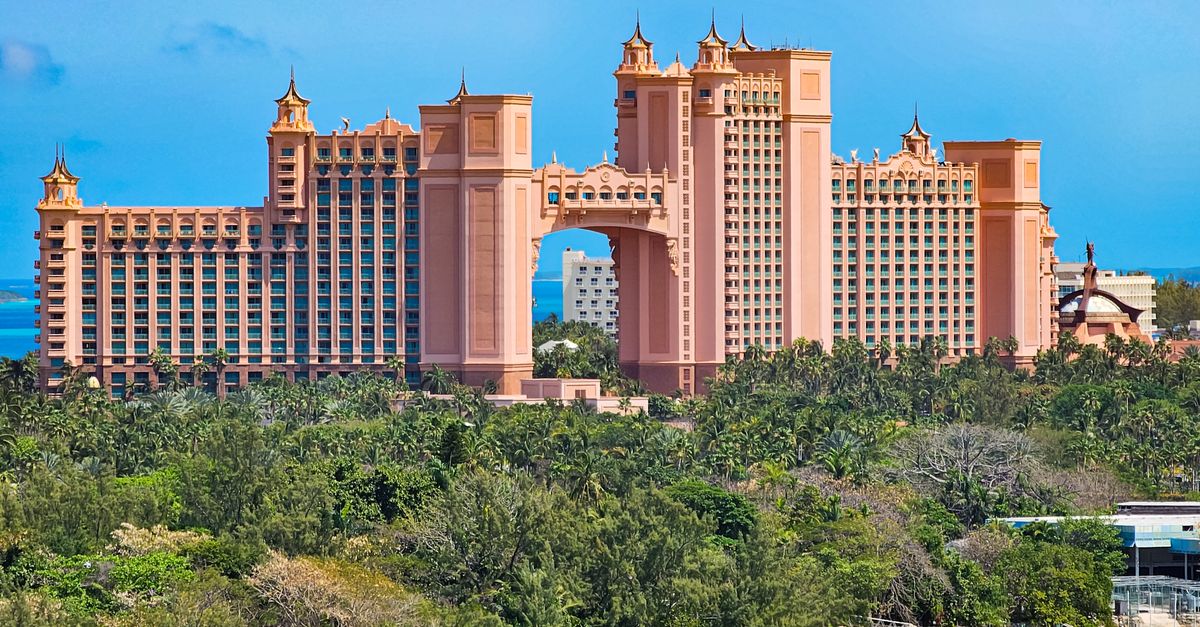
Paradise Island — the smaller island connected to Nassau by two bridges — is dominated by Atlantis (USD 350-1,200 per night) and a handful of smaller properties (Comfort Suites Paradise Island, Bay View Suites, the Cove). Paradise Island has Cabbage Beach (excellent), the Atlantis water park, the casino, the marina, and a self-contained tourism economy. Best for: families with kids who'll use the Atlantis water park, travellers who want a curated resort island experience and are happy not to leave it. Downsides: USD 6-10 toll bridge or USD 4-6 water taxi to reach downtown; expensive on every dimension.
Downtown Nassau — the historic centre around Bay Street, the cruise port, and the British Colonial Hilton — has the British Colonial Hilton (USD 240-400), Towne Hotel (USD 95-130), Quality Inn (USD 110-150), and a growing selection of Airbnb apartments in the Bay Street and Shirley Street corridors. Walking distance to the Maritime Museum, Junkanoo Beach, and Arawak Cay (25 minutes). Best for: travellers prioritising history and culture over beach time, budget travellers, those planning to visit other islands and using Nassau as a base. Downsides: not a resort beach — Junkanoo Beach is workable but not luxurious; nightlife is limited after the cruise ships board.
For first-time visitors with a 4-7 day window and a budget allowing USD 200-400 per night, the recommendation is split: 2-3 nights in downtown to walk Bay Street, see the museums, eat at Arawak Cay, and feel the city; then 2-4 nights at Cable Beach or Paradise Island for the beach holiday. This costs slightly more than picking one base but produces a much fuller picture of what Nassau actually is.
Local Culture & Etiquette
The Bahamas is a former British colony that became independent in 1973 and retains a working parliamentary democracy, a Westminster legal system, and English as the official language. The culture is a fusion of West African heritage, British colonial structure, and Caribbean adaptation, with the Junkanoo festival — a December-January street parade with elaborate costumes, brass bands, and goatskin drums — as the central national tradition. About 90% of Bahamians are of African descent; the remainder of the population is a mix of European, Asian, and mixed heritage.

English is universal but Bahamians speak it with a distinct rhythm and vocabulary that takes a day or two to fully tune into. Locals speak Bahamian Creole (also called Bahamianese) among themselves — closer to standard English than Jamaican Patois but with characteristic features: dropped final consonants, slightly different vowel sounds, and specific words ("conkey" for difficult, "switcha" for limeade, "sip-sip" for gossip). Visitors are not expected to learn this; understanding it improves rapidly with exposure.
Bahamians are courteous and slightly more formal in greetings than the loose North American norm. Walking into a shop or restaurant without saying "good morning" or "good afternoon" is mildly rude. The response is the same. This applies even at the cruise port: greeting the jewellery shop attendant before asking about a price changes the whole interaction.
Religious observance is deeper than in most other Caribbean destinations — about 70% of Bahamians attend Sunday services, and most public business runs on a reduced schedule on Sundays. Many small restaurants, shops, and tour operators close on Sundays, and the cruise port itself is significantly quieter. Dressing modestly when walking past churches on Sunday morning is appreciated.
Tipping is more closely aligned with US practice than European: 15-20% at restaurants (often included as "service charge" — read the bill), USD 1-2 per drink at bars, USD 1-2 per bag for porters, USD 2-5 per day for hotel housekeeping, 10-15% for taxi drivers. Tour guides and excursion operators expect USD 5-10 per person for half-day tours. Over-tipping is fine; under-tipping is noticed.
Dress in town is more conservative than at the beach. Walking through downtown Nassau in only a swimsuit is technically illegal under public-decency laws (rarely enforced for tourists, sometimes enforced selectively), and is in any case viewed as disrespectful by locals. Cover up with a sarong or shirt for any non-beach activity. The exception is Junkanoo Beach itself, where swimwear is the universal standard.
Common Mistakes to Avoid
1. Visiting only on a cruise day, only at the cruise port. The single biggest first-timer mistake is making the cruise-port zone synonymous with "Nassau." If you only see Bay Street's three blocks of jewellery shops, you have technically been to Nassau without seeing any of it. Walk the 25 minutes to Arawak Cay. Take the jitney to Cable Beach. Visit the Maritime Museum. The cruise zone is the smallest, least authentic, and least interesting part of the city — and it's where 80% of first-time visitors spend 80% of their time.
2. Buying jewellery at "duty-free" prices on Bay Street. The duty-free jewellery shops at the cruise port — John Bull, Diamonds International, Colombian Emeralds, dozens of smaller operators — employ commission-based salespeople trained in high-pressure techniques. The "duty-free" claim refers to the absence of Bahamian import duty on the goods, but US visitors pay normal US import duty on anything above their personal allowance back home. Comparison shopping consistently shows that the Nassau prices are at best comparable to, and often higher than, the same goods in major US cities. If you want a nice piece of jewellery, buy it at home from a jeweller you trust.
3. Accepting taxi prices that don't match the posted tariff. Government-set fares are posted at NAS arrivals, at the cruise port, and at most major hotels. A small but persistent minority of taxi drivers in Nassau quote inflated rates to obvious tourists, especially after dark and from the cruise port. Always confirm the rate before getting in: "What's the standard fare to [destination]?" If the answer materially exceeds the posted tariff, the driver is fishing — take the next taxi. Reporting fare overcharges to the Nassau Paradise Island Promotion Board (the local tourism authority) is occasionally productive.
4. Underestimating the cruise-day surge. Nassau receives 3-5 cruise ships simultaneously on most weekdays during winter season, with 12,000-20,000 passengers ashore between roughly 9am and 4pm. Restaurants, the Straw Market, and major attractions are crowded; taxi waits are long; small operators triple their prices for the day. Plan high-density activities (Atlantis day pass, Blue Lagoon Island, swimming with pigs trips) for Sundays or for early/late in the cruise day. Do your downtown walking, Junkanoo Beach swimming, and Arawak Cay meals in the late afternoon when the ships have boarded.
5. Going to Junkanoo Beach at midday on a cruise day. Junkanoo Beach is excellent in the early morning (before 10am) and the late afternoon (after 3pm), and crowded to the point of unpleasantness in between. Cable Beach is consistently calmer because the cruise excursions don't bring passengers there in the same volume. If your hotel is at Cable Beach, use that beach during cruise hours and visit Junkanoo for a swim before breakfast or before sunset.
6. Treating the Bahamas as interchangeable with Jamaica or Cuba. The Bahamas is geographically and culturally distinct: an Anglophone, predominantly Christian, parliamentary monarchy with a different food tradition (conch, peas n rice, johnny cake rather than jerk chicken or rice and beans), different music (Junkanoo and rake-and-scrape rather than reggae or son), and a different pace of social interaction. Walking into a Nassau restaurant and asking for "jerk something" or "Cuban coffee" marks you as a visitor who hasn't done the basic homework. Read 30 minutes about Bahamian history before you fly.
7. Booking expensive Atlantis or Cable Beach excursions for things that are free. Atlantis sells "exclusive beach access" packages for USD 80-150 per person to beaches that are public under Bahamian law. Cable Beach resorts sell "snorkel tours" for USD 60-100 per person at offshore reefs that you can swim to from the public sand with your own gear. Read carefully before booking: the question to ask is "what does this package include that I couldn't access for free or at minimal cost on my own?" If the answer is "nothing meaningful," the package exists for the convenience of resort guests and not as a genuine value proposition.