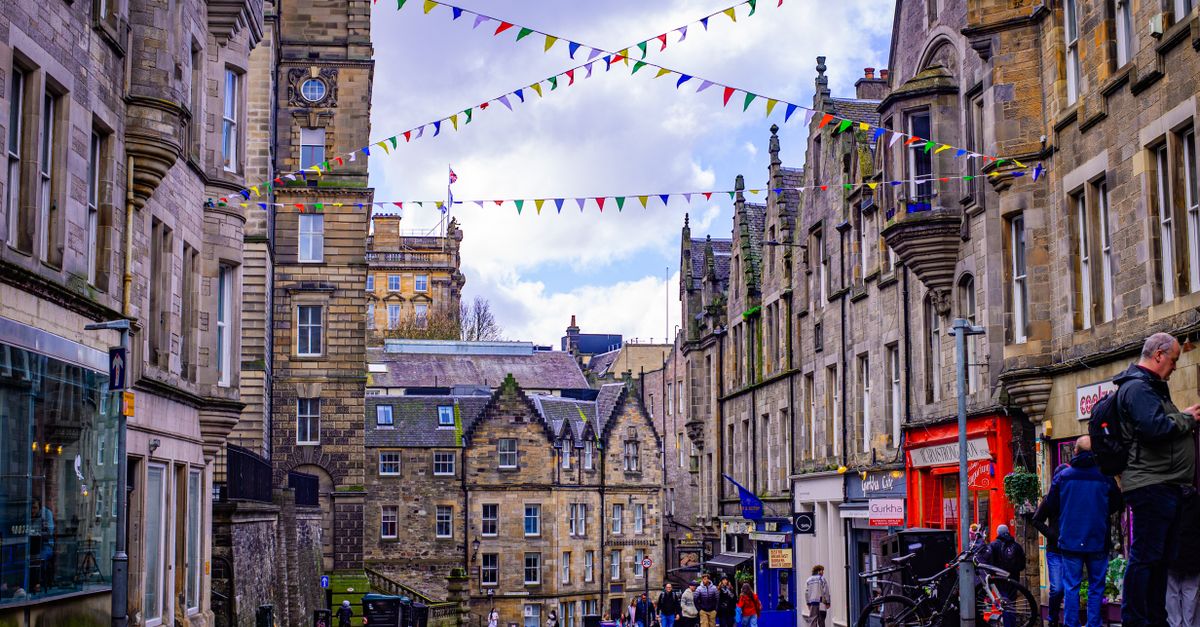
Edinburgh delivers one of the great first impressions in European travel. Arrive by train into Waverley Station and the castle is right there, 80 metres above you on its basalt crag, the Old Town stacked up behind it in tiers of dark stone. It's a city that looks like it was designed for dramatic effect — because, in a sense, it was: eight centuries of architectural ambition piled onto volcanic geology, finished with a Georgian New Town that rivals Bath for elegance. First-time visitors arrive expecting a small, manageable city and find instead a place of astonishing depth. This guide covers everything you need before you land: visas, currency, airport transfers, getting around, where to base yourself, and the cultural nuances that make Edinburgh feel less foreign and more fascinating.
Before You Arrive
The first thing to settle clearly: Scotland is part of the United Kingdom, not the European Union. Edinburgh uses GBP (British pounds sterling), not euros. This surprises a surprising number of European travellers who assume that proximity to the Continent implies shared currency. It does not. Euros are not accepted in Edinburgh shops, restaurants, or attractions — you will need pounds.

On visas: the UK operates its own immigration system entirely separate from the Schengen Area. An EU/EEA national does not need a visa to visit the UK for tourism (up to six months), but they do need to present a valid passport — not just a national ID card in all cases (check your country's specific agreements post-Brexit). Citizens of the USA, Canada, Australia, New Zealand, and Japan also receive visa-free access for tourism stays up to six months. Citizens of India, China, South Africa, and most of the Middle East and South-East Asia require a Standard Visitor Visa in advance, applied for online via the UK Visas and Immigration website. Processing typically takes three weeks. Check the official gov.uk website for your specific nationality — rules change and the official source is the only reliable one.
For currency, your best approach is to bring no cash at all and rely on contactless card payment. Edinburgh is almost entirely cashless: cafés, restaurants, buses, museums, and shops all accept Visa and Mastercard contactless. Lothian Buses specifically do not accept cash — contactless or app payment only. Carry GBP 20-30 in cash for small markets or the rare independent trader. Withdraw from a Travelex-branded ATM only as a last resort; instead use a fee-free card (Wise, Revolut, Starling) or withdraw from a major bank ATM (Barclays, NatWest, HSBC in Edinburgh) to avoid conversion fees.
For SIM cards, Three UK, EE, and Vodafone all have shops on Princes Street and Shandwick Place. A pay-as-you-go tourist SIM with 30-day data costs GBP 10-20 (Three's "Advanced Plan" at GBP 10 for 30GB is frequently the best deal). Alternatively, eSIM services like Airalo offer UK data packages you can activate before departure. Data is essential for Google Maps — Edinburgh's closes and wynds are confusing without navigation.
The Edinburgh Festival Fringe in August is both the best and worst time to visit. Best because the city is electric, every venue has programming, and the street atmosphere is unmatched anywhere in Europe. Worst because accommodation prices triple, the Royal Mile becomes impassable at peak times, and every restaurant has a queue. If you visit in August, book all accommodation and any paid shows at least three to six months ahead.
Getting from the Airport
Edinburgh Airport (IATA: EDI) sits 13 km west of the city centre. It's a compact, easy airport to navigate, with ground transport options well-signed from arrivals. Three realistic options serve most travellers.

The Airlink 100 bus is the classic budget choice: a dedicated express service running every 10 minutes between the airport and Waverley Bridge in the city centre, stopping at Haymarket and Princes Street en route. Journey time is 25-35 minutes in normal traffic. A single ticket costs GBP 4.50, a return GBP 7.50 — buy online at Lothian Buses' website or pay contactless on boarding. This is the most popular option for solo travellers and those with standard luggage.
The Edinburgh Tram runs from a dedicated station at the airport through Murrayfield, Haymarket, and Princes Street to St Andrew Square and York Place in the city centre. Journey time is approximately 35 minutes. A single adult fare from the airport to city centre costs GBP 7.50. The tram is slightly more expensive than the Airlink but offers a smoother, weather-protected journey and deposits you at the east end of Princes Street — convenient for New Town hotels and the St James Quarter area. Tram tickets can be purchased from machines on the platform; contactless payment accepted onboard.
A taxi or rideshare from the airport to central Edinburgh costs GBP 25-30 in a metered black cab and takes 25-40 minutes depending on traffic. Bolt and Uber both operate in Edinburgh. A three-way split makes the taxi competitive with public transport for groups. For solo travellers, it's GBP 20 more than the bus for roughly the same journey time.
Getting Around the City
The core visitor area of Edinburgh — from Edinburgh Castle in the west to Holyrood Palace in the east, and from Princes Street in the north to the Meadows in the south — is entirely walkable. Most first-time visitors cover 8-12 km per day on foot without especially trying. Comfortable walking shoes are the single most important thing to pack. The city is hilly; the Old Town in particular involves constant ascent and descent, and the closes between the Royal Mile and the lower streets can be steep and cobbled. Ankle support matters.

Lothian Buses operate an extensive city network with buses running from around 5:30 AM until midnight, with a Night Bus service on key routes. Single fare: GBP 1.80 by contactless tap-in as you board. A day pass caps automatically at GBP 4.20 after three journeys. Buses are clean, punctual, and well-used by locals — they are not just for tourists. Key routes for visitors: No. 35 connects Leith Walk to the Old Town; No. 23 and 27 connect the Meadows and university area to Princes Street; No. 1 serves Leith. Google Maps shows live bus times and stops for all Lothian routes.
Do not try to pay cash on buses. You will be politely refused. Lothian Buses has been cashless since 2020. Contactless card, Apple Pay, Google Pay, or the Lothian Buses app are your only options. First-time visitors who don't know this get stuck at the door and embarrassed in front of a full bus. Know this before you get on.
The Edinburgh Tram is useful for the Princes Street corridor and airport route only — it is a single line and doesn't penetrate the Old Town.
Taxis are plentiful, metered, and available at ranks on Princes Street, Waverley Bridge, and outside major hotels. Apps: Bolt is typically cheaper than metered cabs for city journeys; Uber also operates here. City centre journey: GBP 8-14.
Where to Base Yourself
Edinburgh's neighbourhoods each have distinct character, and the right base depends on your priorities — proximity to the main sights, nightlife access, local atmosphere, or budget.

Old Town / Royal Mile is the classic first-timer choice. You're within walking distance of Edinburgh Castle, the Palace of Holyroodhouse, St Giles' Cathedral, Greyfriars Kirkyard, and Victoria Street. The area is atmospheric and dramatically beautiful but unambiguously touristy — souvenir shops, bagpipe buskers, and overpriced restaurant menus are part of the deal. Hostel dorms cost GBP 18-28 per night; budget hotels from GBP 75-110. The Royal Mile area is noisier at night during weekends.
Grassmarket sits directly below the castle at the foot of the Old Town and offers one of Edinburgh's most characterful settings: a wide square lined with independent bars, restaurants, and smaller hotels, surrounded by former tenements. It's slightly more local than the Royal Mile itself while remaining walkable to all major sights. Accommodation ranges from GBP 20-28 per dorm bed at Castle Rock Hostel to boutique hotels from GBP 120-160 per night. The Grassmarket nightlife is lively; earplugs if you're a light sleeper.
Leith is Edinburgh's port district, 2-3 km north of the Old Town, and the neighbourhood that locals are most likely to direct you to for eating and drinking. Home to the Royal Yacht Britannia (the decommissioned royal yacht, now a museum) and a cluster of excellent seafood restaurants along the Shore, Leith has been thoroughly gentrified without becoming sterile. Accommodation here is cheaper than the Old Town: small B&Bs and guesthouses start from GBP 65-80 per night double. Bus No. 35 connects Leith Walk to the Old Town in 15 minutes.
New Town offers Georgian elegance along Princes Street, George Street, and Charlotte Square. Hotels here tend to be pricier (from GBP 110-160 for a standard double) but the area is quieter, closer to the main shopping, and well-connected by bus. First-time visitors who want convenience over atmosphere should consider New Town.
Local Culture & Etiquette
Scots are famously direct, warm, and possessed of a dry wit that can read as unfriendliness to those not attuned to it. The culture values understated humour, honest conversation, and a mild scepticism of anything too earnest. A visitor who admits they know nothing about haggis and asks genuinely will be received far better than one who performs their Scotland knowledge. Don't over-reference Braveheart.

The pub is the social institution in Edinburgh as it is throughout Scotland. Edinburgh's pub culture differs subtly from its London equivalent: sessions here can be longer, the whisky list longer still, and the conversation more readily offered to strangers. If you sit at the bar rather than at a table, expect to be drawn into conversation within twenty minutes. This is a feature, not a bug.
The rounds system operates throughout Scottish pub culture and understanding it prevents social awkwardness. When you're drinking in a group, it is customary to take turns buying a round for the entire group — each person buys once while others wait. Accepting drinks from a round and then leaving without buying your own round is a mild but noted social transgression. If you don't intend to stay for a full round, make this clear early by buying your own drink at the bar rather than joining the round. Nobody will be offended by the opt-out; they will be faintly irritated by the disappearance.
On whisky: ordering a "scotch" in Edinburgh will earn you a bemused look. Ask for "whisky" (no 'e' — Irish whiskey takes an 'e', Scottish does not). Specify the distillery or region: Highland, Speyside (fruity and approachable), Islay (peaty and challenging), Lowland (light and floral). Bar staff in Edinburgh's better pubs take genuine pleasure in guiding first-timers through a whisky tasting. Let them.
Scottish weather is the single most discussed subject in the country and for good reason. Edinburgh averages 1,400 mm of rain per year, spread reliably across every month. "Four seasons in one day" is a cliché because it is frequently true. Bring a waterproof layer regardless of the season. July and August are the driest months but not guaranteed fine weather. Layering is not a fashion choice here — it is practical survival.
Common Mistakes to Avoid
Assuming cash is accepted on buses. Lothian Buses are entirely cashless. This is the most common practical mistake first-timers make, standing at the front of a bus queue fumbling for coins that the driver cannot accept. Have your contactless card or phone pay set up before you even leave for the bus stop. If your card has daily contactless limits, increase them before travel.
Eating the whole trip on the Royal Mile. The Royal Mile is a UNESCO World Heritage Site and absolutely worth walking. It is not worth eating at. The restaurants lining it — the ones with photographs of food outside and staff beckoning you in — serve mediocre food at London prices to people who don't know any better. Walk ten minutes in any direction (Grassmarket, Nicholson Street, Cockburn Street, the Cowgate) and the quality doubles while the price halves.
Underestimating Arthur's Seat. The 45-minute hike to the summit of Arthur's Seat looks benign from a distance. In wet weather — which is most of Edinburgh's weather — the paths become slick rock and mud, and ankle injuries are common among visitors in trainers or loafers. Wear shoes with grip and check the weather before you ascend. The view is transformative; the walk to it can be legitimately challenging in poor conditions.
Booking nothing in advance for August. The Edinburgh Festival Fringe runs for three weeks in August and is the largest arts festival on the planet. The city's accommodation is essentially sold out from June, and popular restaurants require bookings weeks in advance. Visiting in August without any pre-booking is not spontaneous — it is expensive and stressful. Either book everything six months ahead or visit in any other month.
Confusing Scotland with England culturally. Scots have a strong and distinct national identity entirely separate from English identity. Calling something "English" when you mean "British," comparing Scottish things unfavourably to their English equivalents, or blithely expressing ignorance about Scottish history will not make you popular. Show curiosity and genuine interest instead — Scots are enormously proud of their history, literature, and culture, and will share it enthusiastically with anyone who asks.
Skipping Leith entirely. First-time visitors to Edinburgh often spend all their time in the Old Town and New Town and never make it to Leith. This is a mistake. The Royal Yacht Britannia is one of the most interesting attractions in the city, The Shore is one of the best streets for eating and drinking, and the neighbourhood gives you a completely different perspective on how Edinburgh actually functions as a living city rather than a heritage set piece.
Wearing a kilt or tartan as a novelty costume. Clan tartan is a genuine part of Scottish family heritage for many people. Wearing a random tartan pattern as a novelty kilt-hire experience is entirely legal but culturally tin-eared. If you want to engage with tartan seriously — and it's actually worth doing — visit Kinloch Anderson or a good independent kilt maker and ask about your family name's connection to Scottish clans. The conversation is far more interesting than the photo.