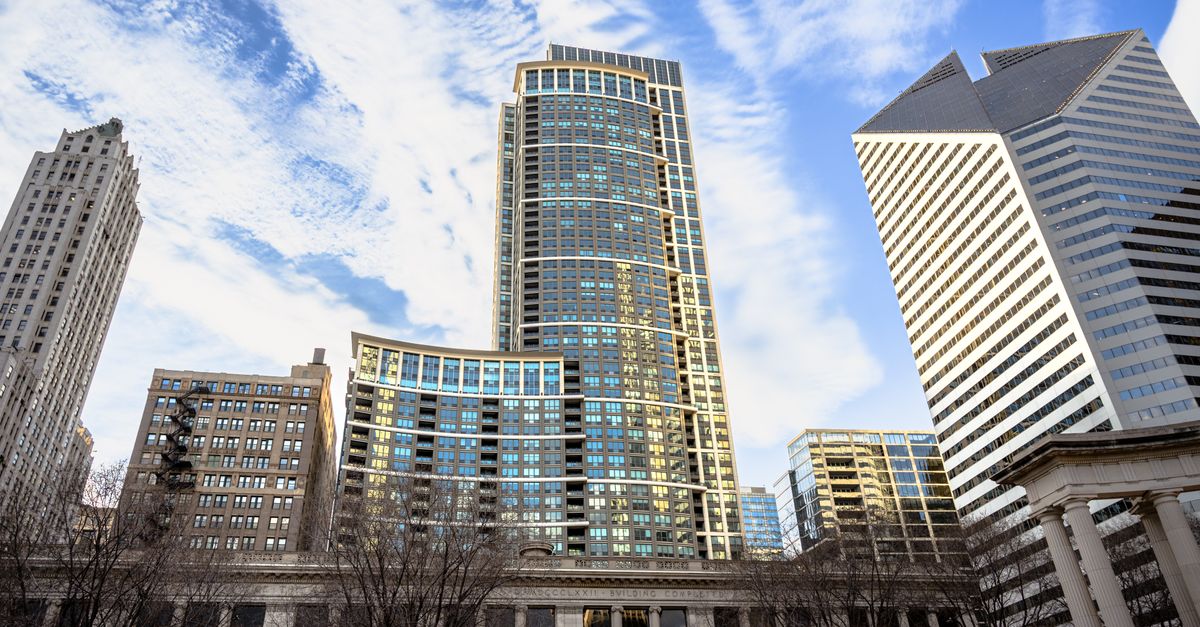
Chicago has a habit of surprising people who arrive with New York or Los Angeles expectations. America's third city is more walkable than either of them, friendlier than both, and architecturally more coherent than any American city outside of a handful of historic East Coast exceptions. The Lake Michigan shoreline functions as Chicago's Central Park — 18 miles of beaches, trails, and parks that belong to everyone — and the El train runs to within a few blocks of almost every major attraction. Chicago is also a city with opinions: deep dish pizza versus thin crust, the Cubs versus the Sox, the North Side versus the South Side. Locals will want to tell you about all of it. Let them.
Before You Arrive
Citizens of 42 countries — including the UK, Australia, most of the EU, Japan, South Korea, and New Zealand — can enter the United States under the Visa Waiver Program (VWP) without a visa. However, ESTA (Electronic System for Travel Authorization) authorization is mandatory before departure. Apply at esta.cbp.dhs.gov — the official US government site — at least 72 hours before travel. The fee is USD 21. ESTA approvals are typically granted within minutes but can take up to 72 hours in some cases. The authorization is valid for two years or until your passport expires, whichever is sooner, and covers multiple trips. Citizens of countries not on the VWP list — including India, China, Brazil, and South Africa — must apply for a B-2 tourist visa at a US consulate, a process that requires an interview and can take weeks or months depending on location.

The United States uses the US Dollar (USD). Credit cards are accepted almost everywhere in Chicago, including food trucks, street festivals, and most market stalls. Contactless payment (Apple Pay, Google Pay) is increasingly widespread on the CTA transit system and in retail. It is worth carrying USD 20–40 in cash for tips at bars, street food stalls, and the occasional cash-only establishment. ATMs are abundant throughout the city — use your bank's network ATMs to avoid the USD 3–5 surcharge common at independent machines. Currency exchange desks at airports offer poor rates; withdrawing from an ATM on arrival is preferable.
For mobile connectivity, Chicago has excellent 5G coverage throughout the city center and lakefront. International visitors should purchase a US SIM card either at O'Hare or Midway airports on arrival (T-Mobile and AT&T both have retail kiosks) or in advance from T-Mobile's international plan. A 30-day unlimited data SIM from T-Mobile costs USD 35–50 and activates immediately. Alternatively, an eSIM from Airalo (around USD 15–20 for 10GB) can be purchased online and activated before departure. Do not rely on your home carrier's international roaming for anything beyond emergencies — the per-day charges are rarely competitive for extended visits.
Finally: the deep dish pizza debate. Chicago deep dish — thick, buttery, and more like a pie than a flatbread — is the city's most famous culinary export, but many locals will tell you they eat thin crust or tavern-style pizza more often day-to-day. Both are genuine Chicago institutions. Have the deep dish at least once; it's a legitimate experience regardless of where you ultimately land on the debate.
Getting from the Airport
Chicago is served by two airports: O'Hare International (ORD) to the northwest and Midway (MDW) to the southwest. Both have direct, cheap, and reliable transit connections to the city center — a genuine advantage that first-time visitors should use without hesitation.

From O'Hare, the CTA Blue Line El train departs from the underground station directly below Terminal 2 (follow the "CTA Train to City" signs from any terminal). The fare is a flat USD 5 — loaded onto a Ventra card purchased at the station for USD 5 (the card deposit is refundable). The journey to the Loop (downtown) takes approximately 45 minutes; stops in River North and the Magnificent Mile area are served by Clark/Lake and Washington stations. Trains run 24 hours a day, with departures every 7–10 minutes during peak hours and every 30 minutes overnight. No reservation, no luggage restrictions, no fuss.
From Midway, the CTA Orange Line connects the airport to the Loop in about 35 minutes for the same USD 5 flat fare. The Orange Line terminates at Harold Washington Library/State-Lake in the South Loop, from which a free transfer to other lines is available. Midway is generally considered an easier airport to navigate than O'Hare and sees somewhat lower traffic.
Rideshares (Uber and Lyft) from O'Hare to downtown cost USD 35–60 depending on traffic and surge pricing, making them roughly 7–10 times the cost of the El. They are worth considering only if you are traveling with heavy luggage and cannot manage the stairs at some El stations, or if you are arriving very late at night in a group. Taxis from O'Hare operate on a flat rate of approximately USD 42–52 to downtown. Shared ride services at the airport (available from designated rideshare pickup zones on the lower level of each terminal) can reduce costs somewhat when traveling solo.
Getting Around
Chicago's grid system — the city is almost entirely laid out on a 1-mile square grid aligned to the cardinal directions — makes navigation intuitive in a way that Manhattan's partially irregular layout and Los Angeles's sprawl do not. State Street and Madison Street form the zero point; addresses on both axes count outward from this intersection. Once you understand the system, you will rarely need to check a map for direction.

The CTA L (El) train system runs eight color-coded lines and covers nearly every neighborhood a visitor is likely to want to reach. Load a Ventra card (available at any station) with credit for USD 2.50 per ride, or buy a 1-day pass (USD 5) or 3-day pass (USD 15) for unlimited rides. The Red Line is the most useful single line — it runs the full north-south length of the city from Evanston through Wrigleyville, Boystown, Lincoln Park, Old Town, River North, the Loop, and continuing south, with 24-hour service. The Brown Line serves Wicker Park, Bucktown, and Lincoln Square. The Blue Line goes to Wicker Park and Logan Square in addition to O'Hare.
Buses fill the gaps between El lines and are included in the same fare and pass system. Google Maps and the official Ventra app both provide real-time arrival information. Divvy bike-share has hundreds of docking stations throughout the city — for flat lakefront rides and north-south trips on clearly marked cycling infrastructure, it is genuinely faster than transit. The Lakefront Trail is 18 miles of car-free path along the lake, almost entirely flat.
Downtown Chicago is highly walkable. The area between Navy Pier and Grant Park, from Michigan Avenue to the river, is compact enough to cover entirely on foot in an afternoon. Comfortable shoes matter: Chicago's sidewalks are clean but the distances between landmarks are larger than they first appear on a map.
Where to Base Yourself
Chicago's neighborhoods are distinct enough that where you stay meaningfully shapes your experience of the city. Each of the main visitor accommodation hubs has a different character and price profile.

The Loop and South Loop are the business district and museum campus area. Hotels here are plentiful and often discounted on weekends (the opposite of most leisure destinations — Loop hotels fill on weekdays with business travelers). Proximity to Grant Park, Millennium Park, the Art Institute, and the Museum Campus is excellent. The Loop is quieter on weekends. Best for: visitors prioritizing museums and architecture.
River North is Chicago's restaurant and nightlife hub, dense with galleries, cocktail bars, and mid-range to upscale hotels. It sits between the Magnificent Mile to the east and Wicker Park to the west, with excellent El access. Nightly hotel rates are typically USD 140–250. Best for: first-timers who want walkable food and nightlife without leaving the neighborhood.
Wicker Park and Bucktown, accessible via the Blue Line, are the city's indie-cool neighborhoods — independent coffee shops, vintage stores, live music venues, and some of the city's most interesting restaurants at lower prices than River North. Hotels and guesthouses are cheaper here, typically USD 90–150. Best for: visitors with 4+ days who want to see Chicago beyond the tourist corridor.
Logan Square is a step further west on the Blue Line, even more local and affordable, with a thriving food and bar scene centered on Logan Boulevard. Average accommodation USD 70–120. Best for: budget travelers and those interested in Chicago's creative and immigrant neighborhood culture.
Local Culture & Etiquette
Tipping in Chicago, as throughout the United States, is not optional — it is a contractual expectation embedded in the service economy. The baseline is 18–20% of the pre-tax bill at sit-down restaurants; 20% is considered standard for competent service, and 22–25% is expected for excellent service. At bars, the convention is USD 1–2 per drink for simple orders and more for craft cocktails. Food delivery and rideshare apps default to 15–20% tip prompts that you will encounter constantly. Hotel housekeeping: USD 2–5 per night, left daily (the room may be serviced by different staff each day). Skipping tips at restaurants is considered genuinely rude and directly reduces the server's take-home income — servers in Illinois are technically paid a sub-minimum "tipped wage" of USD 8.40 per hour (2025), with tips making up the difference to a living wage.

Chicago people are genuinely friendly by the standards of American cities and will give directions, recommendations, and opinions without being prompted. The city has a strong pride in its distinct identity — Chicagoans are not particularly interested in being compared to New York, and the "Second City" label is considered more of a historical artifact than a current insult. The Cubs vs. Sox divide (North Side vs. South Side) is real but playful — it's a useful icebreaker conversation with locals.
Chicago has a well-established LGBTQ+ neighborhood in Boystown (North Halsted), home to a concentration of bars, restaurants, and community organizations. The neighborhood is welcoming and safe; annual Pride in June draws hundreds of thousands of participants. Andersonville to the north is another historically LGBTQ-friendly neighborhood with a strong lesbian bar and community presence.
The city operates on Central Time (UTC-6 in winter, UTC-5 CDT in summer). Restaurants typically serve dinner from 5pm to 10pm; late-night dining after midnight is possible in River North and Wicker Park but less common elsewhere. Drinking age in Illinois is 21, strictly enforced — carry ID at all times. Recreational cannabis is legal in Illinois for adults 21 and over; licensed dispensaries operate throughout the city.
Common Mistakes to Avoid
Chicago's specific geography, transit system, and cultural rhythms generate a predictable set of first-timer errors. Being aware of them before you arrive saves time and money.
Underestimating the wind and lake effect weather. Chicago's "Windy City" nickname partially derives from political blowhards in the 19th century, but the lake wind is entirely real and can drop the apparent temperature by 10–15°F even in summer. A July afternoon that is 82°F becomes noticeably cold in a light layer at the lakefront. Pack a windproof layer regardless of season, and in spring and fall, pack as though you are coming somewhere genuinely cold — temperatures between April and early June can swing 40 degrees in 24 hours.
Skipping the neighborhoods in favor of only downtown. Chicago's character lives in its neighborhoods — Lincoln Square's German heritage, Pilsen's Mexican murals and taquerias, Bridgeport's working-class South Side identity, Andersonville's Nordic and Middle Eastern dining. Spending your entire visit on the Magnificent Mile and Navy Pier gives you a greatly diminished version of the city.
Taking a taxi when the El is faster. Downtown Chicago traffic, especially between 4pm and 7pm on weekdays, is severe. The El runs above it. A taxi from O'Hare during rush hour can take 75+ minutes and cost USD 55–70. The Blue Line takes 45 minutes and costs USD 5, regardless of traffic.
Booking a hotel "near the Magnificent Mile" without checking the El access. The Mag Mile is one of Chicago's least well-served areas by the L — the nearest Red Line stops are still a 10–15 minute walk. The bus options exist but are slower. If transit access matters to you, check the walking distance to the nearest El stop before booking.
Eating deep dish for every meal. Deep dish is a production — it takes 30–45 minutes to bake, weighs heavily, and is a shared experience best enjoyed once with a group. Chicago's thin crust "tavern style" pizza (cut in squares, cracker-thin crust), Italian beef sandwiches, and Chicago hot dogs are the real daily eating culture of the city and equally worth your attention.
Missing a free Chicago Architecture Foundation walking tour. CAF docent-led tours of the Loop and River North run most days and are among the best free architectural tours available in any American city. Reservations are required and fill up, especially in summer — book at least a week in advance through the CAF website.
Assuming all El lines run 24 hours. Only the Red and Blue Lines run all night. All other lines — Brown, Green, Orange, Purple, Pink, Yellow — stop service between roughly 1am and 5am. Plan your late-night return routes accordingly, and use the CTA app to check last departure times if you're staying out late in a neighborhood served only by these lines.