Cancun First-Timer Guide: Everything You Need to Know Before You Go
Cancun is one of the easiest international destinations for first-time travelers. The airport is modern, English is widely spoken in tourist areas, and the infrastructure handles millions of visitors annually. But the gap between the tourist bubble and the real Cancun is vast — understanding this divide before you arrive saves money, time, and frustration.
This guide covers the practical details that trip reports and Instagram posts skip: airport transfers, when to avoid visiting, how the Hotel Zone actually works, and the safety realities beyond the headlines.

Getting from the Airport to Your Hotel
Understanding Cancun Airport (CUN)
Cancun International Airport sits 20 km south of the Hotel Zone and 25 km from downtown. It's Mexico's second-busiest airport with four terminals. Most international flights arrive at Terminal 3 or Terminal 4. After clearing immigration (which can take 30-90 minutes depending on the queue), you'll exit into a gauntlet of timeshare salespeople and transfer hawkers.
Walk past everyone. Do not stop for anyone offering "tourism information" or "free gifts" in the arrivals hall. They are timeshare sellers, and the free breakfast or discounted tour comes with a 3-hour high-pressure sales presentation. Politely decline and keep walking to the official transport area.
ADO Airport Bus — The Budget Option
ADO buses depart from all terminals to downtown Cancun for MXN 98 ($6). The ride takes 30-45 minutes. Buses run roughly every 30 minutes from 5:30 AM to midnight. From downtown, take the R-1 bus to the Hotel Zone for MXN 12 more. Total airport-to-hotel cost: MXN 110 ($7). No bus goes directly to the Hotel Zone.
Taxi and Private Transfer
Official airport taxis operate on a zone-based fixed-price system. Hotel Zone transfers cost MXN 500-800 ($29-47). Downtown costs MXN 350-500 ($21-29). You pay at the taxi booth inside the terminal before walking to the vehicle. Prices are non-negotiable but clearly posted.
Uber technically operates at Cancun airport but faces fierce opposition from the taxi union. Pickup is inconsistent — drivers sometimes cancel due to threats from taxi operators. If Uber works, it's 40-50% cheaper than official taxis. Have a backup plan.
Understanding the Hotel Zone
Geography
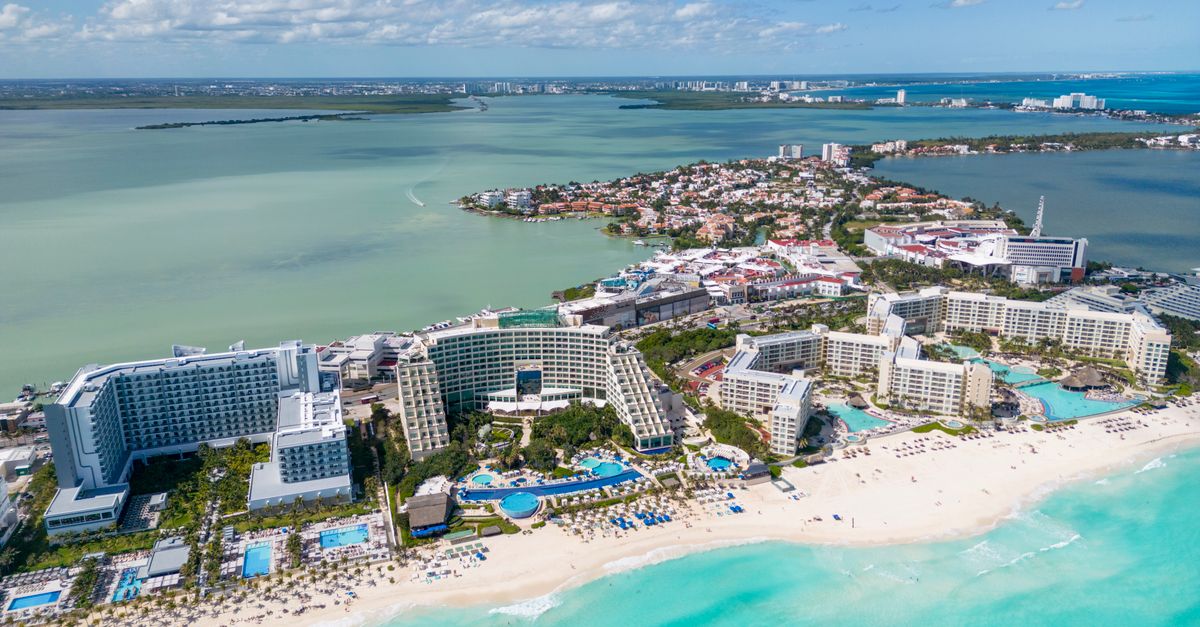
The Hotel Zone (Zona Hotelera) is a 23 km L-shaped sandbar connected to the mainland at both ends. One side faces the Caribbean Sea (east), the other faces the Nichupte Lagoon (west). Boulevard Kukulcan runs the entire length, with kilometer markers (km 1 through km 25) serving as addresses.
The Caribbean side has the beaches but rougher water (especially km 8-16 where the sandbar curves). The lagoon side is calm but not swimmable. Most resorts sit between km 3 and km 22. Shopping malls, clubs, and restaurants cluster around km 9-14.
Hotel Zone vs Downtown
The Hotel Zone is essentially a gated tourism economy. Everything costs 2-4x more than downtown — food, drinks, transport, souvenirs. If you're on an all-inclusive, this doesn't matter. If you're eating independently, spending every meal in the Hotel Zone will destroy a budget.
Downtown Cancun is where 900,000 locals live and work. It has supermarkets, pharmacies, real restaurants, and public transit. The R-1 bus connects both areas in 20-30 minutes for MXN 12. There's no reason to stay trapped in the Hotel Zone unless you choose to.
When to Visit (and When to Avoid)
Best Months: December to April
Dry season brings clear skies, warm temperatures (27-32 C), and minimal rain. January through March is peak season with the highest prices. December and April offer a sweet spot of good weather and slightly lower rates.
Spring Break Warning: March
The first three weeks of March bring waves of American college students to the Hotel Zone. If partying isn't your scene, avoid this period entirely. Prices spike, beaches are packed, and the general atmosphere shifts significantly. Hotels that normally feel family-friendly become party venues.
Hurricane Season: June to November
The Atlantic hurricane season officially runs June 1 through November 30, with peak risk in September and October. This doesn't mean constant storms — many seasons pass without a direct hit. But the risk is real. Hurricane Wilma (2005) devastated the Hotel Zone. Delta (2020) caused significant damage.
If you visit during hurricane season, book refundable accommodations and check forecasts before departure. Travel insurance that covers hurricane disruption is essential. The upside: prices are 30-50% lower and the water is warmest.

Safety in Cancun
The Tourist Zone
The Hotel Zone and tourist areas of downtown Cancun are generally safe. Millions of international tourists visit annually without incident. Standard precautions apply: don't flash expensive jewelry, watch your drink in nightclubs, and use hotel safes for valuables.
Downtown Realities
Downtown Cancun is a regular Mexican city — the central areas around Parque de las Palapas and Avenida Tulum are safe for walking day and night. Avoid the outer colonias (neighborhoods) that locals themselves avoid, particularly late at night. If you wouldn't walk through an unknown neighborhood in any large city at 2 AM, don't do it here either.
Water Safety
The Caribbean side of the Hotel Zone has strong currents, especially between km 8 and km 16. The red and yellow flag system is real — red means no swimming. Drownings happen every year, usually to tourists ignoring flags. Playa Norte on Isla Mujeres and Playa Tortugas in the Hotel Zone are the calmest swimming beaches.
Practical Essentials
Money
Mexican pesos (MXN) are the local currency. Many places in the Hotel Zone accept USD, but at poor exchange rates. ATMs dispense pesos — use bank-attached ATMs (Scotiabank, HSBC, Banamex) and always decline the "convert to your currency" offer. Credit cards work in the Hotel Zone; downtown is more cash-dependent.
SIM Cards and Internet
Telcel SIM cards from any OXXO convenience store cost MXN 100-150 ($6-9) with 3-5 GB of data. Activation takes 5 minutes with your passport. WiFi is available in most hotels and restaurants. Cellular coverage is excellent in the Hotel Zone and downtown.
Language
English is widely spoken in the Hotel Zone, major restaurants, and tour companies. Downtown Cancun is Spanish-dominant. Basic Spanish phrases (por favor, gracias, la cuenta, cuanto cuesta) go a long way. Most Mexicans appreciate any effort to speak Spanish, however imperfect.
| Essential Item | Where to Get It | Cost |
|---|---|---|
| Telcel SIM card | OXXO convenience store | MXN 100-150 ($6-9) |
| Reef-safe sunscreen | Chedraui supermarket downtown | MXN 150-250 ($9-15) |
| Purified water (20L) | OXXO or supermarket | MXN 30-50 ($2-3) |
| Basic pharmacy needs | Farmacias Similares (downtown) | 50-70% cheaper than Hotel Zone |

Cancun rewards preparation with a smoother experience and a fatter wallet. The resort infrastructure makes it forgiving for first-timers, but knowing the downtown alternative, the bus system, and the seasonal patterns separates a good trip from a great one. Once you've mastered Cancun, the entire Yucatan Peninsula opens up as your next adventure.