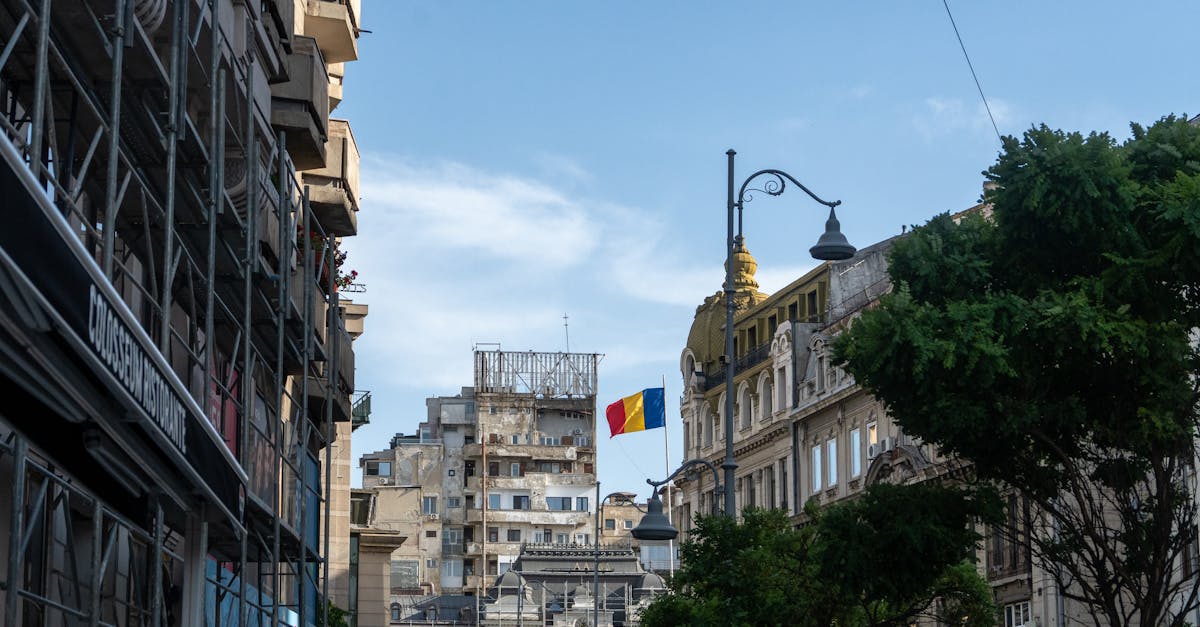
Most travelers who visit Bucharest for the first time arrive with low expectations shaped by decades of unflattering coverage and leave with a genuine enthusiasm that surprises them. Romania's capital is a city of real contradictions — communist-era megastructures alongside Belle Époque boulevards, one of Europe's wildest nightlife scenes embedded in a deeply traditional Orthodox culture, rock-bottom prices in a EU member state — and these contradictions are exactly what make it compelling. The city rewards curiosity. The Old Town (Lipscani) is noisier, messier, and more alive than most European historic centers. The Palace of the Parliament is so immense it borders on the hallucinatory. The food scene, from ciorba soup at a terasa to the creative kitchens of Floreasca, exceeds all reasonable expectations. What Bucharest asks of first-timers is a willingness to engage rather than just observe, and an advance grasp of a few practical realities that determine whether your visit runs smoothly or not. This guide covers those realities in full.
Before You Arrive
Romania is a European Union member state and is part of the Schengen Area as of January 2024, meaning border controls with other Schengen countries have been removed for air and sea travel. Citizens of EU/EEA countries, the UK, USA, Canada, Australia, New Zealand, Japan, South Korea, and most Latin American nations enter Romania visa-free for up to 90 days. South Asian, Chinese, and some African passport holders will typically require a Romanian Schengen visa — apply at the Romanian Embassy or consulate in your home country at least four to six weeks before travel. Always verify requirements with the Romanian Ministry of Foreign Affairs website as visa rules shift; the Schengen accession in 2024 may have changed requirements for certain nationalities.

Currency: Romania uses the Romanian leu (RON), not the euro. This distinction matters practically and is one of the most common first-timer mistakes. Despite Romania being in the EU and many prices in tourist-facing businesses appearing in euros, you will pay in RON everywhere. At roughly RON 4.97 per euro (mid-2025), a RON 50 restaurant main course is around €10, and RON 200 per night for a hostel private room is approximately €40. Adjusting mentally to the leu scale takes a few hours — prices initially seem either shockingly expensive (HUF-to-RON mental math) or reassuringly cheap (euro conversion). The latter is correct.
ATM strategy: Withdraw RON from ATMs immediately after arrival — use the ATM inside the airport terminal before exiting (BRD, BCR, and Raiffeisen Bank branded machines are all reliable). Do not exchange currency at the airport exchange booths; the rates are 5-10% worse than city-center exchange bureaux (casa de schimb). Once in the city, use ATMs attached to major banks: BRD, BCR, Raiffeisen, and ING Bank all offer competitive withdrawal rates. Avoid the Euronet yellow machines visible in tourist areas of the Old Town — their fees and exchange rates are consistently among the worst available.
The taxi situation: This requires pre-arrival attention. Bucharest has a documented problem with unlicensed airport taxi touts who approach arriving passengers in the terminal, offer competitive-sounding fares, and then charge three to five times the agreed amount upon arrival. The solution is simple: download the Clever Taxi app (Romania's most-used ride-hailing platform) and the Bolt app before landing. Both show upfront fare estimates and GPS-tracked routes. A legitimate metered taxi from Otopeni to the Old Town costs RON 80-120. The Express Bus 783 costs RON 3. There is no middle ground worth considering.
Getting from the Airport
Henri Coandă International Airport (OTP), also universally called Otopeni, sits 16 km north of the city center in the Ilfov county suburban zone. The new terminal (T1) handles all Schengen and international arrivals and is modern, well-signed, and English-friendly. From arrivals to the city, you have three legitimate options.

The Express Bus 783 is the unambiguous best-value option for solo travelers and couples. The stop is directly outside the arrivals terminal — follow signs for "Autobuz / Bus" from the baggage claim exit. Purchase a two-trip RON 3 ticket from the vending machine at the bus stop (card and cash accepted). The 783 runs directly to Piața Unirii in central Bucharest via several northern neighborhoods, taking 45-60 minutes in normal traffic. The bus is double-decker, air-conditioned, and has luggage space. It operates approximately 5:30 AM to 11 PM daily. From Piața Unirii, the Old Town is five minutes on foot and the metro connects to all city neighborhoods.
Metered taxis and app cabs via Clever Taxi or Bolt are appropriate for late-night arrivals (after 11 PM when Bus 783 stops running), travelers with mobility limitations, or groups of three or four splitting the RON 80-120 cost. Request your ride inside the terminal while still in the arrivals hall — both apps show driver location and estimated arrival, typically three to eight minutes at the airport. Do not exit to the taxi rank without an app booking unless using the officially metered Fly Taxi rank inside the terminal (also legitimate at RON 1.69/km). Never accept approaches from unofficial drivers.
A third option exists for budget travelers already holding a valid RATB transport card: the local bus 780 connects to Gara de Nord (Bucharest's main train station) via the residential northern suburbs for the standard RON 3 fare. This takes 70-90 minutes and requires a transfer for most city-center destinations. It's worthwhile if you're arriving during Bus 783 off-hours and want to minimize cost; otherwise the 783's direct routing makes it clearly superior.
Getting Around
Bucharest's public transport network covers the city adequately for tourist purposes, though it is less polished than Vienna or Prague. The metro is reliable and fast; the bus and tram network is comprehensive but occasionally unpredictable during peak hours. A practical first-timer strategy combines metro for longer journeys, walking for the central Old Town area, and app cabs for evening returns from outer neighborhoods.

The Metrorex metro has five lines, with M1 and M2 forming the primary tourist arteries. Line M2 (blue) runs north-south through the city center, stopping at Piața Victoriei (northern commercial hub), Piața Romană (central shopping), Universitate (Old Town adjacent), and Piața Unirii (Old Town south, also connecting to M3). Line M1 (red) runs diagonally, connecting Gara de Nord (train station) through Victoriei to the eastern suburbs. Tickets are purchased at metro station kiosks as two-trip (RON 6), ten-trip (RON 25), or day pass equivalents on the Activ rechargeable card. Metro opening hours are approximately 5 AM to 11:30 PM.
The RATB tram and bus network requires a separate RON 8 day pass or RON 3 per-trip card for surface vehicles. Useful tourist routes: Bus 123 (Piața Unirii to Herăstrău Park/Village Museum), Tram 24 (Piața Unirii through the historic center), Bus 79 (Piața Unirii to Gara de Nord). Validate your ticket in the yellow machines on boarding; inspectors do check regularly.
Within the Old Town itself, walking is the only sensible option — the pedestrian zone between Piața Unirii and Piața Universității is car-free and dense with restaurants, bars, and medieval street layouts that reward wandering. The walk from Piața Unirii north along Calea Victoriei to Piața Victoriei covers most of central Bucharest's historic architecture in under 30 minutes. For evening returns from Floreasca or northern nightlife districts after midnight, Bolt is more reliable than waiting for night buses.
Where to Base Yourself
Bucharest's neighborhoods have distinct characters, and the right choice depends on what you want from the city. Unlike some capitals, there is no single obvious "best" area for all travelers — it genuinely depends on priorities.

Old Town / Lipscani is the default choice for first-timers and with good reason. The neighborhood clusters Bucharest's greatest concentration of restaurants, bars, cafés, and historic streetscapes within a small walkable area. The Hanul lui Manuc courtyard inn, Caru' cu Bere beer hall, Stavropoleos Church, and the pedestrian street circuit are all here. Accommodation ranges from backpacker hostels at RON 60-90 per dorm bed to boutique hotels at RON 400-700 per double. The significant downside: extreme noise on Thursday through Saturday nights. The pedestrianized bar street runs 24 hours; sleep before 3 AM is aspirational. Not suitable for travelers who need consistent sleep, families with young children, or those with early-morning departure days.
Floreasca is the upscale expat and professional neighborhood in northern Bucharest — quieter, greener, with excellent restaurants and cafés that serve a local rather than tourist clientele. Accommodation options are primarily boutique hotels and Airbnb apartments at RON 350-600 per night. The neighborhood is connected by metro (M2 to Aurel Vlaicu or Aviatorilor stations) and has some of Bucharest's best casual dining along Strada Dorobanților and Calea Floreasca. Best suited to travelers who want a local residential experience and don't mind being 20-25 minutes from the Old Town by metro.
Cotroceni is the quietest and most elegant of Bucharest's central neighborhoods — bordered by the Botanical Garden, the Cotroceni Palace (presidential residence), and wide tree-lined streets. Accommodation is almost exclusively apartments and small guesthouses at RON 280-450 per night. This is the area for couples seeking tranquility and access to the city's greener, more residential character. The Palace of the Parliament is a 15-minute walk south; the Old Town is 25 minutes by bus or 10 minutes by Bolt.
Local Culture and Etiquette
Romanians have a cultural reputation — among their own neighbors as well as among visitors — for being direct to the point of apparent bluntness, deeply hospitable when comfortable, and understandably wary of strangers given the country's complex history of deception by authority figures. The apparent initial coolness in service interactions typically softens the moment you demonstrate basic engagement: a few words of Romanian, genuine curiosity about a dish or a neighborhood, or simple patience. First-timers who approach Bucharest expecting Italian-style exuberant welcome will be confused; those who treat interactions as opportunities for gradual connection find the city deeply rewarding.

Language: Romanian is a Romance language — if you know any Spanish, Italian, French, or Portuguese, you'll recognize vocabulary and structures. "Mulțumesc" (mool-tsoo-mesk) means thank you and earns consistent appreciation when used in restaurants and shops. "Vă rog" (vah rog) is please. "Scuzați" (scoo-zats) is excuse me. "Bună ziua" (boo-nah zee-wah) is good day. Romanian speakers are accustomed to foreigners not knowing the language and will typically respond in English or German if you struggle.
Orthodox religious culture: Romania is a majority-Orthodox Christian country and religious observance is deeply embedded in public culture in ways that can surprise secular Western visitors. Orthodox churches are active places of daily worship, not just tourist landmarks. When entering any church — and Bucharest has magnificent ones including Stavropoleos, the Patriarchal Cathedral, and the many churches along Calea Victoriei — dress modestly (shoulders and knees covered for both men and women), speak quietly, and be aware that services may be in progress at any hour. Photography inside is usually permitted but should be done discreetly and never during active prayer.
Nightlife culture: Bucharest is widely considered to have Eastern Europe's most intense nightlife — a scene that runs until 6 AM or later, concentrated in the Old Town and in the Floreasca/Dorobanți clubs. The culture is inclusive and genuinely social, but a few norms: clubs charge entry from RON 30-80 on weekends (sometimes including a drink); dressing smartly increases your chances with stricter door policies at upscale venues; and the accepted hour for "going out" is midnight, not 9 PM. Bar hopping before midnight in the Old Town is standard practice for warming up before the later club scene.
Tipping: A 10% tip at sit-down restaurants is standard and expected. Do not leave cash on the table without instructing the server — change left on the table is sometimes taken as an error rather than a tip. Say "vă rog" and hand the tip directly to your server. Tip taxi drivers by rounding up to a convenient figure (a RON 87 fare becomes RON 100). Tipping for drinks at a bar is not obligatory but appreciated at RON 5-10 per round at higher-end venues.
Common Mistakes to Avoid
Taking an unlicensed taxi at the airport. This is Bucharest's single most documented tourist problem. The unofficial taxi drivers inside Otopeni arrivals are persistent, speak good English, and present themselves as official. They are not. The fare difference between their services and legitimate metered cabs is typically RON 150-250 on a single airport trip. Download Clever Taxi or Bolt before landing and request your cab before exiting the terminal building.
Treating the Palace of the Parliament as a photo opportunity only. First-timers sometimes walk along Bulevardul Unirii, take a photograph of the facade, and move on in 20 minutes — missing one of Romania's most extraordinary cultural experiences. The interior guided tour (RON 45, 45-60 minutes, English daily) is essential for understanding the scale and the historical context. 40,000 people were displaced from their homes, 19 Orthodox churches were demolished, and an entire historic neighborhood was erased to build this structure. Seeing the interior — 1,100 rooms, corridors longer than aircraft carriers, reception halls the size of football pitches — while understanding the human cost transforms it from an oddity into a monument to how power deforms human society. Book the tour.
Assuming Bucharest resembles Prague or Krakow. Visitors who expect a compact, perfectly preserved medieval Old Town are mildly disappointed — Ceaușescu demolished much of historic Bucharest in the 1970s and 1980s. What remains is a fascinating hybrid: authentic Belle Époque streets alongside brutalist communist blocks, medieval churches surviving amid Soviet-era apartment buildings. The city rewards visitors who appreciate this complexity rather than seeking photogenic consistency. The fragments of pre-communist Bucharest that survive — Calea Victoriei, the CEC Palace, the Athenaeum concert hall, the Lipscani lanes — are genuinely beautiful. They simply coexist with a more complicated urban landscape than most European capitals.
Paying in euros instead of RON. Some Old Town restaurants and shops accept euros but at exchange rates 15-20% below the real rate. Always pay in lei. If a business quotes a price in euros, ask for the RON equivalent and pay that. The implicit assumption in RON pricing is always more favorable to you as the paying customer.
Visiting only the Old Town. The Old Town is genuinely good but it's tourist-optimized Bucharest. The city's most rewarding experiences — the Village Museum in Herăstrău Park, the Cotroceni neighborhood's tree-lined streets, the Floreasca restaurant scene, the massive Obor market, the Botanical Garden — all require leaving the pedestrian zone. Build at least one full-day excursion to a non-Old-Town area into your itinerary.
Underestimating the summer heat. Bucharest sits in the Wallachian Plain and experiences a continental climate with genuinely hot summers — July and August average 30-35°C with occasional peaks above 40°C. Midday outdoor sightseeing in high summer is uncomfortable and occasionally dangerous for heat-sensitive individuals. Start days early (visit the Palace of the Parliament at the first tour slot, 10 AM), retreat indoors during the 12-4 PM peak heat window, then resume outdoors in the late afternoon. Cișmigiu Park and Herăstrău Park provide shade and lake breezes that make them genuinely more comfortable than the asphalt of the Old Town in peak heat.
Ignoring the church concert schedule. Several of Bucharest's historic Orthodox churches hold free evening prayer services and liturgical music performances that are open to respectful visitors. The Antim Monastery, the Stavropoleos Church, and the Patriarchal Cathedral on Dealul Mitropoliei all host services where the choir singing is transcendent. Entering quietly, standing at the back, and listening for 30-45 minutes costs nothing and provides a window into Romanian cultural and spiritual life that no museum or restaurant can replicate.