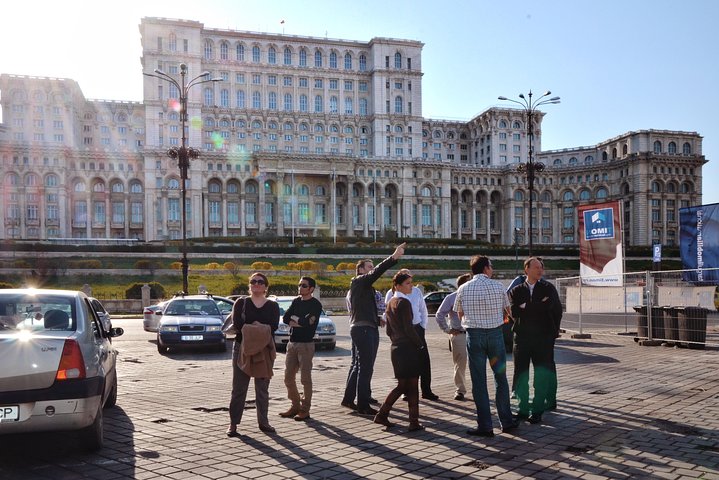
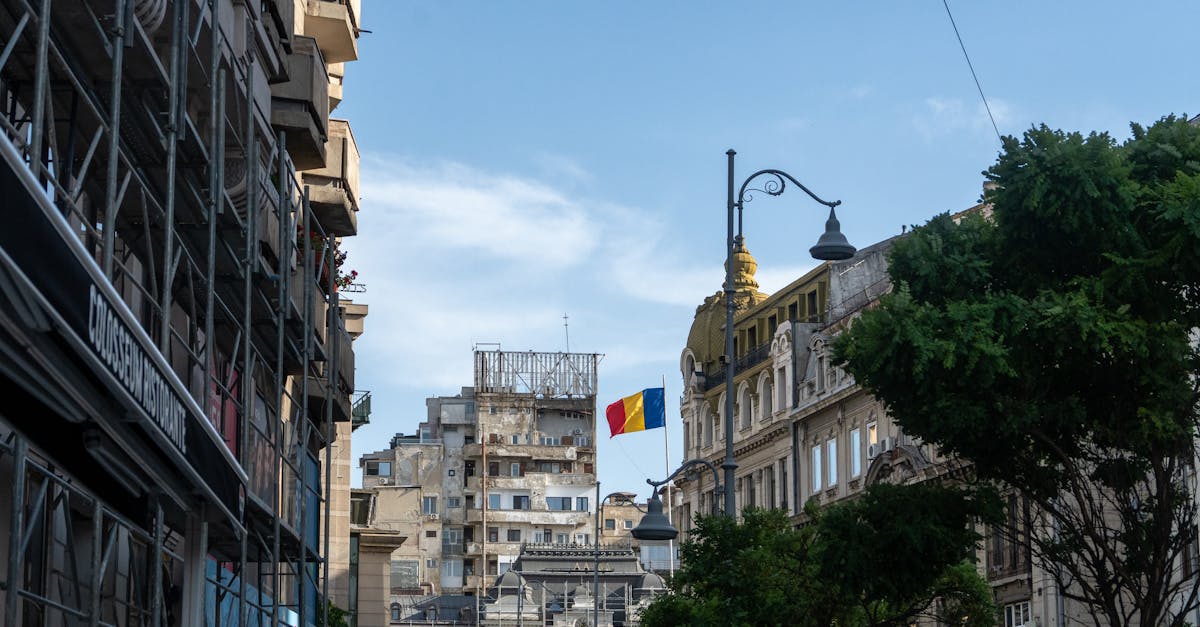
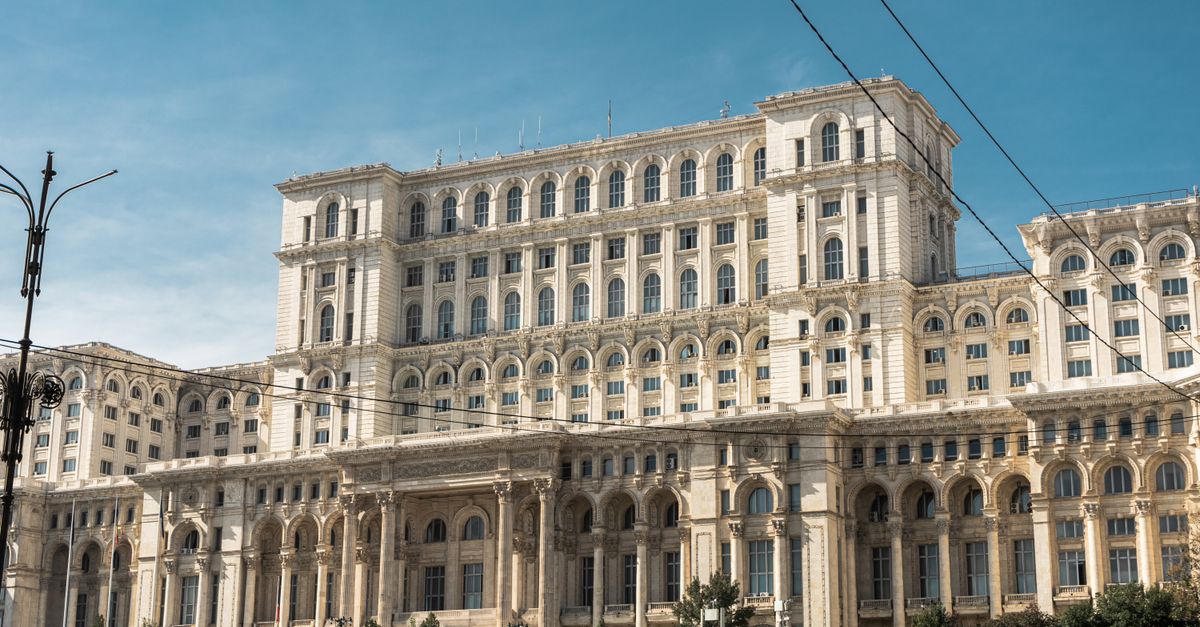
Bucharest is the least understood capital in Central Europe — a city that most travellers associate primarily with Ceaușescu's grotesque Palace of the Parliament and then dismiss. Those who spend time here discover something more complex and rewarding: a city with extraordinary Belle Époque architecture on streets that earned it the nickname "Little Paris," a vibrant and genuinely adventurous food and bar scene, enormous parks, and a creative energy that stems partly from the fact that it exists largely outside the European tourist circuit.
The city was 40% destroyed by Ceaușescu's systematisation programme in the 1980s — entire historic neighbourhoods demolished to make way for the grand boulevards and civic monuments of the communist ideal. What survived is remarkably beautiful in patches: the Floreasca and Dorobanți villa districts, the streets of Floreasca and around Piața Romană, and the old village of Herăstrău around the lake. Understanding the city requires understanding both what was destroyed and what survived.
Bucharest is genuinely cheap — coffee costs €1–2, a full restaurant meal with wine runs €10–18, and craft beer in a bar costs €2–4. The currency is the Romanian leu (RON); roughly 5 RON equals €1. Public transport (metro, tram, bus) costs 3 RON (€0.60) per journey. Budget €30–50 per day for a comfortable non-tourist experience.
1. Floreasca and Dorobanți — The Villa Districts
North of the Floreasca lake, the streets of the Floreasca and Dorobanți neighbourhoods contain Bucharest's most remarkable architectural survival — a dense collection of pre-war villas, interwar modernist houses, and Art Deco apartment buildings that were saved from Ceaușescu's demolition partly by luck and partly by the fact that senior Communist Party officials preferred to live in them. The result is one of the most architecturally interesting residential districts in the Balkans, almost entirely unknown to tourists.
The houses range from Romanian Neo-Byzantine mansions to Streamline Moderne villas that would look at home in Los Angeles, reflecting the eclecticism of interwar Romanian architecture and the wealth of Bucharest's pre-war bourgeoisie. Many buildings still show their original ironwork gates, garden elements, and decorative details — a survival rate that cities in Western Europe, where such properties were long since converted into flats, can rarely match.
Take metro line M1 or M3 to Aviatorilor, then walk north through the residential streets — Aviatorilor Boulevard leads into Floreasca, with the best streets being the smaller ones running perpendicular: Institutul Medico-Militar, Arghezi, and Dorobanți. No formal tours operate here; this is simply a walking neighbourhood where architecture-lovers can wander for hours.
The Floreasca lake park is worth including in the walk — a large artificial lake with promenades, a rowing club, and several café terraces that are packed on weekend afternoons with Bucharest's professional class. Several of the neighbourhood's best restaurants are hidden in converted villas on the lake's northern shore — budget €15–25 for a meal at any of them.
2. Cișmigiu Garden — Bucharest's Living Room
The Cișmigiu Garden, a 17-hectare park in the city centre designed by Viennese landscape architect Wilhelm Friedrich Meyer in 1845, is where Bucharest has always gathered to socialise, row on the lake, play chess, and watch the city pass by. It is not a hidden place — every Bucharester knows it — but it appears in almost no tourist itinerary, perhaps because it is simply a park rather than a monument, and therefore invisible to the itinerary-planner's eye.
The park contains a large central lake with rowing boat rental (€5 for 30 minutes), a rose garden, several formal garden areas, and the atmospheric "Rotonda Scriitorilor" (Writers' Rotunda) — a circular grove with busts of Romanian writers arranged around a central fountain. It is one of the most pleasant places in the entire city and is at its best on weekday mornings when the chess players set up their boards on the tables near the lake.
The park is centrally located between Piața Kogălniceanu and Bulevardul Elisabeta, a ten-minute walk from Piața Unirii metro station. Open daily from dawn to 11pm. Entry is free. The café at the eastern entrance serves coffee and pastries at neighbourhood prices — €1.50 for an espresso. Rowing boats available April to October, 9am to 7pm.
The streets surrounding Cișmigiu — particularly Știrbei Vodă to the north and the streets of the Schei neighbourhood — contain some of Bucharest's best surviving 19th-century urban fabric, including the remarkable Crețulescu Palace and several beautiful Orthodox churches. The neighbourhood is also the location of the best traditional Romanian restaurant in Bucharest's historic centre: Caru' cu Bere, an 1879 beer hall with extraordinary Gothic Revival interior that, unusually, remains excellent despite its tourist-adjacent location.
3. Herăstrău Park — Village Museum
The National Village Museum (Muzeul Satului) in Herăstrău Park is the largest open-air architecture museum in Europe — over 300 original peasant houses, churches, windmills, and farm buildings brought from all regions of Romania and reassembled on the northern shore of Herăstrău Lake. It has been open since 1936 and remains one of the most extraordinary cultural institutions in Southeast Europe. Almost no Western tourists visit it.
The collection spans the full diversity of Romanian rural architecture — from the elaborately carved wooden churches of Maramureș in the northwest to the white-plastered mud-brick houses of the Dobrogea region on the Black Sea coast. Walking through the museum is like traversing the entire geography of Romania in a single afternoon, with each region's distinct building tradition visible and accessible.
The museum is at Șoseaua Kiseleff 28, in the Herăstrău neighbourhood — take metro line M2 to Aviatorilor, then walk 20 minutes north through the park, or take bus 131 from Piața Romană. Open Tuesday to Sunday 9am to 7pm (winter: 9am to 5pm). Admission €5. Allow 3 hours minimum. The museum shop sells excellent Romanian folk craft objects at very reasonable prices — the hand-painted Easter eggs from Bucovina are particularly fine.
The Herăstrău Park surrounding the museum is Bucharest's largest and most beautiful park — a complex of islands, peninsulas, and lakes covering 187 hectares. Rent a bicycle at the main entrance (€5/hour) and cycle the perimeter of the lake for an overview, then walk the interior paths. The park has several good café terraces and a rowing club where you can hire boats (€8 for 30 minutes).
4. Văcărești — Urban Delta
In the southeastern suburbs of Bucharest, where Ceaușescu's planners intended to build a massive reservoir, the project was abandoned after the 1989 revolution and nature reclaimed the excavated basin. The result is the Văcărești Nature Park — a 183-hectare wetland in the middle of a major European capital, home to 97 species of birds, 11 species of reptiles, and a remarkable example of spontaneous urban rewilding that has become one of Europe's most interesting urban ecology stories.
The park contains the ruins of the 18th-century Văcărești monastery, abandoned and partly demolished during Ceaușescu's systematisation, now surrounded by reed beds, willows, and the sound of reed warblers and night herons. Birdwatchers come from across Europe for the diversity of species — particularly during spring and autumn migration, when rare species occasionally appear.
The park is accessible from Piața Sudului metro station (M2) — walk south on Drumul Găzarului for 15 minutes to the park entrance. Open daily from dawn to dusk. Entry is free. The Văcărești Park Association website has current bird observation data and guided tour schedules (tours run on weekends, approximately €5). Bring binoculars if you have them.
The surrounding Văcărești neighbourhood is one of Bucharest's most interesting — a mix of pre-war rural character (it was a village absorbed by the expanding city) with post-communist urban development. Several excellent neighbourhood restaurants on the surrounding streets serve traditional Romanian food at very low prices. The mici (grilled minced meat rolls) here cost €0.80–1 each — a fraction of the tourist-area price.
5. Calea Victoriei — Walking Bucharest's History
Calea Victoriei, the street that has been Bucharest's main promenade since the 17th century, runs for 2.8km from the Dâmbovița river through the historic city centre to Piața Victoriei. Every major institution, palace, hotel, and cultural building of any significance in old Bucharest faces it or is one street away. Walking its length from south to north is the essential Bucharest experience — and almost no tourist walks the entire length.
The southern section, from Piața Națiunilor Unite north to Piața Revoluției, passes the CEC Palace (a beautiful 1900 bank building), the Geology Museum, the old royal palace (now the National Museum of Art, with excellent Romanian and European collections at €8 admission), and the Athenaeum concert hall — Romania's most beautiful building, which seats 850 and hosts the George Enescu Philharmonic at ticket prices starting at €5.
The northern section, from Piața Revoluției to Piața Victoriei, passes the National History Museum, the Cantacuzino Palace (now the George Enescu Museum, €5), and a series of interwar apartment buildings and villas that represent the high point of Romanian Belle Époque urbanism. The street itself is lined with trees and has been pedestrianised in the southern section — excellent for walking at any time of day.
The George Enescu Philharmonic at the Romanian Athenaeum deserves special mention — one of the great orchestras of Eastern Europe, performing regularly from September to June in one of the finest concert halls on the continent, with ticket prices that make it accessible to the local population and therefore wildly undervisited by foreign music lovers. Check the schedule and book at the box office on Piața Revoluției.
6. Lipscani — The Old Commercial District
The Lipscani district is Bucharest's old commercial heart — a dense grid of lanes and alleyways south of Calea Victoriei where merchants from Leipzig (Lipsca in Romanian) traded goods in the 16th–19th centuries. Today it's a mix of renovation, ruination, nightlife, and genuine history. The famous bar and club scene on Lipscani street itself is well-known; the surrounding streets with their layered historical architecture are not.
The Hanul lui Manuc, a 19th-century caravanserai on Str. Franceză, is the most atmospheric building in the district — a three-storey courtyard inn built in 1808 that served as the signing place of the 1812 Treaty of Bucharest between Russia and the Ottoman Empire. It still functions as a hotel and restaurant, and the courtyard is accessible to non-guests for the price of a coffee.
Walk the lanes east of Lipscani street — Str. Blănari, Str. Covaci, Str. Gabroveni — to find the district at its most architecturally interesting. Several buildings are in various stages of renovation or gentle decay, with surviving 19th-century commercial facades, iron balconies, and courtyard gates. The National Museum of History at Calea Victoriei 12 is free on Wednesday afternoons and holds a remarkable collection including a replica of Trajan's Column.
The bar and nightlife scene on and around Lipscani street is genuinely good — Romania has a strong craft beer culture, and the bars in this district serve an excellent range of local microbrewery products at €2–4 per pint. The open courtyard of Control Club at Str. Constantin Mille 4 is one of the most pleasant outdoor bar spaces in the city — live music most weekends, entry free or €5–10 depending on the act.
7. Piața Obor Market
Piața Obor is the largest and most authentic outdoor market in Bucharest — a vast open-air space in the eastern inner suburbs where the agricultural economy of Romania arrives directly in the city. The market is primarily wholesale but open to retail customers, and the scale, variety, and prices reflect a different economic reality from the tourist-adjacent food stalls of Calea Victoriei.
The market is particularly extraordinary for seasonal produce — in summer, the vegetable stalls overflow with quantities of tomatoes, peppers, eggplants, and squash from Romanian farms; in autumn, the mushroom and walnut sellers dominate; in winter, pickled vegetables in enormous barrels, dried herbs, and smoked meats. The livestock section on the market's eastern edge, where farmers sell chickens, rabbits, and geese directly, is a visceral reminder that the food chain is shorter here than in Western Europe.
The market is at Piața Obor, in the Obor neighbourhood — take metro M2 to Obor station. Open daily from 5am to 6pm; the market is busiest and best from 7am to noon. Entry is free. The surrounding streets of Obor have several excellent traditional restaurants serving mici (grilled minced meat rolls), sarmale (stuffed cabbage), and mămăligă (polenta) at prices of €4–8 for a full meal.
The Obor neighbourhood itself is one of Bucharest's most lively and unreconstructed — a district of small family businesses, hardware shops, butchers, and the kind of street life that the gentrifying inner districts are losing. The covered hall on the market's western side sells an excellent range of Romanian cheeses — particularly the telemea (a brined white cheese similar to feta) and the smoked or aged caș from Transylvania.
8. Dealul Mitropoliei — The Patriarchal Hill
Rising above the Dâmbovița river south of the city centre, the Dealul Mitropoliei (Patriarchal Hill) is the spiritual heart of the Romanian Orthodox Church — a complex of patriarchal palaces, churches, and seminary buildings on a hilltop that offers one of the best panoramic views of Bucharest's old centre. It is a major site for Romanian pilgrims but rarely appears in tourist itineraries for foreign visitors.
The Patriarchal Cathedral, built in 1658 in Byzantine style, contains some of the most beautiful frescoes in Bucharest — a full cycle of saints and biblical scenes in warm earth tones, covering the interior from floor to ceiling. Adjacent to the cathedral is the 17th-century Patriarchal Palace, partially open to visitors on request, with a formal reception hall of extraordinary baroque decoration.
Take bus 104 or 232 from Piața Unirii to the Dealul Mitropoliei stop, or walk 20 minutes south from the city centre. The complex is free to enter and open daily from early morning to early evening. Dress modestly — shoulders and knees covered, women may be offered a headscarf at the entrance. The hilltop view north over the old city toward the Palace of the Parliament is one of the most dramatic in the city.
The neighbourhood around the base of the hill — the Dealul Arsenalului area — contains several of Bucharest's best traditional craft workshops: copper beaters, icon painters, embroidery makers. Most have been here for generations and welcome interested visitors. The prices for handmade objects in these workshops are significantly lower than in the tourist market at Piața Unirii, and the quality is higher.

9. Palatul Culturii Dâmboviţa — Unknown Concert Venue
The National Opera House of Bucharest (Opera Națională Română), the Romanian Athenaeum concert hall, and the Radio Hall are Bucharest's best-known classical music venues. Less known is the rich programme of the smaller venues — particularly the Sala Radio at Str. General Berthelot 60, which hosts the Radio Chamber Orchestra and various chamber music series at ticket prices of €5–15 that make serious classical music accessible to anyone.
The Radio Hall is also the venue for a remarkable series of jazz and world music concerts programmed by Radio România Muzical — the national classical music radio station, which has developed an imaginative programming policy that brings international jazz artists to Bucharest at prices that would be impossible in Western Europe. Check the programme at radioromaniacultural.ro.
The building is a five-minute walk from Piața Romană metro station. The box office is open on concert days from 2pm. The hall seats 1,000 and has excellent acoustics for chamber music and jazz. Dress code is smart casual — Bucharest's classical music audience dresses up, which adds to the occasion. After concerts, the neighbourhood around Piața Romană has several excellent late-night bars and wine bars.
The nearby Romanian National Theatre (Teatrul Național I. L. Caragiale) at Bulevardul Nicolae Bălcescu 2 presents both classic and contemporary Romanian theatre, with English surtitles on selected performances. Tickets cost €8–25. The building, designed in the 1960s in a modernist style, contains an excellent café in the lobby where theatre audiences gather before and after performances — one of the most pleasant places in the city for people-watching.
10. Strada Dionisie Lupu — The Artist Quarter
Strada Dionisie Lupu, running between Calea Victoriei and Calea Dorobanților in the Floreasca neighbourhood, has become the informal centre of Bucharest's contemporary art scene — a street of converted villas housing galleries, design studios, and the kind of independent café-gallery hybrid that defines creative urban neighbourhoods. It is completely unknown to most tourists and shows a Bucharest that the city's communist-era reputation rarely allows outsiders to imagine.
The Ivan Gallery, the Zorzini Gallery, and the Anaid Art Gallery are among the most respected contemporary art spaces in Romania, all located within a few blocks of each other on this street and its immediate neighbours. Exhibition openings on Thursday evenings attract Bucharest's creative community and are generally open to any interested visitor — excellent wine, interesting art, and the opportunity to meet Bucharest's most interesting creative professionals.
Walk north from Piața Romană metro station on Bulevardul Dacia, then turn right on Dionisie Lupu. The gallery district extends into the neighbouring streets — Str. Sfânta Vineri, Str. Polona, Str. Tudor Arghezi. Gallery visits are free and galleries are typically open Tuesday to Saturday 11am to 7pm. Several excellent independent coffee shops on the street serve some of the best espresso in Bucharest at €2–2.50.
The neighbourhood's restaurant scene is similarly excellent — several chefs who trained internationally have opened small restaurants in converted villas on the surrounding streets, serving contemporary Romanian cuisine that takes traditional ingredients and preparations seriously while applying modern techniques. Budget €20–30 for a full meal at these restaurants. Reservations essential for weekend evenings — book through Instagram or by phone, as most don't have English-language websites.