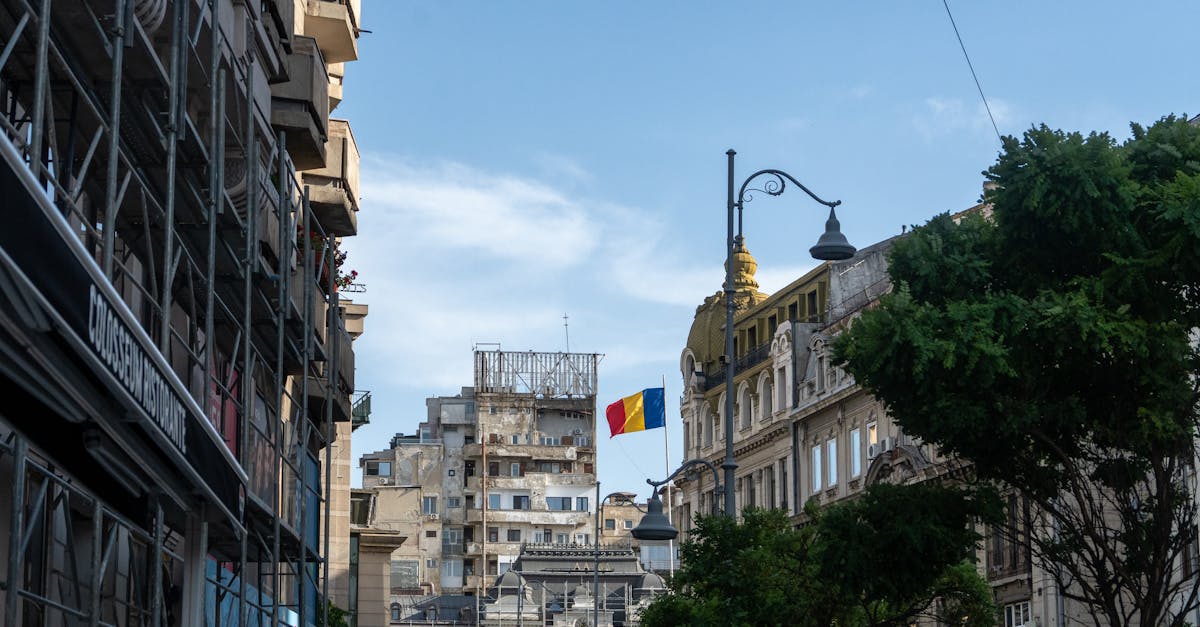
Bucharest is Eastern Europe's most underrated budget destination. The Romanian capital has been overlooked for decades in favor of Prague, Budapest, and Krakow, but this neglect is precisely what makes it extraordinary value in 2025. The currency is the Romanian leu (RON), not the euro — at roughly RON 4.97 to the euro, your spending power stretches considerably. A bowl of ciorba (sour soup) at a neighborhood restaurant costs RON 18-25. A pint of Ursus or Timișoreana in a Floreasca bar runs RON 14-20. A hostel bed in the Old Town costs RON 60-90 per night. The result is a daily budget of RON 200-320 (€40-65) that covers solid accommodation, three meals including one sit-down dinner, unlimited public transport, and an evening out — without cutting any corners that matter. Add to this a genuinely exciting food scene, a nightlife culture that runs to 6 AM, and communist-era architecture of such jaw-dropping scale that it has to be seen to be believed.
Getting There on a Budget
Bucharest Henri Coandă International Airport (OTP), also known as Otopeni airport, sits 16 km north of the city center and is served by Wizz Air, Ryanair, Blue Air, and TAROM, as well as major carriers including Lufthansa, Turkish Airlines, and Air France. Wizz Air's significant Bucharest base generates consistently low fares to Western Europe — London, Paris, Milan, Madrid, and Dublin can be reached for €30-80 return if booked 6-10 weeks in advance. Tuesday and Wednesday departures typically offer the lowest fares. Bucharest also sits on the main Eastern European rail corridor; overnight trains from Budapest (approximately €20-35 in a couchette), Thessaloniki, and Sofia are viable options that combine accommodation and transport in one ticket.

From Otopeni airport to the city center, the Express Bus 783 is the essential budget transfer. This double-decker bus departs from outside the arrivals terminal, runs to Piața Unirii (the main central square) via the northern neighborhoods, and costs just RON 3 for a two-journey ticket purchased from the machine at the bus stop. The journey takes 45-60 minutes during normal traffic, 70-80 minutes during weekday morning rush hours (7-9 AM). The bus runs from approximately 5:30 AM to 11 PM. For arrivals after 11 PM or before 5:30 AM, the Clever Taxi app or Bolt provides metered taxis for RON 80-120 — reliable and transparent, unlike the unmetered taxi touts who approach arrivals with fixed-price offers.
Travelers arriving by train will land at Gara de Nord, Bucharest's main railway station 2 km north of the Old Town. Metro Line M1 connects directly from the station to Piața Victoriei and Piața Universității in around 8 minutes for RON 3. The station has ATMs and exchange offices, though the rates at airport and station exchange offices are typically 5-10% below the rates at city-center exchange bureaux (casa de schimb) — wait until you're in the city if you can.
Note one firm warning: the unmetered "independent" taxi drivers who cluster at Otopeni arrivals and sometimes approach at Gara de Nord are a well-documented scam. They quote low rates verbally and then claim the meter is "broken" or demand cash multiples of the agreed fare at the destination. Use only the Clever Taxi app, Bolt, or officially metered taxis from the designated taxi rank. The saving from taking a legitimate cab over the bus is not worth the risk; the saving from using the bus over a legitimate cab is significant.
Budget Accommodation
Bucharest's Old Town (Lipscani) is the obvious choice for budget accommodation — central, walkable to the major sights, and densely packed with hostels at competitive prices. The trade-off is noise: the Old Town's nightlife runs until 6 AM on weekends, and buildings here pre-date modern soundproofing. Lighter sleepers should look one neighborhood north or east.

Doors Hostel (Strada Lipscani 26) sits right in the heart of the Old Town, a two-minute walk from Piața Universității and the main pedestrian zone. Dorm beds run RON 65-90 per night depending on room size and season; a private twin room costs RON 200-280. The hostel has a well-maintained common area, a small bar serving affordable Romanian craft beer, and an enthusiastic staff who organize walking tours and bar crawls. Reviews consistently praise cleanliness and social atmosphere — the baseline for a good hostel, delivered reliably here.
Little Bucharest Old Town Hostel (Strada Franceză 46) is positioned on one of the Old Town's most atmospheric streets, half a block from Caru' cu Bere, the legendary 19th-century beer hall. Dorm prices from RON 60-80; private doubles at RON 180-240. The building is characterful if creaky, and the staff provides genuinely useful local knowledge including restaurant recommendations off the tourist circuit. This hostel particularly suits solo travelers who want orientation help from experienced local guides.
Pura Vida Sky Bar and Hostel (Splaiul Independenței 2) takes a different approach: it's a rooftop hostel with a bar and terrace overlooking the Dâmbovița River and the cityscape. Dorms run RON 75-100 per night; the rooftop bar is open to non-guests. The location, a short walk from Piața Unirii and the Palace of the Parliament, suits travelers focused on sightseeing rather than nightlife immersion. The views from the bar at sunset justify the slightly higher prices.
For longer stays or two travelers sharing costs, Bucharest's apartment rental market is exceptional value. A well-located studio apartment in the Old Town or Floreasca costs RON 150-250 per night on Airbnb or direct booking — competitive with a private hostel room and including a kitchen that dramatically cuts food costs.
Eating Cheaply Like a Local
Romanian cuisine rewards budget travelers. The food is hearty, deeply flavored, and priced for a population that earns considerably less than the Western European average — which means RON 25-40 buys an excellent full meal at a neighborhood restaurant. The challenge for first-timers is finding those neighborhood restaurants among the tourist-facing establishments in and around the Old Town.

Ciorba (sour soup) is Romania's culinary soul food and the best budget meal in Bucharest. Every traditional restaurant serves multiple varieties: ciorba de burtă (tripe soup, rich and cream-based), ciorba de legume (vegetable), and ciorba de fasole (bean). A bowl at a neighborhood terasa costs RON 18-25 and is a complete meal when served with fresh bread. Order it wherever you see it on handwritten menus — the more handwritten the menu, the more local the clientele, and the better the ciorba.
Mici (also called mititei) are Romania's iconic grilled sausages — small cylinders of minced beef and pork seasoned with garlic, black pepper, and coriander. They're the essential terasa (outdoor café/bar) food, typically served in portions of six or ten with mustard and fresh bread, and cost RON 25-40 for a standard portion. Every terasa in the Old Town sells them; for the most authentic version, find a mici specialist near the market areas. Pair with a half-litre of Ursus (RON 14-18) for a complete budget meal.
Caru' cu Bere (Strada Stavropoleos 5) is a tourist landmark but justifiably so: the interior is a Gothic Revival masterpiece of stained glass and carved wood dating to 1879, and the food is legitimately excellent rather than purely decorative. Main courses run RON 40-70 — pork knuckle (ciolan), sarmale (stuffed cabbage rolls in polenta), and grilled chicken. This is the one "tourist" restaurant that locals also recommend unironically. Lunch is better value than dinner; the two-course lunch set (two courses plus a soft drink) runs approximately RON 55.
Lacrimi și Sfinți (Strada Sfântul Dumitru 4) is a trendier, younger-skewing option in the Old Town with creative modern Romanian cooking. Mains run RON 50-80 — more expensive than a neighborhood terasa but still cheap by Western European standards for food of this quality. The shakshuka (RON 32) at brunch and the daily blackboard specials at lunch represent the best value on an otherwise slightly elevated menu.
For self-catering, the Obor market (northeast of the city center, accessible by metro) is Bucharest's largest traditional market — fruit, vegetables, cheeses, meats, and fresh bread at the lowest prices in the city. The Mega Image and Kaufland supermarket chains are the best-value options for packaged goods; branches are spread throughout the city including multiple outlets near the Old Town.
Free and Low-Cost Attractions
Bucharest's greatest free attraction requires no admission: the communist-era urban landscape itself. Nicolae Ceaușescu's megalomaniacal reconstruction of the city between 1977 and 1989 produced the Civic Center — a boulevard (Bulevardul Unirii) wider than the Champs-Élysées, flanked by nearly identical apartment blocks, leading to the Palace of the Parliament. Walking this boulevard from Piața Unirii south is one of the most extraordinary urban experiences in Europe, free, and requires only comfortable shoes and an open mind.

The Palace of the Parliament (Palatul Parlamentului) is open for guided tours at RON 45 per person — arguably the best RON 45 you'll spend in Bucharest. The building is the world's second-largest administrative structure after the Pentagon, with 1,100 rooms, 3,100 tonnes of crystal, and 480 chandeliers. Ceaușescu displaced 40,000 residents and demolished a quarter of historic Bucharest to build it. The guided tour — available in English several times daily, booking recommended — contextualizes both the architectural excess and the human cost in a way that makes the experience genuinely moving rather than merely spectacular.
The Village Museum (Muzeul Național al Satului Dimitrie Gusti) in Herăstrău Park charges RON 30 for entry and represents outstanding value. This open-air ethnographic museum displays authentic traditional Romanian houses, churches, mills, and farmsteads relocated from villages across the country — over 300 structures dating from the 17th through 20th centuries. The setting within the park on the edge of a lake makes it beautiful as well as educational. Allow three to four hours.
The National History Museum (Muzeul Național de Istorie a României) on Calea Victoriei charges RON 15 and houses an extraordinary collection including a replica of the Trajan's Column reliefs and Romanian crown jewels. Cișmigiu Park (central Bucharest, near Piața Cogălniceanu) is entirely free — a 17-hectare romantic garden with lakes, rose gardens, and chess players — and is the best free afternoon in the city. The Antipa Natural History Museum on Piața Victoriei (RON 30) has a remarkable display that delights both adults and children equally.
Getting Around on a Budget
Bucharest's RATB public transport network covers the city with metro, buses, trams, and trolleybuses. The metro (Metrorex) is the fastest option for longer cross-city journeys; buses and trams cover areas between metro stations. A single journey on any RATB vehicle costs RON 3. A RATB day pass costs RON 8 and covers unlimited bus, tram, and trolleybus journeys — not metro. For a combined metro and surface transport day pass, purchase the Activ Card at any metro station kiosk (RON 5 for the card, then add credit).

The metro has five lines, with Lines M1 and M2 forming a rough cross through the city center. Key stations for tourists: Piața Unirii (Old Town, intersection of M1 and M2), Universitate (central Pest equivalent), Victoriei (northern commercial area), Gara de Nord (railway station). The metro runs from approximately 5 AM to 11:30 PM Monday-Saturday, 5:30 AM to 11:30 PM Sunday.
For shorter distances in the Old Town and surrounding neighborhoods, Bucharest is surprisingly walkable. The Old Town to Piața Revoluției is 15 minutes on foot; the Old Town to the Palace of Parliament is 25 minutes through the Civic Center boulevard. The flat terrain and reasonable pedestrian infrastructure make walking practical for most inner-city movement during daylight hours.
Taxis via Clever Taxi or Bolt are affordable by Western European standards — a 3 km city trip typically costs RON 12-18, and cross-city rides of 8-10 km run RON 28-40. This makes taxi travel a viable option when carrying shopping, returning late, or in poor weather. Never hail taxis from the street in the Old Town; only use app-based services or taxis from hotel stands.
Money-Saving Tips
Bucharest is already cheap by the standards of most visitors. These seven habits will push your budget lower still while improving the quality of your experience.
Exchange cash at city-center exchange bureaux, not at the airport. Casa de schimb (exchange bureaux) in the Old Town and along Calea Victoriei offer rates 5-8% better than airport exchange offices. The difference on €200 is around RON 50-80 — nearly a free meal. Look for bureaux displaying live rates on screens; avoid those that don't display rates publicly.
Drink local Romanian craft beer. The Bucharest craft beer scene has grown dramatically — brands like Zaganu, Hop Hooligans, and Ground Breaker are available in most bars for RON 18-25 per half-litre. Imported beers in tourist bars cost RON 30-45 for the same volume. Romanian wine (Fetească Neagră, Tămâioasă Românească) from supermarkets costs RON 25-45 for a good bottle — exceptional value for quality indigenous wines.
Use the meniu zilei system everywhere. Romanian restaurant culture includes a strong tradition of affordable set lunch menus. Even restaurants that charge RON 80-120 for dinner mains typically offer two-course lunch sets for RON 35-50. Plan your main meal of the day at lunch and eat lighter in the evenings to maximize this cultural norm.
Obor market over supermarket for produce. The Obor market (Metro: Obor) sells fruit, vegetables, cheese, and bread at prices 30-40% below supermarket equivalents. A kilogram of tomatoes is RON 5-8; a 200g block of telemea (Romanian sheep's cheese) costs RON 12-15. For self-catering travelers, a weekly Obor shop dramatically reduces food budgets.
Book the Parliament tour online in advance. The Palace of the Parliament tour costs RON 45 and sells out, particularly in summer months. Book via the official website before arriving. Same-day tickets are sometimes available but unreliable. The tour is genuinely one of Romania's most impressive experiences and worth the planning effort.
Avoid Old Town restaurants with English-only menus and no prices in the window. Several establishments in Lipscani operate as tourist traps with inflated prices and aggressive touting. If a menu is only in English, has no prices displayed, and a staff member is actively beckoning you inside, walk past. Restaurants with Romanian-language menus (and English translations inside) are invariably better value and often better food.
Use the free Herăstrău Park and surrounding lakeside areas for evenings. Herăstrău Park (also known as King Mihai I Park) is Bucharest's largest urban park — entirely free, with lakeside walking paths, the Village Museum, and several open-air bars that charge RON 18-25 for drinks in genuinely beautiful surroundings. This is where Bucharesters spend summer weekends, and it costs nothing to join them.


