Da Nang is the rare coastal city where budget travelers eat remarkably well, sleep close to an excellent beach, and still afford the splurge attractions. Vietnam's third-largest city sits between Hoi An and Hue on the central coast, giving budget visitors two UNESCO World Heritage sites within day-trip range on top of the city's own Marble Mountains, Dragon Bridge, and 30-kilometer beach. With a daily budget of 500,000–700,000 VND (roughly USD 20–28), Da Nang offers a standard of travel that would cost three times as much almost anywhere in Europe. This guide strips away the premium pricing and shows you where to eat, sleep, and move exactly as locals do.
Getting There on a Budget
Da Nang International Airport (DAD) is served by budget carriers from across the region. VietJet Air and Bamboo Airways dominate domestic routes and frequently offer promotional fares from Hanoi or Ho Chi Minh City for 200,000–500,000 VND one-way (USD 8–20) when booked three to six weeks ahead. VietJet's flash sales, announced via their email list and website, sometimes bring fares below 150,000 VND — less than the cost of the Grab ride into the city. Book directly on airline websites rather than third-party aggregators to avoid booking fees; for VietJet and Bamboo, the official apps also run occasional app-exclusive discounts.

From Hanoi (roughly 900 km), the overnight train is the classic budget option. Vietnam Railways' SE3 and SE7 trains depart Hanoi in the late afternoon or evening, arriving in Da Nang 16–18 hours later. A hard-berth sleeper (six-bunk) costs 250,000–400,000 VND; a soft-berth (four-bunk, air-conditioned) runs 450,000–650,000 VND — comfortable, scenic through the Hai Van Pass coastal section, and cheaper than budget flights once baggage fees are factored in. Book on dsvn.vn or the Vietnam Railways app; trains fill quickly during Tet and summer school holidays.
From Ho Chi Minh City (780 km), the overnight train takes 17–19 hours (350,000–600,000 VND for sleeper berths). Bus is also an option — Phuong Trang (Futa Bus), Hoang Long, and Thanh Buoi operate sleeper-bus services from HCMC to Da Nang for 250,000–400,000 VND, taking 16–18 hours with rest stops. The sleeper buses are surprisingly comfortable on Vietnamese expressways, though arrival time varies with traffic.
From Hoi An (30 km south), the local yellow bus number 1 runs hourly from Hoi An's bus station to Da Nang for 30,000 VND — a 45-minute journey that is 5–7 times cheaper than Grab. Catch it on Hung Vuong Street near Hoi An's covered market.
Budget Accommodation
Da Nang's budget accommodation landscape divides cleanly between My Khe Beach and the city center (west of the Han River). For beach access and the majority of traveler activity, the My An and My Khe beach zones along Vo Nguyen Giap Street and An Thuong tourist area offer the best value concentration.

Memory Hostel in the An Thuong tourist area (My Khe Beach) is consistently well-reviewed, with air-conditioned dorm beds from 120,000–160,000 VND and private rooms from 280,000 VND. The rooftop common area and free breakfast make it punching well above its price. Danang Backpackers on An Thuong 4 Street has dorms from 130,000 VND and a reputation as the most social hostel in the city — the ground-floor bar runs nightly happy hours that facilitate genuine traveler connections. Lacasa Hostel on Pham Van Dong (beach road) offers air-conditioned four-bed dorms from 110,000 VND with reliable wifi and free bicycle rental included — an exceptional deal given bicycle rental elsewhere costs 50,000–80,000 VND/day.
In the city center (west bank), guesthouses near the Han Market and Bach Dang riverside strip are cheaper but require a 15–20-minute Grab or bicycle ride to the beach. Guesthouses along Nguyen Chi Thanh Street and Tran Phu Street offer private rooms for 200,000–350,000 VND/night — good value if your priority is access to local markets and non-tourist restaurants rather than beach proximity.
Avoid the large beach-facing hotels on Vo Nguyen Giap's oceanfront strip — these 3-star hotels target Korean and Chinese tour groups and are priced accordingly (600,000–1,200,000 VND/night) with no added value for independent travelers. The An Thuong side streets, one block from the beach, are both cheaper and more characterful.
Eating Cheaply Like a Local
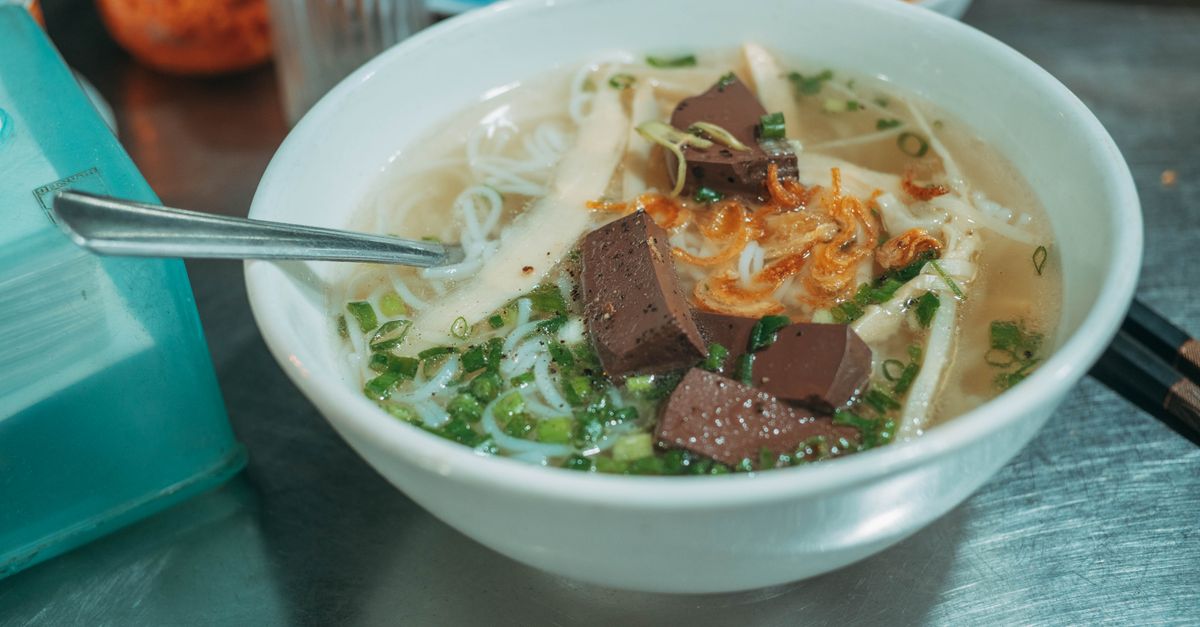
Da Nang has its own distinct central Vietnamese cuisine that is neither Hanoi nor Saigon — and eating it correctly means avoiding the tourist-facing restaurants on the beach strip and committing to the city's covered markets, street stalls, and breakfast shops where locals eat.

Mi Quang (turmeric-yellow noodles with pork, shrimp, quail egg, and roasted rice crackers in a minimal, intense broth) is the city's signature dish. Mi Quang 1A on Hai Phong Street is the most famous address — the family has been cooking the same recipe for decades, and a full bowl costs 35,000–50,000 VND. Queue at the plastic stools from 7 AM. Nearby, Tran on Nguyen Thi Minh Khai Street serves equally good versions to an almost entirely local crowd.
Banh xeo (sizzling crispy crepes filled with shrimp, pork belly, and bean sprouts) at Ba Duong Banh Xeo on K280 Street runs 25,000–40,000 VND per crepe — eat it wrapped in rice paper with lettuce and herbs, dipped in the house nuoc cham sauce. Con Market (Cho Con) in the city center has the cheapest breakfast stalls in Da Nang: bun bo Hue (spicy beef noodle soup, 25,000–35,000 VND), banh mi (pork baguette, 15,000–25,000 VND from vendors on Le Duan Street), and com tam (broken rice with grilled pork, 30,000–45,000 VND).
For dinner, the stretch of To Hien Thanh Street near the beach (locally called the "An Thuong food street") has dozens of seafood and Vietnamese restaurants catering to both locals and tourists, with com ninh (clay-pot rice), lau (hotpot), and grilled seafood. Avoid the premium oceanfront restaurants on Vo Nguyen Giap entirely — the same seafood at 150% markup does not benefit from the view at night. An evening seafood meal at a To Hien Thanh street restaurant for two with beer costs 200,000–350,000 VND total.
Fresh fruit from market vendors (Con Market or Han Market) costs 10,000–20,000 VND per portion — dragon fruit, jackfruit, and rambutan in season are exceptional. Vietnamese iced coffee (ca phe sua da) at small cafes runs 15,000–25,000 VND — the egg coffee variant (ca phe trung) at Cong Caphe on Bach Dang Street is a national treasure at 35,000 VND.
Free & Low-Cost Attractions
My Khe Beach is entirely free — 30 kilometers of white sand with free public beach access and no entrance fee, sunbed charge, or towel rental requirement (bring your own). The beach is public infrastructure, and the sections away from hotel frontages are uncrowded. Sunrise swimming at 6 AM is the city's best free experience: the light, the empty water, and the view toward Son Tra Peninsula.

The Marble Mountains (Ngu Hanh Son) charge 40,000 VND entry (plus 15,000 VND for the elevator). Five limestone hills honeeycombed with cave temples, pagodas, and stone carvings — Buddhist shrines inside caverns where natural skylights pierce the ceiling create genuinely atmospheric light. Thuy Son is the most accessible; Am Phu cave requires a torch and comfort with narrow passages. Marble Mountains is one of Vietnam's best-value attractions and should not be skipped to save the 40,000 VND.
The Dragon Bridge on Han River is free to walk across any evening. The Saturday and Sunday fire-breathing performance at 9 PM is a free spectacle viewable from either riverbank — get a position on Bach Dang Street West for the best angle. The Han River promenade (Bach Dang Street) is a free evening activity: locals walk, cycle, and gather along the waterfront nightly.
The Museum of Cham Sculpture (Bao Tang Dieu Khac Cham) on Tran Phu Street charges 60,000 VND — an extraordinary collection of 10th-15th century Cham Hindu artifacts, the largest such museum in the world. Linh Ung Pagoda on Son Tra Peninsula is free to enter, with a 67-meter white Lady Buddha and sweeping views over Da Nang Bay. The coastal road to Son Tra (15 km from the city on a rented bicycle or scooter) costs nothing and offers dramatic sea views.
Getting Around on a Budget
Da Nang is straightforwardly navigable on a budget. The city center and beach zone are flat and compact — the Han River runs north-south dividing the west-bank city from the east-bank beach strip, and the distance between them is 3–5 kilometers depending on crossing point.

Grab dominates all motorized transport. A GrabBike (motorbike taxi) from My Khe Beach to the city center costs 20,000–35,000 VND; a GrabCar runs 35,000–55,000 VND for the same journey. Marble Mountains from the beach: 40,000–60,000 VND by GrabBike. The fare is shown before you confirm the booking — there is no haggling and no surprise charges. Download the app before you arrive and add a payment method.
Bicycle rental from most beach hostels and guesthouses runs 50,000–80,000 VND per day. The flat corridor along Vo Nguyen Giap Street (beachfront road) and the Han River promenade (Bach Dang Street) is perfect cycling territory. The Marble Mountains are 5 kilometers south of the central beach — an easy and pleasant bicycle ride along a dedicated lane on Nguyen Tat Thanh Street.
Motorbike rental costs 100,000–150,000 VND per day from most guesthouses and shops on Nguyen Van Linh Street. This opens up the Hai Van Pass (40 km north — one of Vietnam's most spectacular coastal roads), Son Tra Peninsula's coastal loop, and the trip to Hoi An. An international driving permit is technically required; carry your national driving licence regardless.
Avoid the metered taxis from Mai Linh and Vinasun unless Grab is unavailable — they are reliable but 40–60% more expensive than Grab for the same distances. Street taxis not affiliated with a major company should be avoided entirely.
Money-Saving Tips
Da Nang's tourist economy is younger and less entrenched than Hoi An's — prices are lower across the board, but the following strategies save meaningfully over a multi-day stay.
Eat breakfast at Con Market, not at your guesthouse. Most beach guesthouses offer a "free breakfast" of toast, eggs, and instant coffee — nutritionally adequate but a wasted food opportunity in a city with extraordinary morning markets. Decline the guesthouse breakfast and walk or cycle to Con Market's food stalls instead: real banh mi, mi quang, and fresh fruit for 30,000–50,000 VND total.
Rent a bicycle for days one and two before deciding on a motorbike. Bicycles cover the beach, city center, and Marble Mountains perfectly well. Only upgrade to a motorbike if you specifically plan to ride the Hai Van Pass or Son Tra loop — the extra 60,000–80,000 VND/day is only worth it with those specific destinations in the plan.
Buy Viettel or Vietnamobile SIM at the airport arrivals hall. Data costs 50,000–100,000 VND for 7 days with adequate 4G coverage across Da Nang. You need it active from minute one for Grab, Google Maps, and restaurant research. Viettel has the strongest nationwide signal; Vietnamobile is cheaper for urban-only stays. Avoid the airport's international roaming offers from your home carrier — they charge 10–20 times as much per gigabyte.
Book Ba Na Hills online for the 10–15% discount. If you're going, book at least a day ahead on the Sun World website. The saving on two adult tickets is 100,000–180,000 VND — approximately two full restaurant meals.
Walk the Han Market before shopping at An Thuong tourist shops. Han Market (Cho Han) on Bach Dang Street sells ao dai (Vietnamese dresses), lacquerware, and local snacks at local prices. The An Thuong tourist area shops sell similar items at 30–50% markup. Compare prices before committing to any souvenir purchase.
Swim at the north end of My Khe Beach. The south end (near the big resort hotels) has paid sunbeds and umbrella charges from the adjacent beach clubs. The north section of My Khe (near My Khe Beach Restaurant area) has no commercial infrastructure — the same sand and sea for free. Bring your own towel and water.
Time the Dragon Bridge visit correctly. Only Saturday and Sunday at 9 PM includes the fire and water show. On other evenings, the bridge is beautifully lit but static. Plan your Saturday or Sunday around a beach day finishing with the bridge show — it's free from the riverbank and combines easily with a riverside dinner.