
Cairo is one of humanity's great cities — a sprawling, overwhelming, magnificent place of 22 million people layered over five millennia of continuous habitation. Most visitors come for the Pyramids and the Egyptian Museum, both of which deserve their reputation, but the city beneath and around those monuments is equally extraordinary and almost entirely unexplored by the tourist trail.
Islamic Cairo alone contains more medieval monuments than any other city on earth. The Coptic Christian quarter in Old Cairo predates the Islamic conquest by six centuries. The City of the Dead — a vast necropolis where hundreds of thousands of people live among the tombs — is one of the most astonishing urban environments in the world. The Khan el-Khalili bazaar is famous but its surrounding alleyways are not, and those alleys contain most of the real craft production that the bazaar merely retails.
The Egyptian pound (EGP) has devalued significantly in recent years, making Cairo extremely affordable for foreign visitors. Taxis and metro rides cost a few pounds; a full restaurant meal rarely exceeds EGP 200–400 ($4–8 USD) except at the most tourist-oriented establishments. This is one of the world's great cities at some of the world's most accessible prices.
1. Al-Muizz Street at Dawn
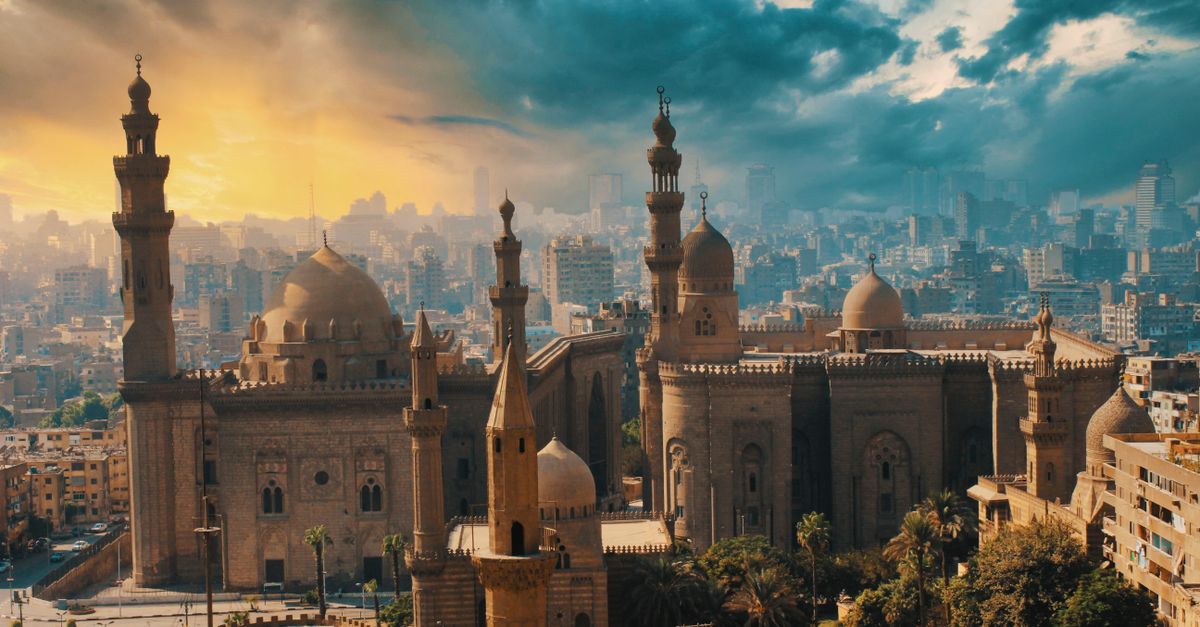
Al-Muizz li-Din Allah al-Fatimi Street is the oldest street in Cairo, running north from the great gate of Bab Zuweila through the heart of medieval Islamic Cairo to the northern gate of Bab al-Futuh. For a kilometre, it is flanked by an unbroken succession of medieval Islamic monuments — mosques, madrasas, caravanserais, hammams, and mausolea — from every dynasty that ruled Egypt between the 10th and 19th centuries. UNESCO has described it as an open-air museum of Islamic architecture without peer.
The street is open to tourists throughout the day and is often pedestrianised in the evenings, when it fills with Cairene families and becomes a chaotic but joyful promenade. The secret is to visit at dawn — just after the Fajr prayer call, around 5–6 a.m. depending on the season — when the street is entirely empty of tourists and only a handful of shopkeepers are opening their shutters. In that early light, the medieval stone facades glow amber, the minarets cast long shadows, and the city's 10-century Islamic heritage is briefly, perfectly yours alone.
The street is in the Gamaleya district of Islamic Cairo, accessible by taxi or Cairo Metro to Al-Azhar station. From there it's a 10-minute walk through the bazaar alleyways. No entry fee for the street itself; individual mosques and monuments charge EGP 40–100 ($1–2 USD) each. The key monuments along the route are the Mosque of Sultan Barquq, the Qalawun Complex, the Mosque of al-Aqmar, and the Bab Zuweila gate.
Bab Zuweila is one of the original gates of the Fatimid city and the only one still standing with both towers intact. Climbing the towers costs EGP 60 ($1.20 USD) and provides the finest rooftop view in Islamic Cairo — a sea of medieval domes and minarets extending in every direction. The view north along Al-Muizz from the top of the gate is one of Cairo's defining vistas and rarely crowded before 9 a.m.
2. The Mosque of Ibn Tulun
The Mosque of Ibn Tulun is Cairo's oldest intact mosque — built between 876 and 879 CE during the rule of Ahmad ibn Tulun, the Abbasid governor who declared Egypt's effective independence. It predates the famous Al-Azhar mosque by nearly a century and covers an area of 26,000 square metres, making it one of the largest mosques in Africa and the Islamic world. Yet it receives a fraction of Al-Azhar's visitors, partly because it sits in a quieter neighbourhood (Sayyida Zaynab) and partly because it lacks Al-Azhar's contemporary religious significance.
The mosque's architectural achievement is in its simplicity: pointed arches — the first major use of this form in Egypt, predating its spread to medieval Europe — line the arcades surrounding a vast courtyard containing a spiral minaret modelled on the minarets of Samarra in Iraq, Ibn Tulun's homeland. The effect is meditative rather than overwhelming, a quality that Al-Azhar's perpetually crowded courtyard cannot match.
The mosque is open daily from 8 a.m. to 5 p.m. Entry costs EGP 100 ($2 USD). The adjacent Gayer-Anderson Museum — a pair of 16th-century Mamluk houses joined by a bridge and filled with the eclectic collection of Major R.G. Gayer-Anderson, a British officer who lived here in the 1930s — is equally extraordinary and charges EGP 100 separately. Together they represent two hours of deeply satisfying exploration for under $4 USD.
The spiral minaret of Ibn Tulun is one of only two spiral minarets in Egypt (the other is at the Mosque of Amr ibn al-As). Visitors can climb it for the panoramic view across the neighbourhood to the Citadel. Take a taxi to Sayyida Zaynab Square and walk 5 minutes east; the mosque's massive brick walls are impossible to miss from several blocks away. Dress modestly; shoes must be removed to enter the prayer hall.
3. The City of the Dead
Cairo's Qarafa — the City of the Dead — is simultaneously the city's most extraordinary neighbourhood and one of its most misunderstood. The vast necropolis stretching south and east of the Citadel has been inhabited by the living as well as the dead since at least the 10th century. An estimated 500,000 people live among the tombs, using them as homes, workshops, and community spaces. The tombs of the Mamluk sultans — magnificent 15th-century domed mausolea — coexist with satellite dishes, schoolchildren, and vegetable sellers.
The northern section of the Qarafa contains the finest group of Mamluk funerary architecture in the world: the tomb complexes of the sultans Barsbay, Qaytbay, and Inal are more ornate and better preserved than most mosques in the rest of the Islamic world. The carved stone domes — each carved in a different geometric pattern — are masterpieces of medieval craftsmanship. Yet because they're in a cemetery, tourist visiting infrastructure is almost nonexistent.
The Qarafa is accessible by taxi to the "Qaitbay" area of Manshiyat Naser. Entry to the major tomb complexes costs EGP 60–100 each. The inhabited areas between the tombs are freely walkable; residents are accustomed to (and generally welcoming of) respectful visitors. A guide is strongly recommended — ask at your hotel for a reputable local guide, as the area's layout is genuinely confusing without local knowledge. Expect to pay EGP 300–500 ($6–10 USD) for a 2-hour guided walk.
The light in the City of the Dead in the late afternoon — when the domed tombs glow golden and the sounds of evening prayers echo from every direction — is one of Cairo's great photographic opportunities. The neighbourhood is entirely safe during daylight hours; the community is tight-knit and the children particularly curious about visitors. Bring small gifts (pens, notebooks) for the children if you wish, but the expectation of gifts can become problematic if overdone.
4. Coptic Cairo's Hidden Church
Old Cairo's Coptic quarter — the Misr al-Qadima — is a walled compound of churches, monasteries, and museums that preserves one of Christianity's oldest continuous communities. The Copts (Egyptian Christians) are the direct descendants of the pharaonic Egyptians who converted to Christianity in the 1st century CE — their church was established by the evangelist Mark, and they number perhaps 10% of Egypt's population today. The Coptic quarter contains churches that predate the Islamic conquest of Egypt by six centuries.
The most famous church is the Hanging Church (Al-Muallaqah), suspended on the gatehouse towers of the Roman fortress of Babylon. But the most serene and least visited is the Church of St. Sergius and Bacchus (Abu Serga) — a 5th-century structure built over a cave where the Holy Family is believed to have sheltered during the Flight into Egypt. The cave below the altar is still accessible by a narrow staircase and is among the most spiritually charged spaces in Egyptian Christianity.
The Coptic quarter is in Misr al-Qadima district, accessible by Cairo Metro to Mar Girgis station (the first stop after Maadi on the northern branch). The station exit opens directly onto the compound gate. Entry to the compound and most churches is free; a donation at each church entrance is appreciated. The Coptic Museum adjacent to the compound charges EGP 120 ($2.50 USD) and houses the world's finest collection of Coptic art.
Visit on a Sunday morning to hear the Coptic liturgy — an ancient language (a form of ancient Egyptian written in Greek letters) that sounds unlike anything in the contemporary world. The choir's ululating harmonies in the dim interior of Abu Serga are an experience that stays with visitors long after the Pyramids have faded. Photography is permitted in most churches but not during services; ask before pointing a lens.
5. Khan el-Khalili's Backstreet Workshops
Khan el-Khalili bazaar is famous; the streets around it are not. Within a 10-minute walk of the bazaar's main entrance lies a network of specialised craft streets that predates the Khan itself by several centuries — the historic artisan quarter of Islamic Cairo where actual production still happens. The Sharia al-Nahhas (coppersmiths' street) rings with hammering from workshops producing copper and brass trays, lanterns, and water pipes. The perfumers' street is dense with attar essences. The tent-makers' market (Khayamiyya) at the base of Bab Zuweila produces the hand-sewn appliqué panels used to line Ramadan tents and pilgrimage processions.
The Khayamiyya is particularly extraordinary — a covered street of workshops where craftsmen cut, appliqué, and hand-stitch geometric and figurative panels in vivid colours. The technique is unique to Egypt and the panels (sold as wall hangings, cushion covers, and bed coverings) are among the most authentic crafts available in Cairo. Prices in the workshops themselves are considerably lower than in the Khan bazaar and the quality is demonstrably better: EGP 200–500 for a medium cushion cover versus EGP 600–1000 for inferior imported versions in the tourist market.
The craft streets radiate from the south gate of the Khan and from the base of Bab Zuweila; a map is available from the Egyptian Tourism Authority office near Al-Azhar mosque. The workshops are generally open from 9 a.m. to 6 p.m. Saturday to Thursday. Most craftsmen speak enough English for basic transactions, and all of them appreciate visitors who show genuine interest in the production process rather than just the final product.
Bargaining in the workshops is softer than in the bazaar — these are working craftspeople with fixed costs, not traders with arbitrary starting prices. A polite negotiation might secure 10–15% off the asking price; pushing harder than that is considered rude. Pay by cash (EGP); card machines are rare in the craft workshops.
6. Zamalek Island's Art Galleries
Zamalek, the island district in the middle of the Nile, is Cairo's most cosmopolitan neighbourhood — home to embassies, expatriates, and the city's most active contemporary art scene. The main gallery strip on Shagaret al-Durr Street and the surrounding blocks contains more than a dozen independent galleries showing Egyptian contemporary painting, sculpture, photography, and installation work. The Cairo art scene is underrecognised internationally but genuinely vital, and Zamalek is its public face.
The Townhouse Gallery on Hussein Street in downtown Cairo (not in Zamalek but worth the detour) is the most internationally connected space, having hosted Egyptian and international artists in residency and exhibition since 1998. But Zamalek's galleries — including the Safar Khan Gallery, the Hanager Arts Centre, and the Egyptian Centre for International Cultural Cooperation — show work that is more deeply rooted in the Egyptian cultural context.
Gallery openings in Zamalek typically happen on Thursday evenings and are generally open to anyone who shows up — free entry, wine or juice provided, and the opportunity to see Cairo's creative class gathered in unusually informal circumstances. Check the Cairo 360 events website for current exhibition schedules. Most galleries are open Tuesday to Saturday from 10 a.m. to 8 p.m.
Zamalek is equally rewarding for its café culture: the Brazilian Coffee Stores on Shagaret al-Durr and the Kaffeine chain on the 26th of July Corridor serve excellent Egyptian and specialty coffee in settings that attract architects, journalists, and artists. A strong Egyptian coffee costs EGP 30–50 ($0.60–1 USD). The neighbourhood is eminently walkable and the Nile corniche on the island's western edge provides a sunset promenade that rivals any in the city.
7. Wekalet el-Balah Market
In the working-class neighbourhood of Bulaq, north of downtown Cairo, Wekalet el-Balah is one of the city's largest and most chaotic wholesale markets — a place where second-hand clothes, antiques, household goods, and inexplicable miscellany wash up from across the city and are resold at prices that make the bazaar look expensive. The name means "date warehouse" — the market originally traded in dates from Upper Egypt — but today it stocks everything from 1970s electronics to hand-embroidered galabiyyas (Egyptian robes) to Murano glass from the 1950s.
Wekalet el-Balah is not a curated shopping experience — it is genuinely unpredictable, slightly chaotic, and requires patience and a good eye. But for vintage Egyptian textiles, copper kitchenware, and the kind of objects that tell the story of a century of Egyptian domestic life, it is without equal. Prices start at EGP 20–50 for most items; bargaining is expected and the starting prices are already low.
The market is in Bulaq, north of downtown. Take a taxi to Sharia Wekalet el-Balah or walk 20 minutes north from the Egyptian Museum along the Corniche. The market operates daily from 8 a.m. to 6 p.m. The best vintage textile stalls are concentrated in the covered section toward the market's interior; the outdoor section is more miscellaneous. Go with cash (EGP); no digital payments accepted anywhere.
The neighbourhood around Wekalet el-Balah is also Cairo's traditional Nubian settlement area, with a concentration of Nubian-owned tea houses and food stalls serving southern Egyptian and Sudanese-influenced food: karkadeh (hibiscus tea), ful medames with extra cumin, and the remarkable Nubian asida (a fermented sorghum porridge). Ask for recommendations from the tea house owners — they'll happily direct you to the best food.
8. El-Fishawy Café at Midnight
El-Fishawy is the oldest continuously operating café in Cairo — established in 1797 in the heart of the Khan el-Khalili bazaar, it has never closed for a single day in over two centuries. The Nobel Prize-winning novelist Naguib Mahfouz was a regular for most of his life; he set much of his Cairo Trilogy in and around the streets of the Khan and used El-Fishawy as his unofficial office. The walls are hung with aged mirrors and water-pipe hookah apparatus; the chairs are mismatched and the tables ancient.
El-Fishawy is on every tourist itinerary, which means it's crowded by day — but at midnight, when most tourists have returned to their hotels, the café reverts to its natural state: local men drinking tea, smoking shisha, and playing dominoes with the focused leisure of people who have nowhere they need to be. The Ramadan nights, when the bazaar is open until 3 a.m. and El-Fishawy fills with families after the Iftar meal, are the café at its most extraordinary.
Tea costs EGP 20–30 ($0.40–0.60 USD); a shisha pipe is EGP 50–80 ($1–1.60 USD). The café is open 24 hours, every day. Find it by entering the Khan el-Khalili from the Al-Azhar Street entrance and following the narrow alley past the gold jewellery shops — you'll hear the clatter of dominoes and smell the apple shisha before you see the mirrors.
Naguib Mahfouz's literary Cairo — the working-class alleys and coffeehouses of the 1940s and 50s — is described in extraordinary detail in his Cairo Trilogy (Palace Walk, Palace of Desire, Sugar Street). Reading even the first volume before visiting transforms the experience of walking these streets. The three novels together represent one of the greatest achievements of 20th-century literature and cost around EGP 150 ($3 USD) for a second-hand copy from the booksellers on Sharia Ezbekiya.
9. Al-Azhar Park
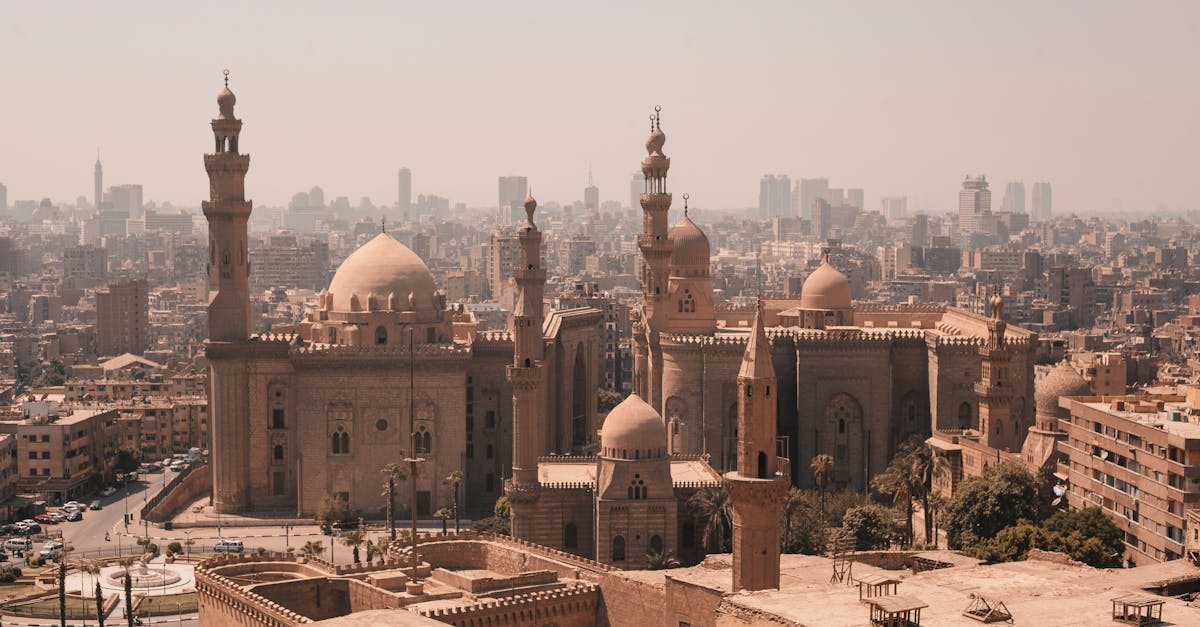
Al-Azhar Park is one of the Middle East's great urban regeneration stories — a 30-hectare public park created in 2005 on a previously derelict hillside of historic rubble between the city walls of Islamic Cairo and the Citadel. The park was funded by the Aga Khan Trust for Culture and simultaneously involved the restoration of the adjacent Ayyubid city walls and the rehabilitation of the Darb al-Ahmar neighbourhood below. The result is one of Cairo's most beautiful public spaces and one of its most undervisited.
The park's formal gardens, lakes, and lawns provide a refuge from Cairo's urban intensity that is almost impossible to find elsewhere in this city of 22 million. The view from the park's ridge — across the minarets and domes of Islamic Cairo to the west, and south toward the Citadel and the Mosque of Mohammed Ali — is Cairo's finest elevated panorama and one of the most beautiful urban vistas in the world. At sunset, with the mosques lit gold and the muezzin calls rising from multiple directions simultaneously, it becomes unforgettable.
The park is on Salah Salem Road at the eastern edge of Islamic Cairo. Entry costs EGP 20 ($0.40 USD). The park is open daily from 9 a.m. to 10 p.m. The café at the northern end serves adequate Egyptian food; the views from the terrace justify any shortcomings in the kitchen. The hilltop restaurant charges more but the panorama at dinner is extraordinary.
The walk from Al-Azhar Park down into the Darb al-Ahmar neighbourhood — which the Aga Khan Trust also rehabilitated — passes through one of Cairo's most characterful historic streets. Darb al-Ahmar's 14th- and 15th-century architecture includes houses, mosques, and artisan workshops in various states of beautiful dilapidation. The neighbourhood is entirely non-touristy and genuinely fascinating for those who enjoy urban archaeology.
10. Saqqara's Pyramid Field Beyond Djoser
Everyone visits Saqqara for the Step Pyramid of Djoser — the world's oldest pyramid, built circa 2650 BCE — but almost nobody walks the additional 30 minutes across the desert plateau to the pyramid field further south, where a dozen smaller pyramids of the 5th and 6th Dynasties stand in various states of collapse amid absolute silence. These are the pyramids that contain the Pyramid Texts — the oldest religious literature in human history, carved into the walls of the burial chambers in hieroglyphs that date to around 2400 BCE.
The Pyramid Texts were the predecessor to the Book of the Dead and the direct ancestor of every religious resurrection narrative in the western world. Reading them (translations are widely available) inside the small, cramped burial chamber of Unas or Teti — lying on your back in the darkness to see the ceiling hieroglyphs — is one of the most profound experiences Egypt offers. The tombs are open to visitors with a separate ticket (EGP 200 for the Unas pyramid interior) and are visited by perhaps 50 people a day while the Djoser complex receives thousands.
Saqqara is 30 km south of Cairo. Take a taxi (EGP 400–500 return including waiting time) or book through a tour company. The general site entry fee is EGP 200; individual monument tickets are sold separately at the entrance to each structure. Arrive at 8 a.m. when the site opens; the plateau is exposed and becomes extremely hot by midday. The adjacent Memphis site (ruins of the ancient capital, 3 km east of Saqqara) can be combined into a half-day trip for EGP 100 additional.
The Mastaba of Ti and the Mastaba of Mereruka — enormous nobles' tombs with wall paintings depicting scenes of daily life in the Old Kingdom — are the finest painted tombs in the Saqqara complex and far more detailed and better-preserved than anything in the Valley of the Kings. They are accessible on the general site ticket and usually completely crowd-free. Bring a torch; the interior lighting is inadequate for reading the paintings properly.


