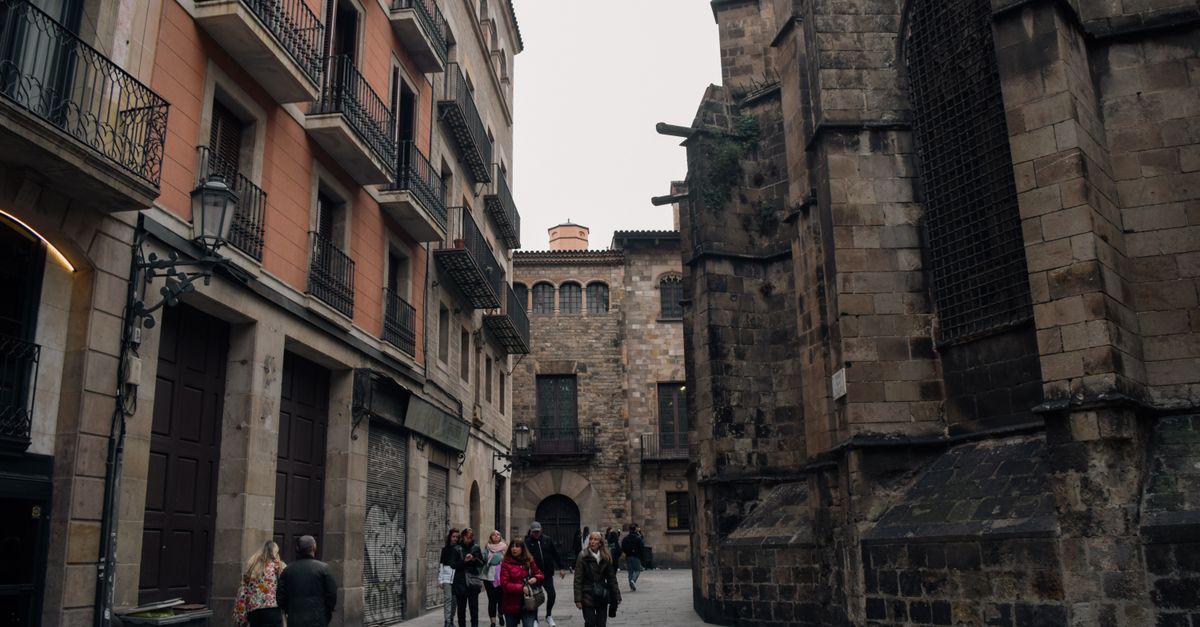
Barcelona — Hidden Gems
Hidden Gems

Barcelona Hidden Gems — 10 Places Most Tourists Miss

Everyone queues for Sagrada Familia, crowds La Rambla, and packs onto Barceloneta Beach. But Barcelona'...

🌎 Barcelona, ES 📖 9 min read 💰 Mid-range budget Updated Jul 2026

Barcelona Hidden Gems: 5 Places Most Tourists Miss

Everyone queues for Sagrada Familia, crowds La Rambla, and packs onto Barceloneta Beach. But Barcelona's most memorable moments happen away from the guidebook circuit — a hilltop Civil War bunker with the city's most spectacular view, a forgotten Art Nouveau hospital that rivals Gaudí's best work, and a creative neighbourhood where street art covers old factory walls. Here are five spots worth rerouting your itinerary for.

Panoramic sunset view of Barcelona from Bunkers del Carmel
Bunkers del Carmel — the best free viewpoint in Barcelona, beloved by locals

Bunkers del Carmel

The Bunkers del Carmel (officially Turó de la Rovira) is a hilltop anti-aircraft battery from the Spanish Civil War that offers a full 360-degree panorama of Barcelona — Sagrada Familia rises to the east, the sea stretches south, Montjuïc anchors the west, and Tibidabo mountain frames the northern horizon. Unlike any paid observation deck, the view is completely unobstructed in every direction. And it's completely free.

Locals — not tourists — claim this as their favourite viewpoint. They come at sunset with bottles of wine, olives, bread, and blankets, spreading out across the concrete gun platforms to watch the city turn golden and then light up below. The vibe is relaxed, communal, and utterly unlike the queue-and-leave atmosphere of ticketed viewpoints. Getting there: take the metro to Alfons X (L4), then walk uphill for 20 minutes through the Carmel neighbourhood. The path is steep but manageable. Arrive 45 minutes before sunset to claim a good spot on the circular concrete platforms. Bring a blanket and something to drink.

Hospital de Sant Pau

While the entire world mobs Sagrada Familia, this UNESCO World Heritage Site sits just five minutes' walk away — connected by the tree-lined Avinguda de Gaudí — with a fraction of the visitors. Recinte Modernista de Sant Pau is a sprawling Art Nouveau hospital complex designed by Lluís Domènech i Montaner, Gaudí's contemporary and rival who many architectural historians consider his equal in ambition and skill.

The complex features 27 individual pavilions connected by underground tunnels, each covered in mosaics, stained glass, ornamental sculptures, and ceramic details that rival anything at Casa Batlló. It functioned as a working hospital until 2009 — imagine recovering from surgery surrounded by this level of beauty. Entry costs €17 for a guided visit (€13 self-guided) and includes the gardens, restored pavilions, underground passages, and exhibition spaces. The morning light through the stained glass windows of the Administration Pavilion is magnificent. Walk up Avinguda de Gaudí from Sagrada Familia to reach the entrance — the avenue frames the Sagrada Familia's towers perfectly from the hospital's viewpoint, making it one of Barcelona's most photogenic streets.

Combo Visit: Walk the tree-lined Avinguda de Gaudí between Sagrada Familia and Hospital de Sant Pau. It's a 10-minute stroll lined with cafés and benches. Visit Sant Pau first thing in the morning (fewer crowds, better light), then walk to your pre-booked Sagrada Familia slot. This pairing is the best architectural morning in Barcelona.

El Born Centre de Cultura i Memòria

Beneath a beautiful 19th-century iron-and-glass market hall lie the excavated archaeological ruins of an entire Barcelona neighbourhood destroyed in 1714 during the Siege of Barcelona, when the city fell to Bourbon forces after a 14-month siege. El Born CCM preserves these streets, houses, workshops, and shops under a transparent floor and open-air roof — you walk above the ruins of a city that was razed as punishment for resistance.

The main archaeological site is free to visit and deeply affecting — information panels in English, Spanish, and Catalan tell the story of the neighbourhood's destruction and what it meant for Catalan identity and autonomy. Temporary exhibitions (usually free or €4-6) rotate on the upper levels of the market hall, often addressing themes of memory, resistance, and cultural survival. The surrounding El Born neighbourhood is Barcelona's most atmospheric district: medieval streets lined with cocktail bars, independent design boutiques, the Picasso Museum, and some of the city's best tapas spots. Visit the ruins, then stay to explore the living neighbourhood around them.

Art Nouveau building facade of Hospital de Sant Pau in Barcelona
Hospital de Sant Pau — Art Nouveau brilliance that rivals Sagrada Familia, with far fewer crowds

Poblenou: Barcelona's Brooklyn

Poblenou is a former industrial neighbourhood on Barcelona's eastern waterfront that's steadily reinventing itself as the city's creative and technological hub. Old textile factories and warehouses now house design studios, coworking spaces, galleries, and concept restaurants. The Rambla del Poblenou — the neighbourhood's own tree-lined pedestrian boulevard — has local cafés, bakeries, and small shops with zero tourist traffic and an authentic neighbourhood heartbeat.

Visit the Palo Alto Market (held on the first and sometimes third weekend of each month, €4 entry) — a curated design, food, and music market inside a lush, vine-covered former factory complex. Local designers sell ceramics, clothing, prints, and jewellery alongside food trucks and live DJs. Walk from Poblenou to Bogatell Beach or Mar Bella Beach for swimming far from Barceloneta's tourist crowds — these beaches are where Barcelona locals actually go. Street art covers walls throughout the neighbourhood, especially around Carrer de Pallars and the 22@ innovation district, with murals that rival any street art capital in Europe. For coffee, Nomad Coffee in Poblenou is Barcelona's best speciality roaster — a flat white costs €3.50 and the industrial-chic interior reflects the neighbourhood's character perfectly.

Montjuïc Cemetery

Built into the steep cliffside of Montjuïc hill overlooking the Mediterranean, the Cementiri de Montjuïc is one of the most dramatically situated cemeteries in Europe. Terraced tombs, elaborate family mausoleums, and winding stone paths climb the hillside in tiers, with views of the sea, the commercial port, and the container ships far below.

It's free to enter, open daily during daylight hours, and almost never visited by tourists despite its proximity to the Montjuïc attractions everyone else visits. Joan Miró is buried here, along with politicians, artists, and generations of Barcelona's families. The architecture ranges from Neoclassical columns and angels to Modernista (Art Nouveau) family chapels — some are miniature works of art with stained glass, mosaic floors, and carved marble facades. Visit on a clear morning for the best sea views and the most dramatic light falling across the terraced hillside. The main entrance is a 15-minute walk from the Montjuïc funicular station — combine it with Montjuïc Castle, Fundació Joan Miró, and the Magic Fountain for a full half-day exploring the hill.

Montjuïc Full-Day Route: Take the funicular up from Paral·lel metro station. Visit Fundació Joan Miró first, then walk to Montjuïc Castle for the views and military history. Continue down the hill's south face to the cemetery (free). Then descend to the Magic Fountain and MNAC at Plaça Espanya. This route covers all of Montjuïc downhill — your legs will thank you.
Street art mural on a building wall in Poblenou Barcelona
Poblenou — Barcelona's creative district with street art, studios, and local beaches

Hidden Dining: Where Barcelona Actually Eats

Barcelona's most interesting food scene exists almost entirely outside the areas tourists concentrate in. La Rambla's restaurants exist purely to capture pedestrian traffic. The real dining city is distributed across working neighbourhoods where chefs cook for neighbours rather than reviewers, and where the bill rarely reaches €30 a head even with wine.

Bar Calders on Carrer del Parlament in Sant Antoni is the template for Barcelona neighbourhood eating done right. The terrace fills with locals from mid-morning for coffee, empties briefly at siesta, then fills again around 7 PM for vermut (Catalan vermouth served neat with an olive and a slice of orange, €3.50) and small plates of boquerones, patatas bravas, and montaditos. The food is simple and the point is the ritual: a cold glass, a bar stool, and the slow accumulation of an afternoon in the neighbourhood's most beloved street.

The Gràcia neighbourhood — the village that Barcelona absorbed without fully digesting — hides some of the city's most compelling cheap dining. La Pepita on Carrer de Còrsega is a bocadillo institution where the anchovy, truffle cream, and tomato roll (€4.50) generates queues at lunch. Walk further up through Plaça del Diamant and Carrer de Verdi and you'll find a string of restaurants serving Catalan and international food to a local clientele that has no interest in being photographed eating it. The area around Carrer de Terol has the highest concentration of restaurants with outdoor tables used by actual residents.

For the best market lunch in the city — better than Boqueria, which is now almost entirely a tourist market — go to the Mercat de l'Abaceria in Gràcia or Mercat de Sarrià in the quiet upper neighbourhood of Sarrià. Both have working market bars where fishmongers and stallholders eat at noon. Order whatever the cook proposes: typically a plate of grilled fish, a glass of house white, bread with tomato, and coffee for €9-12 total. This is the Catalan menú del dia at its most unpretentious.

In Poble Sec, Carrer de Blai — known locally as the street of pintxos — is lined with Basque-style bars where small plates of bread topped with ingredients cost €1-1.50 each. Arrive between 7 and 9 PM, push up to the bar, point at what looks good, and wash it down with a glass of txakoli (a sharp, low-alcohol Basque white wine, €2.50) poured from a height to aerate it. The crowds are local, the energy is high, and a full dinner costs €10-15 per person.

💡 The menú del dia — a three-course set lunch with bread, a drink, and coffee — is one of the great food institutions of Spanish life and the best value meal in Barcelona. Available Monday through Friday at neighbourhood restaurants (not tourist zones), it typically costs €10-14 for food that would cost €35 à la carte in the evening. Look for handwritten chalkboards outside rather than laminated menus — the chalkboards signal daily cooking from whatever arrived at the market that morning.

Explore More of Barcelona

Find hotels in Barcelona | Search flights to Barcelona

JC
JustCheckin Editorial Team
Researched, written, and verified by travel experts. Last updated Jul 08, 2026.
COMPLETE BARCELONA TRAVEL GUIDE

Everything you need for Barcelona

Daily Budget — Barcelona

Typical traveller costs · All figures in USD

🎒
$80
Budget/day
🏨
$180
Mid-range/day
$450
Luxury/day

💱 Euro (EUR) - 1 EUR is approximately 1.08 USD

Culture & Etiquette

👗
Dress Code
Barcelona is generally casual, but for churches like the Sagrada Familia or Barcelona Cathedral, shoulders and knees should be covered. Avoid overly revealing clothing in these places. For evenings, smart casual is common for restaurants and bars.
🤝
Local Customs
Greetings involve a handshake or two kisses on the cheek (starting with the right cheek) between friends and acquaintances. Punctuality is appreciated but not as rigid as in some Northern European countries. 'Siesta' is less common in the city center, but some smaller shops might close mid-afternoon. Tipping is not obligatory but appreciated for good service (rounding up the bill or leaving a few euros).
⚠️
Watch Out For
Be wary of pickpockets, especially in crowded tourist areas like Las Ramblas, the Gothic Quarter, and on public transport (metro, buses). Keep valuables secure and out of sight. Watch out for 'distraction' scams where someone might spill something on you or ask for directions while an accomplice attempts to steal your belongings. Be cautious of overly friendly strangers offering unsolicited help or tours.
Dos & Don'ts
Do: Learn a few basic Catalan or Spanish phrases ('Hola', 'Gràcies'/'Gracias', 'Si us plau'/'Por favor'). Be patient and polite. Enjoy the local pace of life. Don't: Be loud or disruptive in public spaces. Assume everyone speaks English. Litter or disrespect historical sites.
👩
Solo Female Safety
Barcelona is generally safe for solo female travelers. However, exercise the same precautions as in any major city. Be aware of your surroundings, especially at night. Avoid walking alone in poorly lit or deserted areas. Keep your phone charged and share your itinerary with someone. Trust your instincts; if a situation feels uncomfortable, remove yourself from it.
🏳️‍🌈
LGBTQ+ Notes
Barcelona is very LGBTQ+ friendly and considered one of Europe's most welcoming cities. The city has a vibrant LGBTQ+ scene, particularly in the Eixample district, with numerous bars, clubs, and events. Same-sex marriage is legal, and discrimination based on sexual orientation or gender identity is prohibited.
📷
Photography
Generally, you can photograph most public spaces and landmarks. However, avoid photographing people without their explicit consent, especially children. Inside churches, photography may be restricted or prohibited, particularly during services. Be mindful of private property and security cameras.

Getting Around Barcelona

✈️
Airport Transfer
The Aerobus is the fastest and most convenient way from Barcelona El Prat Airport (BCN) to the city center, costing around €5.90 for a single ticket and taking about 35 minutes.
🚇
Public Transport
Barcelona boasts an excellent public transport system, including the metro, buses, and trams, all integrated under the T-casual card for cost-effective travel.
📱
Taxi & Ride Apps
Cabify and Free Now are the most popular ride-hailing apps in Barcelona; they offer competitive pricing and reliable service compared to hailing taxis on the street.
🛵
Rental Tips
Renting a scooter can be convenient for short distances, but be aware of traffic and parking regulations; car rental is generally not recommended for navigating the city center due to congestion and limited parking.
🗺️
Getting Around
Purchase a T-casual travel card for easy access to metro and bus lines; download an offline map of Barcelona for efficient navigation.

Frequently Asked Questions

While tap water in Barcelona is technically safe to drink according to EU standards, many residents and tourists prefer bottled water due to its taste, which can be quite chlorinated. You can buy bottled water cheaply at supermarkets. If you're concerned about taste, consider using a water filter or asking for filtered water at restaurants.
Barcelona uses Type F electrical outlets, also known as Schuko. These have two round pins. The standard voltage in Spain is 230V with a frequency of 50Hz. Most modern electronics (laptops, phone chargers) are dual-voltage, but always check the label on your devices. You'll likely need an adapter for your plugs.
For affordable data and calls, consider purchasing a local SIM card from providers like Orange, Vodafone, or Movistar. You can buy them at their stores or sometimes at convenience stores and airports. Many tourists also opt for eSIMs if their phone supports it, which can be activated online before or upon arrival. Check coverage and data plans that suit your needs.
Catalans, and Barcelonians in particular, value politeness. A 'bon dia' (good morning) or 'hola' when entering a shop or restaurant is appreciated. Punctuality is generally expected for appointments. When dining, it's common to eat later than in many other countries; lunch is typically between 2-4 PM and dinner from 9 PM onwards. Avoid loud conversations in public transport and be mindful of personal space.
The most common issue for tourists is pickpocketing, especially in crowded areas like Las Ramblas, the Gothic Quarter, and on public transport. Keep your belongings secure, wear bags across your body, and be aware of your surroundings. Avoid displaying expensive jewelry or electronics openly. Be cautious of common scams, such as distraction techniques used by thieves.
Bargaining is generally not expected in most shops, restaurants, or cafes in Barcelona. Prices are usually fixed. However, in some smaller, independent souvenir shops or at flea markets (like Els Encants Vells), you might find a little room for negotiation, but don't expect significant discounts. It's best to assume prices are firm unless the seller indicates otherwise.
Tipping is not obligatory in Spain, but it is appreciated for good service. For meals in restaurants, leaving a few extra euros or rounding up the bill is common if you're satisfied. For taxis, rounding up the fare is typical. In bars, you might leave small change. Service charges are often included in the bill, so there's no expectation of a large tip.
Meal times in Barcelona are later than in many other countries. Lunch is typically served between 2:00 PM and 4:00 PM, and dinner is usually from 9:00 PM onwards. Many restaurants close between lunch and dinner service. If you arrive for dinner before 8:00 PM, you might find the kitchen not yet open or the restaurant quite empty. It's advisable to plan your meals accordingly, especially if you prefer a quieter dining experience.
On public transport (metro, buses), it's polite to offer your seat to the elderly, pregnant women, or people with disabilities. Avoid blocking the doors and keep your voice down. When boarding, let passengers disembark first. Keep your bags off the seats if the vehicle is crowded. Using headphones for music or calls is also recommended.
If your passport is lost or stolen, immediately report it to the local police (Mossos d'Esquadra) to get a report, which you'll need for your embassy. Contact your country's embassy or consulate in Spain as soon as possible to arrange for emergency travel documents. If your wallet is stolen, also report it to the police and contact your bank to cancel all credit and debit cards.
✨ Jiai — Travel AI Open Full →
Hi! I'm **Jiai**. Ask me about hotels, flights, activities or budgets for any destination.
✈️

You're on a roll!

Enter your email for unlimited Jiai access + personalised travel deals.

No spam. Unsubscribe anytime.