3 Days in Athens: Ancient Ruins, Street Food & Seaside Sunsets
Athens is where Western civilization began, and it still feels electric. Ancient temples tower over graffiti-covered streets, souvlaki smoke drifts through marble-lined squares, and the Aegean glints on the horizon.
Three days covers the essential ruins, neighborhoods, and a day trip that most itineraries miss. Wear sunscreen and comfortable shoes — you'll need both.

Ancient Athens: Acropolis, Plaka & the Ancient Agora
Get to the Acropolis by 8 AM when gates open. The combined ticket (€30, valid 5 days) covers the Acropolis plus six other archaeological sites including the Ancient Agora, Roman Agora, Kerameikos, Temple of Olympian Zeus, and Hadrian's Library. Buy it here and skip ticket lines at every subsequent site.
The climb up the Sacred Rock takes 15-20 minutes. The Parthenon, Erechtheion with its Caryatid porch, and the Temple of Athena Nike are all here. The new Acropolis Museum (€15, separate ticket) at the base of the hill houses the original Caryatids and the Parthenon frieze. Allow 2 hours for the hill, 2 hours for the museum.
Descend into Plaka, Athens' oldest neighborhood. The narrow pedestrian streets are lined with neoclassical houses, tavernas, and small shops. It's touristy but genuinely charming. Grab lunch at Thanasis (Monastiraki Square 69) — their souvlaki plate with pita and tzatziki (€8-10) has been a local institution for decades.
After lunch, walk to the Ancient Agora (covered by combined ticket). This was the heart of democratic Athens — where Socrates debated philosophy, citizens voted on war and peace, and merchants traded goods from across the Mediterranean. The reconstructed Stoa of Attalos houses an excellent museum of everyday Athenian life, with objects ranging from voting tokens to children's toys. The Temple of Hephaestus, overlooking the agora from a small hill, is the best-preserved ancient Greek temple in the world — its columns and roof still intact after 2,450 years.
End the day watching sunset from Areopagus Hill (Mars Hill), the rocky outcrop just below the Acropolis entrance. Arrive 45 minutes early for a good seat on the rocks. The view across Athens as the sky turns gold is unforgettable.
Museums & Markets: National Archaeological Museum, Monastiraki & Psyrri
Start at the National Archaeological Museum (Patission 44, €12). This is one of the world's great archaeology museums. The Mycenaean gold collection (Mask of Agamemnon), the Antikythera mechanism (an ancient analog computer), and the bronze statues pulled from the sea are extraordinary. Allow 2-3 hours.
Take the metro to Monastiraki. The flea market fills the streets around Avyssinias Square daily, but Sunday is the main event with hundreds of vendors selling antiques, vinyl records, vintage cameras, and random treasures (€1-50). Bargain firmly but fairly.

Lunch at Karamanlidika (Sokratous 1) in the meat market area. This deli-taverna serves traditional Greek cured meats and meze inside a working charcuterie. Pastourma (spiced cured beef, €7), soutzoukakia (spiced meatballs, €9), and their cheese selection are all excellent.
Spend the afternoon in Psyrri, the neighborhood between Monastiraki and Omonia. Once gritty, now vibrant with street art, craft cocktail bars, and small galleries. Walk Sarri and Pallados streets for the best murals. The Little Kook café (Karaiskaki 17) is Instagram famous for its seasonal fantasy decorations — love it or hate it, it's worth seeing.
Dinner at Psyrri's tavernas is excellent value. Oineas (Aischylou 9) serves creative Greek food with mains at €10-14. The grilled octopus and slow-cooked lamb are standouts. Pair with a carafe of house wine (€8/half liter).
Day Trip: Cape Sounion & the Temple of Poseidon
Dedicate your third day to Cape Sounion, 70 km southeast of Athens. The Temple of Poseidon stands on a cliff 60 meters above the Aegean — Lord Byron carved his name into one of the columns in 1810. The sunset here is considered one of the most beautiful in Greece.
KTEL buses run from the Pedion tou Areos terminal (Alexandras Avenue, near Victoria metro) to Sounion. The coastal route (2 hours, €7 each way) follows the Athens Riviera with views of islands and beaches the entire way. Buses depart several times daily — check ktelattikis.gr for schedules.
The temple (€10, or free with combined ticket on some dates) is worth arriving mid-afternoon. Explore the ruins, find a spot on the rocks, and wait for sunset. The columns silhouetted against the Aegean sky are the last great image of your Athens trip.
If you return early, spend the evening in Piraeus. Athens' port city has excellent seafood tavernas along Mikrolimano harbor. A grilled fish plate with salad and wine runs €15-20. Watch fishing boats bob in the harbor as you eat.
Alternatively, skip Cape Sounion and spend the day exploring the coast closer to Athens. Glyfada, Vouliagmeni, and the beaches of the Athens Riviera are reachable by tram or bus in 45-60 minutes. Vouliagmeni Lake (€15 entry) is a geothermal lake fed by underground hot springs at 24°C year-round — tiny fish nibble gently at your feet in a natural spa experience unlike anything else near a major city. The turquoise water surrounded by cliffs makes it feel tropical.

Getting Around Athens
Athens' metro is modern, clean, and cheap. A single ticket costs €1.20 (90-minute validity for all transport including buses and trams), and a 5-day tourist ticket costs €9 including one airport trip. The metro runs from 5:30 AM to midnight (2 AM Friday-Saturday). Line 2 (red) connects Syntagma to the Acropolis. Line 1 (green) is older and runs above ground for much of its route — it's the local commuter line connecting Piraeus port to the northern suburbs.
The city is walkable for most central sightseeing. From Monastiraki to the Acropolis entrance is a 10-minute walk. The entire Plaka neighborhood is compact enough to cover on foot in an afternoon. Save the metro for reaching the National Archaeological Museum (Victoria station), Piraeus, or the coast.
From Athens International Airport, the metro (Line 3, blue) reaches Syntagma in 40 minutes (€9 one-way). The X95 express bus (€6, runs 24/7) takes 50-70 minutes depending on traffic. Taxis cost a flat €40 (daytime) or €55 (midnight-5 AM).
| Expense | Budget | Mid-Range |
|---|---|---|
| Accommodation (per night) | €18-30 (hostel) | €60-100 (hotel) |
| Food (per day) | €12-20 | €30-50 |
| Transport (per day) | €1.80 | €3-5 |
| Attractions (per day) | €10-15 | €15-25 |
| Daily Total | €42-65 | €110-180 |
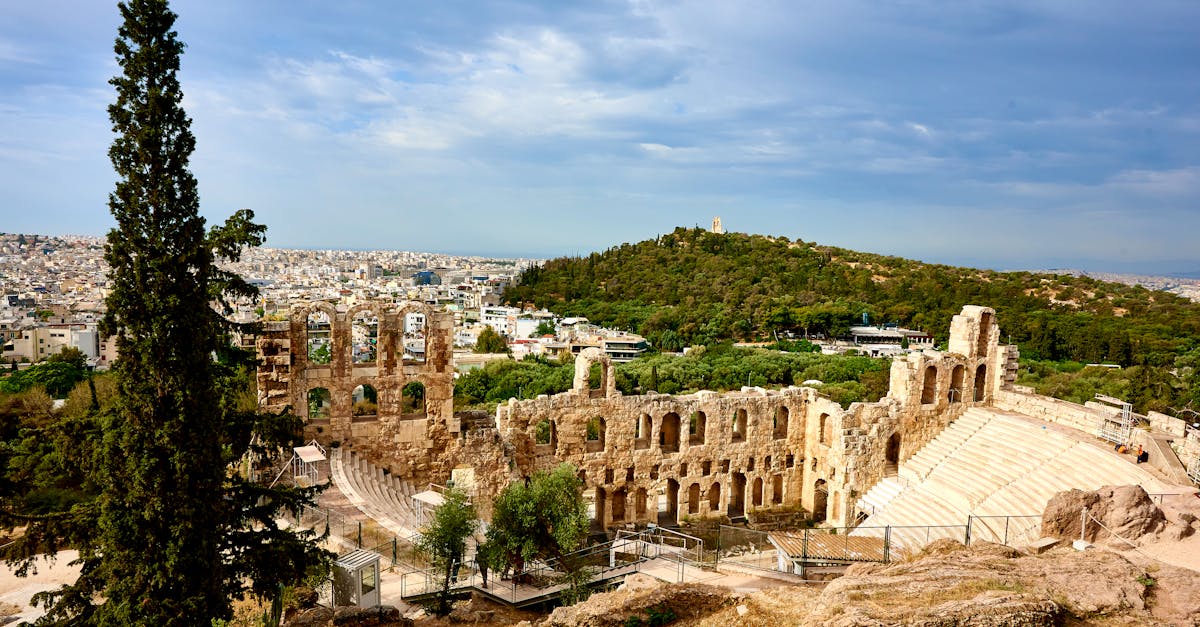
For evening entertainment, check what's on at the Odeon of Herodes Atticus — the ancient theater at the base of the Acropolis hosts concerts and performances during the Athens & Epidaurus Festival (June-August). Tickets range from €15-80 and watching a performance in a 2,000-year-old Roman theater is extraordinary.
Athens surprises visitors who expect only ruins. It's a living, loud, delicious city that happens to have 2,500 years of history scattered through its streets. Three days is enough to fall under its spell.
Neighbourhoods to Know
Athens is a city of distinct neighbourhoods, each with a different character, price level, and crowd. Understanding which area suits your interests saves time and money. The central districts sit within easy walking distance of each other, but the personality shift from one neighbourhood to the next can be dramatic — from ancient ruins to street art galleries to seafood tavernas in the space of twenty minutes on foot.
Plaka is Athens' oldest continuously inhabited district, tucked against the northern slope of the Acropolis. Its narrow, car-free lanes are lined with neoclassical houses painted in ochre and terracotta, bougainvillea cascading over iron balconies, and dozens of tavernas and souvenir shops. It is undeniably touristy, but genuinely charming. Prices here run 20-30% higher than equivalent food and drink elsewhere in the city. Use it for evening strolls and the occasional taverna dinner, but don't base all your eating here.
Monastiraki, adjacent to Plaka at the foot of the Acropolis, is the flea market and transport hub. The metro station sits at the centre of an animated street scene of vendors, bakeries, and old men playing backgammon. The neighbourhood is excellent for cheap souvlaki (€2.50-3.50 per stick at the stalls on Mitropoleos Street), antique hunting on Sundays, and watching the constant human theatre of central Athens. The view of the Acropolis from Monastiraki Square at dusk, framed by the ruins of Hadrian's Library, is one of the great free urban views in Europe.
Psyrri, immediately west of Monastiraki, has evolved from a working-class neighbourhood into one of Athens' most energetic creative districts. Street art murals cover nearly every building on Pallados and Sarri streets. The neighbourhood fills with Athenians rather than tourists after 9 PM — excellent tavernas like Oineas (Aischylou 9, mains €10-14) and craft cocktail bars occupy former warehouses and converted workshops. It is noticeably cheaper than Plaka and far more local in atmosphere.
Exarcheia is Athens' anarchist and student district, roughly 15 minutes' walk north of Monastiraki. Bookshops, vinyl record stores, cooperative cafes charging €1.50 for an espresso, and political murals fill the streets around Exarcheia Square. It has a reputation that sounds alarming but is not particularly threatening to visitors — the neighbourhood's energy is intellectual rather than dangerous, and the tavernas around the square serve some of the best and cheapest home-style cooking in the city. Ama Lachei (Kallidromiou 69) does a brilliant Sunday market lunch for €6-8.