Athens Hidden Gems: 5 Secrets Beyond the Acropolis
The Acropolis is magnificent and unmissable. But Athens has been a living city for 3,000 years, and its most enchanting corners are the ones most visitors walk right past.
From a Cycladic village hidden on the Acropolis slopes to wild beaches within city limits, these five gems reveal the Athens that guidebooks barely mention.

1. Anafiotika Village: An Island in the City
On the northeastern slope of the Acropolis, hidden behind Plaka's tourist restaurants, lies Anafiotika — a tiny neighborhood that looks like it was teleported from the Cycladic islands. White-washed houses, blue doors, narrow paths barely wide enough for two people, and bougainvillea cascading over stone walls.
In the 1840s, workers from the island of Anafi came to build King Otto's palace. They settled on the Acropolis slopes and built homes in the style of their island — without permission. Despite decades of demolition orders, about 45 houses remain, creating one of Athens' most magical neighborhoods.
Enter from Stratonos Street above Plaka. The path winds through whitewashed corridors, past cats sleeping on doorsteps and tiny churches with icons visible through half-open doors. You'll likely get lost — that's the entire point. Allow 30-45 minutes to wander.
The neighborhood is residential. Keep your voice low, don't photograph directly into windows, and remember that people actually live here. The best time to visit is early morning when the light hits the white walls and the cats are just waking up.
2. Filopappou Hill: The Better Acropolis View
Everyone goes to Areopagus Hill (Mars Hill) for sunset because it's right at the Acropolis entrance. Filopappou Hill, directly opposite, offers a better view with a fraction of the crowd.
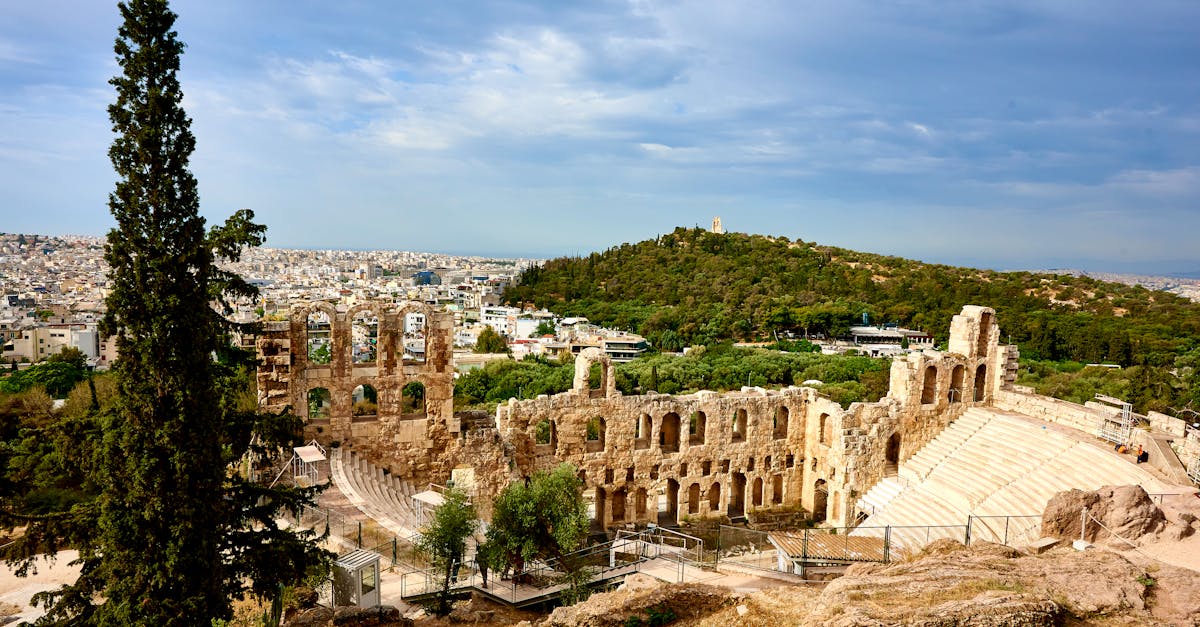
The hill is topped by the Philopappos Monument, a 2nd-century Roman memorial with carved reliefs. But the real draw is the panorama — the Acropolis fills your view from the side, revealing angles you can't see from ground level. The Parthenon, Erechtheion, and Propylaea align perfectly from certain spots on the hillside.
The walk up from Thissio metro takes 15 minutes through pine-shaded paths. Along the way, you'll pass the Pnyx — the hill where Athenian democracy was born, where citizens gathered to vote and orators like Pericles spoke. A small marker indicates the speaker's platform. Stand where democracy literally stood and let that sink in.

Sunset from Filopappou is spectacular. Bring a bottle of wine (€3-5 from a supermarket) and a blanket. You'll share the hillside with Athenians doing the same thing. The atmosphere is romantic, relaxed, and completely free.
3. Kerameikos: Athens' Most Atmospheric Ruin
While tourists queue for the Acropolis, the Kerameikos ancient cemetery and potters' quarter sits nearly empty two blocks from Monastiraki. It's included in the €30 combined archaeological ticket, yet most visitors never use that portion.
Kerameikos was Athens' main cemetery from around 3000 BC. The Street of Tombs, lined with beautifully carved memorial stelae, evokes ancient Athens more powerfully than the Acropolis because of its human scale. These are personal monuments — a father mourning a son, a warrior saying goodbye to his family.
The site's small museum houses extraordinary funerary art, including a terracotta sphinx and painted lekythoi (oil vessels) left as grave offerings. The Dipylon Gate, once the main entrance to ancient Athens, is here — the starting point of the Panathenaic procession that went up to the Acropolis.
Wild tortoises live among the ruins. The site is green, quiet, and contemplative — the opposite of the Acropolis experience. Allow 60-90 minutes. The on-site café has decent coffee (€2) and views across the archaeological area.
4. Exarchia: Athens' Counter-Culture Capital
Exarchia is Athens' most controversial and most fascinating neighborhood. This university district has been the center of Greek protest movements, anarchist culture, and alternative arts for decades. The walls are covered in political murals, posters, and graffiti ranging from raw anger to genuine art.
The neighborhood was ground zero for the 2008 protests after the police shooting of a teenager. Today it's calmer but still fiercely independent. Self-managed cafés, independent bookshops, vinyl record stores, and live music venues fill the streets around Plateia Exarchion (Exarchia Square).
Eat at the small tavernas on Valtetsiou and Kallidromiou streets. Ama Lachei (Kallidromiou 69) serves excellent Greek home cooking (mains €7-10) in a tiny space that feels like eating at someone's grandmother's house. Vrettos (Valtetsiou) does a traditional lamb stew (€9) that locals queue for.
The Saturday Kallidromiou Street market (7 AM-2 PM) is a local farmers' market with none of the tourist polish of places like Monastiraki. Fresh fruit, vegetables, fish, honey, and olives at real Athenian prices. A kilo of tomatoes costs €1-2.
Exarchia is safe during the day and lively at night. The live music bars on Mavromichali Street have free or cheap entry (€5-8) with performances ranging from rembetiko (Greek blues) to experimental electronics.
5. Athens Riviera Beaches
Most visitors don't realize Athens has beaches. The Athens Riviera stretches south from Phaleron along the Saronic Gulf, with swimming spots accessible by tram, bus, or metro.

Glyfada Beach (tram T5 from Syntagma, 40 minutes) is the closest proper beach. Free sections have coarse sand and decent water. Paid beach clubs (€5-10 entry with sunbed) line the coast. Cafés and restaurants along the waterfront make a half-day trip easy.
Vouliagmeni is the jewel of the Riviera. The natural Vouliagmeni Lake (€15 entry) is a geothermal lake fed by underground hot springs at 24°C year-round. Tiny fish nibble at your feet (a natural spa treatment). The setting — surrounded by cliffs and pine trees — feels tropical, not urban.
Kavouri Beach and Astir Beach near Vouliagmeni have the clearest water close to Athens. Astir (€25 entry in summer, free off-season) is upscale. Kavouri is free and perfectly good — locals prefer it. Take bus 122 from Glyfada.
For a local experience, the rocky coast between Varkiza and Lagonissi has dozens of unnamed coves where Athenians swim from the rocks. Accessible by car or KTEL bus, these spots have no facilities but crystal-clear water and genuine solitude.
More Hidden Finds
| Hidden Gem | Cost | Getting There |
|---|---|---|
| Anafiotika | Free | Walk from Plaka |
| Filopappou Hill | Free | Walk from Thissio metro |
| Kerameikos | Combined ticket | Walk from Monastiraki |
| Exarchia | Free | Walk from Omonia metro |
| Athens Riviera | Free-€15 | Tram T5 or bus |
The Technopolis cultural center in Gazi (free entry to the complex, events €5-15) occupies a converted 19th-century gasworks. It hosts concerts, exhibitions, and the annual Athens Jazz Festival. The industrial architecture alone is worth a visit.
The First Cemetery of Athens (Anapafseos Street) is Athens' most beautiful green space after the National Garden. Neoclassical marble sculptures — the "Sleeping Girl" by Chalepas is heartbreaking — make it an open-air sculpture museum. Free entry, usually deserted.
Athens doesn't hide its secrets deliberately. They're just overshadowed by the Acropolis, which dominates every view and every conversation about the city. Look beyond it, and you'll find a city far more complex, more human, and more surprising than its most famous monument suggests.
Hidden Dining
Beyond the tourist-facing tavernas of Plaka and the trendy spots of Kolonaki, Athens has a rich vein of neighbourhood restaurants where locals eat daily at prices that feel almost implausibly low. Psyrri — the artisan quarter between Monastiraki and Omonia — is the best starting point. Gazi Meze on Agiou Filipou Street does a rotating daily meze menu where five small plates of seasonal Greek food cost €9-12 per person. Order the saganaki (fried cheese with honey), the fava bean purée, and whatever fish the kitchen bought that morning at the Varvakeios Central Market two streets over.
The Varvakeios Market itself (Athinas Street, Monday-Saturday 7 AM-3 PM) is where Athenian professional cooks shop. The ground floor sells fish, meat, and spices at wholesale prices. The basement contains a row of lunch canteens — simple tables, handwritten menus, no English, and extraordinarily good food. A plate of grilled octopus, a bowl of fasolia (white bean soup), and a half-litre of house wine cost €8-12. These canteens open at 7 AM for market workers and close when the food runs out, usually by 2 PM. Arrive before noon.
In Exarchia, Ama Lachei (Kallidromiou 69) serves Athenian home cooking that changes daily — the pork with leeks (€8), stuffed peppers with rice and pine nuts (€7), and the baked giouvetsi (orzo with lamb, €9) are the kind of dishes that don't appear on tourist menus. The restaurant is tiny, the tables are crammed together, and the wine comes in a metal jug. Reservations are not taken; arrive at 2 PM or 8:30 PM to get a seat without a long wait. Similar home-cooking restaurants can be found on Mavromichali Street and in the Kypseli neighbourhood further north.
Kouklis Ouzeri (Tripodon 14, Plaka) is the rare Plaka exception — an ouzeri that actually serves Athenians. The concept is simple: order a glass of ouzo (€2-3) and the kitchen sends out a rotating sequence of small meze plates. You keep ordering ouzo; the meze keeps coming. A full session for two with multiple rounds runs €20-30 and takes two unhurried hours. The smoked herring with onions, the cheese croquettes, and the marinated anchovies are outstanding.
The Monastiraki flea market area on Sunday mornings also spawns a cluster of informal souvlaki and kebab stalls that operate only on weekends. Spiros on Ifestou Street has served the same lamb souvlaki pita (€2.50) for decades to antique dealers, market browsers, and the occasional confused tourist who wanders in from the wrong direction. The wrap is greasy, messy, and perfect.
Plan your 3-day Athens itinerary See Athens on a budget