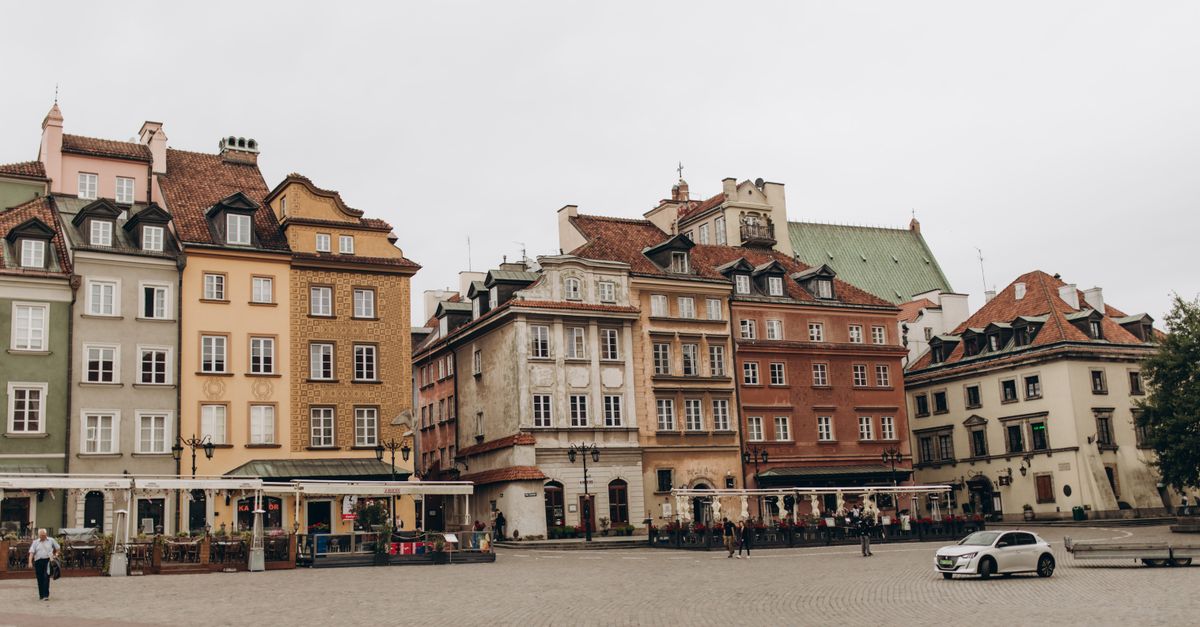
Warsaw is a city that was almost entirely destroyed. By 1945, over 85% of the city's buildings had been deliberately demolished by the retreating German army, and the majority of its 1.3 million pre-war population had been killed or displaced. What exists today is simultaneously a faithful reconstruction, a communist-era urban experiment, and a rapidly evolving contemporary city — and the interplay between those three realities creates something fascinating and entirely unlike any other European capital.
Most visitors come for the Old Town reconstruction — beautiful but architecturally a 1950s facsimile — and perhaps the Łazienki Park. They miss the Palace of Culture and Science looming over a city that simultaneously loves and resents it, the Praga neighbourhood across the Vistula that was never destroyed because the Soviet Army stopped at the river, the communist-era modernist housing estates that ring the city, and the extraordinary Jewish heritage sites that tell the story of what Warsaw was before it was destroyed.
Warsaw is one of Europe's most affordable capitals — a coffee costs €1.50, a good restaurant meal runs €8–15, and public transport is comprehensive and cheap at €0.80–1.60 per journey. The city rewards multiple days of serious exploration, and this guide will take you to the places that Varsovians consider theirs.

1. Praga — The Neighbourhood That Survived
When the Warsaw Uprising ended in defeat in October 1944, the Soviet Red Army was camped on the eastern bank of the Vistula, just across from the burning city. Stalin chose not to advance and relieve the Polish fighters — a deliberate decision that has been debated and condemned by historians ever since. The consequence was that the Praga district, on the Soviet-occupied eastern bank, was never destroyed. Its pre-war streets, buildings, and atmosphere survive essentially intact.
Today, Praga is Warsaw's bohemian neighbourhood — full of artists, musicians, independent galleries, and the kind of lived-in, slightly rough architectural character that the reconstructed western bank deliberately lacks. The Różycki Bazaar, operating since 1901, is the most authentic flea market in Warsaw. The nightlife strip on Ząbkowska and Środkowa streets is where actual Varsovians go on weekends.
Cross the Vistula on the Śląsko-Dąbrowski Bridge (ten-minute walk from the Old Town) or take metro line 2 to Dworzec Wileński. The Różycki Bazaar is at Targowa 54, open daily 7am to 3pm. Saturday morning is the best time for the flea market section; arrive early for Soviet-era military watches, pre-war Polish ceramics, and mountains of vintage clothing.
The Praga Museum at Targowa 50a (€2 admission, Tuesday to Sunday 10am to 6pm) documents the neighbourhood's pre-war multicultural history — Polish, Jewish, and Ukrainian communities overlapping in a district that survived the war but not the Soviet-era transformation. The museum's collection of pre-war photographs is particularly affecting. Lunch at any of the milk bars on Targowa costs €3–5 for a full meal.
2. Bar Mleczny — The Communist Canteen
The bar mleczny (milk bar) is one of Poland's greatest cultural inheritances from the communist era — a subsidised canteen serving traditional Polish food at prices so low they barely seem real, in premises that have changed almost nothing since the 1960s. Warsaw has around 30 surviving milk bars, and they are where elderly Varsovians, construction workers, students, and now a growing number of food-curious tourists come for lunch.
The menu is handwritten on a chalkboard and changes daily: barszcz (beet soup), żurek (sour rye soup with hard-boiled egg), gołąbki (stuffed cabbage rolls), kotlet schabowy (breaded pork chop), kopytka (potato dumplings), and seasonal vegetable dishes. Portions are enormous. The entire meal, including soup, main course, and a glass of kompot fruit drink, costs €3–5.
The best milk bars in Warsaw: Bar Mleczny Prasowy at Marszałkowska 10/16 (the most famous, perpetually busy, excellent quality), Bar Familijny at Nowy Świat 39 (the most neighbourhood-feeling, with regulars who've been coming for 30 years), and Bar Bambino at Hoża 3 (quietest and closest to the tourist centre). All open weekdays 7am to 8pm, shorter weekend hours.
Ordering at a milk bar requires confidence — approach the counter, tell the serving woman what you want (pointing works fine), pay at the till, and collect your food when called. The system is slightly chaotic and entirely wonderful. No reservations, no menus in English (usually), no concession to tourist expectations. Exactly right.
3. POLIN — The Museum of Polish Jews
POLIN, the Museum of the History of Polish Jews, is one of the greatest museums in Europe — a fact recognised by multiple international museum awards but somehow still not widely appreciated by travellers who think of Warsaw primarily as a war museum destination. The permanent exhibition covers 1,000 years of Jewish life in Poland, from the first settlers in the 10th century through the golden age of the 16th-17th centuries to the Holocaust and its aftermath.
The building itself, designed by Finnish architect Rainer Mahlamäki, is extraordinary — a glass and copper structure built on the site of the Warsaw Ghetto, with an interior wavy concrete wall that recalls the parting of the Red Sea. The exhibition inside spans eight galleries and uses interactive technology, original artifacts, and reconstructed environments to tell a story of extraordinary cultural richness that predates and vastly exceeds its genocide.
The museum is located at Mordechaja Anielewicza 6, in the Muranów district, adjacent to the Monument to the Ghetto Heroes. Take the metro to Ratusz Arsenał, then walk 15 minutes west, or take bus 111 from the Old Town. Open Wednesday to Monday 10am to 6pm. Admission €13 for the permanent exhibition; worth every zloty. Book online to guarantee entry in summer.
The permanent exhibition takes 3–4 hours to see properly. After visiting, walk the streets of Muranów — built entirely on the rubble of the destroyed ghetto, the neighbourhood has a strange flatness that reflects the layers of destruction beneath. The Umschlagplatz memorial, where Jews were loaded onto deportation trains, is a ten-minute walk north. The combination of POLIN and the surrounding memorial sites constitutes the most important historical experience available in Warsaw.
4. Łazienki Park — The Parts Tourists Skip
Every guidebook mentions the Palace on the Water in Łazienki Park, and on summer Sundays Chopin concerts draw large crowds to the amphitheatre. But the 76-hectare park has far more than these headline attractions — a neoclassical amphitheatre on an island connected by bridges, a Romantic-era ruin landscape, a rose garden of extraordinary beauty, and several small museums that visitors walking purposefully to the main palace simply walk past.
The White Cottage (Biały Domek) at the northern edge of the park was Augustus III's private escape from court — a small neoclassical building whose interiors include original 18th-century decorative schemes. The Myślewicki Palace, also in the northern part of the park, served as the residence for the king's nephew and contains an excellent collection of period furniture. Both charge under €3 admission and see very few visitors.
The park is a 20-minute walk south from the city centre on Ujazdowskie Avenue, or take bus 116 or 180 from the centre. Entry to the park itself is free. Hours are dawn to dusk year-round. The Chopin concerts happen every Sunday at noon and 4pm from May to September — completely free, but arrive 30 minutes early for a seat near the Chopin statue.
The peacocks that roam freely through the park are perhaps its most photographed inhabitants, but the most spectacular sight is the park in autumn when the formal gardens and surrounding forest turn copper and gold. The café at the Łazienki Palace terrace serves reasonable coffee and cake at non-tourist prices — €2.50 for coffee, €3 for cake.
5. Elektrownia Powiśle — Power Station Reborn
The former Powiśle power station on the Vistula riverbank has been converted into one of Warsaw's best mixed-use cultural spaces — a food hall, boutique hotel, independent cinema, gallery spaces, and rooftop bar occupying the magnificent early 20th-century industrial buildings of what was once Warsaw's primary electricity generator. Unlike many such conversions, the industrial character has been preserved rather than smoothed away.
The food hall in the main turbine hall features around 20 vendors serving food from across Central and Eastern Europe — Georgian khinkali, Ukrainian borscht, Polish pierogi, Austro-Hungarian-inspired schnitzel, and excellent local coffee. The space is busy with Warsaw's young professional and creative community on weekend afternoons and evenings.
The complex is at Dobra 42, in the Powiśle neighbourhood between the Old Town and Łazienki Park — a 15-minute walk from either. Open daily 9am to midnight. The food hall serves from 11am. Budget €10–15 for a meal, €3–5 for coffee and pastries. The rooftop bar has one of the best views of the Vistula and is worth the inevitable weekend queue.
The Powiśle neighbourhood surrounding the power station has become Warsaw's most desirable address for young professionals and is studded with excellent independent restaurants, wine bars, and coffee shops. Walk the streets between Dobra, Wiślana, and Browarny to find the neighbourhood at its most interesting — the mix of pre-war apartment buildings, modernist infill, and riverside parks is characteristic of Warsaw at its most liveable.
6. The Warsaw Rising Museum
The Warsaw Rising Museum, opened on the 60th anniversary of the 1944 uprising in 2004, is one of the most moving museums in Europe and tells the story of the 63-day uprising against the German occupation with extraordinary visual and emotional power. Unlike the POLIN Museum, which remains relatively undervisited by international tourists, the Rising Museum does attract significant visitor numbers — but the queues are manageable with a pre-booked ticket and the experience fully justifies the effort.
What makes the museum exceptional is its refusal to be merely documentary. A reconstructed field radio station plays wartime broadcasts. A replica sewer tunnel can be crawled through. Personal testimonies from surviving fighters are woven throughout. The scale of the uprising — 250,000 civilians killed, the entire city subsequently demolished on Hitler's orders — becomes comprehensible through individual stories rather than statistics.
The museum is at Grzybowska 79, a 20-minute walk from the Old Town or metro to Rondo ONZ and then bus 159. Open Monday, Wednesday, Friday 8am to 6pm; Thursday 8am to 8pm; Saturday and Sunday 10am to 6pm; closed Tuesday. Admission €12. Pre-booking strongly recommended in summer. Allow 3–4 hours for the full experience.
The Liberty Park adjacent to the museum contains a B-24 Liberator aircraft — one of the planes used to drop supplies to the uprising fighters — and several outdoor installations. The museum rooftop offers a panoramic view of the city that makes the story of its destruction and reconstruction viscerally clear. The museum shop has excellent English-language books on the uprising and Warsaw's wartime history.
7. Hala Koszyki — Art Deco Food Hall
Hala Koszyki is a beautifully restored Art Deco market hall from 1908 that now functions as Warsaw's most sophisticated food hall — a high-ceilinged iron-and-glass structure packed with independent food vendors, wine bars, a craft beer hall, oyster stand, and the kind of relaxed weekend energy that suggests locals have genuinely reclaimed a beloved institution rather than watching it become a tourist trap.
The building was a functional food market from 1908 until 2007, when it was closed for restoration. When it reopened in 2016 as a contemporary food hall, the restoration had preserved the original cast-iron structure while installing the best of Warsaw's independent food scene beneath it. Vendors change regularly, but the quality remains consistently high.
Hala Koszyki is at Koszykowa 63, in the Śródmieście district — a 10-minute walk south from the Palace of Culture and Science. Open Monday to Thursday 7am to 11pm, Friday and Saturday 7am to midnight, Sunday 8am to 10pm. Prices are mid-range by Warsaw standards — expect to spend €10–18 for a meal and drink.
The Saturday morning brunch crowd is the most interesting — Warsaw's creative and professional classes working their way through coffee, pastries, and long conversations across the wooden communal tables in the central hall. The basement wine cellar stocks an excellent selection of natural and biodynamic wines from Poland and neighbouring countries.
8. Muranów — The Ghost Neighbourhood
The Muranów district was built in the late 1940s and early 1950s entirely on the rubble of the destroyed Warsaw Ghetto — architects literally built housing blocks on top of the 6-metre-deep layer of debris left by the German demolition. Walking its streets today, knowing what lies beneath, is a peculiar and haunting experience that is entirely unlike any other neighbourhood walk in Europe.
The district was designed by Bohdan Lachert as a showcase of socialist realist architecture — wide boulevards, symmetrical apartment blocks, heroic public spaces. The underground reality is that an estimated 300,000 people were killed in the ghetto before it was destroyed, and their material world — furniture, clothing, books, personal possessions — lies in the earth beneath the current city.
Walk from the POLIN Museum south along Mordechaja Anielewicza and then turn onto the residential streets — Nowolipki, Karmelicka, Miła — the names of streets that existed before the war, rebuilt on top of their own graves. At Miła 18 is a small mound marking the bunker where Mordechai Anielewicz and the last ghetto fighters died. It is quiet, uncrowded, and profoundly affecting.
The Muranów neighbourhood today is a pleasant middle-class residential area with good restaurants and cafés along Andersa and Nowolipki streets. The café Filtry at Nowogrodzka 62 serves excellent Polish coffee and cake in an interior that references the pre-war Jewish café culture of the district — the owner, a local historian, can explain the connection if asked.

9. Plac Zabaw — Underground Club Culture
Warsaw's club and bar scene operates largely in basements, converted factories, and repurposed Soviet-era buildings — a geography of the underground that reflects both the city's history and its culture. The Praga district's Ząbkowska and Środkowa streets contain the highest concentration of genuinely local bars, but the most interesting club spaces are scattered across the city in places you'd never find without local knowledge.
Smolna 38, in a disused electrical substation near the National Museum, is widely considered Warsaw's best club — a multi-room space with excellent sound systems that hosts everything from techno to jazz to experimental electronics. The atmosphere is inclusive and the dress code is minimal. Entry is typically €10–15 on weekends. Queue forms around midnight.
For a more accessible introduction to Warsaw's nightlife, the riverside beach bars that set up along the Vistula each summer (from May to September) are excellent — particularly the Plaża Miejska on the eastern bank, which has consistent live music, DJs, and a relaxed atmosphere that draws a cross-generational crowd. Entry is free, beer costs €3–4.
The jazz scene in Warsaw is particularly strong. Tygmont Jazz Club at Mazowiecka 6 (central, open nightly) has been running since 1975 and books both Polish and international jazz musicians. Cover charge varies from free to €10. The bar at Tygmont serves excellent Polish craft beer and a decent selection of whiskey at prices well below London or Paris equivalents.
10. The Palace of Culture Viewing Platform
The Palace of Culture and Science — a Stalin-era skyscraper presented as a "gift" from the Soviet Union to Poland in 1955 — remains the most controversial building in Warsaw and probably in Poland. Varsovians have argued about whether to demolish it since the day it was finished. In the meantime, the 30th-floor viewing terrace has become the best vantage point in the city for understanding Warsaw's extraordinary urban geography.
From the observation deck at 114 metres, the layout of the reconstructed city becomes clear — the Old Town reconstruction to the north, the communist-era residential towers radiating outward from the centre, the Vistula silver in the distance, the glass towers of the new financial district crowding around the Palace's base in a way that seems designed to diminish it but somehow makes it more imposing.
The Palace is unmissable — it's the tallest building in Warsaw at 237 metres and the centrepiece of Plac Defilad, the city's main square. Take the metro to Centrum, then walk one minute. The viewing terrace is open daily 10am to 8pm. Admission €5. The elevator ride itself, in a wood-panelled Soviet lift, is part of the experience.
The Palace also houses a cinema multiplex, three theatres, two universities, a swimming pool, the Polish Academy of Sciences, and the excellent Museum of Technology — a Soviet-era science museum with hands-on exhibits and original technical equipment that is completely free to enter and utterly charming in its period authenticity. The technology museum alone is worth a 90-minute visit.