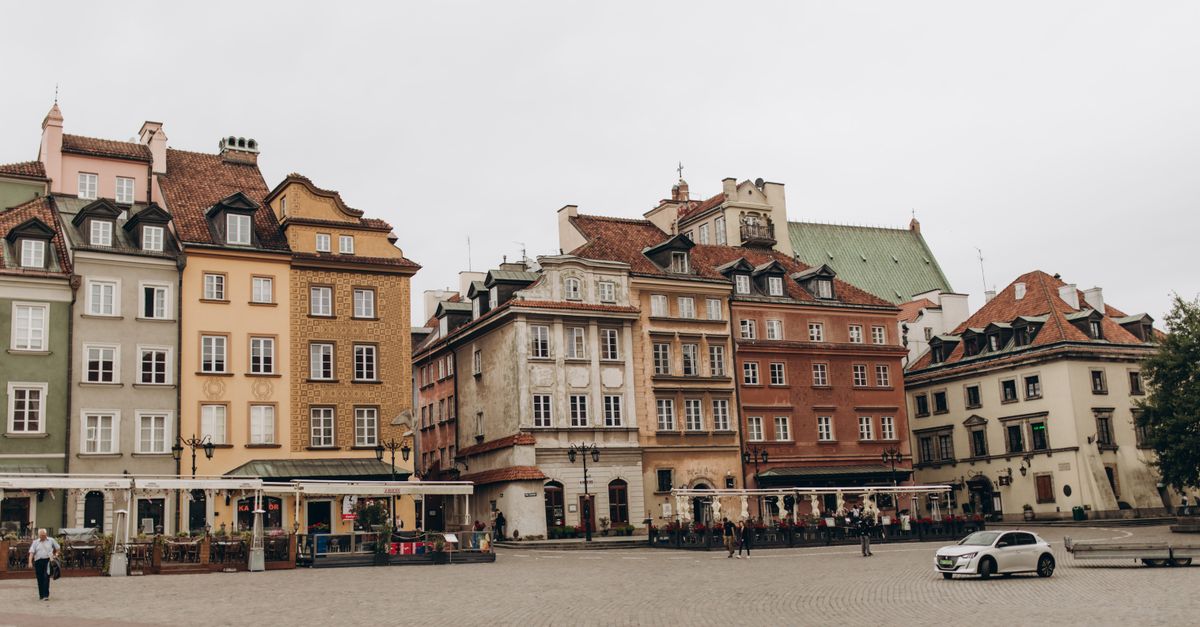
Warsaw is one of the most historically layered cities in Europe, and it tends to surprise first-time visitors in the best possible way. Most people arrive expecting a grey post-communist capital and find instead a confident, energetic metropolis with a rebuilt baroque Old Town, world-class museums dedicated to the darkest chapters of the twentieth century, a booming restaurant scene, and a nightlife culture that runs late and costs little. It is also a city that demands a little preparation — knowing which transport apps to download, understanding that Poland uses the złoty not the euro, and appreciating the weight of places like the Warsaw Rising Museum before you walk in will make the difference between a tourist visit and a genuine encounter with one of Europe's most extraordinary cities.
Before You Arrive
Poland is a member of the European Union and the Schengen Area. Citizens of EU countries, the United Kingdom, the United States, Canada, Australia, and most South American nations can enter visa-free for up to 90 days within any 180-day period. If you require a Schengen visa, apply at the Polish consulate in your home country at least four to six weeks before travel — Polish embassies are generally efficient but processing times vary by country. Check the current requirements at the official Polish Ministry of Foreign Affairs website, as they update regularly.

Poland's currency is the Polish złoty (PLN). This is important: Poland is in the EU but has not adopted the euro, and vendors who accept euro payments typically offer extremely poor exchange rates. Withdraw złoty from ATMs after arrival — the best rates come from bank-operated ATMs (PKO Bank Polski, mBank, Santander Poland). Avoid standalone currency exchange offices at the airport that advertise "zero commission", as the commission is embedded in the exchange rate. A rough guide: 1 EUR is approximately PLN 4.25, and 1 USD is approximately PLN 3.90, though rates fluctuate.
Download the following apps before flying: Bolt (ride-hailing, widely used and cheaper than street taxis), Uber (backup ride-hail option), jakdojade (Warsaw public transport planner in English, more reliable than Google Maps for tram and bus times), and ZTM Warszawa (official transit ticketing app, allows contactless ticket purchase on your phone). Having these ready before landing removes friction on arrival, particularly if you land late at night.
Pack for weather variability. Warsaw winters (November–February) are genuinely cold, with temperatures regularly below freezing and occasional snow. Summers (June–August) are warm and occasionally hot — 28–32°C — but thunderstorms are common in July and August. Spring and autumn are the most comfortable seasons and the best time to visit.
Getting from the Airport
Warsaw Chopin Airport (WAW) is Warsaw's main international airport, located approximately 10 km southwest of the city centre in the Włochy district. It is a compact, well-organised airport with clear English signage throughout. From the arrivals hall, you have four realistic options for reaching the city.

Bus 175 departs from directly outside the arrivals terminal and runs north into central Warsaw along the Royal Route, stopping at Nowy Świat, Centrum (near the Palace of Culture), and continuing to the Old Town area. The journey takes approximately 45 minutes depending on traffic and costs PLN 4.40 for a standard ZTM 75-minute ticket, purchased at machines outside the terminal or via the ZTM Warszawa app. This is the cheapest option and perfectly comfortable with a medium-sized bag.
SKM suburban rail connects the airport to Warsaw Central (Warszawa Centralna) station in approximately 25 minutes. The fare is the same PLN 4.40 ZTM ticket. The train departs from a station below the airport terminal — follow the "SKM" signs from arrivals. This is faster than the bus and preferable if your accommodation is near the city centre or accessible by metro from Warszawa Centralna.
Bolt or Uber from the airport to central Warsaw typically costs PLN 35–50, depending on destination and time of day. Surge pricing applies during rush hours and late nights. Open the apps from within the arrivals hall, select your pickup point (marked on the app map), and meet your driver in the designated ride-hail area. Never use unmarked taxis or drivers who approach you inside the terminal offering fixed-price rides.
Warsaw Modlin Airport (WMI), 35 km north of the city, serves additional Ryanair routes. A shuttle bus connects Modlin to Warsaw Central station for PLN 33; journey time is approximately 55 minutes. Always check which Warsaw airport your flight uses when booking.
Getting Around
Warsaw's ZTM public transport network covers the entire city with two metro lines, an extensive tram network, and buses. For a first-time visitor, the system is logical and easy to use within a day of arrival.

The standard single ticket costs PLN 4.40 and is valid for 75 minutes on all modes — metro, tram, and bus — including transfers. A 24-hour unlimited pass costs PLN 15 and is the best option for busy sightseeing days. Tickets can be purchased from machines at metro stations (accepting cards and cash), from drivers on buses (cash only, and they dislike large notes), via the ZTM Warszawa app, or by tapping a contactless bank card directly on validators in metro stations and on trams. The contactless card option is the most convenient — no app, no language barrier, just tap and go.
Metro Line 1 (M1) runs north–south through central Warsaw, connecting Kabaty in the south to Młociny in the north, passing through key stations including Centrum (city centre), Politechnika, and Wilanowska. Metro Line 2 (M2) runs east–west, crossing the Vistula river and connecting Praga with the western suburbs via Rondo ONZ and Centrum Nauki Kopernik. The two lines intersect at Świętokrzyska station.
Trams are the most useful surface transport for tourists, particularly for reaching Łazienki Park (tram 18 or 36) and crossing the city centre. Download the jakdojade app for real-time tram tracking — it shows exact arrival times at each stop and is essential during the evening when services thin out.
Bolt and Uber operate extensively and are cheap by Western European standards. A typical city-centre ride costs PLN 12–25. Veturilo public bicycles are available across the city centre for PLN 3 per 20-minute ride.
Where to Base Yourself
Warsaw's neighbourhoods have distinct personalities, and where you stay significantly shapes your experience of the city. Three areas stand out for first-time visitors.

Śródmieście and the Old Town is the central district covering the reconstructed Old Town, the Royal Route, and the area around the Palace of Culture and Science. Staying here puts you within walking distance of the city's major museums, the most concentrated restaurant and café scene, and the main metro line. Hotels range from PLN 180–350 per night for mid-range three-star properties; boutique hotels in the Old Town itself reach PLN 400–700. The area can feel tourist-heavy near the Market Square in summer, but a few streets back from the main drag it quiets considerably.
Powiśle is a riverside neighbourhood below the Old Town escarpment, stretching along the Vistula between the Old Town and Łazienki Park. It is Warsaw's most fashionable district — full of independent coffee shops, wine bars, the renovated power station cultural centre (Centrum Praskie Koneser), and the iconic beach bars that open along the riverbank every summer. Accommodation is less plentiful than in Śródmieście but includes several excellent boutique hotels and apartments at PLN 220–450 per night. Ideal for travellers who want a local, less touristy base without sacrificing central access.
Praga, on the east bank of the Vistula, is Warsaw's raw creative district — the only part of the city not bombed flat in 1944, meaning it retains original pre-war architecture. Street art covers entire building facades; independent galleries, artisan workshops, and unpretentious bars fill the post-industrial spaces along Ząbkowska Street. Accommodation is cheaper here — hostels from PLN 60 per dorm bed, apartments from PLN 130 per night — and the neighbourhood is safe, though it still has a rougher edge than the western bank. Connected to the centre by the M2 metro in five minutes.
Local Culture & Etiquette
Warsaw is a welcoming city for international visitors, but a few cultural norms are worth understanding before you arrive. Getting these right earns you genuine warmth from Polish people; getting them wrong rarely causes serious offence but can create awkward moments.

Polish people tend to be more formal in initial interactions than Western Europeans. Smiling at strangers on the street or starting conversations with shop staff beyond what is needed for a transaction is not the norm and can seem odd. This is not unfriendliness — it is simply a cultural difference. Warmth emerges quickly once a conversation is established or once you have demonstrated interest in the country and its history.
The historical context of Warsaw is ever-present. The city lost over 85% of its buildings and roughly 700,000 residents — about half the population — during World War II. The Warsaw Ghetto, the 1943 Ghetto Uprising, and the 1944 Warsaw Rising are not distant history here; many living Warsovians have parents or grandparents who survived. Engage with this history seriously. When visiting the Warsaw Rising Museum, POLIN Museum, or the Ghetto Memorial, treat these as the deeply meaningful places they are.
Tipping in restaurants is appreciated but not obligatory. A 10–15% tip for good service is standard. In milk bars (bar mleczny) and canteen-style restaurants, tipping is not expected. In taxis and Bolt rides, rounding up to the nearest PLN 5 is a courteous gesture. Do not leave coins on the table — hand the tip directly to the server or tell them to keep the change when paying.
Smoking is prohibited in all restaurants, bars, and enclosed public spaces. Outdoor bar terraces often have designated smoking areas. Drinking alcohol in public parks is technically regulated, though the enforcement is inconsistent in places like the Vistula riverbanks during summer. Churches require covered shoulders and knees — carry a scarf or light jacket for unexpected visits.
Common Mistakes to Avoid
First-time visitors to Warsaw make a predictable set of errors. Each of the following is avoidable with a few minutes of advance knowledge.
Assuming Poland uses the euro. It does not. Attempting to pay in euros will either result in a refusal or an exchange at a rate 10–20% worse than the ATM rate. Withdraw złoty from a bank ATM as soon as you arrive. This is the single most common logistical mistake made by first-time visitors to Poland.
Taking unofficial airport taxis. The drivers who approach you in the arrivals hall offering fixed-price rides into the city are operating without meters and typically charge PLN 150–250 for a journey that should cost PLN 35–50 via Bolt. Always use the official metered taxi rank (look for the MPT or Lux Med signs) or open Bolt or Uber in the arrivals hall.
Eating every meal in the Old Town Market Square. The restaurants immediately surrounding Rynek Starego Miasta charge tourist prices — PLN 50–80 for dishes that cost PLN 25–40 three streets away. The Old Town is beautiful and worth exploring, but treat the Market Square restaurants as occasional splurges, not daily options.
Missing the Warsaw Rising Museum because it seems heavy. It is heavy — intentionally and necessarily so. But it is also one of the most expertly curated museums in Europe, using architecture, sound, and testimony to make history visceral and human rather than academic. Visitors who skip it consistently report it as the biggest regret of their Warsaw trip.
Confusing the Warsaw Uprising with the Warsaw Ghetto Uprising. These were two separate events. The Warsaw Ghetto Uprising of April 1943 was a rebellion by Jewish residents of the Nazi-imposed ghetto. The Warsaw Rising of August 1944 was a broader Polish resistance operation against German occupation. Both are commemorated in Warsaw with extraordinary seriousness. Understanding the distinction before visiting the relevant memorials and museums adds depth to what you see.
Not downloading jakdojade before exploring. Google Maps handles Warsaw transport passably but jakdojade is significantly more accurate for tram and bus arrival times, especially during disruptions and engineering works. Download it on WiFi at your accommodation before heading out.
Leaving Praga off the itinerary. Most first-time visitors spend all their time west of the Vistula. The M2 metro reaches Praga in five minutes from the city centre, and the neighbourhood — with its intact pre-war tenements, street art, craft workshops, and honest bars on Ząbkowska Street — offers a completely different perspective on Warsaw that the Old Town cannot provide.


