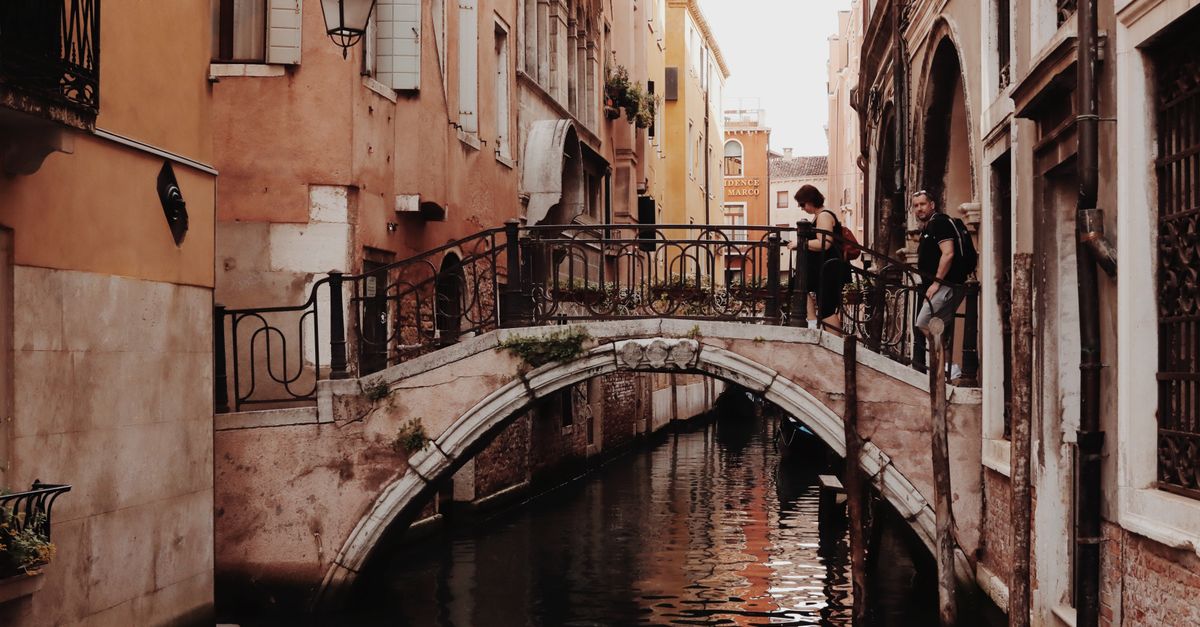
Venice is one of the most visited cities on earth and one of the most written about. The clichés are real: the crowds, the expense, the pigeons, the gondola touts. But Venice is also a living city of 50,000 residents (down from 174,000 in the 1950s), and those residents have, by necessity, developed an elaborate geography of places tourists don't go. The hidden Venice is not far from the tourist Venice — sometimes it's one campo, one bridge, one sestiere away — but the difference is absolute.
This guide is for the traveller who is willing to get lost deliberately, who will eat at a bacaro (the Venetian version of a tapas bar) rather than a canalside restaurant, and who knows that the best time to see the Grand Canal is 6am, from a vaporetto, when the mist is still on the water and the water buses are carrying workers rather than tourists.
Venice is already fighting for its survival as a real city. Travel with that in mind, eat and drink in places that serve residents as well as visitors, and resist the instinct to photograph everything in favour of experiencing some of it.

1. Dorsoduro's Zattere at Dawn
The Zattere is a long waterfront promenade on the southern side of Dorsoduro, facing the Giudecca island across a broad channel. In the afternoon it's a pleasant tourist walk; at dawn it's extraordinary — the light coming up behind Giudecca, the occasional gondola heading out for work, the water still and grey and enormous. A few cafés open at 6:30am; the one at the western end (near the Pensione la Calcina where John Ruskin stayed) does an excellent café lungo and cornetto for €2.50 at the bar.
Dorsoduro is generally the most liveable sestiere for visitors — less tourist-dense than San Marco, with a student population from the Ca' Foscari university that keeps bars and bakeries at honest prices. The Zattere promenade itself runs from the Punta della Dogana (the customs house, now a contemporary art museum) in the east to the Stazione Marittima in the west — about 1.5 kilometres of waterfront.
Walk south from Accademia and through the campo of San Trovaso (where one of Venice's last gondola workshops, the squero, is visible through the gate — arrive before 9am to watch the craftsmen at work, free from the canal-side bridge). Turn right on the Fondamenta della Zattere. The western end near the church of Gesuati has the best views across to Giudecca and the Palladio-designed Redentore church opposite.
The Gesuati church (Santa Maria del Rosario) on the Zattere is worth entering for the ceiling frescoes by Giambattista Tiepolo — three enormous panels dating from 1737–39 that are among the finest Rococo paintings in Venice. Open Monday to Saturday 10am–5pm. Admission €3 on the Chorus pass (which covers many Venice churches and costs €15 for all). The pasticceria opposite has the best frittelle (fried dough puffs) in the neighbourhood.
2. The Ghetto of Cannaregio
The world's first ghetto — the word itself is Venetian, derived from the foundry (getto) that once operated on this island — is a campo and surrounding streets in the north of Cannaregio where Venice's Jewish community was confined from 1516 until Napoleon arrived in 1797. Today it's a neighbourhood of extraordinary layered history: Renaissance synagogues, a Holocaust memorial, a traditional Jewish bakery, and a campo that is one of the finest public spaces in the city and almost always less crowded than San Marco.
The Jewish community arrived in Venice in the 11th century and gradually grew, trading in a city that needed their financial skills but mistrusted their religion. The 1516 decree confining them to the island was simultaneously a persecution and an acknowledgement of their permanence. Because they couldn't expand outward, the community built upward — the Ghetto Novo buildings are the tallest domestic buildings in Venice, stacked six and seven stories high to accommodate the population density. Several buildings have the characteristic extra floors still visible from outside.
Walk north from the train station through Cannaregio along the Lista di Spagna and then northeast along Fondamenta degli Ormesini. The Ghetto is signed from the main campo — enter through the sotoportego (underpassage). The Museum of Jewish Art and the synagogue tours depart from the main campo (Campo del Ghetto Nuovo) — €12 including museum and one synagogue tour, Tuesday to Sunday 10am–5:30pm. The Antico Forno bakery in the campo makes challah, biscotti ebraici, and traditional Jewish pastries.
The Holocaust memorial installed on the campo wall in 1980 by Arbit Blatas is one of the most moving public monuments in Venice — bronze reliefs of deportation scenes on an otherwise ordinary residential wall. The campo is best visited on a Friday evening when the community gathers and the campo comes alive with conversation and the smell of challah baking. The neighbourhood of Cannaregio around the ghetto is excellent for lunch: the bacaro at Osteria alla Vedova on Calle del Pistor has been open since the 19th century and serves exceptional cichetti.
3. Bacaro Crawl in San Polo
The bacaro is Venice's answer to the tapas bar — a small, often ancient wine bar where you drink an ombra (a small glass of wine, €1–2) and eat cichetti (small snacks: fried things, bread rounds with toppings, hard-boiled eggs, polenta squares with fish). The best bacaro crawl in the city is through the streets between the Rialto market and the church of San Polo, a fifteen-minute walk that passes a dozen genuine bacari and no tourist restaurants.
The Rialto market on the eastern end of this zone opens at 7am — the fish market (Pescheria) on the Grand Canal is one of Europe's finest fish markets, operating since 1097. By 8am the fishmongers are in full voice. The fruit and vegetable market (Erbaria) runs alongside. By 11am the stalls pack up. The bacari in the streets immediately behind open from 10am and start serving cichetti at 11am. This is what Venetians call the giro d'ombra — the round of wines.
Start at Naranzaria on the Grand Canal near the Rialto bridge (not cheap but excellent for the view), then work back through Do Mori on Calle dei Do Mori (the oldest bacaro in Venice, open since 1462, standing room only), then All'Arco on Calle de l'Arco (small, superb cichetti, always crowded at lunchtime), and finish at Pronto Pesce on the Pescheria canal for some of the finest raw seafood in the market. Budget €3–5 per stop for a drink and a cichetto.
The bacaro crawl operates on Venetian time: most bacari close 3–6pm and reopen for the evening. The lunchtime giro (roughly 11am–2pm) is the most authentic. Don't sit down if there are bar stools or standing space available — the bar counter experience is the real one. Learn a few words: ombra (small wine), bicchiere (glass), cichetto (snack), prosecco (here ordered as prosecco di Valdobbiadene, not the industrial stuff). Spritz in Venice is with Aperol or Campari, not the tourist-bar Aperol spritz of the rest of the world.
4. San Giorgio Maggiore Bell Tower
Everyone queues to climb the Campanile in Piazza San Marco for the view over Venice. Fewer people know that the bell tower of San Giorgio Maggiore — the Palladio-designed church on the island opposite the Doge's Palace — offers an almost identical view but from the south, making it possible to see the entire San Marco waterfront plus the rooftops of Dorsoduro and the lagoon beyond. You reach it by a 5-minute vaporetto ride from San Marco (Line 2), and there's rarely a queue.
The church of San Giorgio Maggiore is one of Palladio's most celebrated buildings — completed in 1610, its white Istrian stone facade across the water from San Marco is the view that defines Venice from almost every angle. Inside, it contains two Tintoretto masterpieces (The Last Supper and The Gathering of Manna), both painted for this church and still in their intended position. The bell tower is a 19th-century replacement of the original and is climbed by lift (one of the very few in Venice).
Take vaporetto Line 2 from San Marco Zattere stop to San Giorgio (2 minutes, or walk/boat from San Zaccaria). The church is free to enter. Bell tower €8, open daily 9am–noon and 12:30–6pm. The climb is by lift; you emerge at a viewing gallery with 360-degree views. The perspective looking back toward San Marco from here — the campanile, the Doge's Palace, the two columns, the Grand Canal mouth — is different from and in some ways superior to the view from the San Marco tower itself.
The island of San Giorgio also has the Cini Foundation, a research centre and cultural institution that opens its cloisters and garden for occasional open days and exhibitions. The monastic cloisters are extraordinary — 16th-century, beautifully preserved, usually empty. Check the Fondazione Cini website for open days. The cypress-lined garden visible from the water is one of the most beautiful private spaces in Venice.
5. Castello's Via Garibaldi
Via Garibaldi in the Castello sestiere is the widest street in Venice — not a canal, an actual street — and it's the social and commercial centre of the most residential part of the historic city. The market in the morning, the bars in the evening, the children playing football while their grandparents sit on chairs outside: this is Venetian daily life in a form that almost no tourist sees. The Giardini della Biennale are a ten-minute walk further east, and the lagoon path beyond them continues to Sant'Elena, a 1920s neighbourhood that feels like a completely different city.
Castello is Venice's largest sestiere and its most working-class — the Arsenal, the greatest naval shipyard in medieval Europe, dominates its western half; fishing families and artisans historically dominated its eastern half. The area around Via Garibaldi and the nearby Rio di Sant'Anna retains this character: fishing boats tied up along the fondamenta, vegetable barges selling directly from the water to residents leaning out of windows, the occasional cat with the self-possession only a Venetian cat achieves.
Take vaporetto to Arsenale or Giardini and walk east. Via Garibaldi begins at the bridge over the canal and runs east toward the park. The morning market (Monday to Saturday, roughly 8am–1pm) has fresh vegetables, fish, and bread. The bar at the western end of the street — Bar Ruga Rialto, despite the name — does a €1.10 espresso and is the neighbourhood bar where the fishermen stop before heading out. The enoteca (wine bar) Al Portego, just off the main street, is one of the finest bacari in the eastern part of the city.
The Biennale gardens at the eastern end of Via Garibaldi are free to enter outside of exhibition periods (the Architecture and Art Biennale alternates years). The permanent pavilion buildings — national pavilions designed by some of the 20th century's finest architects (Alvar Aalto for Finland, Gerrit Rietveld for the Netherlands, James Stirling for the UK) — are a free outdoor architecture tour even when empty. Continue past the gardens to Sant'Elena for the most extraordinary perspective: looking back across the Bacino from the tip of the island, Venice appears as a wall of spires and domes on the water.

6. Libreria Acqua Alta
The Libreria Acqua Alta is a secondhand bookshop in Castello that is, it must be said, well-known — but not in the same way as the tourist attractions. It's known because it's genuinely extraordinary: books stored in gondolas, bathtubs, and a full-size boat inside a building; a staircase made from stacked books; cats sleeping on the shelves; and the owner, Luigi Frizzo, who has been running it since 1989 on the principle that water damage is inevitable in Venice so you might as well embrace it. It's the most Venetian thing in Venice.
The shop is on a small canal in Castello, and during the acqua alta (the periodic high-water flooding that affects Venice), the ground floor genuinely floods. The books are stored in waterproof vessels accordingly. The collection covers multiple languages and subjects, with an emphasis on art, photography, travel, and local history. Prices are low — many English-language titles go for €2–5. The novelty brings it tourist traffic, but the books themselves are genuine and the system of organisation (loosely alphabetical, strongly chaotic) rewards browsing.
Find it at Calle Lunga Santa Maria Formosa, near the Campo Santa Maria Formosa in Castello. Open daily roughly 9am–8pm. No admission. The best time to visit is a weekday morning when it's quiet enough to actually browse. Buy a book, sit on the book-staircase terrace at the back and look out at the canal, and feel briefly like you belong here.
The surrounding Campo Santa Maria Formosa is one of the most beautiful campi in Venice — spacious, lined with palaces, with a café that puts tables outside in all but the coldest weather. The church of Santa Maria Formosa contains Palma il Vecchio's famous painting of Saint Barbara (1522) — she's depicted in the right transept, a genuinely beautiful work that rarely gets the attention it deserves because the tourists are all in the Frari and the Accademia.
7. Murano Glass Factory Tours
Murano Island — fifteen minutes by vaporetto from Venice — has been the centre of European glass production since 1291, when the Venetian Republic moved all the glassmakers there to reduce fire risk in the city. Most visitors who go to Murano get herded into a factory for a sales demonstration. The genuinely interesting experience is different: visit the Museo del Vetro (Glass Museum) first for the historical context, then find one of the small working furnaces that does genuine craft work rather than tourist sales.
The glass tradition at Murano spans 700 years and at its peak employed most of the island's population. The glassmakers held extraordinary privileges — their daughters could marry into the Venetian nobility — in exchange for keeping the technical secrets of their craft within the island. Many of the key innovations in European glass (cristallo glass, filigrana technique, aventurina) originated here. The museum at Palazzo Giustinian traces the full history with outstanding examples from every period.
Take vaporetto Line 4.1 or 4.2 from San Zaccaria — the journey takes about 40 minutes with several stops. The Museo del Vetro is on Fondamenta Giustinian (€10, open daily 10am–5pm). After the museum, walk the Fondamenta dei Vetrai and watch through the open furnace doors — many factories welcome observers who are clearly interested rather than just shopping. Venini on Fondamenta dei Vetrai 47 is the finest contemporary glass manufacturer and has a showroom worth visiting for the design quality alone.
Murano is significantly quieter than Venice and has its own neighbourhood life — the Busa alla Torre restaurant on Piazza Colonna does an excellent fritto misto di mare for €18, one of the best versions in the lagoon. The campo around the church of Santi Maria e Donato has a 12th-century basilica with Byzantine mosaic floors that are extraordinary and almost always uncrowded. Stay for a meal rather than rushing back to Venice and you'll see the island revert to itself after 4pm when the day-tripper boats thin out.
8. Torcello Island
Torcello is a marsh island in the northern lagoon — once the most powerful city in the Venetian lagoon, with a population of 20,000, now reduced to about 20 permanent inhabitants. What remains is extraordinary: the Cathedral of Santa Maria Assunta, with Byzantine mosaics dating from the 12th century that are among the finest in the western world, and an atmospheric emptiness that makes it feel like standing in the ruins of history. Venice itself began here, not on the Rialto.
The island was settled in the 7th century by refugees fleeing Lombard invasions of the mainland — they built a city in the marsh that eventually dominated the lagoon trade. As Venice rose and the northern lagoon silted up, Torcello declined. By the 17th century it was essentially abandoned. What survived was the Cathedral and the adjacent church of Santa Fosca — both still standing exactly where they were built, in a field of grass and archaeological remains that stretches to the horizon.
Take vaporetto Line 12 from Fondamente Nove to Torcello — the journey takes about 45 minutes and includes a stop at Murano and Burano (the famous coloured-houses island). The Cathedral is open daily 10am–5pm (March–October), shorter hours in winter. Admission €8 including the museum. The gold-ground Last Judgement mosaic on the west wall and the Madonna and Child mosaic in the apse are the masterpieces — allow time to stand in front of both.
The island has one excellent restaurant — Locanda Cipriani, founded in 1934 and still run by the Cipriani family. Lunch costs €50–80 per head but includes the opportunity to eat in the garden where Hemingway wrote, which has its own appeal. The bar beside the restaurant serves spritz at €5 and is excellent. The stone chair beside the cathedral — called Attila's Throne though it has nothing to do with Attila — is the only bench in the entire island and visitors are permitted to sit on it.
9. The Arsenale from the Outside
The Venetian Arsenal — the great naval dockyard that was once the largest industrial complex in Europe — covers a fifth of Venice's island area. Most of it is still used by the Italian Navy and is inaccessible, but the architecture visible from the canals and from the gate on the Fondamenta dell'Arsenale is extraordinary, and during the Biennale the interior spaces open for exhibitions. The gateway (the Porta Magna, 1460) is the first Renaissance gateway in Venice and possibly in all Italy — a fact that almost no one stopping to photograph it is aware of.
The Arsenal at its peak employed 16,000 workers (Arsenalotti) and could complete a war galley in a single day using a primitive assembly-line system that stunned contemporary observers. Dante mentioned it in the Inferno — the bubbling pitch of the Arsenal's caulking pits gave him an image for the boiling tar of hell. The walls and towers visible from the canal date from the 12th to 17th centuries and represent 500 years of military architecture.
Walk east from San Marco through Castello along the Riva degli Schiavoni and then Fondamenta dell'Arsenale. The Gate is at the end of the fondamenta. The exterior walls along the canal of the Arsenal (best seen from vaporetto Line 1 from Arsenale to San Zaccaria) are massive crenellated brick ramparts that enclose a completely separate world. The lions at the gate were looted from Greece by Doge Francesco Morosini in 1687 — the runic inscriptions on two of them were carved by Varangian mercenaries in the 11th century.
Free to observe from outside. During the Venice Architecture Biennale (even-numbered years) and the Venice Art Biennale (odd-numbered years), large sections of the Arsenal interior open as exhibition venues — admission with Biennale ticket (approximately €25 for the full Biennale). Outside Biennale years, some spaces occasionally open for cultural events — check the Venice Biennale website. The Naval History Museum on the canal beside the Arsenal (Museo Storico Navale, €4, Monday to Friday 10am–5pm, Saturday 10am–4pm) covers the full naval history of the Republic with models, maps, and artefacts.
10. Fondamenta delle Zattere Night Walk
After 10pm, when the restaurant terraces on the main tourist waterfront have quieted and the vaporetti run less frequently, walk the Zattere from east to west. The lights of Giudecca reflect in the still water. The air smells of salt and diesel and very faintly of something floral from the gardens behind the convent walls. The few people you pass are locals walking dogs or young people going home after an evening out. It's the Venice of the novels — the city that exists in Brodsky and in Ruskin and in Donna Leon — rather than the Venice of the bucket list.
The night walk along the Zattere is one of the great free pleasures of being in Venice overnight. The path is well-lit and safe; the occasional open bar provides a warm destination. Nico's gelateria on the Zattere is the most famous on this stretch — the gianduiotto (a block of chocolate and hazelnut semifreddo, €2.80) is the classic order, best eaten sitting on the low wall above the water.
Start at Punta della Dogana (the tip of Dorsoduro) and walk west — about 1.5 kilometres to the church of the Angelo Raffaele at the far end. Then turn north through the narrow lanes of western Dorsoduro — the darkest and least-visited part of the island — and emerge near the Carmini church and the Campo Santa Margherita. The Campo Santa Margherita at 11pm is the best nightlife square in Venice: a large, irregular space surrounded by student bars and bacari, full of young Venetians on aperitivo until midnight.
The bars on Campo Santa Margherita are some of the cheapest in Venice for precisely this reason — they're catering to students and local residents, not tourists. A Spritz goes for €2.50–3.50; cichetti from €1 each. The campo is animated until about midnight and then quiets; the population shifts to the few clubs in the area for late-night dancing. The street stalls selling grilled corn and baccalà mantecato (creamed salt cod on bread) on the campo edges are open until 1am and are inexplicably good.