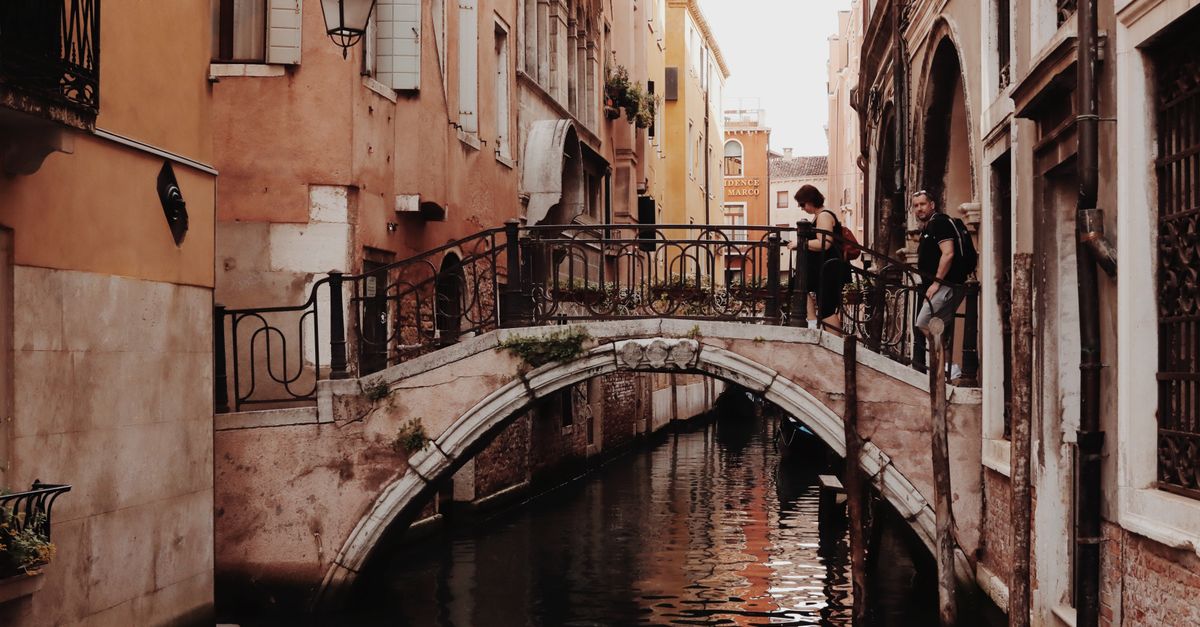
Venice is like nowhere else on earth — and that is not travel-writer hyperbole. A city of 118 islands connected by 400 bridges, with no roads, no cars, and a way of life organised entirely around water that has persisted essentially unchanged for a thousand years. But Venice in 2025 is also one of the world's most overtouristed destinations: 30 million annual visitors squeezed into a residential island that holds 50,000 permanent inhabitants. First-timers who arrive without preparation find themselves swept along the same three tourist corridors, paying inflated prices for mediocre experiences, and leaving convinced that Venice is overrated. It isn't. It is just misunderstood. This guide gives you the knowledge to experience it properly.
Before You Arrive
Schengen visa: Italy is a member of the Schengen Area. Citizens of the USA, UK, Australia, Canada, Japan, and most EU countries can visit for up to 90 days within any 180-day period without a visa. From 2025, travellers from visa-exempt non-EU countries will need an ETIAS (European Travel Information and Authorisation System) travel authorisation — register at etias.com before departure. The process costs EUR 7 and takes minutes for most applicants. Citizens of countries outside the visa-exempt list must apply for a Schengen visa at the Italian consulate in their home country well in advance of travel.

Currency: Italy uses the Euro (EUR). Venice is a particularly cash-conscious city — many smaller bacaro wine bars, market stalls, and family-run restaurants operate on cash only. Carry EUR 80-100 at all times. ATMs (bancomat) exist throughout Venice, including near Piazzale Roma and Santa Lucia station, but are less common deep in the residential neighbourhoods. Withdraw cash from bank-branded machines to avoid high fees; never use exchange desks in the arrivals area at the airport.
Italian SIM cards: TIM, Vodafone, and WindTre are Italy's main carriers. Tourist SIM cards cost EUR 15-25 for 15-30 GB of data (30-day validity) and are available at airport kiosks, carrier brand stores, and authorised resellers throughout Venice and Mestre. Bring your passport — Italian law requires ID for SIM registration. EU residents travelling from within Europe typically have no extra charges under EU roaming rules. Note that mobile data signal in Venice's narrow calli can be patchy — download offline maps (Maps.me or Google Maps offline) before navigating.
The Venice day-tripper access fee: This is the most important new information for first-time visitors. Venice now charges a EUR 5 contribution from day visitors (people not staying overnight in Venice) who arrive on peak days — approximately 30 specific days per year, primarily summer weekends and public holidays. Pre-registration is mandatory at cda.veneziaunica.it. Arriving on a peak day without registration risks a fine of EUR 50-300. If you are staying overnight in Venice, you are exempt — show proof of accommodation at the entry points. Check the official calendar of applicable days on the website and register before your visit date if required.
Getting from the Airport
Venice is served by Marco Polo International Airport (VCE), 12 km northeast of the city on the mainland, and Treviso Airport (TSF), 30 km away, used primarily by Ryanair for budget European routes.
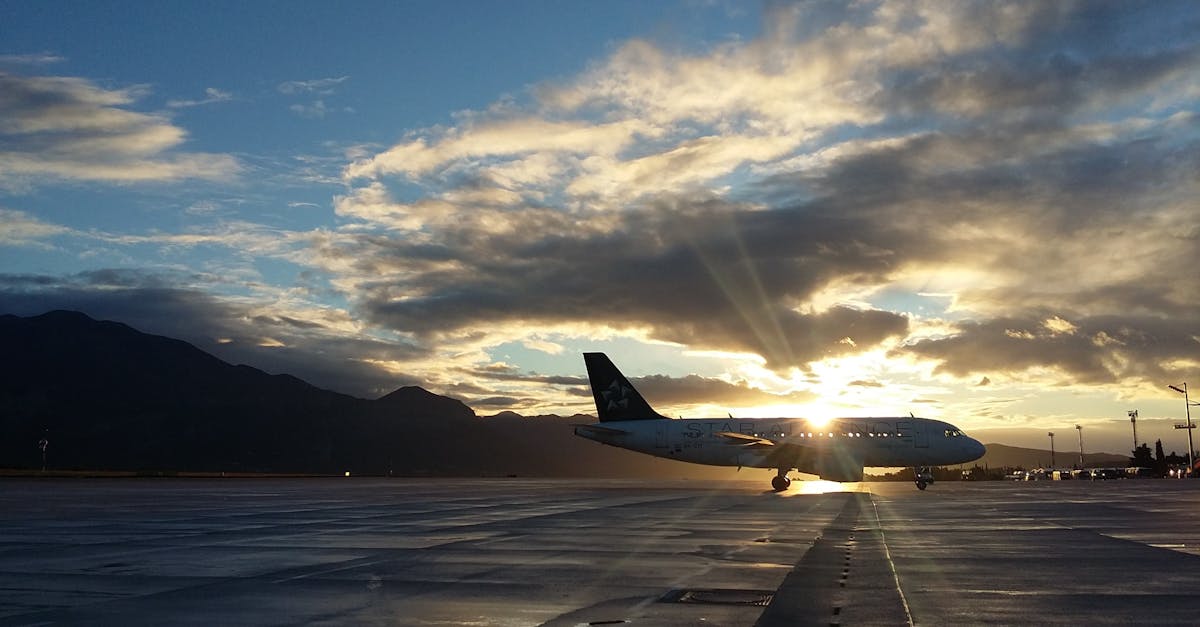
From Marco Polo Airport, three budget options reach the city. The ACTV bus to Piazzale Roma costs EUR 6.50 and takes approximately 25 minutes to the mainland bus terminus; from Piazzale Roma you can walk into Venice or continue by vaporetto. The ATVO coach to Piazzale Roma costs EUR 8 and also takes 25-30 minutes — slightly more comfortable than the local ACTV bus. Both services run frequently during daylight hours. The Alilaguna water bus operates directly from the airport dock to various Venice landing points: EUR 8-15 depending on route. The Orange Line (EUR 8) serves Murano and Fondamente Nove; the Blue Line (EUR 15) goes to San Marco via the northern lagoon in about 75 minutes. This is the most scenic and atmospheric option, arriving by water. A private water taxi from the airport to your Venice hotel's nearest water door costs EUR 90-120 — shared between four passengers with heavy luggage, this approaches reasonableness.
From Treviso Airport, ATVO coaches run to Piazzale Roma for EUR 12-14 (book online at atvo.it). The journey takes 70 minutes. Taxis from Treviso to Venice are not a viable budget option (EUR 100+).
From other Italian cities, Trenitalia and Italo high-speed trains arrive at Venezia Santa Lucia station, located directly on the Grand Canal at the northwest end of the island — one of the world's most dramatic railway arrivals. Milan to Venice starts at EUR 10-30 booked in advance; Rome to Venice EUR 20-50; Florence to Venice EUR 15-35. Book through the Trenitalia or Italo apps at least a week ahead for the best fares.
Getting Around the City
Venice has no roads, cars, or land-based public transport. Movement is entirely on foot or by water. There are no bikes, no scooters, and no taxis of the conventional kind. This takes approximately two hours to internalise and is subsequently one of Venice's greatest pleasures.

The vaporetto (water bus) is the city's public transport system, operated by ACTV. Lines run throughout the lagoon serving Venice's main island, Giudecca, Murano, Burano, Torcello, and the Lido. A single-ride ticket costs EUR 9.50 — high for one journey. Buy a time-based pass instead: 24-hour unlimited EUR 25; 48-hour EUR 35; 72-hour EUR 45; 7-day EUR 65. Buy passes at ACTV booths at major stops, HelloVenezia vending machines at Piazzale Roma and Santa Lucia, or via the AVM Venezia app. Validate your pass at the orange machines at the dock before boarding — inspectors are present and fines are significant.
The most important lines: Line 1 runs the entire length of the Grand Canal from Piazzale Roma to San Marco and Lido, stopping at every dock. It is slow, scenic, and the best way to see the palazzi from water level. Line 2 is the faster Grand Canal service with fewer stops, also serving Giudecca. Line 12 from Fondamente Nove serves Murano, Burano, and Torcello — the essential island day-trip route.
Walking is how you experience Venice. The core island takes about 35-40 minutes to cross on foot; the main tourist route from Santa Lucia to San Marco is about 25 minutes. The walk is the point — every route through the calli reveals courtyards, canal reflections, and details that no vaporetto journey reproduces. Embrace getting slightly lost; the island is small enough that you cannot get seriously lost for long.
The traghetto — a gondola ferry — crosses the Grand Canal at six traditional points where there is no nearby bridge, for EUR 2 per person. These standing two-minute crossings are used by residents and provide a genuine gondola moment at a fraction of the leisure gondola price (EUR 80-100 for 30 minutes).
Where to Base Yourself
Venice's six historic districts (sestieri) have distinct characters. Where you stay shapes your entire experience of the city.

Dorsoduro is the best all-round neighbourhood for first-time visitors who want to experience both the city's culture and its daily life. Home to the Gallerie dell'Accademia, the Peggy Guggenheim Collection, and the Basilica della Salute, it is also a student neighbourhood centred on Campo Santa Margherita — a large lively square with outdoor seating, bacari, and a genuine local atmosphere that vanishes in San Marco. The Zattere promenade along the south waterfront is one of Venice's great walking routes, sunny, relatively uncrowded, and lined with gelaterie and bars. Budget accommodation here runs EUR 80-130 per person in a guesthouse; mid-range hotels EUR 150-250.
Cannaregio is the largest and most local of Venice's six districts, stretching from Santa Lucia station north and east toward the lagoon shore. Fondamenta della Misericordia and Fondamenta degli Ormesini are lined with local bacari and restaurants that price for residents rather than tourists — some of the best-value eating in Venice. The historic Jewish Ghetto (the original ghetto, from which the word derives) is here, along with the strikingly colourful Palazzo Mastelli. Accommodation is cheaper than Dorsoduro: budget hostels EUR 25-45 per dorm bed; private guesthouses EUR 70-110. An excellent base for travellers arriving by train.
Castello, the easternmost district, is the quietest and most residential neighbourhood in central Venice. Stretching from San Marco's eastern edge all the way to the Arsenale and beyond, it offers streets where you can walk for 20 minutes without seeing a tourist shop. The Via Garibaldi area has local markets, family restaurants, and a neighbourhood energy completely unlike the tourist corridors. Further from the major sights but very real. Mid-range accommodation EUR 100-180.
Local Culture & Etiquette
Overtourism etiquette is a genuine consideration in Venice. The city receives 30 million visitors a year to an island of 50,000 residents. Several behaviours have become so problematic that they carry official fines: sitting on the steps of bridges or doorways (EUR 50-250 fine), eating while walking through crowds (EUR 25), swimming in canals or gondola areas (EUR 50-1,000), dragging wheeled suitcases over bridges unnecessarily (it damages the stone and is extremely loud in a city where the acoustics are unique). None of these prohibitions are unreasonable. The city's physical fabric and the patience of its residents depend on visitors behaving with basic consideration.

Basilica di San Marco: Entry requires covered shoulders and knees — no shorts, no sleeveless tops. Scarves are available near the entrance. The queue for entry can be 60-90 minutes in peak season; book a free timed slot online at veniceconnected.com to skip the line, or arrive before 9 AM. Photography without flash is permitted in the nave; no photography near the altars during services.
The coperto (cover charge) applies at most Venetian sit-down restaurants: EUR 2-4 per person is standard. It is legal, traditional, and not optional. Budget for it on every restaurant meal. Service charge (servizio) may also appear on the bill — check before adding a tip.
Bacaro culture — the standing wine bar with cicchetti — is how Venice drinks and eats at all hours of the day. Order by pointing at the cicchetti you want, ask for un'ombra de vino (a small glass of local wine, typically Soave or Prosecco from nearby Veneto), and eat standing at the bar. This is not a budget compromise; it is how Venetians eat. Approach it as participation in local culture, not as a poverty measure.
Water: Venice's tap water is perfectly safe to drink and comes from mountain springs via underground pipes — it is notably clean. The city has installed public water fountains (fontanelle) throughout the island. Fill a reusable bottle rather than buying bottled water at tourist prices (EUR 2-4 per bottle at San Marco; EUR 0.80 at supermarkets).
Common Mistakes to Avoid
1. Spending all your time on the main tourist corridor. The route from Santa Lucia station to San Marco via the Rialto Bridge concentrates 80% of tourists onto 20% of the city's streets. The other 80% of Venice — Cannaregio's back canals, Dorsoduro's residential streets, Castello's Via Garibaldi — is almost tourist-free, genuinely beautiful, and full of restaurants and bars priced for residents. Force yourself off the main path.
2. Eating anywhere near Piazza San Marco without checking prices first. A EUR 25 plate of pasta, a EUR 15 glass of wine, EUR 5 for a coffee on the square — this is standard San Marco pricing. Fifteen minutes' walk into Dorsoduro or Cannaregio and you pay EUR 10-14 for the same pasta. The coffee on the famous square is worth doing exactly once, with full knowledge that you're paying for the orchestral accompaniment and the view.
3. Not registering for the day-tripper fee on peak days. Arriving on a peak day without pre-registering at cda.veneziaunica.it risks fines of EUR 50-300. The EUR 5 contribution is a minor cost; the fine for non-compliance is not. Check the calendar before you travel.
4. Confusing a vaporetto with a gondola experience. The vaporetto is the bus. It is efficient and covers the Grand Canal, but it is transport. For the gondola experience — the silence, the narrow canal perspective, the sculling motion — you need either a traghetto crossing (EUR 2, standing, 2 minutes) or a booked gondola ride (EUR 80-100, 30 minutes). Both are worthwhile. Don't confuse them.
5. Not booking the Doge's Palace in advance. The peak-season queue for Palazzo Ducale can exceed two hours. Online booking costs EUR 2-3 extra but eliminates the queue entirely. Book at palazzoducale.visitmuve.it on the same day you book your accommodation.
6. Packing with wheeled luggage. Venice has 400+ bridges — all with steps, all requiring luggage to be carried. Soft duffel bags or backpacks are dramatically easier to navigate than wheeled cases. If you must bring a wheeled case, accept that you will carry it manually over every bridge on your route. There is no wheeling option. This is a practical issue, not aesthetic judgment.
7. Underestimating the heat in July and August. Venice in peak summer is both extraordinarily crowded and genuinely hot. The island's stone reflects heat, the narrow calli trap warmth, and air conditioning is inconsistently available. Arrive before 8 AM to see the major sights, retreat to air-conditioned museums between 11 AM and 3 PM, and re-emerge in the late afternoon. The evening canal light from 7-9 PM is the best Venice has to offer aesthetically, and the temperature is finally tolerable.