
Chitwan occupies the Terai — Nepal's narrow southern lowland strip — in the broad river valley where the Narayani and Rapti rivers flow east toward their confluence with the Ganges system. This is the real Nepal that most trekking tourists never see: a subtropical landscape of elephant grass, sal forest, and river flood plains where the Tharu people have farmed and fished for centuries alongside the wildlife that inhabits the national park bearing the valley's name. The food here is not Himalayan — it is hot, flat, agricultural, influenced by the Indian plains to the south, and profoundly distinct from the dal bhat culture of the mountains.
Tharu cuisine is one of South Asia's most underrecognized food traditions — a kitchen developed over millennia by an indigenous people who lived in the malaria-endemic terai before modern medicine, hunting wildlife, fishing the rivers, and farming the flood-plain rice paddies. The Tharu were traditionally immune to the malaria strains endemic to the region (a genetic adaptation that allowed them to live where others could not), and their food culture reflects this intimate relationship with the forest and water ecosystems of the Chitwan valley. Smoked fish (sidra), mustard-based preparations, rice beer (jaaँड, jaanr), and jungle greens cooked with distinctive spicing are the hallmarks of authentic Tharu cooking.
Chitwan today is primarily known as the gateway to Chitwan National Park — a UNESCO World Heritage Site protecting one-horned rhinoceroses, Bengal tigers, and gharial crocodiles — and its food scene serves both the wildlife tourism economy (lodge dining, jungle breakfast, campfire cooking) and the local Tharu community. The combination creates an unusually rich food experience: eat at a Tharu community homestay for the most authentic flavors, order dal bhat in a teahouse on the river bank for the Nepali staple at its most elemental, and ask your guide what the rhino wardens eat for lunch.
10 Must-Try Dishes in Chitwan
1. Tharu Dal Bhat
Dal bhat — lentil soup with rice, plus accompanying vegetables and pickles — is Nepal's national meal and the fuel of Himalayan trekking legend: "Dal bhat power, 24 hour" is the Nepali trekker's mantra. But the Tharu version of dal bhat is distinct from the mountain preparation and from the Kathmandu restaurant version in ways that make the comparison fascinating. Tharu dal uses different lentil varieties (masoor dal, the pink-red split lentil, is more common in the Terai than the black kala chana of the mountains), the tarka (spiced oil poured over the lentils) uses mustard oil rather than ghee, and the accompaniments include jungle greens (sag), dried fish, and fermented vegetables unavailable in the higher elevations.
The rice in Chitwan's dal bhat is also different: grown in the flat, irrigated paddy fields of the Terai, Sona Masoori and Basmati varieties are common, producing a lighter, more fragrant rice than the short-grain varieties of the middle hills. The entire composition of a Tharu dal bhat — the mustard-oil dal, the jungle-greens sag, the fermented sidra fish, the millet or corn flatbread (dhido or makkai roti) sometimes served alongside — represents a complete nutritional system developed over centuries of life in the subtropical lowlands.
Eat Tharu dal bhat at a community homestay in Sauraha — the main tourist village — rather than at a tourist lodge. Several families in Sauraha and in the surrounding Tharu villages (Meghauli, Bachhauli) offer homestay meals that include authentic Tharu preparations. Ask your lodge owner to connect you with a Tharu family kitchen rather than the tourist restaurant menu.
A dal bhat meal at a homestay costs NPR 400–600 (USD 3–5). At a tourist restaurant, the same meal with tourist presentation costs NPR 700–1,200. The difference in authenticity is enormous; pay for the homestay experience. Pair with a clay cup of jaanr — Tharu rice beer — for the most culturally complete eating experience Chitwan offers.
2. Jaanr (Tharu Rice Beer)
Jaanr (also written jaaँड in Nepali script) is the indigenous fermented rice or millet beer of the Tharu people — a mildly alcoholic, slightly sour, warm-temperature beverage made by fermenting cooked rice or millet with a natural starter culture (marcha) derived from bark, roots, and wild herbs. It is consumed both as a ceremonial drink (at Tharu festivals including Maghi, Holi, and the post-harvest celebrations) and as a daily social drink. The flavor ranges from mildly sweet and yeasty (fresh, lightly fermented) to pleasantly sour with a grain depth that compares favorably to Belgian lambic beer.
There are two forms of jaanr in the Chitwan Tharu tradition: the liquid filtered version (strained from the fermenting grain and drunk cold or at room temperature) and the tongba-style version where the fermented grain is placed in a vessel, hot water is added, and the liquid is sipped through a bamboo or metal straw as it steeps through the grain. The Tharu prefer the filtered version; the tongba vessel version is more associated with the Limbu and Rai peoples of the hills. Both are excellent; both are deeply Nepali in a way that no bottled beer or imported spirit can be.
Find jaanr at Tharu cultural restaurants and homestays in Sauraha and at the Tharu Cultural Program evenings organized at several community centers (these include traditional dance, music, and food demonstrations). Moti Homestay and similar Tharu family homestay operations in the villages around Sauraha serve jaanr with meals. Ask — it is often not on the menu but available on request at Tharu households.
A cup costs NPR 80–150 (USD 0.60–1.20). No food pairing needed — jaanr is its own accompaniment and is traditionally consumed between meals or during communal social gatherings rather than strictly with food. Drink slowly, refill from the jar, and allow the mild alcohol (typically 2–5%) to contribute to the warm, convivial atmosphere of a Tharu evening meal in the way it has been doing for centuries.
3. Sidra (Dried and Fermented Fish)
Sidra is the most characteristic Tharu food preservation tradition — small freshwater fish (rohu, catfish, snakehead) caught from the Narayani and Rapti rivers, cleaned, salted, sun-dried, and in some preparations briefly fermented until they develop an intensely savory, slightly pungent flavor that is the Tharu equivalent of anchovy paste or shrimp paste in Southeast Asian cooking. Used as a seasoning ingredient, sidra transforms simple dal bhat into a deeply complex meal; eaten on its own or fried with onions and chili, it is a standalone dish of considerable character.
The preparation of sidra reflects the Tharu people's historical relationship with the rivers of the Terai — a relationship of deep familiarity with fish species, seasonal fishing methods, and preservation techniques developed over centuries without refrigeration. The best sidra is made with the small, bony species that are too small to eat fresh but too abundant to waste; the drying and fermentation concentrates their flavors into a potent seasoning that amplifies every other ingredient it accompanies.
Sidra dishes appear at Tharu community meals and at the more authentic restaurants in Sauraha that cater to local tastes. Sidra fried with onions, tomatoes, and green chilies and served with rice is the most approachable preparation. The Sauraha market (morning hours) sells dried sidra from river catches — these make remarkable gifts or cooking ingredients to bring home.
Sidra as part of a meal costs NPR 150–250. Raw sidra at the market costs NPR 400–600 per kg. The flavor is assertive and not universally appealing on first encounter — approach it as you would approach fermented shrimp paste: as an ingredient of great power and historical depth, not a mild condiment. Pair with jaanr or with chai — the Indian-style milk tea that is the non-alcoholic default in the Terai.
4. Jungle Breakfast
The jungle breakfast is a Chitwan National Park tourism institution — eaten at a fire-side breakfast table in the jungle interior during or after an early morning elephant safari, canoe trip, or jeep safari. Typically: hot chapatis or parathas from a camp fire, scrambled eggs cooked in a small iron pan, seasonal fruit (banana, papaya), jam, butter, and the best masala chai of your life served in a thermos after a misty 5am start. The setting — the sound of the jungle waking up, the possibility of a rhino silhouette through the elephant grass, the smell of woodsmoke and morning dew — transforms perfectly ordinary food into one of the most memorable meals of any traveler's life.
The masala chai in the Terai is fundamentally different from the high-altitude versions — brewed with local ginger (fresh, not dried), cardamom, black pepper, and sometimes fennel, with full-fat buffalo milk (Chitwan's buffalo population is substantial), it is thick, warming, and intensely spiced in a way that the thinner mountain versions are not. Drinking it from a clay cup (kulhar) that imparts a faint earthy note to the tea, while watching the sun burn off the river mist, is a sensory experience that justifies the 5am wake-up call entirely.
Jungle breakfasts are arranged through your safari guide or lodge operator — most Chitwan safari packages include one jungle breakfast as part of the program. For the best experience, book a morning canoe trip on the Rapti River followed by a short jungle walk and breakfast at one of the fire-side campsites maintained by local lodge operators. The Safari Camp lodge in Sauraha and several others have riverside breakfast setups that are spectacular in the early light.
A jungle breakfast as part of a safari package costs NPR 2,000–4,000 (USD 15–30) including the safari. Standalone, the breakfast at a riverside camp costs NPR 600–900. No alcohol; masala chai, black tea, or fresh pressed sugarcane juice (from the roadside stalls near the park entrance) are the jungle beverages of choice.
5. Sel Roti
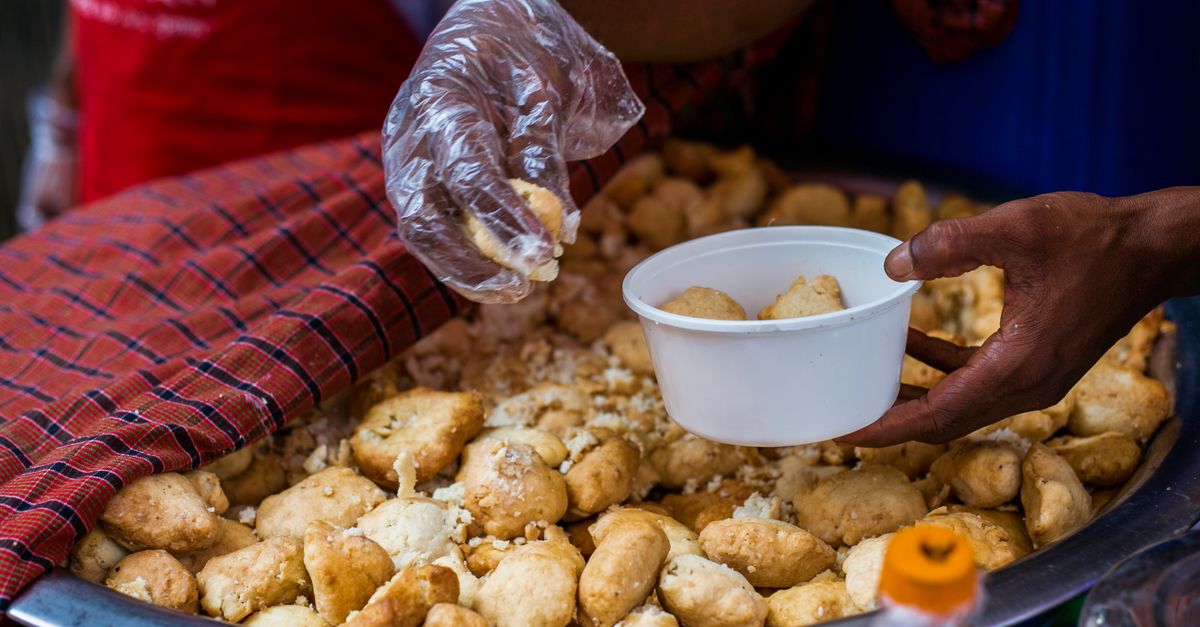
Sel roti is a ring-shaped, deep-fried rice-flour bread that is one of Nepal's most beloved festival foods and an everyday staple in the Terai — sold by street vendors, made at home for Dasain and Tihar celebrations, and available at virtually every teahouse and market stall in Chitwan. The batter is made from rice flour, banana (mashed, for sweetness and binding), sugar, cardamom, and clarified butter, thinned to a consistency slightly thicker than crêpe batter, then poured in a ring shape into hot oil and fried until golden and crisp on the outside with a slightly tender, chewy interior.
Sel roti occupies the interesting category of food that is simultaneously sweet (from the banana and sugar) and savory-adjacent (from the rice flour and ghee), eaten as a breakfast item, a festival snack, or a quick energy source. It has a unique texture — the exterior shatters like a well-fried cruller, the interior has a mild chewiness from the rice flour, and the cardamom and banana combine into a faint tropical perfume. It is best eaten hot, slightly sweet, with achar (pickle) or yogurt on the side for contrast.
Find sel roti from breakfast vendors near the Sauraha market from 6am — look for the large clay pots of oil with a vendor pouring the batter in rings and lifting the golden circles out with a bamboo stick. Also available at the teashops along the riverside in Sauraha and at festival time (Dasain, usually October) from virtually every Tharu household in the area.
A sel roti costs NPR 15–30 (USD 0.15–0.25) — one of Nepal's great food values. Eat three. Pair with masala chai from a neighboring vendor. This is Nepal's morning street food at its most elemental and most satisfying — simple, freshly fried, slightly sweet, eaten while watching the river and deciding what the day will bring.
6. Aloo Tama (Bamboo Shoot and Potato Curry)
Aloo tama is a quintessential Terai and lower-hills Nepali dish — a sour curry made from fermented bamboo shoots (tama) and potatoes, with black-eyed peas often added, flavored with turmeric, cumin, ginger, and a generous hand with both mustard oil and souring agents. The fermented bamboo shoots provide an extraordinary flavor that has no Western equivalent — simultaneously earthy, sour, and umami-rich, slightly sulfurous in the manner of very good aged cheese, with a soft but firm texture. Against the neutral potato and the earthy black-eyed peas, the tama creates a dish of real complexity.
Bamboo grows prolifically throughout the Chitwan valley — the rhinos and elephants eat enormous quantities of it in the national park, and the human population harvests the young shoots during the monsoon for immediate cooking and fermentation. Traditional tama preparation involves burying the bamboo shoots in clay pots for several weeks to develop their characteristic fermented sourness before use. The resulting ingredient is used throughout the Terai and the hill regions of Nepal as a souring and flavoring agent in curries and pickles.
Aloo tama is available at the better teahouses and local restaurants in Sauraha and at Tharu community homestays. It should appear as a side dish alongside dal bhat rather than as a standalone main course. Ask specifically for it — not all restaurants serving tourists maintain it on the menu, but most Tharu households make it regularly during bamboo season (July–September).
As part of a dal bhat set, no additional charge. As a separate dish, NPR 180–280. Pair with a glass of local mustard tea (locally called raayo cha) or with plain rice — the sourness of the tama is the dominant flavor and it pairs well with starchy, neutral companions. Aloo tama is an acquired taste of great depth; eat it twice before judging.
7. Makai Roti (Corn Flatbread)
Makai roti — corn flour flatbread — is the food of the Terai's seasonal agricultural calendar. Corn is grown extensively in the Chitwan and surrounding Terai districts as both a monsoon and a winter crop; maize flour ground at local mills becomes the daily flatbread during corn season. Made from coarse-ground yellow corn flour mixed with salt and hot water, shaped into thick discs, and cooked on a dry griddle (tawa) or directly on hot coals until slightly charred on the exterior and tender within, it has a satisfying earthiness and a slight sweetness from the corn that distinguishes it completely from wheat roti.
In Tharu tradition, makai roti is eaten with ghee and achar (fermented pickle), with mustard greens sag and a cup of dal, or simply plain with a cup of chai as a morning meal. The thickness of the Tharu version — considerably thicker than the thin Indian chapati — gives it a bread-like quality: torn into pieces, used to scoop up curry, or simply eaten with your hands and salt. The charred spots from the griddle add a pleasant bitterness that elevates the corn's sweetness.
Find makai roti at Tharu homestays and at the roadside dhabas (simple food stalls) on the roads through the Terai around Sauraha. The market in Bharatpur (the nearest city, 30 minutes from Sauraha) has excellent dhaba-style restaurants serving makai roti for breakfast and lunch. Also available at the community kitchen events run by Tharu cultural groups in Sauraha during high tourist season (October–March).
A makai roti with dal costs NPR 120–200 at a local dhaba. Pair with masala chai or with lassi — the yogurt-based drink that is ubiquitous throughout the Terai and that is made here with buffalo milk, producing a richer, more protein-dense version than the cow's milk equivalent common in Indian tourist restaurants.
8. Local Honey
The forests of Chitwan and the surrounding Terai produce several varieties of wild honey that are among the most distinctively flavored in South Asia — cliff honey from wild cliff-nesting honeybees (Apis dorsata), forest honey from jungle hives in the sal and Bombax trees of the Chitwan buffer zone, and managed hive honey from the increasingly important beekeeping operations around the national park periphery. The cliff honey, produced by the world's largest honeybee species, has a slightly bitter, intensely aromatic quality influenced by whatever forest flowers are in bloom — and in the diverse Chitwan ecosystem, that means extraordinary complexity.
Honey harvesting (madhu sanchayan) by Gurung and Tharu honey hunters is a traditional practice around the Chitwan area — some hunters scale rope ladders to reach cliff-face hives at considerable height, using smoke and considerable courage. The resulting honey is sold at markets, tourist shops, and along roadsides in unlabeled glass jars or plastic bottles. It ranges from mild wildflower varieties (pale, clear, delicately aromatic) to intensely dark forest honeys with strong medicinal reputations in Ayurvedic tradition.
Buy local honey at the Sauraha market or from roadside vendors on the approach road to the national park. The most interesting varieties are the dark sal flower honey (available October–December) and the spring citrus blossom honey (March–April). Several lodges sell honey sourced from their local beekeeping partners — ask at check-in.
Local wild honey costs NPR 500–1,500 per 500ml jar depending on variety and source. Forest honey from named Tharu producers costs more but is worth seeking out. Eat it on sel roti, mixed into lassi, or simply by the spoonful as a digestive treat. The flavor is the landscape — the Terai forest flowers, the sal tree pollen, the warm subtropical air — in edible form.
9. Tharu Pork Dishes
Pork is central to Tharu food culture in a way that distinguishes them from the higher-caste Hindu communities of Nepal (who traditionally avoid pork) and reflects the Tharu people's animist and indigenous food traditions that predate the Brahmin food taboos of Hindu orthodoxy. Tharu pork is typically raised as free-range village animals, slaughtered for festivals, and prepared in several distinctive ways: chhop (a dry-spiced pork preparation with turmeric, ginger, chili, and mustard oil, slow-cooked until the meat is falling-tender), pork achar (spiced pork pickle), and smoked pork preserved over wood fires in the traditional manner.
The festival context is important: Tharu pork dishes are most commonly prepared for Maghi (the Tharu New Year, celebrated in January), Holi, and harvest festivals — occasions when the community slaughters animals, prepares large quantities of food, and eats communally over multiple days. Eating pork at a Tharu festival is eating food with genuine ceremonial and social meaning. Visitors fortunate enough to be in Chitwan during Maghi (typically mid-January) can participate in Tharu community celebrations that include elaborate pork preparations and rice beer.
Tharu pork dishes are available at homestays and at the small number of Tharu-owned restaurants in Sauraha that specifically market their indigenous food culture. The Tharu Cultural Museum and Community Kitchen in Sauraha occasionally offers cooking demonstrations and meals featuring traditional Tharu pork preparations.
A pork dish as part of a Tharu feast costs NPR 500–800 per person including rice, dal, vegetables, and jaanr. During festivals, community meals may be available to respectful visitors by arrangement with local guides or homestay operators. Pair with jaanr or Aila (the local grain spirit) — both are the traditional companions of Tharu pork celebrations and neither requires a wine glass or a restaurant setting.
10. Seasonal River Fish Curry
The Rapti and Narayani rivers that border Chitwan National Park support significant freshwater fisheries — rohu (Labeo rohita), catfish (Clarias batrachus), snakehead (Channa marulius), and the prized Mahseer (Tor tor) that grows to enormous size in the fast-running river shallows. River fish curry in the Tharu tradition is made with mustard oil as the base fat, flavored with turmeric, cumin, coriander, and a green chili paste, with the fish added to the hot spiced oil, turned once, and then cooked with minimal liquid to develop a dry, clinging spice coating around each piece. It is robust, direct, and intensely flavored with the mustard oil's characteristically pungent note amplifying the river fish's earthy, freshwater sweetness.
The Mahseer, when available, is particularly remarkable — a large-scaled, powerful river fish with dense, slightly oily flesh that takes spicing beautifully without losing its inherent character. Mahseer fishing is now heavily regulated within the national park buffer zone; most fish caught commercially come from outside the protected area. The best river fish preparations in Chitwan use fish caught that morning from the local rivers by fishermen who know the seasonal runs.
River fish curry appears on menus at riverside restaurants and teahouses in Sauraha, particularly from October through April when river fishing is most productive. The most authentic versions are served at small, family-run restaurants near the Rapti River ghat rather than at the tourist lodges. Ask at your accommodation which riverside restaurant the park staff eat at — that intelligence is the most reliable guide to freshness.
A river fish curry with rice costs NPR 350–550. Pair with cold Tuborg or Gorkha beer (Nepal's most widely available lagers, always cold in Chitwan's heat) or with lime soda — a tall glass of soda water with fresh lime juice and black salt, the Terai's most refreshing non-alcoholic drink. River fish and cold beer on a Rapti River bank, watching the gharial crocodiles bask on the opposite shore, is a Chitwan evening experience of gentle, warm perfection.

Chitwan's Essential Food Areas
Sauraha is the main tourist village adjacent to Chitwan National Park's Sauraha entrance and the center of the visitor food economy — a strip of lodge restaurants, teahouses, and tour operator offices along the river bank. The better lodge restaurants (Tiger Tops Tented Camp, Jungle Safari Camp) serve well-prepared Nepali and Tharu food; the independent restaurants and teahouses along the main road serve simpler dal bhat and momos at local prices. The Sauraha morning market (6–9am) sells fresh produce, dried fish, and local honey.
Tharu Cultural Village, a 10-minute walk from Sauraha center, consists of traditional Tharu households where the most authentic food preparation happens. Several families offer homestay meals and cooking demonstrations that represent the most genuinely Tharu food experience available to visitors. The gap between tourist restaurant food and Tharu homestay food in Chitwan is significant — bridge it deliberately.
Bharatpur, the district capital 30 minutes east of Sauraha, is a proper Nepali city of 280,000 people with a far more diverse and local food scene than the tourist village. Indian-style dhabas, Newari restaurants, and excellent thali establishments catering to local government and business workers operate here at prices oriented toward local budgets. Worth a half-day visit for a more complete picture of Terai food culture.
Meghauli, the remote western entrance to Chitwan on the opposite side of the national park from Sauraha (accessible by light aircraft from Kathmandu), is home to the luxury Tiger Tops Lodge — but also to the small Tharu farming community around the airstrip, which maintains the most traditional Tharu food culture in the area. If your budget permits a Tiger Tops stay, the Tharu meals prepared by the lodge's community kitchen partners are the finest expression of traditional Chitwan food served in any hotel context.
Practical Tips for Eating in Chitwan
Chitwan is inexpensive by any international standard. A full dal bhat meal at a teahouse costs NPR 400–700 (USD 3–5.50). Lodge restaurant prices are higher — NPR 1,000–2,500 per meal — but still affordable by South Asian tourist standards. The most valuable food investment in Chitwan is arranging at least one homestay meal with a Tharu family through your lodge or guide — the marginal cost (NPR 500–1,000 per person) is small and the educational and culinary value is enormous.
Water safety is important throughout the Terai — drink only bottled or lodge-purified water, avoid ice unless you know the source, and apply the same caution to raw vegetables. The spice level of Tharu food is typically higher than the tourist-restaurant versions; communicate your preference clearly and early. The eating schedule in Chitwan follows the agricultural rhythm: breakfast from 6am (farmers and safari guides eat early), lunch from 11am, dinner from 6pm. The best food of the day is typically available at lunch, when whatever came into the market that morning is freshest.


