
Amritsar's food scene is Punjabi cooking at its most indulgent — a city that runs on butter, cream, and ghee in quantities that would horrify a cardiologist but produce some of India's most satisfying dishes. The Golden Temple's langar (free kitchen) aside, Amritsar is where butter chicken, amritsari kulcha, and tandoori cooking reach their peak. The old city's food stalls have operated for decades, passing down recipes through generations.
Must-Try Dishes
1. Amritsari Kulcha with Chole — ₹80-120
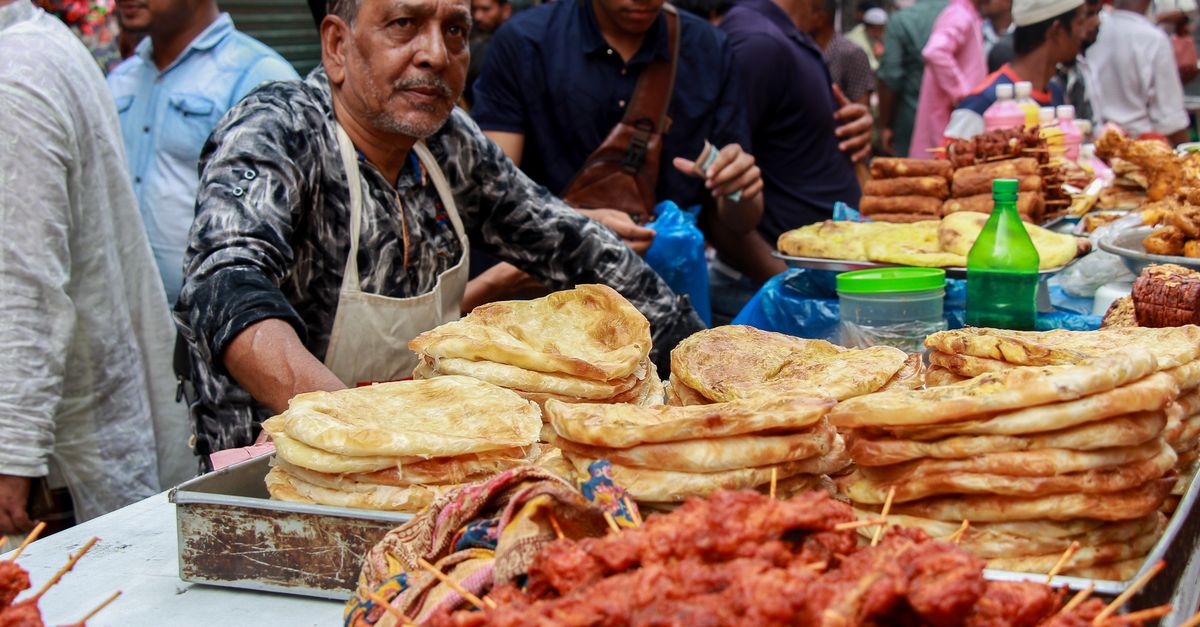
Stuffed, butter-drenched flatbread — the kulcha is filled with spiced potato, paneer, or mixed vegetables, baked in a tandoor, then doused in butter. Served with chole (chickpea curry) and pickle. Bharawan Da Dhaba serves the definitive version (₹80-120). The butter-to-bread ratio approaches 1:1.
2. Amritsari Fish — ₹200-300
River fish (usually sole) marinated in ajwain (carom seeds), chili, and chickpea flour, then deep-fried to a golden crust. Crispy outside, flaky inside, with a distinctive ajwain fragrance. Makhan Fish Corner near the Golden Temple is the legend (₹200-300). Eat hot from the oil.
3. Lassi — ₹40-80
Amritsar's lassi is legendary — thick, creamy yogurt blended with sugar and sometimes topped with malai (cream). Giani Di Lassi and Ahuja Lassi near the Golden Temple serve lassis in massive steel glasses (₹40-80). The full-fat creaminess puts chain-restaurant lassis to shame.
4. Tandoori Chicken — ₹250-400
Whole chicken marinated in yogurt, Kashmiri chili, and spices, cooked in a clay tandoor. Amritsar claims to have perfected the art. Beera Chicken House on Majitha Road serves a benchmark version — the chicken is so tender it falls from the bone (₹250-400 for half).
5. Pindi Chole (Chickpea Curry) — ₹60-100
A darker, drier version of chole using tea-bag-darkened cooking water and a spice mix heavy on amchur (dried mango powder) and anardana (pomegranate seed). More complex than standard chole. Kesar Da Dhaba has served this since 1916 (₹60-100).
6. Phirni — ₹30-50
Ground rice pudding set in clay cups — Amritsar's traditional dessert. The clay absorbs moisture, creating a thick, creamy texture flavored with saffron, cardamom, and almonds. Available at sweet shops for ₹30-50. The clay cup is part of the experience.
Where to Eat
Old City (Golden Temple Area) — Street Food Legend
Kesar Da Dhaba (since 1916) for dal makhani and chole (₹60-120). Bharawan Da Dhaba for stuffed kulcha (₹80-120). Giani Di Lassi for massive lassis (₹40-80). All within walking distance of the Golden Temple.
Lawrence Road — Sit-Down Restaurants
Beera Chicken House for tandoori chicken (₹250-400). Crystal Restaurant for North Indian-Chinese (₹150-300). Brothers' Dhaba for butter chicken (₹200-350). Less atmospheric than old-city stalls but more comfortable.
Majitha Road — Night Food
The road leading from the old city has evening food stalls and restaurants. Kulcha Land for late-night kulchas (₹60-100), and Gurdas Ram Jalebi Wala for crispy jalebis (₹40-60/plate) — best eaten hot from the oil at 10 PM.

Eating Etiquette in Amritsar
Indian food is traditionally eaten with the right hand — the left hand is considered impure. Tear roti or naan into small pieces, use them to scoop curries and rice, and push food toward your mouth with your thumb. This technique takes practice but enhances the eating experience. Restaurants always provide cutlery if you prefer, and no one will judge either approach.
Indian restaurants serve water in two forms — regular (filtered tap water, sometimes marked 'aqua' or 'mineral') and bottled (sealed brands like Bisleri or Kinley). At budget restaurants, ask specifically for 'sealed bottle water' to avoid filtered water that might not agree with foreign stomachs. At mid-range and upscale restaurants, filtered water is generally safe.
Vegetarian food in India is identified by a green dot on packaging and menus; non-vegetarian by a red dot. Many Indian restaurants are 'pure veg' — meaning no meat, fish, or eggs are served or allowed on the premises. This is not a limitation — Indian vegetarian cuisine is the world's most sophisticated, with thousands of dishes that make meat unnecessary.
The concept of 'thali' — a complete meal on a metal platter with small bowls (katoris) of different dishes — is India's greatest culinary invention. Thalis provide variety, balance, and value. Most thali restaurants offer unlimited refills of dal, rice, and sabzi (vegetables). A ₹100-200 thali provides more food than most people can finish.
Planning Your Food Exploration
The most rewarding food experiences come from planning meals around the local eating schedule rather than forcing your own rhythm onto a foreign city. Most Asian cities eat early — breakfast stalls open at dawn and close by 9 AM, lunch service peaks at noon and ends by 2 PM, and dinner starts at 5-6 PM. Night markets and street food stalls offer the best evening options, typically running from 6 PM until 10 PM or later.
Budget allocation matters. Spend 30-40% of your food budget on one memorable meal — a signature local restaurant, a cooking class, or a fresh seafood dinner. Allocate the rest to street food, markets, and casual local restaurants where the authentic flavors live. This strategy ensures you taste both the refined and the everyday versions of the local cuisine without breaking the bank.
Photography etiquette at food stalls and small restaurants varies by culture. In most of Asia, photographing your food is completely normal and even expected. Photographing the cook or the stall itself — ask first with a smile and gesture. Most vendors are flattered; a few prefer not to be photographed. In sit-down restaurants, photograph freely but be discreet about photographing other diners.
Food allergies and dietary restrictions require preparation. Write your restrictions in the local language (Google Translate helps) and show the note at each restaurant. Common allergens like peanuts, shellfish, and gluten appear in unexpected places — soy sauce contains wheat, fish sauce is in many Thai and Vietnamese dishes, and peanuts appear in Indonesian, Malaysian, and Chinese cooking. Communicate clearly and ask about ingredients rather than assuming from the menu description.
Street Food & Markets
Amritsar's street food is inseparable from its geography. The lanes radiating from the Golden Temple — Katra Jaimal Singh, Hall Bazaar, and the winding alleys of the old walled city — are where the best outdoor eating happens, with stalls that have occupied the same few square metres for forty years.
The parikrama (circumambulation path) around the Golden Temple's sarovar (sacred pool) is lined with small stalls selling chai, roasted chickpeas (chhole), and simple fried snacks from early morning until late at night. These are not tourist stalls — they serve pilgrims and workers. A clay cup of masala chai costs ₹10-15. Steamed aloo tikki (potato patties with tamarind chutney and yogurt) from the stalls near the main entrance costs ₹30-50 for a plate of two.
Lawrence Road in the new city hosts Amritsar's evening street food concentration. Between 7 PM and 11 PM, vendors set up carts selling chaat — papdi chaat (crispy wafers with potatoes, yogurt, and chutneys, ₹40-60), golgappa (puri shells filled with spiced water and chickpeas, ₹30-50 for six), and dahi bhalla (lentil dumplings in cold yogurt, ₹40-60). The pani (spiced water) in Amritsar golgappa is tangier and spicier than the Delhi version — locals specify "tez" (extra spicy) or "meetha" (sweet) when ordering.
Hall Bazaar, Amritsar's main shopping street, has a dedicated lane of dry fruit and sweet shops. The walled city's Shivala Bhaina Road is home to Giani Di Hatti (not to be confused with Giani Di Lassi), which has served pinni — a dense sweet made from wheat flour, ghee, sugar, and dry fruits — since the 1920s. A 200g box costs ₹120-150 and makes a considered edible souvenir. The nearby Brahm Butte Bazar spice market sells fresh-ground spice blends — ajwain (essential for fish fry), Kashmiri chili, and the mixed spice blend used for tandoori marinades — at prices a fraction of packaged equivalents.
The single best food investment in any Asian city is a cooking class. For 5-50, you'll visit a local market, learn 4-6 dishes hands-on, and gain techniques that let you recreate the flavors at home. The market tour alone — learning to identify local herbs, spices, and produce — transforms your understanding of the cuisine for every subsequent meal during your trip.


