
Petra is one of the New Seven Wonders of the World — a 2,000-year-old Nabataean city carved into rose-red sandstone cliffs in southern Jordan. The Treasury (Al-Khazneh), the Monastery, and hundreds of tombs, temples, and water channels spread across a vast archaeological site that rewards at least two full days of exploration. Three days lets you see the major monuments, hike the less-visited trails, and experience Petra by Night.
The Siq, Treasury & Main Trail
Morning (6:30 AM) — The Siq: Enter through the 1.2-kilometer narrow canyon (entry included in Petra ticket — JOD 50 for 1-day, JOD 55 for 2-day, JOD 60 for 3-day, free with Jordan Pass). The Siq's towering walls — some 80 meters high — create a dramatic entrance. Ancient water channels carved into the rock are visible. At the end, the Treasury suddenly appears framed by the canyon walls — the single most dramatic reveal in archaeology.
Mid-Morning — The Treasury (Al-Khazneh): The 40-meter-high carved facade is Petra's icon. Built as a royal tomb in the 1st century BC, its Hellenistic columns and carved figures blend Greek and Nabataean art. The morning sun illuminates the rose-red stone. Budget 30-45 minutes for photos and awe.
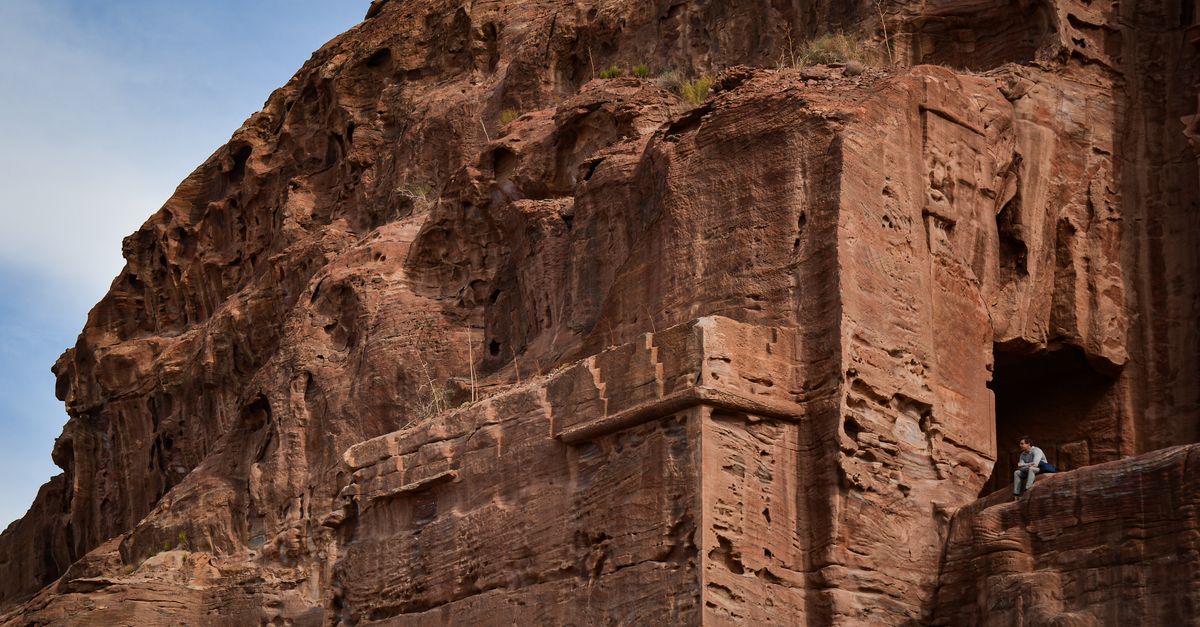
Afternoon — Street of Facades & Royal Tombs: Walk past dozens of carved tomb facades and the 3,000-seat Roman Theater to the Royal Tombs — the Urn Tomb, Silk Tomb, and Corinthian Tomb. The Urn Tomb interior was later converted into a Byzantine church. Continue to the Colonnaded Street and Qasr al-Bint temple.
Evening — Petra by Night (Mon/Wed/Thu): The Siq and Treasury are lit by 1,500 candles, accompanied by Bedouin music and tea (JOD 17). The experience is atmospheric and worth the early bedtime it demands. Starts at 8:30 PM, lasts 2 hours.
The Monastery & High Place of Sacrifice
Morning (7:00 AM) — The Monastery (Ad-Deir): The hike to Petra's most impressive monument — 800 rock-cut steps ascending a mountain. The Monastery is even larger than the Treasury (47 x 48 meters) and far less crowded. The hike takes 45-60 minutes up. The cafe at the top serves tea with views over the Wadi Araba valley to Israel/Palestine. Start early to avoid the heat.
Midday — High Place of Sacrifice: An alternative trail climbs to a Nabataean sacrificial altar with panoramic views of the entire Petra basin. The descent via the Wadi al-Farasa route passes the Lion Fountain, Garden Tomb, and Roman Soldier Tomb — some of Petra's most elaborate carvings in relative solitude.
Afternoon — Basin Restaurant or Bedouin Camp: Lunch at the Basin Restaurant near the Qasr al-Bint (JOD 12-18 buffet) or at a Bedouin tent serving tea and simple food (JOD 3-8). The afternoon heat (April-October) makes this a good time to rest before evening exploration.
Evening — Wadi Musa Town: The town adjacent to Petra has budget restaurants serving Jordanian food. Al Saraya for mansaf (JOD 5-8), and the cave bar at Petra Guest House for atmospheric drinks (JOD 5-8 for cocktails) in a 2,000-year-old Nabataean cave.
Little Petra & Back Trails
Morning — Little Petra (Siq al-Barid): A miniature version of Petra, 15 minutes north by car (free entry). Carved facades, a painted biclinium (banquet hall) with original Nabataean frescoes, and far fewer tourists. Walk through in 1-2 hours. The hike from Little Petra to the Monastery back trail (3-4 hours) is Petra's best off-the-beaten-path route.
Midday — Return & Unexplored Areas: Re-enter Petra for areas missed on Day 1-2. The Turkmaniya Tomb, the Crusader-era Habis fortress ruins, and the lesser tombs along side wadis are best explored at your own pace. The site is vast — most visitors see only 20%.
Afternoon — Souvenir Shopping: Wadi Musa and the Petra Visitor Center have shops selling Nabataean-inspired jewelry (JOD 5-30), sand bottles (JOD 3-15), and locally made ceramics. Bedouin women sell handwoven textiles at stalls inside the site.

Practical Tips
Jordan is the Middle East's safest and most visitor-friendly country — stable, welcoming, and with excellent tourist infrastructure. The Jordanian dinar (JOD) is strong — 1 JOD = roughly $1.41. Budget JOD 40-80/day for mid-range travel. Buy the Jordan Pass online before arrival (JOD 70-80) — it includes Petra entry, visa waiver, and 40+ sites.
Jordanian hospitality is legendary. You will be invited for tea, coffee, and meals by strangers — accept whenever possible. 'Ahlan wa sahlan' (welcome) will follow you everywhere. Tipping is expected: 10% at restaurants (unless service charge is included), JOD 1-2 for taxi drivers and hotel staff. Bargaining is expected at souqs but not at restaurants or fixed-price shops.
Jordan's climate is hot and dry. Petra and Wadi Rum can reach 40°C+ in summer — carry 3+ liters of water and plan strenuous activity for early morning. The Dead Sea is the lowest point on Earth at 430 meters below sea level — the heat and low altitude intensify sun exposure. Amman is cooler (it sits at 750 meters) but still hot in summer. October-April is the best season for comfortable exploration.
Best Times to Visit & Budgeting
Timing your visit matters enormously for both weather and crowds. Peak tourist seasons bring higher prices, sold-out accommodations, and crowded attractions. Shoulder seasons (the weeks just before and after peak) often deliver the best balance — good weather, manageable crowds, and reasonable prices. Off-season travel is the cheapest but check for monsoon rains, extreme heat, or seasonal closures.
Budget planning for three days should account for accommodation (30-40% of total), food (20-25%), transport (15-20%), activities and entrance fees (15-20%), and a contingency buffer (10%). The biggest savings come from choosing accommodations wisely — a well-located mid-range hotel that eliminates taxi costs can be cheaper than a budget hotel in a remote area plus daily transport.
Travel insurance is non-negotiable. A single hospital visit in most Asian countries costs more than a year of comprehensive travel insurance (0-80 for a 2-week trip). Ensure your policy covers emergency medical evacuation — this is the expensive scenario that justifies the premium. Download your policy documents to your phone for offline access.
Currency exchange tips: ATMs generally offer better rates than airport exchange counters. Withdraw larger amounts less frequently to minimize per-transaction fees. Carry some US dollars (0-100) as universal backup — they're accepted in emergencies across most of Asia. Notify your bank of travel plans to prevent card blocks. Use a travel-specific card (Wise, Revolut) for the best exchange rates and lowest fees.
Download essential apps before arriving: Google Maps (with offline maps for your destination), Google Translate (with offline language packs), the local ride-hailing app (Grab for Southeast Asia, DiDi for China, Uber/Ola for India), and your accommodation booking confirmation. A portable battery pack (10,000-20,000 mAh) keeps your phone alive through a full day of navigation, photography, and ride-hailing.
Getting Around
The Petra Archaeological Site itself is pedestrian-only — horses, donkeys, and camel rides are offered inside the site but walking is both free and preferable for fully absorbing the scale of the place. The main trail from the entrance gate to the Treasury is 1.2 kilometres through the Siq. From the Treasury to the Basin Restaurant (near the Monastery trailhead) is another 2 kilometres. The Monastery hike adds 2 kilometres and 800 steps. Budget 8-12 kilometres of walking per full day inside Petra — wear proper footwear, not sandals.
Wadi Musa, the modern town adjacent to the site, is easily navigable on foot for the central streets near the visitor centre. Taxis are available for trips to Little Petra (JOD 5-8 each way, 15 minutes), Wadi Rum (JOD 25-35, 1.5 hours), and Aqaba (JOD 25-40, 2 hours). Fixed-price taxis operate from the visitor centre area — agree the price in advance and confirm it includes waiting time if needed. JETT buses run from Wadi Musa to Amman twice daily (JOD 10, 3 hours) and are the most affordable long-distance option. Local minibuses to nearby villages cost JOD 1-2 but run on irregular schedules.
Rental cars from Aqaba or Amman give the most flexibility for the region — Wadi Rum, the Dead Sea, and Petra can all be combined in a self-drive loop. International driving licences are required for rental. Roads between Aqaba and Wadi Musa (via the Desert Highway or Kings Highway) are well-maintained. The Kings Highway is the more scenic route, passing through Crusader castles and dramatic wadi landscapes, but adds 90 minutes to the journey. Petrol stations are plentiful on both routes.


