Naples is the most misunderstood city in Western Europe. The chaos is real; so is the extraordinary density of ancient history, extraordinary cooking, and a social life conducted entirely in public that makes every other Italian city feel slightly shy by comparison. The pizza gets all the attention, but the city also has the finest collection of ancient art outside of Rome, a network of underground tunnels running beneath the entire historic centre, and a neighbourhood (the Quartieri Spagnoli) that is one of the great urban experiences on the continent.
This guide is for the traveller who has enough confidence to walk into a place where the menu is on a blackboard in Neapolitan dialect and point at what the person next to them is eating. It's for someone who wants to spend a morning in the Museo Archeologico Nazionale without having done the tour group circuit, who wants to buy fried food from a street stall at midnight, and who is interested in understanding why Neapolitans are simultaneously the most hospitble and the most proud people in Italy.
Naples will reward you in proportion to the openness you bring to it. Come with fixed expectations and a tight schedule and you'll struggle. Come curious and flexible and it will be one of the finest cities you ever visit.

1. Quartieri Spagnoli Morning Walk
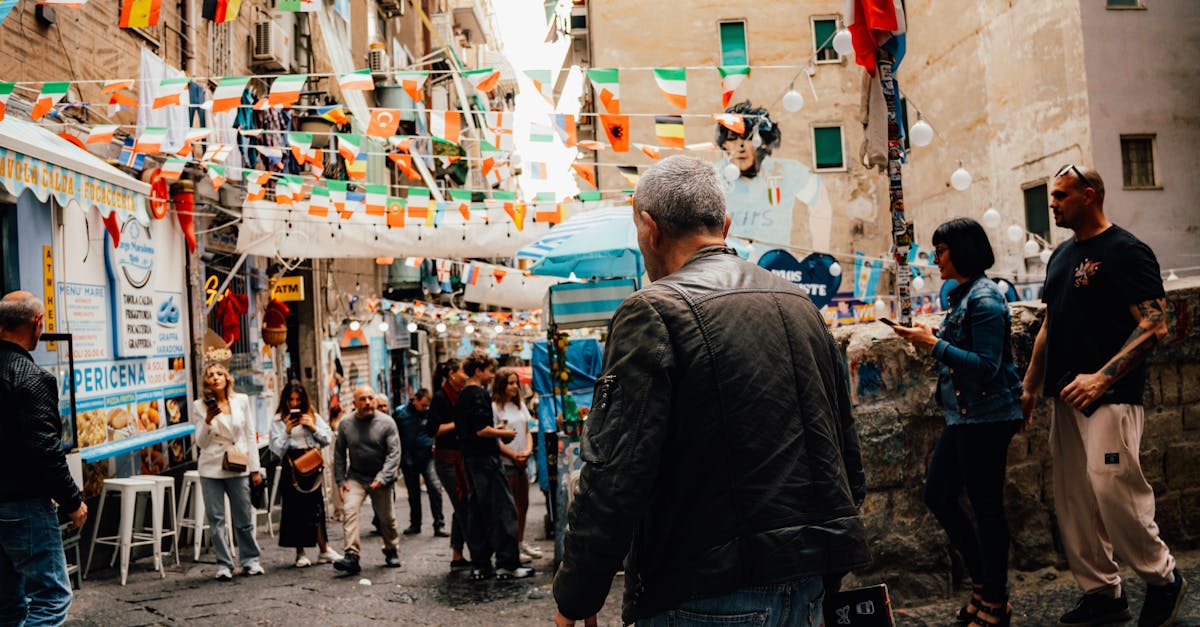
The Quartieri Spagnoli (Spanish Quarters) is a grid of narrow lanes west of Via Toledo, built by the Spanish viceroys in the 17th century to house their troops. Today it's one of the most densely inhabited urban areas in Europe — a tightly packed neighbourhood where the washing is strung between windows, the votive shrines to Maradona and the Madonna share wall space, and the bars open at 6am for workers heading to the port. It is also one of the most beautiful places in Naples.
The neighbourhood's reputation for danger has been exaggerated and is now largely historical. The petty crime that once characterised it has diminished significantly over the past decade as the area has gentrified incrementally — not enough to price out residents, but enough to bring good coffee shops, pizzerias, and a vibrant creative scene into the lanes. Walk here at 9am on a weekday and you're in a working neighbourhood, not a tourist zone.
Enter from Via Toledo at Via Speranzella or Via Concezione a Montecalvario. Walk in any direction and you'll get lost — this is not a problem, it's the point. The lanes are safe in daylight; at night, the main ones are lively and safe, the smallest ones less so. The shrine to Maradona at the corner of Via Emanuele De Deo is one of dozens of neighbourhood altars to the Argentine footballer who played for Napoli from 1984–91 and became effectively a deity in the city.
Coffee at any bar in the Quartieri costs €1 standing at the counter — the Neapolitan espresso is the finest in Italy, short, dark, and served at the exact right temperature. Breakfast is coffee and a sfogliatella (a layered pastry filled with ricotta and candied citrus) for under €2 total. The best sfogliatella in Naples is debated with religious intensity; a reliable option is the pasticceria on Piazza Carità at the northern edge of the neighbourhood.
2. Museo Archeologico Nazionale: The Secret Cabinet
The Museo Archeologico Nazionale di Napoli (MANN) holds the finest collection of ancient Roman art in the world — the finds from Pompeii and Herculaneum are here, along with the Farnese collection of classical sculpture. The museum is extraordinary and surprisingly unvisited relative to its importance. But the best-kept secret within the museum is the Gabinetto Segreto — the Secret Cabinet — a dedicated room containing the erotic art from Pompeii, which was deemed too explicit for public display for almost a century and is still slightly hidden within the museum's layout.
The Gabinetto Segreto contains phalluses, explicit paintings, erotic lamps, and an extraordinary marble sculpture of Pan having sex with a goat — objects that tell you more about Roman attitudes to sexuality, religion, and commerce than almost anything else in the museum. The collection was locked away in 1821 and only opened to the general public in 2000. Today it's accessible to all visitors but is still reached through a tucked-away entrance that many visitors miss.
The museum is at Piazza Museo Nazionale 19. Metro Line 1 to Museo. Open Wednesday to Monday 9am–7:30pm. Closed Tuesday. Admission €20. The Gabinetto Segreto is included in the standard ticket — look for it on the first floor (Piano Nobile) and follow the signs. The rest of the museum requires at least three hours to see properly: the Farnese Hercules (an enormous 2nd-century copy), the Alexander Mosaic from Pompeii, and the extraordinary still-life paintings from Herculaneum are all unmissable.
The museum café on the ground floor is poor — go elsewhere for lunch. The streets around the museum, around Piazza Cavour and Via Foria, are excellent for cheap Neapolitan lunch: the trattoria opposite the museum's side entrance does a three-course menù del giorno for €10 including wine. Book the Gabinetto Segreto guided tour in advance if you want the full context; they run in Italian and English and take about 45 minutes.
3. Spaccanapoli Street Walk
Spaccanapoli — "Naples splitter" — is the long straight street that cuts through the historic centre from east to west, following the path of the ancient Greek and Roman city of Neapolis. It changes names as it runs (Via Benedetto Croce, Via San Biagio dei Librai, Via Vicaria Vecchia) but the visual is continuous: one of the most extraordinary urban streetscapes in Europe, lined with Baroque churches, palazzi, bookshops, presepe (nativity scene) workshops, and the occasional ancient column incorporated into a 17th-century facade.
The street has been continuously inhabited since the 5th century BC. The building stock visible today is primarily 17th–18th century — the period when Naples was one of the largest cities in Europe and the Bourbon and Spanish viceroyal courts spent lavishly on churches and palaces. The density of Baroque architecture on Spaccanapoli is unparalleled: the churches alone (Gesù Nuovo, Santa Chiara, San Domenico Maggiore, and a dozen more) could occupy three days of serious art history.
Enter from the western end at Gesù Nuovo and walk east. The Piazza del Gesù Nuovo is a good starting point: the Gesù Nuovo church has an extraordinary 17th-century interior and a facade of diamond-pointed rustication (actually a pre-existing 15th-century palazzo that the Jesuits incorporated). Santa Chiara adjacent, a Gothic church with a ravishing medieval cloister of majolica-tiled columns, is €6 admission but one of the finest spaces in Naples.
Walk the full 2 kilometres to the eastern end at Piazza dei Girolamini, taking every lateral church and vicolo (alley) that attracts your attention. The Cappella Sansevero, just north of Spaccanapoli near Piazza San Domenico, contains the Cristo Velato (Veiled Christ) — a 1753 marble sculpture by Giuseppe Sanmartino depicting a dead Christ under a transparent veil, carved from a single piece of stone in one of the greatest technical achievements in Western art. Entry €10; advance booking essential as space is limited.
4. Napoli Sotterranea (Underground Naples)
Beneath the historic centre of Naples runs a network of tunnels, cisterns, and passages carved from the soft tufa rock over two and a half millennia. Napoli Sotterranea is the main public access point — an association that runs guided tours through the Greek aqueduct tunnels (4th century BC), Roman cisterns, and Second World War air raid shelters that form a continuous underground city beneath the pavements of Spaccanapoli. It's one of the strangest and most fascinating experiences in the city.
The underground system was originally a Greek and Roman water supply network — an aqueduct bringing water from the Serino river 100 kilometres away, distributed through a system of cisterns cut directly into the rock beneath every building. The system served the city until a cholera epidemic in 1884 made the authorities close the open-topped cisterns and build a modern water supply. The tunnels were then forgotten, rediscovered, and used as air raid shelters during the Second World War. The WWII sections still have the graffiti, furniture, and personal effects of the families who sheltered there.
The Napoli Sotterranea access point is at Piazza San Gaetano 68, just off Via dei Tribunali. Tours run daily every two hours from 10am to 6pm (English tours at noon, 2pm, and 4pm). Duration approximately 1.5 hours. Admission €10. The tour involves narrow passages and a section requiring crawling — not suitable for severe claustrophobia. Wear shoes with grip and bring a layer, as the underground temperature is constant at 15°C regardless of surface weather.
The Greek aqueduct sections — narrow rectangular tunnels cut by hand with candles — are the most atmospheric part. The Roman cisterns, with their massive vaulted spaces and ancient graffiti, are the most architecturally impressive. The WWII section is the most emotionally affecting — the children's drawings on the walls, the makeshift theatre stage, the photograph of a child's birthday celebrated underground during a bombing raid, are genuinely moving. Book in advance online for weekend tours, which fill up.

5. Rione Sanità and the Catacombe di San Gennaro
The Rione Sanità, north of the ancient city walls, is the neighbourhood that the earthquake of 1688 pushed outside the city — the poorest, most historically neglected area of Naples, and one of its most extraordinary. The Catacombe di San Gennaro beneath the basilica at the top of the neighbourhood are the largest early Christian catacombs in southern Italy, covering 5,000 square metres and containing frescoes from the 2nd through 10th centuries. They're managed and guided by a local youth cooperative that has transformed the neighbourhood's relationship with its own heritage.
The catacombs contain the original burial site of San Gennaro (the patron saint of Naples) before the relics were moved to the Cathedral. The frescoes — some of the earliest Christian images in the western world — are in extraordinary condition given their age, the older layers dating from the 2nd century when the catacombs were still used by a mixed pagan and Christian community. The guided tour (€9, runs Tuesday to Sunday on the hour from 10am to 5pm) is the only way to access the site and the young local guides are excellent.
Take the 47 bus from Piazza Cavour to Piazza Ottocalli and walk up via Sanità. The neighbourhood itself is extraordinary — densely inhabited, chaotic, with extraordinary Baroque churches at street level built directly over older funerary architecture. The church of Santa Maria della Sanità at the foot of the catacombs hill has a magnificent interior and a crypt with additional catacombs visible through the floor. The community café run by the cooperative has the best cornetto in the neighbourhood.
The cooperative that manages the catacombs — Coop. La Paranza — also runs alternative neighbourhood tours that take you into the palazzi and underground spaces not included in the standard catacomb visit. These are available in English on advance booking (€15 per person). The neighbourhood, despite its poverty, is genuinely safe and extraordinarily hospitable — people sitting on chairs outside their buildings will often volunteer directions before you ask for them.
6. Palazzo Reale di Capodimonte
The Capodimonte is Naples's royal palace turned art museum — 100 rooms on a hill north of the city centre, housing the Farnese collection (including Titian's Danae, Raphael's Portrait of Leo X, and Caravaggio's Flagellation of Christ), Neapolitan painting from the 13th to 18th centuries, and the finest collection of Capodimonte porcelain in the world. The museum is huge, magnificent, and — on a weekday morning — almost entirely unvisited. You can stand alone in front of Titian masterpieces for as long as you want.
The palace was built between 1738 and 1838 as a hunting lodge and royal residence for the Bourbon kings of Naples. Its position on a hill above the city gives extraordinary views over Naples, Vesuvius, and the bay — the terrace view from the upper floor is one of the finest free panoramas in southern Italy. The surrounding park (Bosco di Capodimonte, 134 hectares) is the largest green space in Naples and a Sunday institution for Neapolitan families with picnics and footballs.
Take bus 178 or R4 from Piazza Museo or bus C63 from Piazza Trieste e Trento. Open Thursday to Tuesday 8:30am–7:30pm. Closed Wednesday. Admission €15. The museum is genuinely enormous — three floors, 100 rooms — and attempting to see all of it in one visit leads to exhaustion. Focus on the Farnese collection (first floor) and the contemporary art installations (third floor) for a more manageable experience. The restaurant on the first floor is surprisingly good — €15–20 for lunch with a glass of Campanian wine.
The park around the palace is free and open all day. On Sunday mornings it fills with Neapolitan families doing what Neapolitan families do in public: making noise, eating, playing football, arguing about football, playing music, and occasionally looking at the extraordinary view. The park has several simple kiosks selling coffee and cold drinks. This is one of the finest Sunday-morning experiences in any Italian city.
7. Via dei Tribunali Street Food
Via dei Tribunali is the decumanus maximus of ancient Neapolis — the main east-west road of the Greek city, 2,500 years old and still in continuous use. Today it's lined with pizzerias, street food vendors, churches, and the casual social life of the Centro Storico. The street food here is Naples at its most fundamental: cuoppo di frittura (paper cones of fried seafood and vegetables, €4), pizza a portafoglio (folded pizza, €1.50), and the sfogliatella riccia from the ancient Pintauro pasticceria.
The cuoppo is the essential Naples street experience — a paper cone filled with whatever the fryer has going, typically a mix of fried anchovies, squid rings, zucchini fritters, and arancini. You eat it standing on the street, dropping pieces of hot batter and feeling completely happy about it. The best cuoppo vendors are near the intersection with Via San Gregorio Armeno, and the queue of locals rather than tourists is your guide to quality.
Walk the full length of Via dei Tribunali from the western end (near Piazza del Gesù) to the east (toward Piazza dei Girolamini) — about 800 metres. Stop at Via San Gregorio Armeno, the alley famous for the presepe workshops where artisans carve nativity scene figures (the craft has been practiced here since the 18th century, and the contemporary figures include politicians, footballers, and celebrities alongside the traditional sacred scene). The workshops are open year-round but peak in November–December.
Lunch on Via dei Tribunali can be done for under €5: a pizza a portafoglio (pizza folded into quarters for walking) from Sorbillo's takeaway counter (Via Tribunali 32) costs €3, a cuoppo costs €4, a bottle of water €1. Total for a full street lunch with dessert (a sfogliatella from the nearest pastry counter): under €10. This is authentic Naples food at the price Neapolitans pay, not the tourist-restaurant equivalent.
8. Pompeii at Opening Time
Pompeii is not hidden — it's one of the most visited archaeological sites in the world, with 4 million visitors a year. But visiting at 9am, exactly when the gates open and before the tour buses have unloaded, gives you an hour in a ghost city that feels genuinely abandoned rather than performatively preserved. The streets, the houses, the fast-food bars (thermopolia), the graffiti on the walls — all visible in near-silence before the crowds arrive.
Pompeii was buried by the Vesuvius eruption of 79 AD under 4–6 metres of volcanic ash and pumice. The burial preserved the city almost intact: carbonised food still in its serving dishes, electoral slogans painted on street-corner walls, surgical instruments in their cases, a baker's shop with the bread still in the oven. The scale of the site is the first shock — it covers 66 hectares, the entire urban area of a prosperous Roman town, with streets, houses, temples, brothels, baths, and gardens all visible.
Take the Circumvesuviana train from Naples Piazza Garibaldi to Pompei Scavi station — trains every 30 minutes, journey approximately 35 minutes, cost €2.80. The archaeological site opens at 9am. General admission €18. Buy tickets online in advance to avoid the queue at the gate. The site is enormous — a 3-hour visit covers only a fraction. Use the official app (free download) for the site map and key building information.
The key buildings requiring advance knowledge to find: the Villa dei Misteri (outside the city walls, to the west — the most famous set of frescoes at Pompeii), the Lupanare (brothel, clearly signposted, with original erotic paintings above each cubicle to help clients select services), and the Garden of the Fugitives (the most affecting exhibit — a garden where 13 victims were buried by ash and their plaster casts are still in position). Don't attempt to see everything; pick 10 buildings, find them on the map, and see them properly rather than racing through 50 at speed.
9. Pozzuoli and the Campi Flegrei
Thirty minutes west of Naples by metro lies Pozzuoli — the ancient Roman city of Puteoli, now a working fishing town that happens to contain one of the finest amphitheatres outside Rome, a Roman market building with extraordinary marble and mosaic floors, and a volcanic landscape of fumaroles and boiling mud pools that make it feel like another planet. The Campi Flegrei (Phlegraean Fields) around Pozzuoli are one of the great overlooked geological and archaeological sites in Italy.
The Anfiteatro Flavio di Pozzuoli (2nd-century AD) is the third-largest amphitheatre in the Roman world — after the Colosseum and Capua — with a remarkable underground system of cages and passages that is more complete than anything at the Colosseum. The Serapeo (Temple of Serapis), actually a Roman market building with columns still rising from the sandy ground of the port, shows the effects of bradyseism — the slow rising and sinking of the ground over volcanic activity — with extraordinary clarity: the columns are sea-worn at the base where they were underwater in the medieval period.
Take metro Line 2 from Piazza Garibaldi to Pozzuoli (40 minutes, €1.80). The amphitheatre is on Via Anfiteatro (€8, open Monday to Saturday 9am–2 hours before sunset). The Serapeo is on the port — free, open at all hours. The Solfatara di Pozzuoli, 1 kilometre from the centre, is an active volcanic crater with fumaroles and boiling mud, accessible by foot from the town (admission €8, open daily 8:30am–1 hour before sunset).
Pozzuoli is a working fishing town with genuine local restaurants on the port. The Cantina del Porto on Via Roma serves fresh-caught fish grilled simply for €12–18 per main; the frittura di paranza (mixed fried fish) for €10 is the classic order. The port market on Tuesday and Friday mornings has the freshest fish in the Naples area. The town is almost entirely tourist-free and is one of the great underrated day trips in southern Italy.
10. Certosa di San Martino
The Certosa di San Martino is a former Carthusian monastery on the Vomero hill above Naples — now a national museum — with the finest view over the city and bay available from any accessible public building. The church interior is one of the most extravagantly decorated Baroque spaces in Italy; the cloister is serene and perfect; the presepe collection (historic nativity scenes) is the finest in the world. The view from the belvedere takes in the entire bay from Capo Posillipo to Vesuvius to the islands of Procida, Ischia, and Capri on the horizon.
The monastery was founded in 1325 and continuously enlarged until the suppression of the monasteries in 1799, when it became a national museum. The accumulated art and architecture of 500 years of religious patronage is visible in every surface — the inlaid marble floors, the frescoed ceilings, the altarpieces by the greatest Neapolitan masters, the extraordinary intarsia woodwork. The Quarto del Priore (Prior's Apartment) is preserved as it was in the 17th century and is one of the finest historic room sequences in Italy.
Take the Funicolare Centrale from Piazza Fuga (Line 1) to the Vomero district — the funicular is a tram running on steep rails up the hill, €1.20 each way. The Certosa is at Largo San Martino — a 5-minute walk from the funicular stop. Open Thursday to Tuesday 8:30am–7:30pm. Closed Wednesday. Admission €8.
The belvedere below the monastery is free and always open — even if you don't pay the museum admission, come for the view. The Castel Sant'Elmo, the Spanish-built fortress immediately adjacent, also has a belvedere with similarly extraordinary views (€5, same hours as the museum). Together they make the Vomero hill the finest urban viewpoint in Naples. The neighbourhood of Vomero itself is pleasant for an evening dinner — quieter and more residential than the historic centre, with good restaurants on Via Scarlatti and Via Luca Giordano.