
Macau is Asia's most misunderstood destination. The casino lobby view of Macau — the Venetian, the Grand Lisboa, the Cotai Strip spectacle — is real and spectacular in its Las Vegas-but-larger way, but it bears almost no relationship to the actual Macau that the city's 650,000 residents inhabit. The actual Macau is the historic peninsula with its 400-year-old Portuguese colonial architecture, its Cantonese-Portuguese food fusion, its layered street life in the Taipa and Coloane villages, and its extraordinary cultural heritage (a UNESCO World Heritage designation covering 30 monuments and public spaces) that the casino industry has preserved through economic activity and partially obscured through its own presence.
The Portuguese were in Macau from 1557 — the first European settlement in Asia, and they stayed until 1999. Four hundred and fifty years of Sino-Portuguese cultural mixing produced something genuinely unique: the Macanese language (Patuá, now nearly extinct), the Macanese cuisine (a fusion of Portuguese, Cantonese, African, and Indian influences), and the specific architectural hybrid visible in the historic center where Portuguese baroque facades stand above Chinese shop signage and incense spirals hang from Catholic church doorways. This is not manufactured multicultural tourism — it's the genuine result of four centuries of cohabitation.
These ten hidden corners of Macau go beyond the Famous Ruins of St Paul's to the neighborhoods, traditions, and specific Macanese cultural products that the casino economy has not yet replaced with itself.
1. Taipa Village's Back Streets
Taipa Island (now connected to the Cotai Strip casino land) has a historic village center — Taipa Village — that has been almost entirely preserved because the casino development happened on the newly reclaimed Cotai land rather than on the existing village. The main tourist path through Taipa Village covers Rua do Cunha (the main food street), the Casa Museum, and the Pak Tai Temple. The back streets between Rua do Cunha and the Taipa waterfront are the better experience: narrow lanes of two-story Macanese houses painted in the specific pastel yellows, greens, and pinks that Portuguese colonial Macau used as a class signaling system (different colors indicated different social status), with Chinese shop signage below the Portuguese facade architecture.
The Taipa Village lanes carry the social life of the Macanese community who have lived here continuously: the neighborhood bakery (four generations, same recipe for Portuguese egg tarts that are different from the Pastéis de Nata of Lisbon and different from the Hong Kong egg tart — the Macanese version has a rougher pastry base and a heavier vanilla custard filling), the retired fishermen's café that opens at 8 AM for the first customers, and the small shrine at each lane junction that combines Portuguese Christian iconography with Chinese deity figures in the same wall niche.
Taipa Village is accessible from the Macau Peninsula by bus (Lines 11, 22, 28A, 30, 33) or by taxi (MOP 50-70 from the Macau Ferries Terminal). The village center is compact — 400 metres of main street with 200 metres of back streets on each side. Go on a weekday morning before the Cotai casino hotel guest tours descend. The best breakfast in Taipa is at Café Tai Lei Loi Kei on Rua do Cunha — the original Macanese pork chop bun (bolo de carne) café, MOP 30 for the pork chop in a soft roll, operating since 1968.
The Pak Tai Temple at the village's eastern end (a Taoist temple dedicated to the Sea Spirit, serving the fishing community of Taipa since the 18th century) has a specific atmosphere during the Pak Tai festival (third month of the lunar calendar, usually April or May) when the temple's ceremonial paraphernalia is brought out and the surrounding lanes are decorated with paper offerings. Even outside the festival, the temple is active daily with the neighborhood's elderly Cantonese community performing incense and food offerings at the morning and evening prayer times.
2. Coloane Village and Hac Sa Beach
Coloane is Macau's southern island — an actual island, connected by bridge, that still functions primarily as a village and natural park rather than a development zone. The Coloane Village at the island's western end has the most intact Portuguese-Chinese harbor village architecture in Macau: a waterfront with 19th-century warehouse buildings and Portuguese customs house, a village square with a small Catholic chapel (the Chapel of St Francis Xavier, housing a reliquary of the saint's arm bone), and the Kuong Iam Temple facing the square across the flagstones. The juxtaposition of the Catholic chapel and the Kuong Iam Temple is literal — they face each other across 30 metres of public square, in perfect coexistence.
Hac Sa Beach on the eastern coast of Coloane is Macau's only natural beach — a 1.5-km stretch of volcanic black sand (the "Hac Sa" means black sand in Cantonese) that is the only natural dark sand beach between Korea and Southeast Asia. The black sand is unusual enough to require explanation: it comes from the erosion of the Coloane hilltop basalt, which colors the beach distinctly. Swimming at Hac Sa is safe from May to October. The beach is almost always less crowded than Macau's casino resorts and far less expensive — the seafood restaurants on the beach road serve grilled fish at MOP 80-150 per dish rather than casino restaurant prices.
Coloane is accessible by bus from the Macau Peninsula (Lines 21, 21A, 26A) or from Taipa (Lines 25, 26, 26A). The journey takes 25-40 minutes. The ferry terminals to and from Hong Kong and China are on the Peninsula, so Coloane requires either a taxi (MOP 60-80) or the bus. The entire Coloane island can be walked on a 3-hour circuit from the village. The Coloane Trail (7 km, 2 hours on marked paths) passes through the island's southern forest reserve and ends at Hac Sa Beach.
Lord Stow's Bakery in Coloane Village is the original source of the Macanese egg tart — the specific recipe (created by a British expat, Andrew Stow, in 1989) that became global food culture and spawned a franchise of thousands across Asia. The original bakery, still at 1 Rua do Tassara, sells the same egg tarts from the original recipe at MOP 11 each. The queue is real and worth it. The connection between a British expat's 1989 recipe experiment and the current global egg tart industry is specifically Macau: the city's cultural mixing produces culinary innovation as a byproduct.
3. Macau's Military Cemetery
The Old Protestant Cemetery on Camões Square in the northern Macau Peninsula is one of the most historically interesting small burial grounds in Asia: established in 1821 to serve the Protestant European merchant community in Macau, it contains the graves of early China traders, ship captains, and the artists and naturalists who used Macau as their base for exploring China in the early 19th century. Most famously, it contains the grave of George Chinnery — the Irish-born artist whose portraits of the China Coast merchant community and their Chinese servants are the finest visual record of 19th-century Macau.
The cemetery's 500 graves represent the full spectrum of the early Western presence in Asia: merchant adventurers who made fortunes and died of tropical disease, naval officers who fought in the First Opium War, missionaries who translated the Bible into Chinese, and the occasional explorer who used Macau as the last Western port before the Chinese interior. The inscriptions (in English, Portuguese, and Dutch) are often specific about the circumstances of death — the tropical fevers, the maritime accidents, and the "native violence" that terminated the China careers of these early East-West traders.
The cemetery is at the northern end of the Camões Garden on the western side of the Macau Peninsula. Entry free. Open daily 8:30 AM to 5:30 PM. The Camões Garden adjacent to it has a specific significance: the Portuguese Baroque bust of Luís Vaz de Camões (the author of Os Lusíadas, the Portuguese national epic) was placed here by the Portuguese community in the 19th century as a statement of cultural identity at the furthest reach of the Portuguese empire. The garden's banyan trees are among the oldest in Macau.
The military dimension of the cemetery is specific: the graves include officers of the Macau garrison, participants in the First and Second Opium Wars, and the specific community of British India Army officers who used Macau as a recovery and recreation posting during the 19th century. Walking the rows of graves with dates and professions visible is a social history of British and Portuguese colonial Asia in compressed form — the deaths are clustered in the fever months (May-September) and in the years of military conflict, mapping the mortality pattern of 19th-century Asia onto individual names and dates.
4. Mandarin's House
The Mandarin's House (鄭家大屋) on Travessa de António da Silva in the historic center is the largest and most important surviving Chinese domestic architecture in Macau. Built in 1869 for Zheng Guanying — a Chinese merchant and reformer who later wrote "Words of Warning in a Prosperous Age," one of the most influential texts of the Chinese modernization movement — the compound covers 4,000 square metres with over 60 rooms arranged around courtyards in the classic Lingnan (South Chinese) manor house tradition. Zheng received some of the most important figures of late Qing modernization in these rooms, including the reformers who attempted the 1898 Hundred Days' Reform.
The architecture at Mandarin's House is a deliberate statement of Chinese cultural identity in a Portuguese colonial environment: the compound is built entirely in the South Chinese tradition (granite columns, carved wooden screen doors, central courtyard orientated to the south for feng shui), with only minor concessions to Portuguese presence in some doorframe details. The quality of the timber joinery is exceptional — the screen doors in the main reception hall use the specific Guangdong carved wood panel tradition at its best period (late 19th century).
Mandarin's House is on Travessa de António da Silva, accessible from the Largo do Senado (Senado Square) by a 10-minute walk south. Entry free. Open Wednesday to Monday, 10 AM to 6 PM. The restoration (completed 2010) has been careful and well-documented — the structural stabilization that prevented collapse is invisible, and the decorative elements have been conserved rather than replicated. The compound's exterior wall, which faces a narrow lane, has a single modest entrance gate that gives no indication of the extraordinary space behind it — in the best Chinese architectural tradition.
The surrounding neighborhood around Mandarin's House (the Rua de António da Silva and the Largo do Lilau area) contains the finest concentration of surviving 19th-century Sino-Portuguese vernacular architecture in Macau outside the UNESCO World Heritage individual monuments. These are private houses, not monuments, and some are in various states of maintenance. Walking the lanes between 9 AM and noon, when the morning light is on the western-facing facades, provides the most complete picture of the actual historic Macau streetscape that the casino development has not replaced.
5. A-Ma Temple at Dawn
A-Ma Temple (媽閣廟) at the southwestern tip of the Macau Peninsula is the oldest temple in Macau — the site was a temple in use before the Portuguese arrived in 1557, and the "Macau" name derives from the temple's local name (Mako). The temple is on the UNESCO World Heritage list and receives significant tourist visits. At dawn (5:30-7:30 AM), before the tour groups arrive and when the morning prayer attendance of local Cantonese women and fishermen is at its peak, the temple is the most genuinely alive it becomes in any 24-hour period.
The dawn prayer at A-Ma Temple is conducted by the resident temple caretaker community in coordination with the spontaneous devotional visits of the neighborhood's older residents. The incense spirals hanging from the ceiling (each sponsored by a donor whose name is written on the attached card) produce smoke in the early morning air that filters the rising light entering through the open courtyard in a specific way — the temple photography that appears in travel books is always taken at this light condition. The prayer bell and the wooden fish drumming provide the acoustic backdrop for the smoke and light composition.
A-Ma Temple is at the southern end of Rua do Lilau, a 15-minute walk from the Senado Square. Entry free. Open daily 7 AM to 6 PM (but the gates are sometimes open earlier for the early morning community). The temple complex covers multiple pavilions on a cliff face — a Fishermen's Pavilion at the base, a Mercy Pavilion at the top, and the Bodhisattva Hall in the middle, each dedicated to a different aspect of the A-Ma deity. The top pavilion viewpoint over the Macau Inner Harbor to Taipa Island has been the visual reference for Macau artists since the 17th century.
The A-Ma Temple neighborhood extends into the Barra area — the Macau Maritime Museum is 100 metres from the temple, open daily except Tuesday 10 AM to 6 PM (entry MOP 10). The maritime museum's collection of Chinese and Portuguese traditional vessels (including a reconstructed Macau junk of the 18th century and a replica of the caravel that first sailed to India) is the context for the A-Ma Temple fishing deity tradition — the goddess protected the fishermen who constituted the original Macau community. The museum's outdoor dock area has a traditional Chinese junk moored for boarding — the closest thing in Macau to seeing the original Macau watercraft tradition in three dimensions.
6. Seac Pai Van Park's Aviary
Seac Pai Van Park on Coloane Island is Macau's largest public park — 20 hectares of subtropical forest on the island's southern slope, with a free public aviary, a botanical garden, and a hiking trail network. The aviary is the hidden highlight: it contains an unusual collection of rare Chinese bird species including the white-rumped shama (considered China's finest songbird), the Chinese bulbul, and the endangered Hwamei (Chinese hwamei, designated as the classic Chinese caged bird). The aviary is free, rarely crowded, and the birds' song — particularly the shama's complex, rich call — fills the surrounding forest in a way that is genuinely extraordinary.
The Seac Pai Van forest trail network connects the park to the Coloane Trail and provides access to the island's forested interior. The A-Ma Cultural Village (a reconstruction of traditional Macanese village and temple architecture) at the park's upper level is closed to visitors except during cultural events but the exterior architecture and the setting — on a ridge above the park with views toward the Pearl River estuary — is visible from the trail. The park's panda habitat (two giant pandas from China, installed in 2008) is the primary visitor attraction; the aviary and the forest trails are the reason the park rewards a longer visit.
Seac Pai Van Park is accessible by bus from the Macau Peninsula (Lines 21, 21A to Hac Sa Beach, then walk north 20 minutes) or by taxi (MOP 70-90 from the ferry terminal). Entry to the park is free. The aviary is open 8 AM to 5 PM daily. The panda enclosure has specific viewing hours (10 AM-1 PM and 2-5 PM). Walk the full park circuit (3 km) to connect the aviary, the botanical garden, and the forest trail in a single 2-hour visit. The forest trail section particularly is the finest forest walk accessible from Macau city and is used exclusively by the Coloane resident and Macau hikers community.
The botanical garden section of Seac Pai Van focuses on the specific plant communities of the South China coastal ecosystem — the mangrove section (small but genuine), the tropical food plant garden, and the collection of Macau endemic flora. The endemic Macau species are limited by the island's size but the specific subtropical forest species found in the park's primary forest sections — the wild lychee trees, the subtropical ginger varieties, the specific tree fern species that grow in the valley bottom — are the botanical vocabulary of the Pearl River Delta forest ecosystem that has been mostly replaced by development.

7. Ruins of St. Paul's at Night
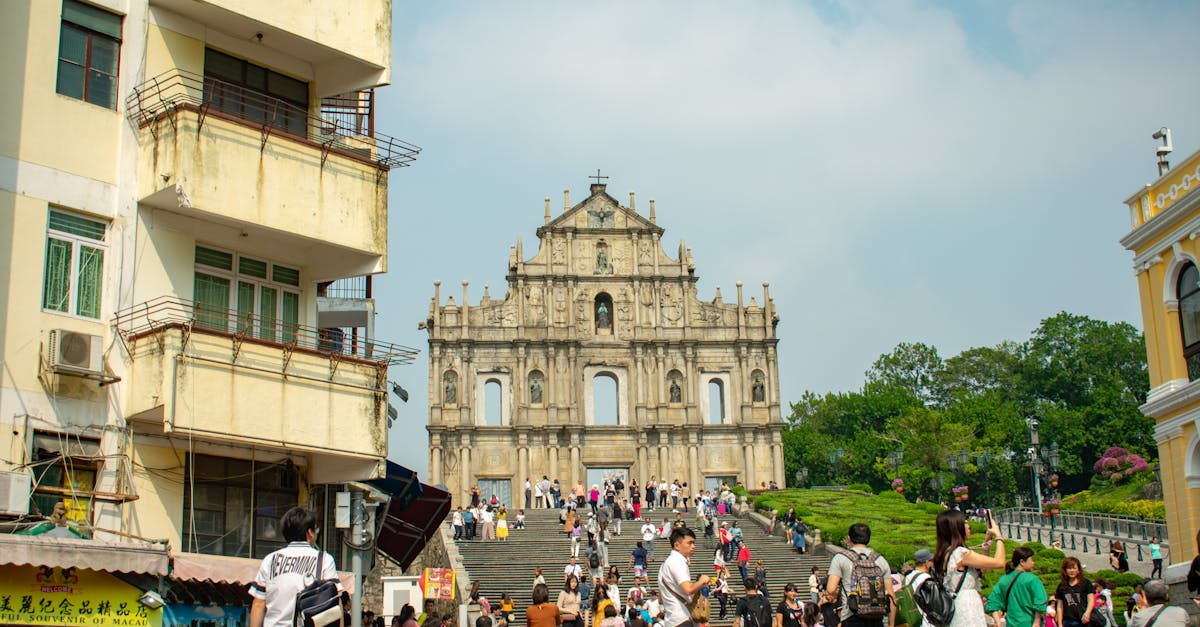
The Ruins of St Paul's (the facade of the destroyed 1640 Jesuit church, remaining after the 1835 fire) is Macau's most photographed site. The standard tourist visit is daytime. At night, from 6 PM to midnight, the facade is dramatically illuminated and the steep stone staircase approach (99 steps from the Largo da Companhia) is occupied primarily by young Macanese and Chinese visitors rather than day-tour groups. The evening atmosphere — the facade lit against the dark sky, the incense smoke from the small Shinto shrine at the base of the staircase, and the sound of Cantonese conversation from the night market on the adjacent lanes — is more evocative of the site's centuries-long coexistence between Catholic and Chinese traditions than any midday tourist visit.
The crypt beneath the St Paul's facade (accessible from the side entrance on Rua de São Paulo) houses the Museum of Sacred Art and Crypt — a small museum with religious objects from the Jesuit Macau period and the ossuary of Japanese Christian martyrs who fled Japan's 1597 persecution and sought refuge in Macau. The Japanese Christian presence in Macau is completely unknown to most visitors and yet these martyrs' bones are in a glass case in a crypt below the most famous facade in the city. Entry free, open daily 9 AM to 6 PM.
The church ruins at St Paul's are specifically remarkable for what the facade's bronze bas-reliefs depict: the Jesuit missionaries at work among the Chinese and Japanese communities, scenes of the martyrdom of Japanese Christians in Nagasaki, and the specific theological synthesis of Catholic and Chinese cosmological imagery that the Jesuits developed as their conversion strategy. The facade is a theological argument in visual form — the most complex surviving example of Sino-Christian visual theology in Asia.
The lanes between the Ruins and Senado Square (Rua da Palha, Rua dos Mercadores) are the night market zone where Macau's street food culture operates from 6 PM to midnight. Egg rolls, almond cakes, beef jerky (the specific Macanese dried beef seasoned with wine and spices), and the serradura (sawdust dessert — layers of cream and crushed Marie biscuits) are available from the street vendors. Budget MOP 80-120 for a complete night market food circuit of the area. The vendors are primarily Macanese families who have operated these stalls for 20+ years.
8. Guia Fortress and Lighthouse
Guia Fortress and Lighthouse on the Guia Hill in northeastern Macau is the highest point on the peninsula and the site of the oldest lighthouse in China (and Asia, by most accounts) — built in 1865 by the Portuguese colonial administration. The lighthouse is still operational (operated by Macau Maritime Authority) and the 15-metre white cylindrical tower is visible from most of Macau and the adjacent Pearl River estuary. The accompanying Guia Chapel (Chapel of Our Lady of Guia, built 1626) is the oldest Western chapel in China to survive intact, with original mural paintings from the 17th century that show a unique fusion of European fresco technique with Chinese architectural and floral motifs.
The Guia Chapel murals are the specific discovery that makes Guia worth visiting independent of the lighthouse. The European-trained Augustinian brothers who painted the chapel used Chinese floral and geometric border patterns on what are otherwise European religious narrative compositions. The Virgin Mary appears with Chinese facial features in some sections; the architectural backgrounds include Chinese furniture. This is the visual record of the Portuguese missionaries' attempt to present Christian figures in a way legible to Chinese viewers — a 400-year-old cross-cultural communication strategy visible on the chapel walls.
Guia is accessible from the Macau Peninsula center by cable car from the Flora Garden (Macau cable car, MOP 12 return, open Tuesday to Sunday 8 AM to 6 PM) or by a 20-minute uphill walk from the Rua de São Lázaro. The cable car is the more interesting approach: it crosses the residential northern Macau neighborhoods from above, providing a mid-level view of the dense urban fabric between the historic center and the Chinese border. The lighthouse and chapel complex is open Wednesday to Monday, 10 AM to 5:30 PM (chapel), 9 AM to 5:30 PM (fortress grounds).
The Guia Hill walking paths below the fortress provide the best view of the Macau casino skyline from an elevated position — the Grand Lisboa's distinctive lotus-blossom shaped tower, the Wynn Macau, and the Morpheus Hotel are all visible from the Guia fortifications in a skyline composition that puts the modern casino towers in front of the traditional Portuguese fortification in a single visual argument about Macau's identity. This photograph is taken by architectural photographers and rarely by tourists, which means the viewpoint itself is usually available and unoccupied.
9. Cotai Strip's Architecture Tour
The Cotai Strip — the 2-km stretch of reclaimed land between Taipa and Coloane islands — contains the largest concentration of architectural spectacle per square kilometre anywhere on earth. The Venetian Macao (by the architect of the Las Vegas Venetian), the Morpheus Hotel by Zaha Hadid (her last completed building, a non-linear concrete structure with structural diagrid exoskeleton), the MGM Cotai (by Bernardo Fort-Brescia of Arquitectonica), and the Studio City's figure-8 Ferris wheel (by Kohn Pedersen Fox) are all individually significant pieces of contemporary global architecture collected in a place that most architectural critics refuse to take seriously because of its casino context.
The Morpheus Hotel in particular deserves architectural attention without the critical qualifier. Designed by Zaha Hadid and completed in 2018 (after her death in 2016), it is the world's first free-form high-rise exoskeleton structure — a steel diagrid skin that provides all structural support without internal columns, allowing the interior floors to be free of structural constraints. The building's shape (a loop with dual voids carved through the body) is a mathematical shape called a toroid that Hadid had been developing in theoretical projects for decades and finally realized at Cotai. The building's exterior can be viewed and photographed from the City of Dreams resort promenade for free; a beverage at the Nüwa Hotel bar on the 38th floor provides the interior view of the void structure from above.
The Cotai Strip architectural walk (2 km, 1 hour) covers the major buildings from the City of Dreams complex at the eastern end to the Venetian and the Sands Cotai Central at the western end. No entry fees for exterior viewing; interior viewing requires either a hotel stay or a restaurant reservation at the relevant properties. The Venetian's canal-shopping interior (a replica of Venice's Grand Canal with gondolas, sunset lighting at all hours, and the ceiling painted to simulate outdoor sky) is free to enter and worth seeing as the most ambitious piece of stage-set commercial architecture in the world. The fact that it's commercially motivated doesn't make the scale and execution less remarkable.
The contrast between the Cotai Strip's architectural spectacle and the Coloane Village's Portuguese-Chinese 19th-century vernacular architecture — available within a 10-minute taxi ride — is the defining Macau spatial experience. No other city in the world offers this specific juxtaposition: the world's most intensively developed entertainment district adjacent to an intact 19th-century colonial fishing village. Understanding both as simultaneously real and simultaneously Macau is the prerequisite for understanding what Macau actually is.
10. Senado Square's Morning Before Tourists
Largo do Senado (Senado Square) is the social center of historic Macau — a wave-patterned cobblestone plaza (Portuguese-style calçada, using black and white stones) flanked by the São Domingos Church, the Leal Senado building (the historic council chamber), and the commercial streets leading to the Ruins of St Paul's. It's thoroughly touristed by 10 AM. At 7 AM, the square belongs to the neighborhood: the Portuguese bakeries selling freshly baked pão (bread rolls) and the Cantonese dim sum restaurants open at 7 AM on the adjacent streets draw the morning crowd of Macanese locals rather than tourists. The square's specific morning activity — the elderly men reading the newspaper on the fountain edge, the religious shop on the corner selling incense for the adjacent São Domingos Church — is the quotidian Macau life that the midday tourist version obscures.
The São Domingos Church on the square's northern end (also called St Dominic's Church) is open daily from 10 AM to 6 PM. Entry free. The interior houses a carved alabaster altar from the 17th century and a museum of sacred art on the upper floor (separate entry ¥5) that is one of the finest small religious art collections in Asia — the museum holds procession statues, gold and silver liturgical objects, and paintings from the Macau Jesuit tradition of the 16th-18th centuries. The 17th-century carved ivory processional figure of Our Lady of Fatima is the single most extraordinary object in the collection.
The commercial streets radiating from Senado Square (Rua de São Paulo toward the Ruins, Rua dos Mercadores toward the Red Market in the north) constitute the traditional Macau street retail circuit. The specific Macau souvenir items available here — almond cakes (lightly baked almond and sugar cookies, specific to Macau), pork jerky (a Macanese version of the Hong Kong standard using wine and soy in the marinade), and the dried seafood products of the Cantonese tradition (abalone, scallop, sea cucumber) — are best bought from the family-run shops on these streets rather than the larger tourist shops on the main strip, at prices 20-30% lower and with quality corresponding to products sold to a repeat local customer base.
The Leal Senado building (the Old Senate) on Senado Square faces a 1919 reconstruction but contains, in its library, one of the finest collections of Portuguese-Macanese administrative documents from the colonial period. The library is not generally open to visitors but the building's interior courtyard (accessed through the public entrance on the square) and the assembly chamber (open during public events) are accessible and the formal Portuguese imperial architecture — the blue and white azulejo tile panels on the staircase walls — is the finest surviving example of 20th-century Portuguese decorative art in Asia.


