Most visitors to Ho Chi Minh City see the same highlights: War Remnants Museum, Ben Thanh Market, Cu Chi Tunnels. These places are genuinely worth your time, but they barely scratch the surface of a city with ten million people and neighborhoods that most tourists never discover.
The real Saigon lives in converted apartment buildings where every floor is a different cafe, in quiet riverside districts where the city's future is being built, in morning markets where vendors have been selling the same products since before the war. These hidden gems are all easily reachable by Grab and none cost more than a few dollars to experience.

1. The Cafe Apartments (42 Nguyen Hue)
This crumbling nine-story colonial-era apartment building on Nguyen Hue Walking Street has been organically transformed into one of the most unique cafe experiences in Southeast Asia. Each apartment has been converted into a different themed cafe, boutique, or workshop — you take a tiny elevator (VND 3,000) or climb the stairs and discover a new world on every floor.
Saigon Oi on the fourth floor serves excellent Vietnamese coffee (VND 45,000) with a balcony overlooking the walking street. Thinker & Dreamer has a minimalist design aesthetic and single-origin pour-overs (VND 65,000). Part.2 Cafe on the upper floors has the best views — you can see the Saigon River and the city skyline from the balcony while drinking coconut coffee (VND 50,000).
The building itself is the attraction — faded yellow paint, narrow stairwells with peeling walls, old mailboxes with hand-painted numbers. It's a perfect metaphor for Saigon: making something beautiful out of something old without pretending to be something it isn't.
2. Thu Thiem
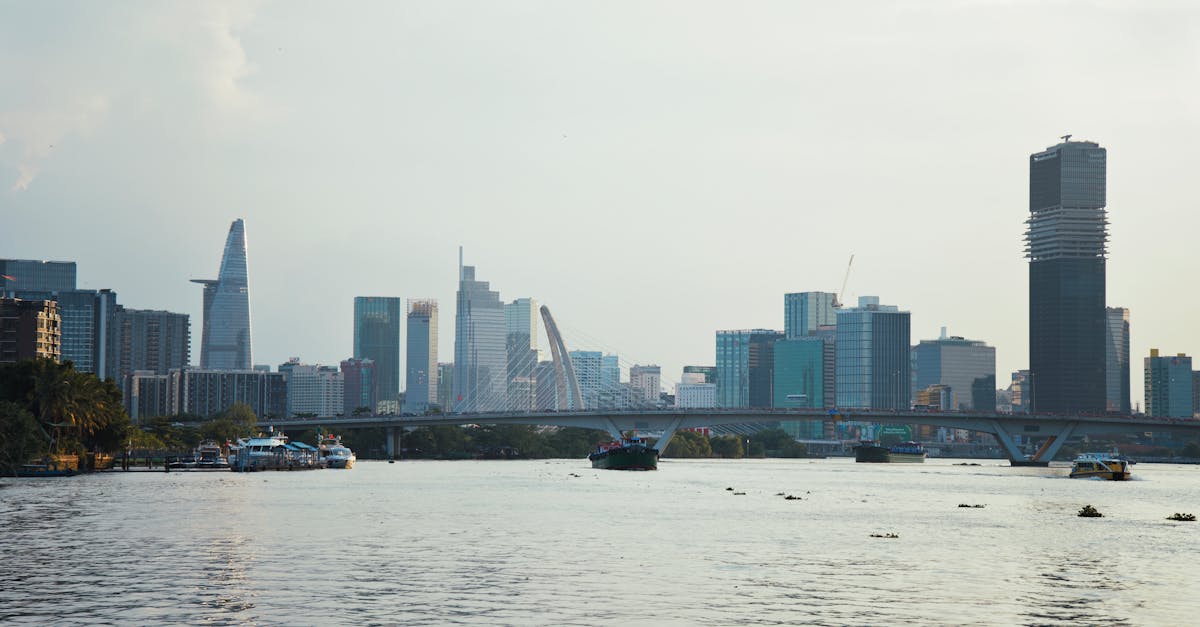
Cross the Saigon River to Thu Thiem, the massive development district on the river's east bank. The area is still largely under construction, but the completed Thu Thiem Bridge and the emerging Thu Thiem Central Park offer the best views of the District 1 skyline — especially at sunset when the Bitexco Tower and Landmark 81 catch the last light.
The area around Thu Thiem 2 Bridge (completed 2022) has become a popular evening hangout for young Saigonese — families picnic on the riverbank, couples take selfies against the skyline, and street vendors sell corn, squid, and drinks. It's an unpolished, authentic scene that feels a world away from the tourist areas across the water.
Take a Grab bike across the bridge — the ride itself, sweeping over the river with the city lights reflected below, is worth the VND 15,000 fare. The area is changing fast — within five years it will be Saigon's new commercial center. See it now while it still has the frontier energy of something unfinished.
3. Thinh Hao Pottery Street
Tucked away in District 6, Thinh Hao is a quiet residential street where pottery workshops have operated for generations. The area produces traditional Vietnamese ceramics — bowls, vases, teapots, and decorative pieces — using techniques that haven't changed in decades.
You can watch artisans shape clay on foot-powered wheels, paint intricate designs by hand, and fire pieces in wood-burning kilns. Unlike the mass-produced souvenirs at tourist markets, the pottery here is genuine craft. Prices are a fraction of what you'd pay in District 1: a hand-painted bowl costs VND 30,000-50,000, a decorative vase VND 100,000-200,000.
The workshops don't have formal opening hours — they work when there's work to be done. Visit on a weekday morning for the best chance of seeing artisans at their wheels. A few workshops offer informal hands-on sessions if you ask politely — there's no set price, but VND 100,000-200,000 as a gesture of thanks is appropriate.
4. Saigon River Sunset
The Saigon River waterfront in District 1, particularly the stretch from the Majestic Hotel to the Bach Dang Wharf area, is one of the city's most pleasant evening walks and surprisingly few tourists discover it. The riverside promenade has been recently renovated with lighting, benches, and greenery.
For a budget river experience, take the Bach Dang ferry across to Thu Thiem (VND 5,000 per person) — a 5-minute ride that gives you river-level views of the skyline. The ferry runs until 9 PM and is used almost exclusively by locals commuting by motorbike.
For something more elaborate, sunset river cruises depart from Bach Dang Wharf (VND 200,000-400,000 per person for a 2-hour cruise with dinner). The budget option is to simply buy a beer from a riverside vendor (VND 15,000), sit on the wall, and watch the cargo ships and speedboats pass against the sunset. Free, atmospheric, and perfect.

5. Apartment Cafe Culture
The Cafe Apartments on Nguyen Hue are the most famous example, but Saigon's apartment cafe culture extends across the city. Vietnamese entrepreneurs have been converting old residential apartments into cafes, bars, and galleries throughout Districts 1 and 3, creating a hidden layer of experiences invisible from street level.
Boo Coffee on Ly Tu Trong (third floor of a residential building) has a terrace overlooking the Saigon Opera House. Cafe RuNam occupies a gorgeous renovated colonial apartment on Mac Thi Buoi with ceiling fans, antique furniture, and coffee served in ceramic drip filters (VND 55,000). L'Usine on Le Loi combines a cafe with a design concept store in a converted factory space — their lunch sets (VND 150,000) are excellent.
Finding these places is half the adventure. Look for small signs at building entrances, or search Google Maps for "cafe" in any District 1 or District 3 alley. The buildings often look abandoned from outside — buzzing with life inside.
More Under-the-Radar Spots
Tao Dan Park Morning Bird Market
Every morning from 6-8 AM, elderly men gather in Tao Dan Park with their caged songbirds, hanging them in the trees and listening to them sing. It's a competition of sorts — whose bird sings the most beautifully. The atmosphere is peaceful and distinctly Saigonese. Completely free, and the park's banyan trees and tamarind canopy provide welcome shade. Bring a ca phe sua da from a nearby vendor and sit among the bird enthusiasts.
Binh Tay Market
While tourists crowd Ben Thanh, Binh Tay Market in Cholon (District 5) is the real working market. This massive wholesale market has operated since 1928 in a beautiful yellow colonial building around a central courtyard. Prices are 30-50% lower than Ben Thanh, bargaining is gentler, and the food stalls serve authentic Chinese-Vietnamese dishes like hu tieu and dim sum at local prices.
District 2 (Thao Dien)
Across the river, Thao Dien is Saigon's expat neighborhood with tree-lined streets, excellent brunch spots, craft breweries, and weekend farmers' markets. The Deck has riverside dining. Heart of Darkness serves craft beer (VND 90,000-120,000). It's a completely different Saigon — quieter, greener, and international.

Saigon rewards the curious. Every alley has a story, every apartment building has a surprise, and every neighborhood has a rhythm that takes time to hear. Go deeper.
Hidden Dining
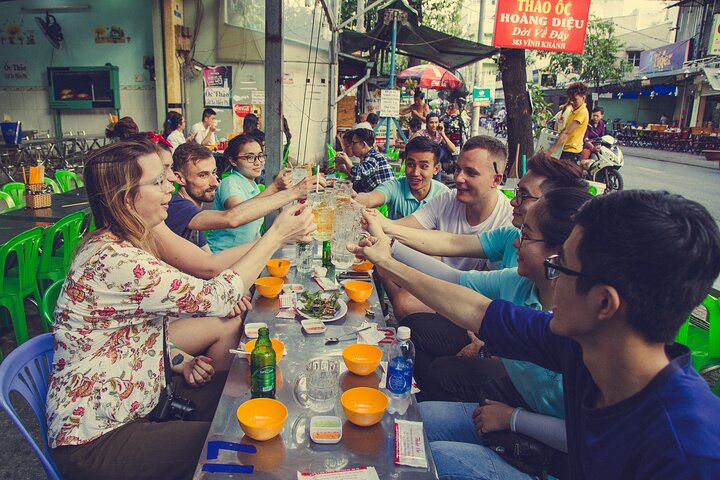
Ho Chi Minh City's best food is almost never found at street level on a main road. The city's most memorable meals happen in places that require a little navigation — an alley number, a staircase, a gate that looks residential. These are the spots locals bring their own families to celebrate, not restaurants that have optimised for TripAdvisor rankings.
Banh mi Huynh Hoa on Le Thi Rieng in District 1 is the acknowledged king of Saigon's banh mi scene and the queue outside proves it. A single sandwich (VND 35,000-45,000) is stuffed so generously with pâté, cold cuts, pickled daikon, fresh chilli, and coriander that it barely closes — arrive before 8 AM or after 3 PM to skip the longest queues. Across town in District 3, Banh Mi 37 Nguyen Trai operates from a window in a residential alley and has been feeding the neighbourhood since the 1970s for VND 20,000 per sandwich. The price difference is the address, not the quality.
For pho, skip the tourist-facing chains and find Pho Hoa Pasteur on Pasteur Street (District 3). Open since 1960, this institution serves a clear, deeply flavoured northern-style broth with rice noodles and your choice of rare beef, well-done beef, or tendon for VND 70,000-90,000. The broth simmers overnight using beef bones, star anise, ginger, and cinnamon — the aromatics are balanced with decades of refinement. Arrive at 6:30 AM when the broth is freshest and the regulars are deepest in conversation.
Cuc Gach Quan on Dang Tat Street in District 1 occupies a converted colonial townhouse and serves southern Vietnamese home cooking — braised pork with eggs in clay pot (VND 120,000), stir-fried morning glory with garlic (VND 60,000), and caramelised fish in a claypot (VND 140,000) — in an atmosphere that feels like dining in a grandmother's living room. Reservations essential; they fill every night by 7 PM. For late-night eating, Nguyen Phi Khanh Street in District 1 hosts a cluster of com tam (broken rice) stalls open until 2 AM, where a plate of grilled pork, broken rice, fried egg, and pickled vegetables costs VND 40,000-60,000 and feeds like a full meal.
For dessert, Saigon's che stalls serve Vietnamese sweet soups — combinations of coconut milk, mung bean, pandan jelly, taro, lotus seeds, and shaved ice that vary by stall and season (VND 15,000-30,000 per bowl). Find Che Khuc Bach on Thi Sach Street in District 1, a famous spot specialising in almond jelly with longan and coconut cream that draws queues of locals most evenings. It looks like nothing from outside — a narrow doorway into a tiled room with plastic stools. The dessert bowl it produces is extraordinary.
Ready to explore? Find hotels across Saigon's districts on JustCheckin.