
Xi'an is one of the most rewarding first stops in China — the walled historic core is compact and navigable, the Muslim Quarter provides one of the world's great street food experiences, and the Terracotta Warriors are genuinely as extraordinary in person as their reputation suggests. But first-timers face a specific set of practical challenges unique to China: a digital payment ecosystem built around apps most tourists haven't set up, a firewall that blocks many familiar Western services, and cultural etiquette around the Muslim Quarter's Hui community that isn't covered in most mainstream guides. This guide addresses those challenges directly, so your first day in Xi'an is orientation rather than frustration.
Before You Arrive
China requires most international visitors to hold a valid visa before arrival, with a small number of nationalities qualifying for visa-free entry of 15 days (including several European countries under bilateral agreements expanded in 2023-2024). Check the Chinese embassy website for your nationality at least six weeks before travel. Standard tourist visas (L-class) are issued for 30-90 days, single or double entry. The application requires a completed form, passport photos, proof of onward travel, and hotel booking confirmation. Processing takes 4-7 business days at most Chinese embassies and consulates.

Alipay Tourist Edition is the single most important thing to set up before leaving home. China's cashless economy has largely replaced physical cash, and Alipay's international version allows foreign credit and debit cards (Visa, Mastercard) to be linked and used as a payment method at tens of millions of Chinese merchants — including street food stalls, metro ticket machines, small restaurants, and tourist attractions. Download Alipay, select "International Edition" or "Tourist Edition," and link your foreign card. Verify the setup actually works before traveling. WeChat Pay's international function is the alternative but Alipay is currently more widely accepted. Without one of these, you will need cash for many transactions and will lose access to significant portions of the economy.
VPN: Google Maps, Gmail, WhatsApp, Instagram, and most Western social platforms are blocked in mainland China. Download and pay for a VPN service before leaving your home country — VPN apps cannot be downloaded from inside China. ExpressVPN, Astrill, and NordVPN all have functional China server options. Test the VPN's China performance before you travel. Even with a VPN, connections can be slow; download offline Google Maps data for Xi'an before you arrive.
Cash: Carry CNY 500-1000 in cash for situations where mobile payment fails or isn't accepted. Bank of China and ICBC ATMs generally accept international Visa and Mastercard. Airport exchange rates are poor; exchange a small amount at the airport for immediate needs and use ATMs in the city for the rest. The CNY exchange rate is fixed daily by the People's Bank of China and doesn't vary significantly between legitimate exchange points.
Getting from the Airport/Station
Xi'an Xianyang International Airport (XIY) is 47 kilometers northwest of the city center. Four transport options serve the journey into town, ranging from CNY 6.5 to CNY 200+.

Metro Line 14 is the newest and cheapest option: CNY 6.5, approximately 50 minutes to Fengdong New Town, where you transfer to Metro Line 1 for the city center. The transfer adds 15-20 minutes and a second fare (CNY 2-4 depending on destination). Total journey time including transfer: 75-90 minutes. Metro trains are clean, air-conditioned, and run from approximately 6 AM to 11 PM. Bags up to standard luggage size are permitted on all Metro lines.
Airport Bus Line 4 departs every 20 minutes from outside the international arrivals hall and terminates at the Bell Tower area in central Xi'an. Fare: CNY 30. Journey time: 70-80 minutes under normal traffic conditions, up to 100 minutes during rush hour (7-9 AM, 5-7 PM). The bus stops at key central locations and is useful if your hotel is near Bell Tower or the Muslim Quarter, saving you the metro transfer.
Taxi: The metered taxi rank is outside arrivals. A legitimate metered cab to central Xi'an costs CNY 100-150 and takes 45-60 minutes. Reject any offer from touts inside the terminal offering fixed-price rides — these charge 2-3 times the metered rate. Only use the official taxi queue.
High-speed rail: If you're arriving from Beijing, Shanghai, or Chengdu, trains arrive at Xi'an North Station or Xi'an Station. Xi'an North Station is on Metro Line 2, a direct 30-minute ride to Bell Tower station (CNY 4). Xi'an Station (the older city-center terminus) is within walking distance or a short taxi ride from most walled-city accommodation.
Getting Around the City
Xi'an's walled city center is small enough that many first-timer sights are walkable from each other. The Bell Tower sits at the geographic and cultural center; the Muslim Quarter is a 10-minute walk north; the South Gate and city wall are a 15-minute walk south. For destinations further afield — the Big Wild Goose Pagoda, the Terracotta Warriors, or Xi'an North Station — metro and bus are the practical options.
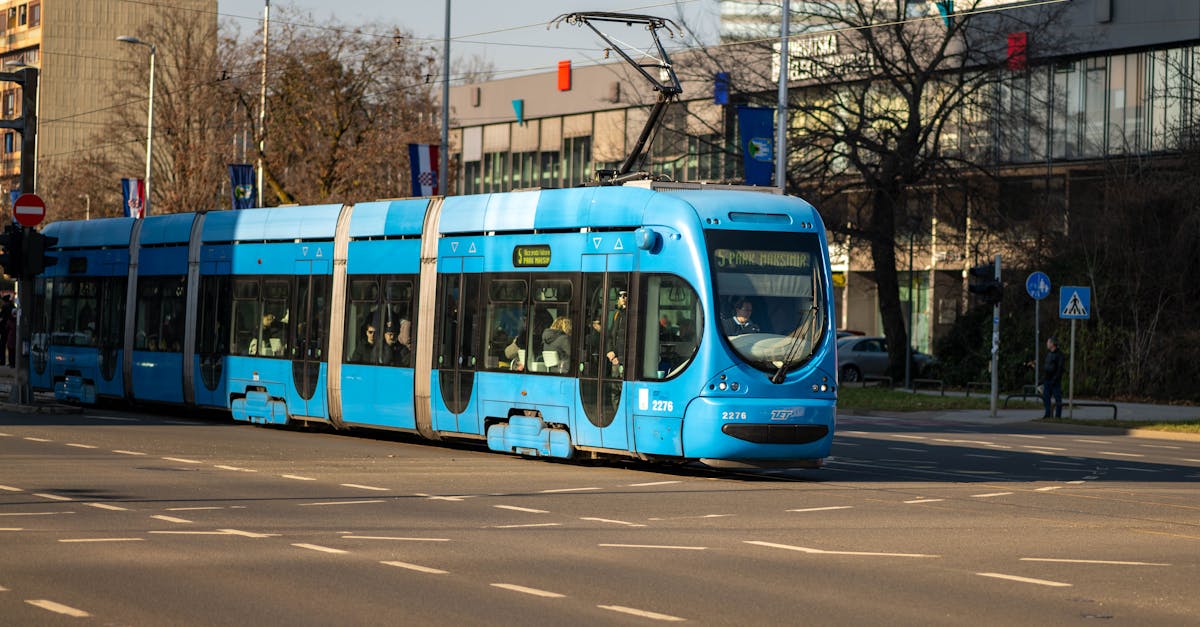
Metro: Five lines currently operate, with Line 1 (east-west through the walled city) and Line 2 (north-south, connecting Xi'an North Station to the city) being the most useful for tourists. Fares are CNY 2-6 based on distance. A rechargeable Yikatong transit card (CNY 20 deposit, refundable at trip end) earns small discounts and avoids queuing for tickets. Machines at every station dispense single-journey tickets with an English-language option.
Buses: Xi'an's bus network is extensive and cheap (CNY 1-2 per trip) but requires either a transit card or the exact change, and routes are primarily labeled in Chinese. Google Maps (with a VPN) or Baidu Maps works well for bus navigation. The most important tourist bus route is Bus 306 from Xi'an Railway Station to the Terracotta Warriors Museum — CNY 7, departing every 20-30 minutes.
DiDi: The dominant ride-hailing app works reliably in Xi'an. Download DiDi, register with an international phone number or your Chinese-linked Alipay account, and you can book taxis and private cars across the city with upfront pricing and an English interface. Rides within the walled city: CNY 12-25. To the Big Wild Goose Pagoda: CNY 20-35. DiDi drivers in Xi'an generally don't speak English, but the app handles all communication.
Cycling: The city wall is the highlight cycling experience — bicycle rental at the wall entrance costs CNY 45 for 1.5 hours and the complete 13.7-kilometer circuit is flat and paved. Mobike and Hellobike shared bicycle apps operate in Xi'an for city-level cycling (CNY 1.5 per 30 minutes).
Where to Base Yourself
Xi'an's historic walled city contains three distinct neighborhoods worth considering as a base, each with its own character and practical trade-offs.

Muslim Quarter / Huimin Street Area: The most atmospheric choice for first-timers who want total immersion in Xi'an's street food culture. The neighborhood is dense, lively, and loud — especially on weekends when Beiyuanmen Street turns into a continuous food market. Budget hostels like Hantang International Youth Hostel sit right in the center; mid-range guesthouses run CNY 280-450 per night. The area is almost entirely walkable to the Bell Tower, Great Mosque, and Drum Tower. The trade-off is noise — if you're a light sleeper, ask for a room facing away from the main street.
South Gate / Shuyuan Area: Quieter and better organized than the Muslim Quarter, with more mid-range hotels and the excellent Shuyuan Youth Hostel. The South Gate (Yongning Gate) is Xi'an's most beautiful city wall entrance and is a five-minute walk from accommodation here. This area places you close to the Forest of Steles Museum and the south wall cycling access. Mid-range hotels run CNY 350-600 per night. Better for those who want solid sightseeing logistics without the nighttime noise.
Bell Tower / Dong Dajie: The commercial center of the walled city, with the full range of hotels from budget guesthouses (CNY 200-300) to branded mid-range options like the Holiday Inn Xi'an (CNY 450-700). This is the most central location — metro Line 1 and 2 interchange at Bell Tower station, making onward travel in every direction straightforward. The area is commercial rather than atmospheric, but the logistics are hard to beat for first-timers who want to see the whole city.
Local Culture & Etiquette
Xi'an's Muslim Quarter requires specific cultural awareness that most travel guides underemphasize. The neighborhood is home to approximately 20,000 Hui Muslims — ethnic Chinese who practice Islam — and the community has maintained continuous religious and cultural traditions in this quarter for over 1,200 years. This is an actively religious neighborhood, not a theme park re-creation of historical culture.

Food etiquette: The Muslim Quarter is predominantly halal. Pork and alcohol are absent from virtually every stall and restaurant in the core of the neighborhood. If you want pork dishes (like the non-halal version of rou jia mo), you'll find them outside the quarter. Don't ask Muslim Quarter vendors to accommodate non-halal preferences — this is their religious practice, not an oversight. The lamb, beef, and chicken options are excellent and the food culture is richer for this specialization.
Great Mosque of Xi'an: Entry to the mosque (CNY 25) comes with a dress code. Shoulders and knees must be covered for all visitors regardless of gender. The mosque is a working place of worship; five daily prayers happen on schedule. During prayer times — particularly Friday afternoon jumu'ah prayer — non-Muslim visitors should wait quietly outside the prayer hall or step away entirely. Photography inside the main prayer hall is generally prohibited; the courtyard and pavilions may be photographed without flash. Ask before photographing local worshippers.
During Ramadan: The Muslim Quarter observes Ramadan with noticeable changes — many stalls reduce daytime hours or close until after sunset. The neighborhood comes alive at iftar with extraordinary energy. If you're visiting during Ramadan (check the lunar calendar for dates), eating or drinking in front of fasting vendors during daylight hours is considered disrespectful. Simply wait until you're out of the quarter to eat or drink during daytime Ramadan hours.
Photography: Street photography is generally accepted and many vendors enjoy it, but always acknowledge people before pointing a camera at them. A smile and a brief pantomimed "may I?" gesture is universally understood. The Muslim Quarter's women, many of whom wear hijab, should be photographed only with clear permission.
Common Mistakes to Avoid
Skipping Alipay or WeChat Pay setup before arrival. This is the most common and most avoidable problem first-timers face in China. Without mobile payment, you cannot pay at the majority of street food stalls, many restaurants, ride-hailing apps, or transit machines. Cash covers some gaps but not all. Set up one of these apps with a foreign card before departure — the 30 minutes invested saves days of frustration.
Booking the Terracotta Warriors without advance tickets. The museum enforces daily visitor caps. Walk-up same-day tickets are available but the queue during peak season (April-October) can mean 60-90 minutes of waiting before you even enter. Book online through the official Qinshihuang Mausoleum website or Trip.com at least two days ahead. Tickets are CNY 120 and don't vary in price between booking platforms.
Going to the Muslim Quarter for dinner on a Saturday night without a plan. It will be extraordinarily crowded. The Lao Sun Jia restaurant for yangrou paomo has queues exceeding an hour on weekend evenings. Either arrive before 5:30 PM for an early dinner, visit on a weekday, or accept the wait as part of the experience. The food is worth it but the confusion of not knowing how long you'll wait makes the evening chaotic.
Taking a taxi to the Terracotta Warriors. It costs CNY 80-120 each way, versus CNY 7 on Bus 306. The taxi doesn't arrive significantly faster and the bus stop at Xi'an Railway Station is well-signed. Some taxi drivers outside the station attempt fixed-price deals for tourist sights — always insist on the meter or use DiDi.
Forgetting that Google Maps doesn't work without a VPN. If your VPN connection drops inside China, you're suddenly without navigation. Download offline maps for Xi'an on Google Maps before travel. Alternatively, Baidu Maps works without a VPN and has reasonable English-language support. Amap (Gaode) is what most locals use.
Bringing only credit cards and no cash. Despite China's largely cashless economy, older establishments, rural day trips, and some traditional vendors only accept cash. Carry CNY 300-500 at all times for emergencies, small transactions, and situations where your payment app fails due to connectivity issues (which happen).
Underestimating the Terracotta Warriors site's size. The museum covers three separate excavation pits, a bronze chariot vault, and multiple exhibition halls spread across a large site. Budget at least 3-3.5 hours and bring water. The walk from the main entrance to Pit 1 alone is 600 meters. Comfortable walking shoes matter more here than anywhere else in Xi'an.


