
First-time visitors to Mykonos typically arrive expecting glamour and leave having received it — along with a level of expense, noise, and social intensity that the island's promotional imagery almost never conveys. This is Greece's party island, the Aegean's answer to Ibiza, and one of the world's most LGBTQ+-friendly destinations, all wrapped in a white-cubic Cycladic village that genuinely looks like every photograph you have seen of it. The challenge for the first timer is not finding beauty — it is everywhere — but navigating an island whose pricing, logistics, and seasonal personality vary so dramatically that arriving unprepared can transform a dream trip into an expensive, over-heated, and over-crowded ordeal. Arrive knowing what you are walking into and Mykonos rewards handsomely.
Before You Arrive
Greece is a full Schengen Area member state. Citizens of EU/EEA countries, the USA, Canada, Australia, New Zealand, Japan, South Korea, and most developed nations enter visa-free for stays up to 90 days within any 180-day period. Passport holders from countries not on the Schengen visa-waiver list must apply for a type C short-stay Schengen visa through the Greek embassy or consulate in their home country, ideally 6-8 weeks before travel. The fee is EUR 80. From 2025, EU Entry/Exit System (EES) biometric registration applies to non-EU nationals at border crossings — allow additional time at ferry terminals and airports.

Greece uses the Euro (EUR). Mykonos is heavily cash-dependent in the lower end of the market — gyros counters, local bakeries, bus tickets, and many smaller accommodation operations operate primarily on cash. ATMs are available in Mykonos Town but can run low during August peak weekends when the island's population swells to several times its normal level. Withdraw EUR 150-300 in cash from a mainland bank or the airport before arriving, and carry it in a money belt rather than a wallet in the beach club crowds.
For mobile data, a Greek prepaid SIM card (Cosmote, Vodafone GR, or Wind Hellas) costs EUR 10-15 for a data-and-calls package and is available at Athens Airport, the Piraeus ferry terminal, or at shops in Mykonos Town. Coverage across the island is generally strong. EU-registered SIMs roam on Greek networks at no extra cost under EU roaming regulations. Non-EU visitors from the UK, USA, and other countries should verify international roaming charges before relying on their home SIM.
The critical pre-arrival decision is seasonal timing. July and August bring Mykonos to its most extreme form: peak prices across all categories, beach clubs operating at maximum capacity, nightclubs running until 7am, and a social atmosphere orientated entirely around the party scene. This is the version of Mykonos that the island is globally famous for, and it is simultaneously the most expensive and most intensely social time to visit. June and September offer the same Cycladic landscape and warm Aegean sea with prices 25-35% lower, smaller crowds, and a slightly more balanced atmosphere. May and October are quieter still — some beach clubs close, the nightlife contracts, but the island's physical beauty is undiminished and the budget goes significantly further.
Mykonos is one of Europe's most established LGBTQ+-friendly destinations, with a visible and celebrated queer community that concentrates particularly around Mykonos Town and the southern beaches. Pride events, dedicated venues, and an inclusive atmosphere are year-round features, though the peak of LGBTQ+ travel coincides with the July-August high season.
Getting from the Airport/Port
Mykonos is served by JMK Airport, located on the island's northern edge approximately 3 kilometres from Mykonos Town. The airport is a busy, seasonal facility that handles both domestic Greek connections and a significant volume of direct international charter and scheduled flights in summer. Arrivals should expect terminal congestion in July and August, with queues at both baggage claim and the taxi rank extending 30-45 minutes during peak arrival windows.

The most affordable ground transport from the airport is the public KTEL bus to the Fabrika terminal in Mykonos Town (EUR 1.80, 15 minutes, departures roughly every 45-60 minutes in peak season). The bus stop is directly outside arrivals. This is the correct option for travellers without large amounts of luggage arriving during daytime hours. In peak season, the bus can be crowded with arriving passengers sharing the route with beach-bound local traffic.
Official airport taxis operate from the designated rank outside arrivals (EUR 20-25 to Mykonos Town, fixed rate). Despite the cost premium over the bus, taxis are the practical choice for anyone with significant luggage, travelling as a couple or group (the fixed fare splits easily), or arriving late at night when bus frequency drops. Pre-book if arriving on a late evening flight in peak season — the taxi rank can be depleted by demand at busy times.
Travellers arriving by ferry will dock at either the Old Port (central, within walking distance of Mykonos Town) or the New Port at Tourlos, 2 kilometres north of the town centre. The New Port is served by bus (EUR 1.80 to the old port area) and by taxis (EUR 8-10). Fast ferries from Athens and other Cyclades typically use the New Port; slower conventional ferries sometimes dock at the Old Port. Your ferry booking confirmation will specify the arrival port — check this detail before disembarking to orient yourself correctly.
Getting Around
Mykonos's bus network, operated by KTEL, is the backbone of affordable island transport. The system runs from two terminals in Mykonos Town — the Fabrika terminal on the south side of town for southern and eastern destinations, and the Old Port terminal on the north side for northern beaches and Ano Mera. Bus tickets cost EUR 1.80-2.50 depending on route length and are purchased from the driver or from the KTEL offices at each terminal. In peak season (July-August), services run from approximately 8am to midnight with 20-45 minute frequencies on the main routes.

The southern routes from Fabrika are the most used: Platis Gialos (EUR 2, 15 minutes), Paraga and Paradise Beach (EUR 2, 20 minutes), Psarou (EUR 2, 20 minutes), and Kalafati (EUR 2.50, 25 minutes). The northern route from the Old Port terminal serves Agios Stefanos (EUR 1.80), Tourlos, and Ano Mera village (EUR 2, 20 minutes). The bus schedule is published on the KTEL website and posted at each terminal; in shoulder season the frequency drops significantly after 8pm.
Renting a quad bike or small ATV (EUR 25-45 per day) provides the most flexible island exploration — connecting beaches, visiting the interior, and managing early-morning arrivals before the buses fill up. This is how most independent travellers explore Mykonos beyond the main bus routes. Ensure the rental includes basic insurance, confirm whether the quoted rate covers damage beyond the excess, and wear the provided helmet. The roads are narrow and the traffic in July-August is chaotic in a way that catches off-guard visitors who are accustomed to broader roads.
Water taxis operate from the Old Port to Ornos, Platis Gialos, and Paradise Beach — scenic but significantly more expensive than the land bus (EUR 8-15 per person). Worth considering for a single scenic crossing; not an economical daily commute. Private boats can be chartered for full-day island circumnavigation trips (EUR 250-500 for a full boat shared among a group), which is among the finest ways to see the island's coastal geography, sea caves, and surrounding islets.
Where to Base Yourself
Mykonos's geography divides into four distinct zones, each with a different character, price level, and practical profile. First timers should choose based on their primary purpose for visiting.
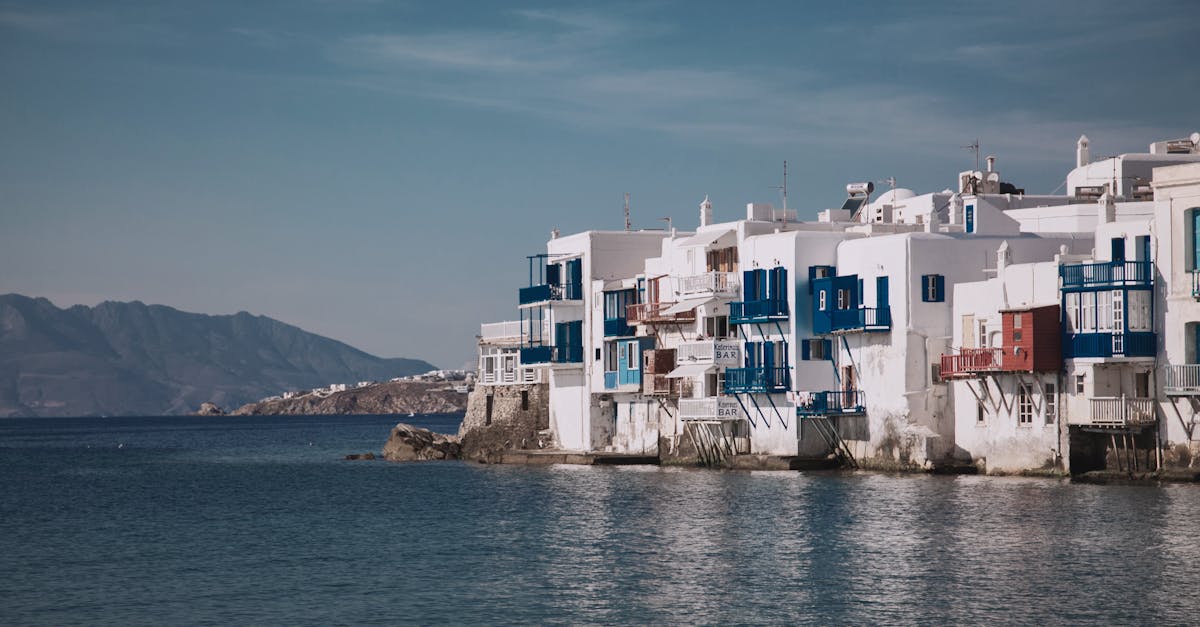
Chora / Mykonos Town (hotel doubles from EUR 100-150 in shoulder season, EUR 250-500+ in July-August) is the right base for visitors whose priority is the iconic Cycladic architecture, the restaurant and bar scene, and the cultural sights — the windmills, Little Venice, the Archaeological Museum, and the Church of Panagia Paraportiani. Staying in or immediately adjacent to Chora means every beach is a bus ride away and every notable restaurant is walkable. The tradeoff is noise: the main town runs loud from 11pm to dawn in high season. Request a room on a quiet street, not the main pedestrian thoroughfares.
Ornos (hotel doubles from EUR 90-160 in shoulder season) is the most family-friendly base — a calmer bay south of Mykonos Town with a genuine beach, water sports facilities, and a cluster of mid-range hotels set back from the water. The atmosphere is relaxed rather than party-orientated, bus connections to both Chora and the party beaches are regular, and the tavernas around the bay charge prices closer to local standards than the Chora tourist premium. Ideal for couples and families who want beach proximity without the nightlife intensity.
Paradise Beach area (Paradise Beach Camping EUR 20-60, nearby rooms EUR 80-140) is the base for visitors whose primary reason for coming to Mykonos is the party beach scene. The beach clubs, the campsite, and the backpacker accommodation here are all geared toward the all-day, all-night social experience. Proximity to the beach club is the main advantage; tranquillity is not on offer. This is the right choice for a 3-4 day visit focused specifically on the beach party culture for which Mykonos is internationally known.
Ano Mera village (rooms from EUR 50-80 in season) is the budget-conscious and authentically local alternative — the inland village 8 kilometres from the coast where the island's permanent population concentrates. No beach, but regular bus access to Mykonos Town, lower prices across accommodation and food, and a genuine village atmosphere that offers a counterpoint to the coastal tourism economy. Suited to travellers combining Mykonos with a wider Greek island itinerary who want to avoid the island's most expensive elements.
Local Culture & Etiquette
Mykonos is both a Cycladic Greek island with a thousand years of Orthodox Christian and Aegean maritime culture, and a globally famous party destination whose July-August identity is largely constructed for international visitors. Both versions coexist throughout the year, but the balance shifts dramatically with season. Understanding this duality — and respecting the permanent community that lives under the weight of its own island's fame — is the foundation of good visitor conduct.

The island's permanent population of approximately 10,000 rises to an estimated 100,000+ in peak summer. The local community concentrates in Ano Mera, the outer residential lanes of Chora, and the island's working infrastructure — fishermen, farmers, and service workers — whose daily life continues in parallel with the tourist economy but often invisible to visitors who spend their days between beach clubs and bars. Engaging with the local economy — eating at the Ano Mera tavernas, shopping at the old port's fish market, attending a service at one of the island's many chapels — creates a richer experience and supports the community directly.
The Orthodox Christian calendar structures the island's religious year in ways that occasionally intersect with tourist activity. The feast of the Assumption (August 15th) is a major religious holiday across Greece, including Mykonos, with a procession and service at the main church in Chora. Several of the island's smaller chapels — Mykonos has an extraordinary number, reportedly one for every family that built one in historic times, totalling over 400 — celebrate name-day festivals throughout the summer with music, food, and community gatherings that visitors are generally welcome to observe respectfully.
Dress codes within churches require covered shoulders and knees regardless of the heat outside. Wandering through Chora's lanes in beachwear is common practice and largely tolerated in the commercial areas, but entering a church, taverna with formal service, or residential neighbourhood in swimwear is considered disrespectful. Carry a light scarf or sarong for easy compliance.
Mykonos's status as a major LGBTQ+ destination creates an atmosphere of visible inclusivity that is, in the context of Greek island culture generally, unusually liberal and well-established. This is a feature rather than a novelty — the island has been an LGBTQ+ gathering place since the 1970s and the community is deeply embedded in the social fabric. Visitors of all orientations and identities are welcomed with equal commercial enthusiasm by the island's hospitality industry.
Common Mistakes to Avoid
Assuming Mykonos is just another Greek island. The expectations appropriate to Santorini, Crete, or Rhodes — moderate prices, quiet evenings, family tavernas — do not transfer. Mykonos in peak season is an international nightlife destination with pricing to match. A cocktail costs EUR 16-25. A beach sunbed at a top club runs EUR 30-80. A dinner for two at a mid-range restaurant in Chora is EUR 80-120 with wine. Arrive with a realistic budget or arrive in shoulder season. Arriving with Santorini-level budget expectations in August leads to either financial stress or disappointment.
Not booking in advance for July-August. The island's most popular accommodation sells out weeks in advance for peak-season dates. Ferry tickets on the fast Seajets and Golden Star services from Athens fill for weekend departures. Beach clubs at Paradise and Super Paradise often require reservation for their premium sunbed sections. The visitors who describe Mykonos as chaotic are almost invariably those who arrived without pre-booking anything. Reserve accommodation, ferries, and one or two restaurant dinners at minimum 4-6 weeks ahead for any July-August travel.
Visiting only the party beaches and missing Chora's depth. Mykonos Town is genuinely one of the most beautiful Cycladic settlements in the Aegean, with an archaeological museum, extraordinary church architecture, and the historic Kastro quarter that rewards several hours of unhurried exploration. Visitors who spend their entire stay commuting between Paradise Beach and the Fabrika bus stop miss the island's actual character. Dedicate at least one full morning to walking Chora — before 10am, before the cruise ship day-trippers arrive and the lanes fill with shopping traffic.
Taking a taxi when the bus route covers the same journey. The official taxi system on Mykonos is expensive relative to the bus for single-person travel: EUR 10-15 for journeys the bus covers for EUR 2. Solo travellers and couples who reflexively reach for taxis accumulate significant unnecessary spending over a 4-5 day stay. Use the bus for all daytime beach runs and the taxi only for late-night returns after the buses stop.
Spending money at Super Paradise without understanding the pricing structure. Super Paradise Beach is the island's most famous beach club destination but operates on a mandatory sunbed hire model — there is effectively no public sand section. Entry costs EUR 20+ in the form of compulsory sunbed hire, and drinks cost EUR 12-25 each. This is fine as a one-time experience if budgeted for explicitly. Arriving at Super Paradise expecting a free public beach is a common and expensive mistake for first timers who haven't researched the specific commercial model of each beach.
Underestimating the Meltemi wind's effect on swimming conditions. The strong northerly wind that blows across the Aegean from late June through August makes the northern and eastern beaches genuinely uncomfortable on high-wind days — rough water, sand in the face, and conditions unsuitable for casual swimming. The sheltered southern beaches (Platis Gialos, Ornos, Psarou) are calm even when the north is exposed. Check the wind forecast (windy.com is the most reliable tool) before choosing which beach to commit to for the day.
Ignoring Ano Mera village entirely. The single most authentically Mykonian experience available to tourists is a half-day spent in Ano Mera — lunch at a village taverna, a visit to the Monastery of Panagia Tourliani with its elaborately carved marble iconostasis, and a walk through the residential streets where the island's actual community life happens. The bus from Fabrika costs EUR 2 and takes 20 minutes. Visitors who never leave the coastal tourist circuit miss the island's genuine soul entirely.


