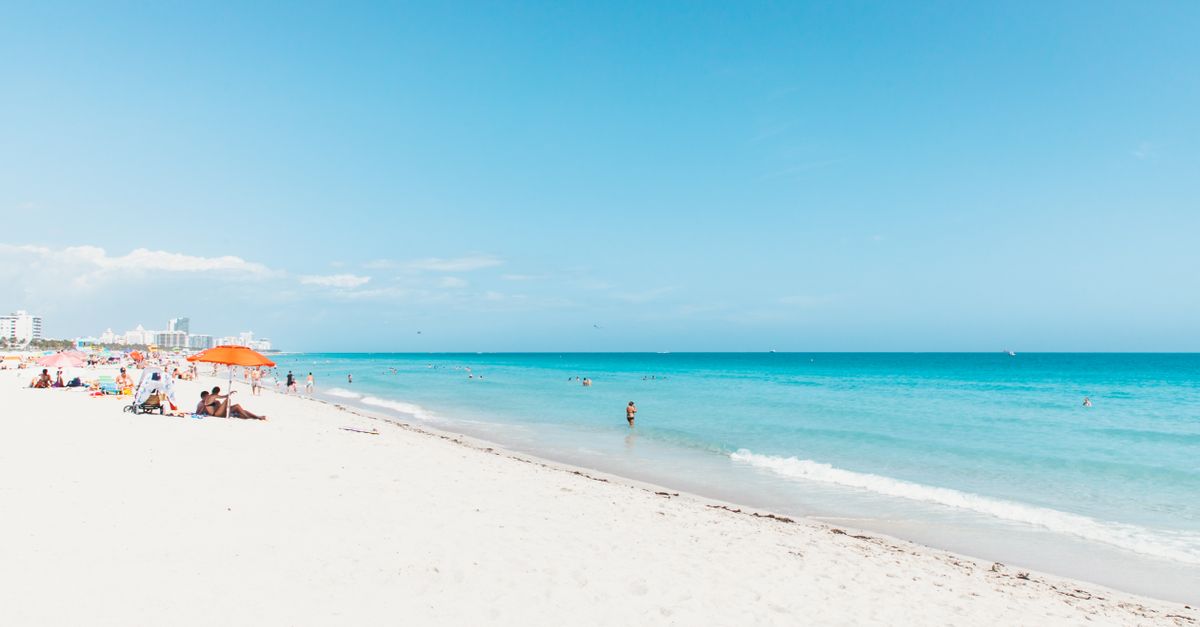
Miami hits first-time visitors with a sensory overload that no travel article fully prepares you for: the humidity that lands like a warm towel the moment you step off the plane, the collision of Latin American cultures on every block, the Art Deco architecture glowing pink and turquoise in the late afternoon sun, and the sheer scale of the beach. This is not a relaxing city in the way that, say, a small Caribbean island is relaxing — it has energy, noise, and ambition baked into its DNA. Understanding how it works before you arrive transforms Miami from an overwhelming spectacle into one of the most rewarding cities in the United States. This guide covers everything a first-timer needs: visas, weather, transport, neighborhoods, culture, and the mistakes that catch newcomers off-guard.
Before You Arrive
Visas and entry: Most visitors from Western Europe, Australia, Japan, South Korea, and 40+ other countries enter the United States under the Visa Waiver Program (VWP) with an ESTA authorization. ESTA is not a visa — it's an electronic travel authorization that must be applied for online at least 72 hours before departure (ideally weeks in advance). The fee is $21 per application. An approved ESTA allows stays of up to 90 days for tourism or business. Check the official ESTA website (esta.cbp.dhs.gov) — do not use third-party sites that charge $50–$80 for the same application.

Citizens of countries not on the VWP list must apply for a B-1/B-2 tourist visa at a US Embassy or Consulate. Wait times vary enormously by country — some are weeks, others are months. Apply as far in advance as possible. The visa fee is $185.
Currency: The US Dollar (USD) is the only currency. Miami is overwhelmingly cashless — credit and debit cards are accepted everywhere including street markets, food trucks, and transit. Visa and Mastercard are universally accepted; American Express has slightly less coverage. Notify your bank before travel to prevent fraud holds. ATMs are widely available; use bank ATMs (Chase, Wells Fargo, Bank of America) to avoid the $3–$5 surcharge on independent machines.
SIM card: Buy a prepaid US SIM on arrival from T-Mobile, AT&T, or Verizon. T-Mobile's $30 prepaid plan offers unlimited data for 30 days. Alternatively, buy an eSIM from providers like Airalo before departure — plans start at $7 for 1GB of US data. Miami has good 4G/5G coverage throughout the tourist areas. Free Wi-Fi is available at most cafés, the airport, and all hostels.
Climate awareness: Miami has two seasons: a dry season (November–April, 68–82°F, low humidity, ideal weather) and a wet season (May–October, 85–95°F, high humidity, daily afternoon thunderstorms). The wet season overlaps with Atlantic hurricane season (June 1 – November 30). Hurricanes are rare direct hits on Miami, but tropical storms and watches do affect the area, particularly August–October. Monitor the National Hurricane Center (nhc.noaa.gov) during this period. Travel insurance with trip cancellation coverage is strongly recommended for wet-season visits.
Getting from the Airport
Miami International Airport (MIA) is a large, somewhat confusing hub with three terminals connected by an internal people mover called the MIA Mover. Arrivals proceed through Customs and Border Protection in the main terminal — allow 30–75 minutes for immigration depending on flight volume and the time of day. Morning long-haul arrivals from Europe and Latin America land in waves and the queues can be long. CBP Mobile Passport and Mobile Passport Control apps can speed up processing for eligible passengers.

The cheapest option into the city is the MIA Mover + Metrorail combination. Take the free MIA Mover automated train from the MIA Mover Station (follow "MIA Mover" signs from baggage claim) to the Earlington Heights Metrorail station. Purchase a EASY Card or pay cash for the Metrorail ($2.25 per ride). The Metrorail Orange Line runs south through Brickell (for South Beach connections) and north through downtown. Total cost: $2.25 (Metrorail only, the MIA Mover is free). Journey time to downtown: approximately 35–45 minutes. Note: the Metrorail does not go directly to South Beach — from Brickell station, take the Miami Beach Connector bus ($2.25) across the causeway.
A standard taxi from MIA to South Beach or downtown Miami costs $35–$45. The fare is metered. All Miami taxis are regulated and metered — there are no licensed fixed-fare routes. Rideshares (Uber and Lyft) typically run $25–$40 depending on time of day. Both apps function well at MIA; designated rideshare pickup zones are on Level 2 of the garage near each terminal.
Do not accept offers from unlicensed drivers who approach you in arrivals halls. Miami has had historical issues with jitneys and unlicensed taxi operators overcharging tourists. Use metered taxis from the official taxi queue or book Uber/Lyft within the app.
Getting Around
Miami is a sprawling city of distinct neighborhoods connected by a patchwork of transit options, each with its own logic. Understanding which tool works for which area is the difference between navigating effortlessly and spending hours waiting at bus stops.

The Metrorail ($2.25) connects the airport, downtown, Brickell, Coconut Grove, and Coral Gables on two lines. It's clean, air-conditioned, and reliable — the backbone of public transit for visitors staying downtown or visiting Vizcaya. The Metromover is free and loops through downtown, Brickell Village, and the Omni district continuously. Use it freely for short downtown hops.
The Miami Beach Connector bus ($2.25) crosses the MacArthur Causeway between downtown Miami (Government Center) and Miami Beach multiple times an hour. The South Beach Local bus (Route 123) circulates the length of the Beach. Combined, these two routes cover the beach end of most visitors' itineraries without requiring a car.
Uber and Lyft are widely used throughout Miami and are the practical solution for trips that cross multiple zones or for late-night travel (public transit ends around 11pm–midnight). Prices are reasonable outside peak hours: $10–$18 for most intra-city trips. Surge pricing on Friday and Saturday nights between midnight and 3am can double or triple fares — set a budget limit in the app before confirming.
Citi Bike Miami docking stations are found throughout South Beach and Wynwood. Day passes cost $24; single rides are $4.50 per 30 minutes. For exploring South Beach or Wynwood at a leisurely pace, the bike is genuinely faster than buses and more enjoyable than an Uber.
Where to Base Yourself
Miami's neighborhoods each offer a radically different experience, and your base shapes your entire trip.

South Beach (SoBe) is where most first-timers stay, and the instinct makes sense: the beach, the Art Deco architecture, the restaurants, the nightlife, and the sheer cinematic quality of Ocean Drive are all here. It's the most tourist-dense area in Miami, which means inflated restaurant prices, heavy foot traffic on weekends, and the constant background noise of club music on Lincoln Road. Accommodation ranges from $50/night (hostel dorm) to $400+/night (boutique Art Deco hotel). Stay here if the beach is your priority and you want to walk everywhere.
Wynwood is Miami's arts district, centered on NW 2nd Avenue. It lacks a beach but compensates with the city's best restaurant and bar scene, the famous street art murals, and a younger, more creative energy. Accommodation options are fewer — primarily Airbnb apartments and a handful of boutique hotels — but prices are 20–30% lower than South Beach. Stay here if food, art, and nightlife matter more to you than beach access.
Little Havana (SW 8th Street corridor) is the cheapest base in Miami and the most culturally authentic. The Cuban community here has shaped Miami's identity since the 1960s, and staying in the neighborhood puts you close to the city's best affordable food. The beach requires a bus or rideshare (20–30 minutes), which is the tradeoff. Airbnb apartments in Little Havana run $65–$95 per night — genuinely good value.
Brickell is Miami's financial district — glass towers, rooftop bars, and a sophisticated urban feel. It's convenient for the free Metromover, close to Vizcaya, and well-served by Metrorail. Hotels here cater to business travelers and prices reflect that ($130–$220 per night for mid-range). A good base for visitors who want urban Miami with easy transit access rather than the beach-centric South Beach experience.
Local Culture & Etiquette
Tipping is not optional. The 20% tipping norm in the United States is more firmly established in Miami than almost anywhere else — service industry workers earn significantly below minimum wage and depend on tips to survive. The standard in Miami is 20% for sit-down restaurant service, 18–20% for bar service ($1–$2 per drink minimum), 15–20% for taxi and rideshare, and $2–$5 per bag for hotel porters. Some Miami Beach restaurants add an automatic 18% gratuity for international visitors — check your bill before adding an additional tip. If you find the automatic gratuity insufficient (many locals consider 18% low), add the difference to 20%.

South Beach culture and dress: South Beach is one of the most body-conscious environments in the US, and the culture reflects it. The beach itself operates on a simple principle: swimwear at the beach and pool, cover-up (shorts, sarong, dress) the moment you leave. Walking in a bikini top on Lincoln Road is fine; walking into a restaurant without a shirt is not. The city does not have formal dress codes in most casual settings, but the better Wynwood restaurants and rooftop bars operate "smart casual" standards on weekend evenings — neat, clean clothing rather than beachwear.
The Latin identity: Miami is a majority-minority city where Spanish is effectively a co-equal first language. Roughly 70% of Miami-Dade residents are Hispanic or Latino, predominantly Cuban-American. Attempting a few words of Spanish — "gracias," "por favor," "una cerveza, por favor" — is warmly received in Little Havana and throughout the city. Do not assume that every Spanish speaker is an immigrant — many Cuban-American families have been in Miami for three or four generations.
Alcohol: Florida's liquor laws are relatively permissive by US standards. Miami Beach allows open-container drinking in certain designated entertainment districts (the Entertainment District between 8th Street and the City of Miami Beach boundary). Alcohol is served at restaurants and bars until 5am in Miami Beach — one of the latest closing times in the continental US. The legal drinking age is 21; carry ID even if you are well over that age, as ID checks at bars are universal.
Common Mistakes to Avoid
Underestimating the heat and humidity. Miami in July is genuinely uncomfortable for visitors from temperate climates. The combination of 92°F heat and 85% humidity creates a real danger of heat exhaustion for people who aren't acclimatized. Drink water constantly (carry a refillable bottle — tap water is safe), limit outdoor activity between noon and 4pm, and don't plan walking-heavy days without factoring in midday rest. This is not an exaggeration: heat exhaustion sends hundreds of tourists to Miami emergency rooms each summer.
Eating every meal on Ocean Drive. The restaurant row facing the beach on Ocean Drive is one of the worst dining values in Florida. Mediocre food, aggressive sidewalk hosts, tourist-trap menus with inflated prices, and mandatory 18% service charges make it a reliable disappointment. Go once for the atmosphere, order a single drink, and eat your actual meals on Collins Avenue, Washington Avenue, or in a different neighborhood entirely.
Renting a car without checking parking costs first. Miami is car-centric by design, but South Beach parking is a legitimate financial shock: $3–$4 per hour at street meters, $25–$35 per day in beach-area garages. A four-day car rental that costs $60 on the booking site becomes $180+ after parking fees alone. Unless you're doing day trips to the Everglades or the Keys, the transit system handles most Miami Beach needs without a car.
Scheduling a packed itinerary without accounting for traffic. Miami traffic is notoriously bad, particularly on I-95 and the causeways during morning (7–9am) and evening (4–7pm) rush hours. A drive from Miami Beach to the airport that takes 20 minutes at 2pm takes 55 minutes at 5pm. Build transit time buffers into your schedule, especially for airport departures. Missing a flight because of Miami traffic is a well-documented tourist experience.
Forgetting sunscreen. Miami sits at 25 degrees north latitude — significantly closer to the equator than most of North America or Europe. UV index regularly hits 11+ (extreme) between May and September. Sunburn serious enough to ruin the rest of a trip occurs within 20–30 minutes of unprotected beach exposure at midday. Apply SPF 50+, reapply every 90 minutes in water, and do not skip this step because you tanned without burning last summer at home. Miami's sun is categorically different from northern latitudes.
Assuming everything closes early. Miami operates on a late schedule that surprises visitors from northern US cities. Dinner reservations before 8pm feel early to locals; the restaurants fill up between 8:30pm and 10pm. Bars on South Beach reach peak activity between midnight and 3am. Many venues don't have proper opening hours until 10pm or later. If you show up at 7pm expecting a lively atmosphere at a Miami Beach bar, you'll often find an empty room — the city starts two hours later than you expect.
Ignoring Wynwood and Little Havana. First-timers who spend their entire Miami visit on South Beach miss the two most culturally distinctive and locally beloved parts of the city. Wynwood's art scene and food culture and Little Havana's Cuban identity are what make Miami genuinely interesting — South Beach is the postcard version of the city, not the soul of it. Build at least one full day away from the beach into every Miami visit.


