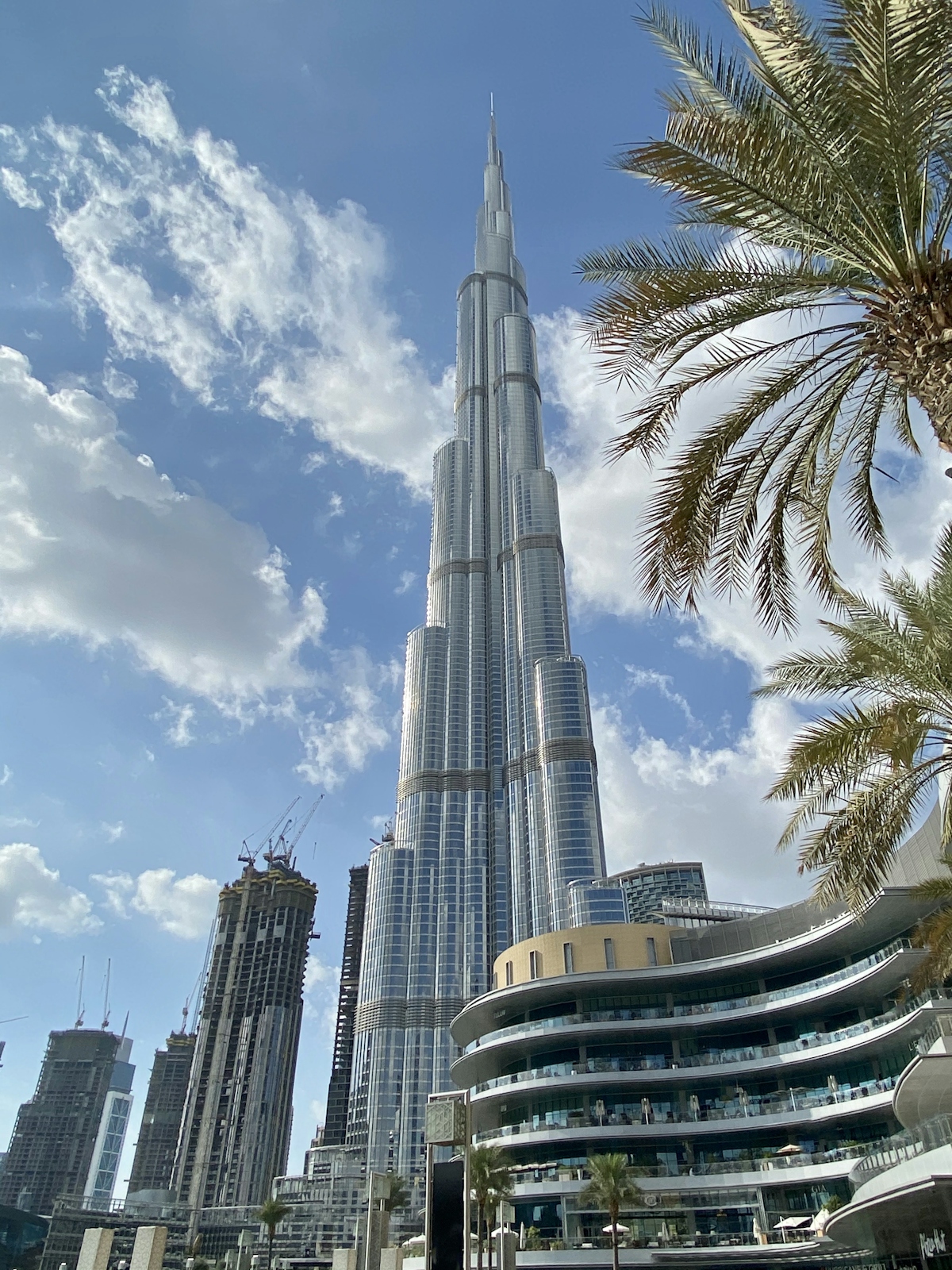
Dubai is a city that defies expectations at every turn. Rising from the Arabian Desert in barely half a century, it has transformed itself from a modest trading port into one of the most ambitious urban experiments on Earth — a place where the world's tallest building stands next to centuries-old souks, where artificial islands reshape the coastline, and where over 200 nationalities coexist in a city that somehow functions with remarkable efficiency.
But Dubai can also be overwhelming for first-time visitors. The distances are vast, the cultural norms are significantly different from what most Western visitors are used to, the heat can be genuinely dangerous for half the year, and the sheer number of things to do — from desert safaris to underwater dining to indoor skiing — makes planning feel impossible.
This guide strips away the marketing gloss and gives you everything you actually need to know before your first visit: the visa rules, the real costs, the neighborhoods that match your budget and style, the etiquette that will keep you comfortable and respectful, and the practical details about transport, connectivity, and safety that turn a confusing first visit into a seamless one. Dubai rewards visitors who arrive informed.
The city is extraordinarily welcoming, but it operates on its own terms, and understanding those terms before you land makes the difference between a trip that feels exhausting and expensive and one that feels like the future arrived early.

Before You Go — Visa, Currency, and Connectivity
Visa and Entry Requirements
Dubai has one of the most generous visa policies in the Middle East, and for many nationalities, getting in is remarkably easy. Citizens of the EU, UK, US, Canada, Australia, and most Western countries receive a free 30-day visa on arrival — no advance application needed.
Your passport must be valid for at least six months from the date of entry. Indian passport holders can obtain a 14-day or 30-day visa on arrival for a fee, though regulations change frequently, so check the UAE government's official ICA website before booking.
One of Dubai's best-kept secrets for long-haul travelers is the 96-hour free transit visa, available to passengers transiting through Dubai on Emirates or flydubai with a confirmed onward ticket. This gives you four full days to explore the city at no visa cost — enough time to see the highlights comfortably.
The transit visa is processed at immigration on arrival; just show your onward boarding pass. For nationalities that require a pre-arranged visa, the process is typically handled through your airline, hotel, or a licensed tour operator, and processing takes 3-5 working days.
Dubai's immigration is efficient and fast — expect to be through passport control within 15-30 minutes at most times, longer during peak hours at Terminal 3.
Currency and Money
The currency is the UAE dirham (AED), pegged to the US dollar at a fixed rate of approximately 3.67 AED to 1 USD. This peg has been stable for decades, so there's no currency fluctuation risk for dollar-based travelers. Credit and debit cards are accepted virtually everywhere in Dubai — malls, restaurants, taxis, even many smaller shops.
Visa and Mastercard are universal; American Express is widely accepted at hotels and larger establishments. Contactless payment through Apple Pay and Google Pay works at most terminals. However, carry AED 200-300 in cash for smaller purchases, tips, old Dubai souks, abra rides (the traditional wooden boats that cross Dubai Creek for AED 1), and the occasional street food vendor.
ATMs are everywhere and offer reasonable exchange rates. Avoid the currency exchange counters at the airport — the rates are poor. Instead, exchange at the numerous exchange houses in Deira and Bur Dubai, which consistently offer better rates than banks.
Al Ansari Exchange and UAE Exchange are reliable chains with competitive rates. Tipping is not obligatory in Dubai but is customary: AED 10-20 for restaurant service, AED 5-10 for hotel porters, and rounding up taxi fares is appreciated.
SIM Card and Connectivity
Dubai has two mobile operators: du and Etisalat. Both offer tourist SIM cards available at the airport arrivals hall, mall kiosks, and brand stores across the city. The du tourist SIM costs AED 55 and includes a local number, data (typically 1-2 GB), and some local calling minutes — sufficient for navigation, messaging, and light use over a week-long trip.
Etisalat's visitor line is similarly priced. You'll need your passport to activate any SIM card in the UAE. Free WiFi is widely available at malls, hotels, restaurants, and even on the Dubai Metro, but having mobile data is essential for navigation and ride-hailing apps.
Important note: VoIP services including standard WhatsApp and FaceTime audio/video calls are restricted in the UAE. WhatsApp messaging works perfectly, but for calls, you'll need to use the local alternatives (Botim or C'Me, both available for a daily or monthly fee) or use your hotel's WiFi-based calling if available.
This catches many visitors off guard, so download Botim before you arrive if you need to make voice or video calls.
Best Time to Visit
The ideal window is November through March, when temperatures range from a pleasant 20-30°C, the skies are clear, and outdoor activities are comfortable. December and January are peak tourist season — hotel prices rise significantly, especially around New Year's Eve, when Dubai puts on one of the world's most spectacular fireworks displays at Burj Khalifa.
February and March offer slightly lower prices with equally good weather. The shoulder months of October and April can work, with temperatures around 30-35°C — warm but manageable if you're comfortable with heat.
From May through September, Dubai enters its brutal summer, with temperatures regularly exceeding 45°C and humidity levels that make stepping outside feel like walking into a wall of hot wet air. The city adapts — everything is air-conditioned to arctic levels, including bus stops and outdoor shopping areas — but outdoor sightseeing becomes genuinely unpleasant and potentially dangerous.
Summer does bring dramatic hotel price drops (luxury hotels at 40-60% off peak rates), making it attractive for visitors who plan to spend most of their time indoors at malls, hotels, and indoor attractions. Ramadan, which moves through the calendar year, adds another consideration: during this holy month, eating, drinking, and smoking in public during daylight hours is prohibited for everyone, including non-Muslims.
Many restaurants close during the day or serve behind screens, and the pace of the city slows significantly. However, the evenings during Ramadan are magical — the iftar (fast-breaking) meals at hotels and restaurants are elaborate feasts, and the city comes alive after sunset with a festive, communal atmosphere that's genuinely special.
Getting from the Airport to the City

Dubai International Airport (DXB)
Dubai International is one of the world's busiest airports, handling over 80 million passengers a year. Most international flights arrive at Terminal 3 (Emirates) or Terminal 1 (other airlines). Terminal 2 handles budget carriers and regional flights.
Getting to the city is straightforward and affordable. The Dubai Metro Red Line connects directly to Terminals 1 and 3 via dedicated airport stations. The journey to central Dubai takes 30-45 minutes depending on your destination: BurJuman station (Bur Dubai) is about 25 minutes, Dubai Mall/Burj Khalifa station is about 35 minutes, and Dubai Marina is about 50 minutes.
The fare ranges from AED 4-8 depending on the number of zones crossed, with the typical airport-to-downtown journey costing around AED 6. The metro runs from 5 AM to midnight Saturday through Wednesday, 5 AM to 1 AM on Thursday, and 10 AM to 1 AM on Friday.
You'll need a Nol card (the rechargeable transit card) which you can buy at any metro station for AED 25 (including AED 19 of credit). Taxis are readily available outside all terminals and are metered.
A typical fare to Downtown Dubai or the Marina is AED 60-100, taking 20-40 minutes depending on traffic. There's a AED 25 airport surcharge on all taxi rides from the airport.
Taxis are comfortable, air-conditioned, and use meters — there's no need to negotiate. Uber and Careem (the regional ride-hailing app, now owned by Uber) both operate from the airport, with typical fares similar to or slightly below metered taxis.
For most first-time visitors, the metro is the best option: it's clean, modern, air-conditioned, and drops you at the most central locations for a fraction of the taxi cost.
Al Maktoum International Airport (DWC)
Dubai's newer airport in the south is used by some budget carriers, including some Wizz Air and flydubai routes. It's further from the city center than DXB, and there's no metro connection.
The cheapest option is the F55 bus to Ibn Battuta metro station (AED 5, about 40 minutes), from where you can connect to the metro network. Taxis cost AED 120-180 to central Dubai.
If you're flying into DWC, factor in the longer and more expensive transfer when comparing flight prices.
Where to Stay — Neighborhood Guide
Downtown Dubai (Burj Khalifa Area)
This is where the iconic Dubai lives — the Burj Khalifa, Dubai Mall, and the Dubai Fountain are all within walking distance. Hotels here range from luxury brands (the Address Downtown, Armani Hotel inside the Burj Khalifa itself) at AED 800-2,000+ per night to more accessible options like Rove Downtown at AED 250-400.
The area is well connected by metro (Burj Khalifa/Dubai Mall station) and you're within walking distance of the city's biggest attractions. The downside is that it can feel sterile and corporate — this is a district of skyscrapers and malls, not characterful streets.
Restaurants and cafes are concentrated inside malls rather than along walkable streets, and the outdoor walking experience between November and March is pleasant but unremarkable. Best for: first-time visitors who want the iconic Dubai experience and easy access to the main sights.
Dubai Marina and JBR
Dubai Marina is a man-made canal city lined with high-rise apartments, restaurants, and a waterfront promenade that's one of the best places in Dubai for an evening stroll. Adjacent JBR (Jumeirah Beach Residence) adds a public beach, The Walk (an outdoor shopping and dining promenade), and a more relaxed coastal atmosphere.
Hotels range from mid-range options at AED 200-400 per night to luxury beachfront properties at AED 700-1,500+. The Marina has a metro station, and the tram connects the area to the beach and the Palm Jumeirah monorail.
This is one of the few areas in Dubai that feels genuinely walkable — you can walk from your hotel to the beach, to restaurants, and along the marina without needing a car or taxi. Best for: visitors who want beach access combined with restaurants and nightlife, and couples looking for a more relaxed base.
Deira and Bur Dubai (Old Dubai)
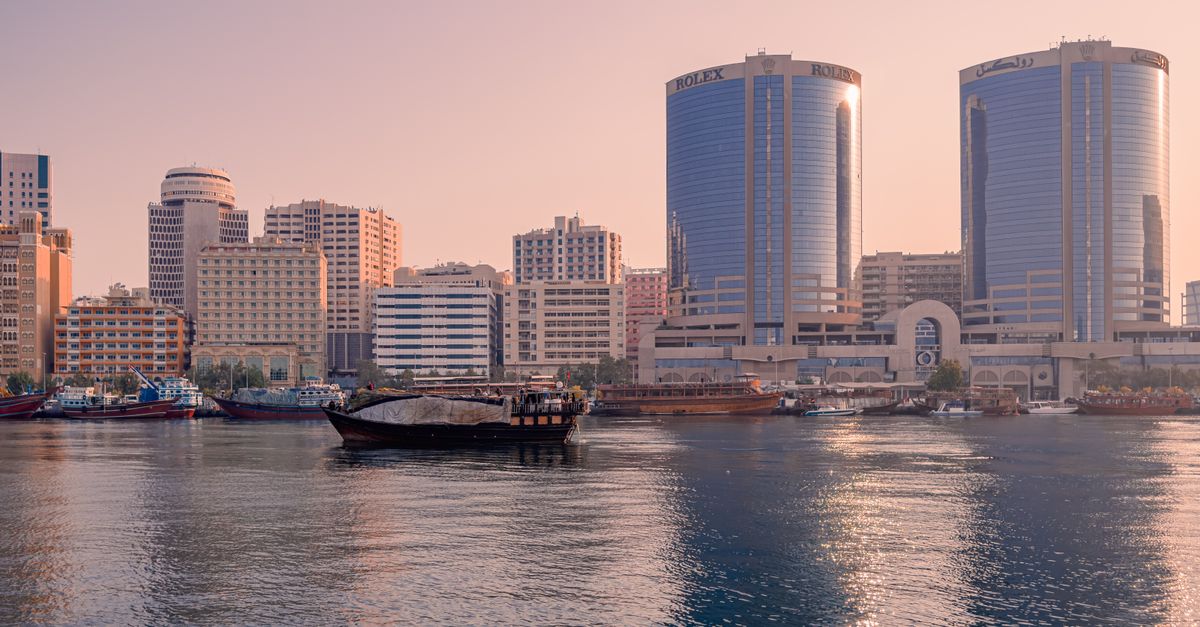
The historic heart of Dubai along Dubai Creek is where the city's trading heritage lives on. The gold souk, spice souk, and textile souk are all here, and the atmosphere is closer to a Middle Eastern city than the gleaming towers of the Marina or Downtown.
Hotels are significantly cheaper — decent three-star options can be found for AED 100-200 per night, and the area has excellent budget dining, with Indian, Pakistani, and Arabic restaurants serving generous meals for AED 15-30. The Dubai Creek abra crossing (AED 1) is one of the city's most charming experiences.
The area is well connected by metro (Green and Red lines) and buses. The trade-off is that the neighborhood is older, noisier, and less polished than newer areas, and it's a metro ride or taxi away from the beach and the modern attractions.
Best for: budget travelers, culture seekers, and anyone who wants to experience the Dubai that existed before the skyscrapers.
Palm Jumeirah
The iconic palm-shaped artificial island is home to some of Dubai's most famous hotels, including Atlantis, The Palm. Hotels here are uniformly expensive (AED 600-3,000+ per night) but come with private beach access, resort facilities, and the unmistakable novelty of staying on an artificial island visible from space.
The Palm has limited public transport (a monorail connecting to the mainland tram system) and few independent restaurants or shops outside the hotels. You'll be taking taxis everywhere. Best for: luxury travelers who want a resort experience and don't mind being removed from the rest of the city.
Top 10 Must-See Experiences with Prices
1. Burj Khalifa — At the Top — The world's tallest building at 828 meters. The observation deck on the 124th and 125th floors offers panoramic views that make the rest of Dubai look like a model village.
Entry: AED 169 for standard "At the Top" ticket, AED 379 for "At the Top SKY" on the 148th floor. Book online in advance — walk-up prices are significantly higher, and sunset slots sell out quickly.
The view at sunset, when the city shifts from daylight to a sea of lights, is worth the premium timing.
2. Dubai Mall and Dubai Fountain — The world's largest shopping mall by total area, with over 1,200 stores, an aquarium, an ice rink, a waterfall, and a dinosaur skeleton. Entry to the mall is free.
The Dubai Aquarium and Underwater Zoo costs AED 155 for the full experience. The Dubai Fountain show, outside the mall on Burj Khalifa Lake, is free and runs every 30 minutes from 6 PM to 11 PM — choreographed water jets shooting 150 meters high, set to music.
The fountain show is genuinely spectacular and one of the few world-class free attractions in Dubai. Arrive 15 minutes early for a waterfront spot.

3. Dubai Creek and the Souks — Cross the creek on a traditional wooden abra (AED 1) and explore the gold souk (home to over 300 gold retailers, with prices among the lowest in the world), the spice souk (the aromas alone are worth the visit), and the textile souk in Bur Dubai.
The entire experience is free to explore, and the souk atmosphere — haggling, aromatic, chaotic — is the polar opposite of the Mall experience. Bargaining is expected; start at 40-50% of the asking price.
4. Dubai Frame — A 150-meter-tall picture frame structure in Zabeel Park that offers views of old Dubai on one side and new Dubai on the other. Entry: AED 50.
The glass-bottomed walkway at the top provides vertigo-inducing views straight down. It's one of the most cost-effective observation points in the city, and the museum exhibition on the ground floor covering Dubai's transformation is genuinely well done.
5. Desert Safari — A quintessential Dubai experience that takes you into the Arabian Desert for dune bashing (high-speed driving over sand dunes in a 4x4), camel riding, sandboarding, and a Bedouin-style camp dinner under the stars with live entertainment including belly dancing and tanoura spinning.
Half-day safaris typically run from 3 PM to 9 PM and cost AED 150-300 per person depending on the operator. The dune bashing is thrilling and not for those prone to motion sickness.
Book through your hotel or a reputable operator — avoid the rock-bottom priced tours that cut corners on vehicle maintenance and driver experience.
6. Jumeirah Mosque — One of the few mosques in Dubai open to non-Muslim visitors. The guided tours (AED 35, Saturday through Thursday at 10 AM) are excellent, covering Islamic culture, architecture, and daily life with genuine warmth and openness to questions.
The mosque is beautiful, the guides are knowledgeable, and the experience consistently ranks as one of the most meaningful cultural encounters visitors have in Dubai. Modest dress is required but abayas and scarves are provided free of charge.
7. Museum of the Future — Dubai's newest landmark, a torus-shaped building covered in Arabic calligraphy that has been called the most beautiful building of the 21st century. The museum inside explores future technologies through immersive exhibitions covering space travel, bioengineering, and sustainability.
Entry: AED 149. The architecture alone justifies the visit, and the interior exhibitions are among the most technologically sophisticated in any museum worldwide.
8. Atlantis Aquaventure Waterpark — Located on Palm Jumeirah, this is the Middle East's largest waterpark with over 30 slides, a lazy river, a private beach, and the chance to wade through an aquarium filled with 65,000 marine animals.
Entry: AED 349 for a full day. Expensive, but it's an all-day experience and the slides are genuinely world-class. The Leap of Faith slide sends you down a near-vertical drop through a shark-filled lagoon in a clear tube.
Book online for discounted rates.
9. Al Fahidi Historical Neighbourhood — The oldest residential area in Dubai, with traditional wind-tower houses dating to the 1800s that have been converted into cafes, galleries, and small museums. The Dubai Museum inside Al Fahidi Fort (AED 3) covers the city's history from pearl-diving village to global metropolis.
The neighborhood itself is free to explore, and the contrast with the modern skyline visible over the rooftops of the wind towers is one of Dubai's most photographed moments. Visit in the early morning or late afternoon for the best light and manageable temperatures.
10. Global Village — Open from October to April, this massive outdoor entertainment and shopping destination features pavilions from over 90 countries, each selling traditional food, crafts, and products. Entry: AED 25.
The experience is unique to Dubai — where else can you eat Turkish ice cream, browse Iranian handicrafts, watch Chinese acrobats, and ride a Ferris wheel in a single evening? It's crowded, loud, and slightly overwhelming, but it's also genuinely fun and one of the best value entertainment options in the city.
Located outside the main city; taxis or organized buses are the easiest transport.

Etiquette — Respecting Local Culture
Dress Code
Dubai is more relaxed than many visitors expect, but there are clear guidelines. At beaches and pools, swimwear is perfectly fine. In malls, restaurants, and public spaces, dress should be modest by Gulf standards: shoulders covered, shorts or skirts to at least knee length, and no excessively revealing clothing.
In practice, enforcement in tourist areas is rare, and you'll see visitors in tank tops and short shorts at malls without issue — but you'll earn quiet respect by covering up a bit more, and it's technically the law. At mosques, both men and women must cover arms and legs, and women must cover their hair (scarves are provided at the Jumeirah Mosque).
In Old Dubai and residential areas, conservative dress is more important than in tourist districts.
Ramadan Rules
During the holy month of Ramadan, Muslims fast from dawn to sunset, and non-Muslims are expected to respect this by not eating, drinking, or smoking in public during fasting hours. This is a legal requirement, not just a cultural nicety.
Most restaurants and cafes close during the day or serve food discreetly behind screens or in enclosed areas. Hotels continue to serve guests in their restaurants, usually with screens or curtains for privacy.
The evenings during Ramadan are festive and generous — iftar buffets at hotels are lavish and often represent good value, and the communal atmosphere of breaking fast together is a cultural experience worth seeking out. Music and loud entertainment are toned down during Ramadan, and some bars and clubs may modify their hours or close.
Alcohol Rules
Alcohol is legal in Dubai but only in licensed venues — primarily hotel bars, restaurants, and clubs. You cannot drink alcohol in public spaces, on the beach, in parks, or anywhere outside a licensed establishment.
Off-licence shops exist (African + Eastern, MMI) where you can purchase alcohol with a liquor licence, and since 2023, tourists can obtain a temporary licence for free. However, the simplest approach is to drink at hotel bars and restaurants, which is what most visitors do.
The legal drinking age is 21. Being visibly drunk in public is a criminal offense, and while enforcement is typically limited to disruptive behavior, the law exists and is occasionally applied.
A sensible approach to alcohol in Dubai will avoid any issues: drink at your hotel bar, take a taxi home, and don't carry open containers on the street.
Public Displays of Affection
Holding hands between married or dating couples is generally tolerated, but kissing, hugging, and any more intimate physical contact in public is illegal and can result in fines or arrest. This is not merely a cultural preference — there have been cases of tourists facing legal consequences. In practice, brief and discreet affection is unlikely to attract attention in tourist areas, but anything more demonstrative should be kept to private spaces.
Same-sex relationships are illegal in the UAE, and LGBTQ+ travelers should exercise discretion. The reality on the ground is more nuanced than the law suggests, but the legal framework exists and can be enforced.
Safety in Dubai
Dubai is one of the safest cities in the world for visitors. Violent crime against tourists is extremely rare, petty theft is uncommon, and the city has extensive CCTV coverage and a visible police presence.
Women can walk alone at night in most areas without concern. The main safety considerations are practical rather than criminal: the heat in summer can cause genuine heat exhaustion or heatstroke — drink water constantly, wear sunscreen, and avoid extended outdoor exposure between 11 AM and 4 PM from May to September.
Road safety requires attention: drivers in Dubai can be aggressive, speed limits are loosely observed on highways, and jaywalking (crossing outside designated crossings) will earn you a fine. The sea can have strong currents, and only swim at beaches with lifeguards.
Follow the flag system: red means no swimming. Tap water is safe to drink in Dubai, though most people prefer bottled water for taste. Medical care is excellent but expensive — travel insurance is essential, as a hospital visit without insurance can cost thousands of dirhams.
Essential Apps for Dubai
RTA Dubai — The Roads and Transport Authority's official app is indispensable. It covers metro and bus routes, real-time schedules, journey planning, Nol card balance and top-up, water bus timetables, and parking information.
The app is well designed and reliable, and it's the single most useful tool for getting around the city on public transport.
Careem — The regional ride-hailing giant, now owned by Uber. Careem is often more popular than Uber in Dubai among locals, and its pricing is frequently competitive. The app also offers food delivery, bike rentals, and other services.
Keep both Careem and Uber installed and compare prices for each journey — the difference can be significant during peak hours.
Zomato — Dubai's dining scene is extraordinary, with over 13,000 restaurants representing virtually every cuisine on the planet. Zomato is the dominant restaurant app, with detailed reviews, photos, menus, location maps, and delivery integration.
Whether you're looking for a AED 15 biryani in Deira or a AED 1,500 tasting menu at a celebrity chef restaurant, Zomato will guide you there.
Botim — As noted above, standard VoIP services are restricted in the UAE. Botim is a licensed calling app that works over UAE internet connections, allowing voice and video calls. The monthly subscription is AED 5.
If staying in touch with people back home is important during your trip, install this before you arrive.
Dubai Now — The UAE government's super-app for public services, useful for paying fines, checking visa status, and accessing various government services. Not essential for short visits, but handy if you run into any bureaucratic needs.
Dubai on a budget — how to experience luxury for less The complete Dubai food guide — from street shawarma to sky-high dining Dubai's hidden gems — 10 places the tourist crowds miss Explore all Dubai travel guides and recommendationsWhere to Stay in Dubai
Top-rated hotels and stays — compare prices across booking platforms.


Things to Do in Dubai
Top-rated tours, tickets, and experiences booked by travelers.