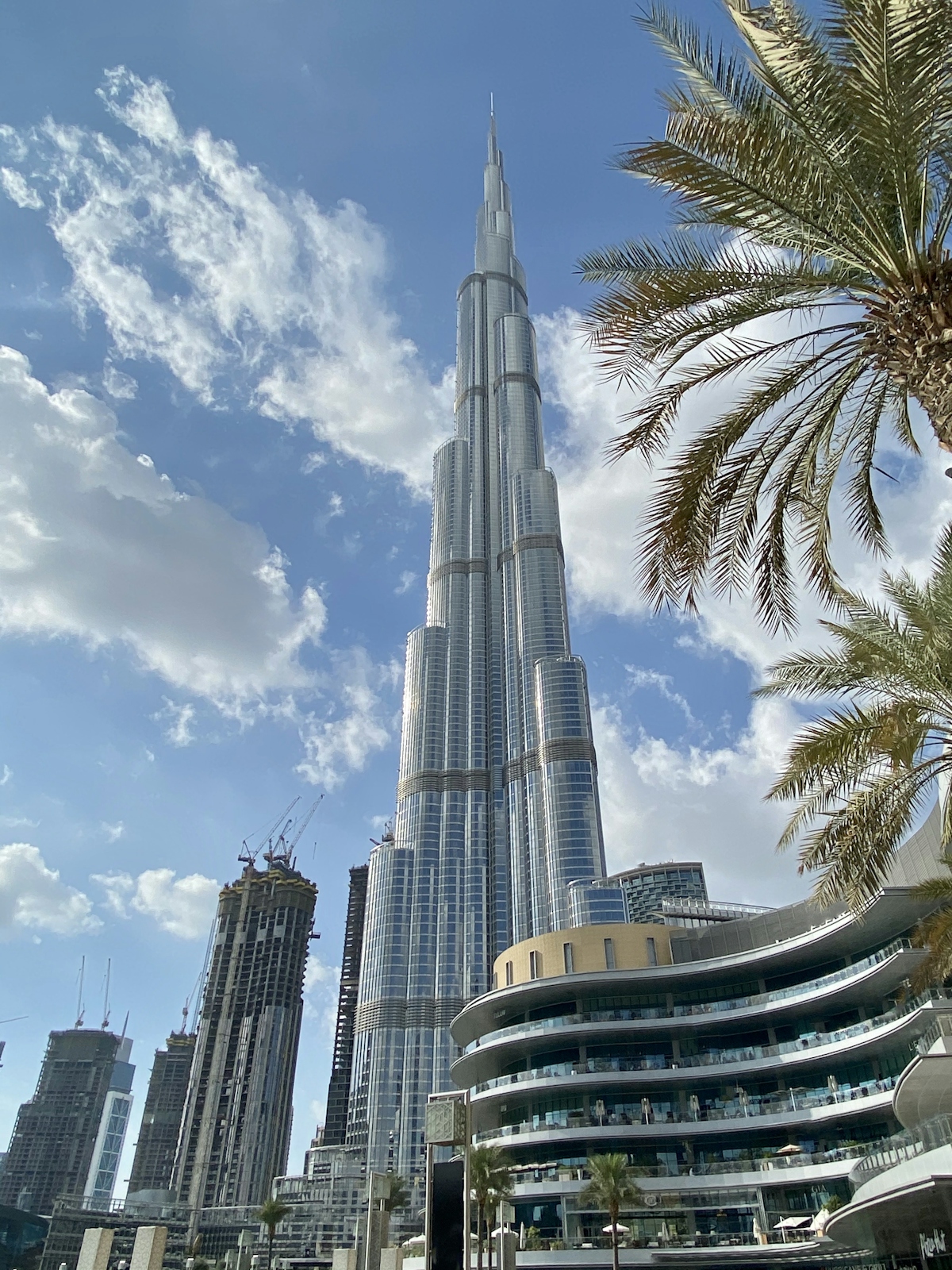
Dubai sells itself on superlatives — the tallest building, the biggest mall, the most luxurious hotel. And those things are genuinely impressive the first time you see them. But the Dubai that stays with you, the one that makes you rebook a flight six months later, is the one hiding behind the glass towers and man-made islands.
It's the Dubai where Emirati artists are transforming industrial warehouses into world-class galleries, where wild flamingos wade through mangroves within sight of the skyline, where hidden beaches have no sunbed rental fees and no DJ playing house music, and where a fifty-dirham ticket gets you inside a building that frames the entire city like a photograph. The ten places in this guide aren't secrets — locals know them well — but they are consistently missed by visitors who stick to the tourist trail between the Burj Khalifa and the Palm Jumeirah.
Every one of them is accessible by public transport or a short taxi ride, and most are free or nearly free. This is the Dubai that doesn't make it onto the tour bus itinerary, and it's the Dubai that's actually worth your time.

1. Al Quoz Arts District and Alserkal Avenue
Alserkal Avenue is what happens when you hand a cluster of industrial warehouses to artists, gallerists, and creative entrepreneurs and let them do whatever they want. Tucked away in the Al Quoz industrial area — a neighborhood of auto repair shops and building supply stores that you'd never visit without a reason — this arts district has quietly become one of the most important contemporary art hubs in the Middle East. There are over 70 creative spaces here now, including galleries showing work by emerging Arab, South Asian, and African artists that you'd pay serious money to see in London or New York.
The Cinema Akil, an independent arthouse cinema inside one of the warehouses, screens films you'll never find at a Dubai multiplex. The A4 Space is part design library, part community space, part cafe.
The Ishara Art Foundation focuses specifically on South Asian art, filling a gap that even major Western institutions struggle with. Entry to almost every gallery is free. The best way to experience Alserkal is on a Saturday afternoon when the galleries are all open and the cafes are full of Dubai's creative class.
Take the metro to Noor Bank station and then a short taxi or walk south into Al Quoz — the industrial surroundings are part of the charm. Visit between October and April when the warehouses are comfortable; in summer, the air conditioning works hard but the crowds thin out, which some prefer.
Plan at least two to three hours to see the major galleries properly.
2. Al Fahidi Historical Neighborhood Coffee Shops
Al Fahidi is the oldest residential neighborhood in Dubai, a tight grid of sand-colored buildings with wind towers — the original air conditioning of the Gulf, designed to catch breezes and funnel cool air into rooms below. Most visitors walk through quickly on their way to the Dubai Museum or the textile souk, snapping a few photos of the photogenic alleyways before moving on.
That's a mistake. The neighborhood has developed a quietly thriving cafe culture that rewards those who slow down. The Arabian Tea House, set in a courtyard draped with bougainvillea, serves Emirati breakfast — balaleet (sweet vermicelli with an egg omelette), chebab pancakes with date syrup, and karak tea strong enough to restart your heart — for AED 40-60 per person.
XVA Art Hotel has a hidden rooftop cafe that serves vegetarian food with views over the wind towers to the Creek. The coffee houses in the surrounding lanes serve Arabic coffee with dates in the traditional Emirati style, and the pace of service is deliberately, unapologetically slow.
This is the point. Al Fahidi is a ten-minute walk from Al Fahidi metro station. Come in the early morning before the tour groups arrive, or in the late afternoon when the light turns golden and the wind towers cast long shadows across the narrow streets.
Friday mornings are particularly quiet and atmospheric.
3. Ras Al Khor Wildlife Sanctuary — Free Flamingo Watching
There are wild flamingos in Dubai. That sentence surprises almost everyone who hears it, but the Ras Al Khor Wildlife Sanctuary, a protected wetland at the inland end of Dubai Creek, hosts a permanent colony of greater flamingos — sometimes over 500 birds — along with herons, cormorants, and dozens of other migratory species.
The sanctuary sits in an almost absurd location: surrounded by the towers of Business Bay on one side, the sprawling Ras Al Khor industrial area on another, and the traffic of the Al Ain Road roaring past. The contrast between the wild pink birds wading through shallow water and the construction cranes on the horizon is pure Dubai. Entry is completely free.
There are three bird hides equipped with binoculars and information boards, and the Flamingo Hide on the southern edge of the sanctuary offers the closest views. No booking is required — just turn up during opening hours, which are Saturday to Thursday from 7:30 AM to 5:30 PM (closed Fridays).
The best viewing is in the cooler months between November and April, when migratory birds swell the population and the flamingos are most active in the early morning. Getting there requires a taxi or car, as there's no nearby metro station — a ride from Business Bay costs around AED 15-20.
Bring a camera with a zoom lens if you have one; the flamingos can be distant depending on water levels. The entire visit takes about 45 minutes to an hour, making it an easy addition to a morning itinerary.

4. Al Sufouh Hidden Beach
Between the manicured resort beaches of Jumeirah and the construction sites of the Dubai Marina expansion lies a stretch of public coastline that most tourists never find. Al Sufouh Beach — sometimes called Black Palace Beach or Secret Beach by expats — is a roughly 800-meter strip of clean sand backed by low scrubland, with views of the Burj Al Arab in one direction and the Palm Jumeirah in the other.
There are no sunbeds for rent, no beach clubs, no waiters bringing overpriced cocktails. There's just sand, sea, and one of the best sunset views in the UAE. The water is calm and clean, the sand is kept reasonably tidy by the municipality, and on weekday afternoons you might have a 200-meter stretch entirely to yourself.
The access is what keeps it hidden: you approach through a gap in the construction fencing off Al Sufouh Road, walking down a sandy path between low dunes. There's no sign, no parking lot, and no facilities — no toilets, no showers, no shade structures.
Bring everything you need: water, sunscreen, a towel, and something to sit on. A beach umbrella is strongly recommended in summer. The nearest metro station is DAMAC Properties, about a 15-minute walk, or take a taxi and ask for "the public beach near King Salman bin Abdulaziz Al Saud Street." The beach is free and open at all hours, though swimming at night is not advisable due to the lack of lifeguards.
Visit in the late afternoon for the best light and the most comfortable temperatures, especially between October and April.
5. Dubai Frame — The AED 50 Architectural Marvel
The Dubai Frame is the most underrated attraction in the city. This 150-meter-tall, picture-frame-shaped building straddles the boundary between old and new Dubai, and the design concept is brilliant: look through one side and you see the historic neighborhoods of Deira and Bur Dubai; look through the other and the entire modern skyline — Burj Khalifa, Emirates Towers, the DIFC buildings — fills the frame like a postcard.
It's both a viewing platform and a meditation on how quickly this city has transformed. The ground floor houses a well-produced multimedia exhibition covering Dubai's history from fishing village to global city, with vintage photographs and immersive projections.
The glass-floored sky bridge at the top connects the two towers and offers 360-degree views that, on a clear day, extend to the Palm Jumeirah and the World Islands. The partially transparent floor panels at the top are not for the fainthearted but provide excellent photographs.
Entry costs AED 50 for adults and AED 20 for children, which is remarkably good value by Dubai standards — compare this to the AED 170+ charged by the Burj Khalifa observation deck. The Frame is located in Zabeel Park, a short taxi ride from Al Jafiliya metro station.
Book tickets online in advance to avoid the queue, especially on weekends and during the cooler months. Visit in the late afternoon, an hour before sunset, to see both the daylight panorama and the city lighting up as darkness falls.
The entire visit takes about 60-90 minutes including the exhibition and viewing time.

6. Last Exit Food Trucks
Dubai's Last Exit food truck parks are something genuinely unique — permanent collections of food trucks and shipping-container restaurants set up at highway service areas along the major routes out of the city, designed to give road-trippers and commuters a reason to pull over that isn't a gas station sandwich. There are several locations, but the most atmospheric is Last Exit Al Khawaneej, themed around a post-apocalyptic desert aesthetic with rusted metal sculptures, repurposed industrial equipment, and enough Instagram backdrop opportunities to keep a content creator busy for an hour.
The food is surprisingly good across the board. Salt, which started as a single burger truck and has become a Dubai institution, usually has a presence. Depending on the location, you'll find Japanese street food, Filipino cuisine, Mexican tacos, gourmet grilled cheese, and artisanal ice cream, all from independent operators rather than chain restaurants.
Prices are reasonable by Dubai standards: expect to spend AED 40-70 for a full meal with a drink. The Al Khawaneej location is the most convenient for tourists — about 25 minutes by taxi from Downtown Dubai — and is best visited in the evening when the lighting transforms the industrial-art installations.
The E11 location between Dubai and Abu Dhabi is convenient if you're making the inter-emirate drive. Last Exit parks are open late, often until midnight or beyond, and the atmosphere on a cool winter evening with food trucks, fairy lights, and the desert sky overhead is genuinely magical.
Free entry and parking at all locations.
7. La Mer Beachfront
La Mer occupies a stretch of reclaimed waterfront in Jumeirah and does something Dubai doesn't always manage: it creates a public space that feels relaxed, walkable, and genuinely pleasant without charging admission or requiring a hotel booking. The development stretches along a long beachfront promenade lined with independent restaurants, cafes, and shops housed in low-rise buildings decorated with street art and colorful murals.
The beach itself is public, clean, and well-maintained, with lifeguards on duty and free outdoor showers. Unlike the hotel beaches, there's no minimum spend and no dress code beyond standard public beach expectations.
The north end of La Mer connects to the Laguna Waterpark (AED 99 entry) for those who want waterslides, but the main attraction is simply walking the promenade, eating, and swimming. The restaurant selection is diverse and reasonably priced for a beachfront location: Salt does its famous sliders for AED 22, The Maine serves New England-style lobster rolls for AED 85, and Bareburger offers organic burgers for AED 55-70.
On weekends, local artisan markets set up along the promenade with handmade jewelry, art prints, and specialty foods. La Mer is a 10-minute taxi ride from La Mer or Business Bay metro stations.
Visit on a weekday for a quiet beach experience, or on a Friday evening for the full social atmosphere with families, groups of friends, and couples strolling the promenade. The sunset views across the Gulf are excellent from the south end of the beach.
8. Hatta Mountain Exclave — Kayaking, Hiking, and Escape
Hatta shatters every assumption visitors have about Dubai. This small mountain town, technically still within the emirate of Dubai but 130 kilometers east of the city, sits at the foot of the Hajar Mountains near the Oman border, surrounded by craggy peaks, gravel wadis, and a turquoise dam lake that looks like it belongs in Montenegro rather than the Arabian Peninsula.
The drive from Downtown Dubai takes about 90 minutes on a well-maintained highway, and the landscape transition is dramatic — within an hour, the flat desert gives way to rugged mountain terrain. The Hatta Dam is the centerpiece.
You can rent kayaks (AED 60 per hour), pedal boats (AED 80 per hour), or simply walk along the dam wall and take in the view of blue-green water against red-brown rock. For hikers, the Hatta Mountain Trails offer routes ranging from easy 2-kilometer loops to challenging 8-kilometer traverses through the mountains, all free and well-signposted.
The Hatta Heritage Village, a restored mountain settlement with watchtowers and falaj irrigation channels, provides historical context and is free to enter. For something more adventurous, the Hatta Wadi Hub offers mountain biking (AED 35 for bike rental), axe throwing, archery, and zorbing.
Hatta is best visited as a full-day excursion, leaving Dubai early in the morning and returning by late afternoon. Pack a picnic, plenty of water, and sun protection. The cooler months from October to March are ideal — summer temperatures are slightly lower than Dubai but still brutal.
A rental car is the easiest way to get there, though some tour operators run day trips.

9. Rain Room at Sharjah Art Foundation
Technically this one is in Sharjah, Dubai's neighboring emirate, but it's only a 30-minute drive from central Dubai and it's extraordinary enough to justify the trip. The Rain Room is a large-scale installation where rain falls continuously from the ceiling across a dark room, but motion sensors detect your presence and stop the rain directly above you — so you can walk through a downpour without getting wet.
The effect is surreal, meditative, and produces some of the most striking photographs you'll take on any trip. The installation was originally shown at the Barbican in London and MoMA in New York before finding a permanent home at the Sharjah Art Foundation.
Admission is free, but you should book a time slot in advance through the Sharjah Art Foundation website, as slots fill up quickly, especially on weekends. Each visitor gets about 15 minutes inside the room.
The broader Sharjah Art Foundation campus in the Heart of Sharjah neighborhood is worth exploring too — it occupies restored heritage buildings in the old city center and hosts rotating exhibitions, artist residencies, and the prestigious Sharjah Biennial. While in the area, wander the surrounding streets of the Al Mareija neighborhood, where traditional courtyard houses have been converted into galleries, cafes, and cultural spaces.
To reach Sharjah from Dubai, take a taxi (AED 50-70) or drive along the E11 highway. Traffic between Dubai and Sharjah is notorious during rush hours, so time your visit for mid-morning or early afternoon on a weekday for the smoothest journey.
The Rain Room is open Saturday to Thursday, 10 AM to 8 PM.
10. The Ripe Market — Friday Morning Community Market
The Ripe Market is Dubai's best farmers' and artisan market, a weekly gathering that brings together local organic farms, homegrown food businesses, independent designers, and the kind of relaxed community atmosphere that Dubai's malls and mega-developments often struggle to create. The market runs on Saturdays and Sundays during the cooler season (roughly October to May) at various locations around the city, with Academy Park in Al Quoz and Times Square Center being regular venues.
Local farms sell organic produce that was harvested that morning — heirloom tomatoes, microgreens, Arabic herbs, honey from UAE-based apiaries, and seasonal fruits. Homegrown food vendors offer everything from artisanal sourdough bread and craft chocolate to Sri Lankan curry pots and homemade pasta.
Independent designers sell handmade jewelry, ceramics, natural skincare products, and children's clothing. The vibe is genuinely community-oriented: families spread picnic blankets on the grass, dogs are welcome at outdoor locations, and there's usually live acoustic music.
Prices are higher than a supermarket — this is organic and artisanal, after all — but the quality is noticeably better and you're supporting small local businesses. A typical haul of bread, cheese, vegetables, and a couple of ready-to-eat items costs AED 80-120.
Check the Ripe Market Instagram or website for the exact location each week, as it rotates seasonally. Arrive early — by 9:00 AM — for the best selection of produce and to beat the crowds.
The market usually wraps up by 2:00 PM. Free entry at all locations, and parking is generally straightforward at the dedicated event venues.
The complete Dubai food guide — AED 10 shawarma to Michelin stars How to see Dubai on AED 250 a day — a realistic budget breakdown The perfect 5-day Dubai itinerary for first-time visitors