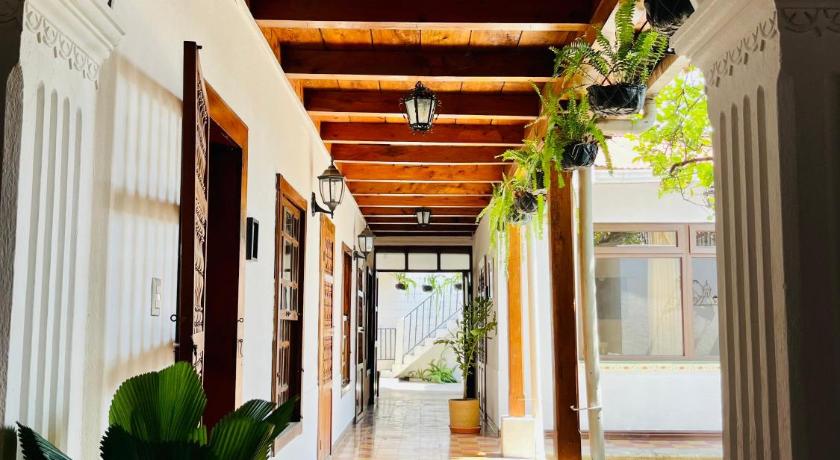
Antigua Guatemala is the easiest first international destination most travellers can choose in Latin America — small, walkable, almost relentlessly beautiful, with an established tourist infrastructure that makes the basics frictionless and a year-round springlike climate that requires neither sunblock for survival nor parkas for comfort. The colonial Spanish capital was destroyed by an earthquake in 1773, abandoned, and left to slow ruin until the 20th century rediscovered it as a UNESCO-grade time capsule. Today's Antigua has perhaps the highest concentration of Spanish language schools in the world, the most photographed cathedral in Central America, and three active volcanoes visible from any rooftop in the city. This first-timer guide covers everything you need to know before you arrive — visa rules, the airport transfer, the cobblestones that will destroy unsuitable shoes, the volcano-hike windows, and the Maya cultural context that distinguishes a respectful traveller from a clumsy one.
Before You Arrive
Guatemala's visa rules are unusually generous and present few barriers for first-time visitors. Citizens of the United States, Canada, the United Kingdom, the European Union, Australia, New Zealand, and most Latin American countries enter visa-free for 90 days under the CA-4 agreement, which provides combined free movement across Guatemala, Honduras, El Salvador, and Nicaragua — the 90 days is shared across the four-country bloc rather than restarting at each border. Bring a passport with at least six months' validity remaining and proof of onward travel (a return flight booking is sufficient).

If you are continuing to Mexico or Belize from Guatemala, the CA-4 days don't apply once you cross out, but a quick land-border exit and re-entry at the Talismán/Tecún Umán bridge can refresh your 90 days if you genuinely need to extend. The official extension process at the immigration office in Guatemala City is also possible but tedious.
No vaccinations are required for entry but yellow fever proof is requested if arriving from a yellow-fever country. The CDC recommends Hepatitis A, typhoid, and routine vaccinations for general travel; rabies and hepatitis B for longer or rural-focused stays. Antigua sits at 1,530 metres altitude in the highlands and malaria risk in the city is essentially zero — chloroquine prophylaxis is unnecessary.
The currency is the Quetzal (GTQ), pegged loosely around 7.7-7.8 to the US dollar. ATMs are widely available in central Antigua (Banco Industrial, BAC, Banrural), accepting most international cards. Bring some USD for backup — many shuttle operators and a few smaller hotels accept dollars, and changing dollars at casas de cambio is reliably easy. Carry mostly small notes (GTQ 5, 10, 20, 50) since chicken bus drivers, market vendors, and small comedores rarely have change for GTQ 100 or 200.
Antigua's climate is consistently temperate — daytime temperatures of 20-25°C year-round, dropping to 10-13°C overnight. The rainy season (May through October) brings reliable afternoon thunderstorms but mornings remain clear. The dry season (November through April) is the peak tourist period and the best window for volcano hiking. Pack layers — light shirts and trousers for daytime, a fleece for evenings, a packable rain jacket for the rainy season, and good closed-toe shoes for the cobblestones.
SIM cards are cheap and easy: Tigo and Claro both sell tourist SIMs at La Aurora airport and at multiple central Antigua kiosks for GTQ 30-80 with 5-15GB of data, valid 30 days. Bring an unlocked phone and your passport for registration. Mobile data coverage in central Antigua is excellent; coverage drops on the volcano hikes and in remote villages.
Getting from the Airport
La Aurora International Airport (GUA) sits in the southern outskirts of Guatemala City, 45 kilometres east of Antigua. There is no direct public bus to Antigua; every transfer involves either a shuttle bus, a private taxi, an Uber, or a multi-step combination of local buses through Guatemala City — the latter being only sensible for budget-focused travellers in daylight with light luggage.

The standard option is a shuttle bus from the airport directly to Antigua. Multiple operators (Adrenalina, Atitrans, Antigua Tours, Hugo's Shuttles) run shared shuttles roughly every 60-90 minutes from outside the arrivals terminal, costing GTQ 80-150 (USD 10-19) depending on operator and timing. Walk to the shuttle desks at arrivals and book on the spot, or pre-book online for a small saving. Travel time is 60-90 minutes depending on Guatemala City traffic — rush hour (7-9am, 4-7pm) can extend the journey to two hours.
Uber works at the airport with fares typically GTQ 200-280 (USD 25-36). Significantly cheaper than the official airport taxis (which charge GTQ 350-450) and door-to-door if your accommodation has a confirmed address. Use the Uber app to request the ride after collecting your luggage; the pickup point is the designated rideshare zone outside the arrivals area.
Pre-arranged private transfers through hotels or specialised tour companies cost GTQ 350-600 (USD 45-78) and offer a known driver, named greeting, and door-to-door delivery. Worth the premium for late-night arrivals, families with young children, or travellers with significant luggage.
Getting Around the City
Antigua is a small, square colonial grid roughly 1.5 kilometres on each side. Walking is the primary mode of transport for almost every visitor, and almost every restaurant, hostel, ruin, and cafe sits within a 15-minute walk of Parque Central. The street naming follows a logical compass system: Avenidas run north-south (numbered with "Norte" or "Sur" suffix relative to Calle Real, the central east-west axis), and Calles run east-west (numbered with "Poniente" or "Oriente" relative to the central north-south axis).

The cobblestones, however, are no joke. Sturdy closed-toe shoes are essential — the volcanic stones are large, uneven, and unforgiving. The stones become particularly slippery in light rain. Walk carefully, watch your feet, and be especially cautious on the slight inclines around the Cerro de la Cruz path and the western edges of the city.
For trips beyond walking distance — to surrounding villages, to nearby attractions like the Hobbitenango theme park, or to volcano-hike trailheads — chicken buses depart from the bus terminal beside Mercado Municipal. Fares are GTQ 5-15 depending on distance, with departures roughly every 20-30 minutes during daylight to most regional destinations. The buses are colourful, loud, crowded, and a genuine experience; they are also the cheapest transit in Central America.
Tuk-tuks operate around the city periphery (technically not in the central historic core but commonly used at the edges) for GTQ 10-25 within the immediate area. They are the convenient option for late-night returns from peripheral neighbourhoods.
Uber functions reliably in Antigua with fares GTQ 15-30 within the city and GTQ 50-100 to surrounding villages. Useful for evening rides, airport returns, and trips with luggage.
For inter-city journeys to Lake Atitlán, Tikal, Semuc Champey, or Río Dulce, shared shuttle buses depart Antigua daily from agencies along 4a Calle Poniente and 5a Avenida Sur. Book the day before; multiple operators offer essentially identical service.
Where to Base Yourself
Antigua's compactness means almost any central neighbourhood is convenient, but each of the main options has a distinct character that suits different travellers.

Around Parque Central (the immediate streets within 3-4 blocks of the main plaza, particularly along 4a Calle Poniente, 5a Avenida Sur, and the surrounding grid) is where most first-time visitors stay — closest to the cathedral, the major restaurants, the tour agencies, and the iconic Santa Catalina Arch. The trade-off is noise (church bells starting before 6am, late-night traffic on weekends) and tourist-priced everything within a one-block radius. Prices: GTQ 90-130 hostel dorm, GTQ 350-700 mid-range hotel, GTQ 1,200-2,500 boutique hotel. Best for first-time visitors who want maximum convenience.
Near the Santa Catalina Arch and northward (1a Avenida Norte, 2a Avenida Norte, the streets toward Convento Santa Catalina) is slightly quieter and just as beautiful — the iconic yellow arch frames Volcán Agua perfectly at sunrise, and the surrounding streets are full of small cafés, design shops, and boutique guesthouses. Prices: GTQ 80-120 hostel dorm, GTQ 400-800 mid-range, GTQ 1,500-3,000 boutique. Best for travellers wanting the photogenic Antigua experience with marginally less noise.
San Felipe and the eastern neighbourhoods (around 7a Avenida Norte and toward San Felipe de Jesús) are the residential, quieter parts of the historic centre — fewer tourists, more local life, real bakeries and tortillerías, and a 10-15 minute walk to Parque Central. Most Spanish school homestays are placed in this area or just south of it. Prices: GTQ 250-450 guesthouse double, GTQ 600-1,200 small hotel. Best for travellers staying a week or longer who want a more residential atmosphere and don't mind the short walk to the central sights.
Local Culture & Etiquette
Guatemala is one of the most indigenous-majority countries in Latin America — roughly 40-50% of the population identifies as Maya, divided across 22 distinct ethnolinguistic groups (Kaqchikel, Tz'utujil, K'iche', Mam being the most relevant in the highlands around Antigua). The city itself has a relatively small indigenous population — most rural Maya travellers come into Antigua from surrounding villages to sell crafts at Mercado de Artesanías or work in the tourism economy — but the broader Guatemalan cultural fabric is deeply Maya, and respectful engagement matters.

The most visible cultural error tourists make is photographing indigenous people without permission, particularly women in traditional huipiles (woven blouses) and cortes (skirts). Maya communities have well-documented historical reasons for distrust of cameras, and the practice of taking unsolicited "ethnic" photographs is rude at minimum and can provoke real anger. Always ask "¿Puedo tomar una foto?" before photographing any individual; accept "no" without negotiation. Some women selling textiles will allow photos for a small payment (GTQ 10-20), which is fair compensation for a stranger's intrusion. Children should never be photographed without parental permission, and even with permission, restraint is appropriate.
Bargaining is acceptable at Mercado de Artesanías and with street vendors, but should be moderate. Aim for 10-25% off the asking price for textiles and crafts; halving the asking price is rude and trivialises significant labour. Many huipiles take weeks or months to weave, and the asking prices are often already low relative to the work involved. Respectful negotiation rather than aggressive haggling.
Spanish is the dominant language but Maya languages are widely spoken in surrounding villages — Kaqchikel in San Antonio Aguas Calientes and Sumpango, Tz'utujil around Lake Atitlán. Knowing basic Spanish is essential and sufficient for almost all interactions; learning even one word of Kaqchikel or another local Maya language ("matyox" — thank you in Kaqchikel) is appreciated and unexpected.
Religion is central to Antigua's identity — Catholic processions, particularly during Semana Santa, are massive cultural events involving thousands of participants and elaborate sawdust carpets (alfombras) laid on the streets. Watch processions respectfully, do not walk on alfombras under any circumstances (they are sacred), and do not interrupt religious services for photographs.
Tipping is more substantial than elsewhere in Central America because of the tourist economy — 10% at restaurants is standard, GTQ 100-200 for overnight volcano-hike guides is appropriate, and rounding up taxi fares is normal. Tip Spanish-school teachers GTQ 100-200 at the end of a course if their teaching was good.
Common Mistakes to Avoid
1. Wearing the wrong shoes. The cobblestones of Antigua are the city's defining infrastructure and the single most common reason first-time visitors end their trip with a sprained ankle, bruised toes, or destroyed footwear. Flip-flops, dress sandals, ballet flats, and any heel are essentially impossible. Bring sturdy closed-toe trainers or hiking shoes with proper soles. The cathedral and the volcanoes will still be beautiful in practical footwear; nothing else makes up for an ankle injury on day two.
2. Mistiming the Acatenango volcano hike. The overnight ascent to camp on Volcán de Acatenango with eruption views of Volcán de Fuego is the iconic Antigua experience, but it is weather-dependent. Hiking during the rainy season (May-October) frequently means arriving at the summit camp in dense cloud with no visibility of Fuego — defeating the entire purpose. Check Mountain-Forecast.com 5-7 days ahead, book during clear-weather windows, and don't waste GTQ 400-700 on a trip you can't see anything from. Acatenango is also genuinely strenuous — 1,500 metres of vertical ascent over 6-8 hours at altitudes between 2,400m and 3,976m — and unfit hikers should consider Pacaya as an easier alternative.
3. Underestimating the altitude on Acatenango. The summit of Acatenango is 3,976 metres above sea level, and many first-time hikers experience altitude sickness on summit night. The city itself is only 1,530m and most visitors don't acclimatise before the trek. Spend at least 2-3 days in Antigua before the hike, drink plenty of water, eat carbohydrate-heavy meals, and consider altitude tablets if you have a history of altitude sensitivity.
4. Walking outside the central grid after dark. Central Antigua (within 4-5 blocks of Parque Central) is generally safe at night with steady tourist foot traffic, but the outer neighbourhoods, the Cerro de la Cruz path, and the road out toward Cementerio General can have safety concerns after sunset. Use Uber or a tuk-tuk for evening movements beyond the central core. The Cerro de la Cruz viewpoint specifically has had occasional muggings; visit during daylight or in groups.
5. Drinking the tap water. Tap water in Antigua is not safe for foreign visitors, and even ice in cheaper restaurants can be made from tap water. Drink purified bottled water exclusively, use bottled water for tooth-brushing, and ask about ice at smaller establishments. Most hostels and homestays provide a 5-gallon garrafón dispenser for refilling smaller bottles — refills cost GTQ 15-20 versus GTQ 8-12 for individual bottles.
6. Booking everything from Parque Central tour offices. The most visible tour offices on and immediately around Parque Central charge premiums of 20-40% for shuttles, volcano hikes, and day trips that hostels and second-tier offices sell at lower prices. Always compare three sources before booking, and consult recent online reviews — the operator landscape changes regularly and the cheapest is rarely the best.
7. Skipping the surrounding villages. First-time visitors often spend their entire trip in central Antigua and miss the surrounding Maya villages (San Antonio Aguas Calientes for textiles, Santiago Atitlán across Lake Atitlán for traditional culture, San Juan del Obispo for the colonial pilgrimage church) that provide context for everything Antigua represents. A half-day trip by chicken bus or shuttle to one of these villages is the difference between a postcard visit and a genuine engagement with Guatemala.