
Fez is one of the medieval world's great surviving cities — a UNESCO-listed medina of 300,000 people living in a maze of 9,400 streets, alleys, and dead-ends that has been substantially unchanged since the 13th century. The Fès el-Bali medina is the world's largest car-free urban zone and contains the world's oldest continuously operating university (the Qarawiyyin, founded 859 CE), the Chouara tannery — one of the most photographed scenes in North Africa — and a craft tradition in leather, metalwork, and ceramics that predates European Renaissance by three centuries.
Visitors to Fez face a genuine choice: the heavily guided tourist circuit hits Chouara, the Bou Inania madrasa, and a few craft shops in 4 hours and leaves. Or you can spend three days getting genuinely lost in the medina, finding the neighbourhoods where actual Fassi (Fez native) life happens without any tourist infrastructure whatsoever. The second option is dramatically more rewarding and requires nothing but time and willingness to follow alleys to their ends.
Morocco's currency is the dirham (MAD). The medina's craft shops have two-tier pricing — tourist and local — and bargaining is expected everywhere except in fixed-price establishments (increasingly common in the tourist zone). Rule of thumb: the first quoted price is two to three times the fair price; settling at 50–60% of the opening offer is reasonable in most contexts.
1. The Andalusian Quarter at Dawn
The Fès el-Bali medina is divided by the Oued Fès (Fez River) into two historically distinct halves. Most tourists explore the western Karaouiyne quarter — where the university, tanneries, and major monuments are concentrated. The eastern half, the Andalusian quarter (Adwat al-Andalus), was settled by refugees from the Moorish kingdom of Andalusia after the Christian Reconquista began expelling Muslims from Spain in the 9th century. It is less visited, less commercially oriented, and more genuinely residential.
The quarter's centrepiece is the Mosque of the Andalusians — founded in 860 CE (one year after the Qarawiyyin) by Fatima's sister Mariam al-Fihri and rebuilt in the 12th and 13th centuries. Non-Muslims cannot enter the mosque but can admire the elaborately carved cedar-wood door and the tiled mihrab visible through the gate. The streets around the mosque are lined with 13th-century fondouqs (merchant warehouses converted to housing) in various states of beautifully romantic dilapidation.
The Andalusian quarter is reached by crossing the main medina via Talaa Kebira and Talaa Saghira, turning left at the Rcif mosque, and crossing the river on the Rcif bridge. The area is half a kilometre from the Chouara tannery as the crow flies but an entirely different world in character. Walk here between 6 and 8 a.m. when the neighbourhood's own routines — bread from the community oven (farran), vegetables from the quarter's souk — are the only activity on the streets.
The community farran (wood-fired communal oven) in the Andalusian quarter bakes bread for neighbourhood residents who bring their own dough at dawn for the first baking. Visitors can watch and occasionally purchase warm bread for MAD 2–3 per loaf — the most direct participation in Fassi daily life available to any outsider. Ask politely and patiently; the farran workers are usually welcoming of respectful observers.
2. Chouara Tannery from the Right Terrace
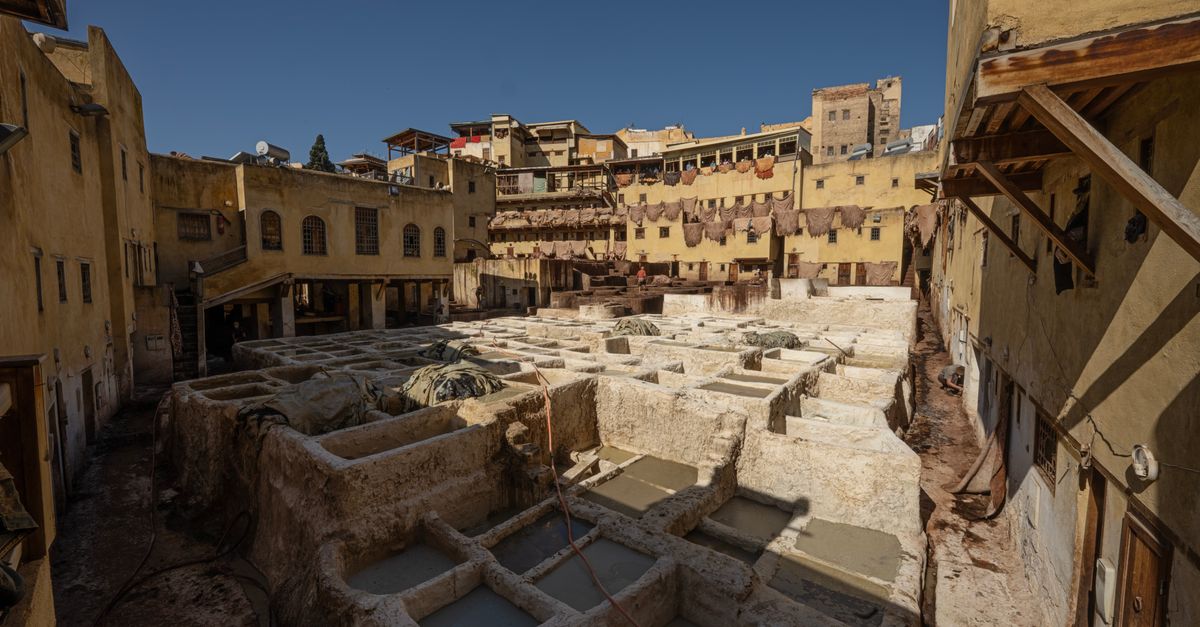
The Chouara tannery is one of the most photographed sites in North Africa — a multi-coloured grid of circular stone vats where leather has been dyed using natural pigments (poppy red, indigo blue, saffron yellow, henna brown) since the 11th century. Every shop surrounding the tannery offers "free" terrace access in exchange for the obligation to browse their leather goods. The right terrace makes all the difference: the northern and eastern terraces get morning light; the western and southern terraces get the better afternoon light.
The tannery itself is a working industrial operation — the workers (many of them from very poor backgrounds, working in caustic lime solutions without adequate protection) deserve more consideration than their status as a photographic backdrop typically affords. The leather industry here employs hundreds of families and represents one of Morocco's most important traditional craft exports. The mint leaves offered at shop entrances are not affectation — the smell of the tanning pits, driven by pigeon excrement used as a softening agent, is powerful.
The best terraces for photography are the shops on Rue Chouara el-Henna, accessible from Talaa Kebira. No charge for terrace access; the social contract is that you spend 15–20 minutes looking at leather goods. Prices for leather goods here are negotiable and start very high: a leather bag quoted at MAD 800 should settle at MAD 350–450 for a genuinely well-made piece. Cheaper options in the quarter below Bab Rcif are often better quality.
The tannery is most colourful in the morning when the dyes are freshly applied. By afternoon the colours are muddier and the activity slower. Winter mornings (November–February) often see the pits covered in steam rising from the lime vats — atmospheric but obscuring. The tannery operates from roughly 7 a.m. to 5 p.m. on weekdays and closes on Fridays. Alternative tanneries — less photographed and equally authentic — exist in the Sidi Moussa and Ain Nokbi districts, both accessible from Bab Guissa.
3. The Mellah's Silver Souk
The Fez Mellah — the historic Jewish quarter, established in the 14th century as one of the world's first designated Jewish neighbourhoods — sits immediately adjacent to the Royal Palace (Dar el-Makhzen) on the medina's eastern edge. The Jewish community that once numbered 30,000 has largely emigrated to Israel and France since the 1950s, but the Mellah's distinctive architecture (tall houses with balconies jutting over the street to allow women to see the street without being seen), its synagogues, and its cemetery remain.
The Mellah's main street, Rue des Mérinides, is now dominated by silver and gold jewelry stalls run by Moroccan Muslim merchants who inherited the trade from the Jewish goldsmiths who once dominated it. The silver work here — filigree earrings, khamsa hand pendants, Berber-style cuffs — is some of the finest in Morocco. Unlike the tourist souk, the Mellah silver market has established prices and the quality of the workmanship is visible and verifiable.
The Ibrahim ben Soussan Synagogue in the heart of the Mellah is still maintained by a Jewish preservation organisation and is open for visits on request (MAD 20 donation). The Haïm Pinto Synagogue nearby is similarly accessible. The Mellah cemetery at the northern end of the quarter contains elaborately decorated tombstones — both Moroccan Jewish and later 20th-century — and is one of the finest historic Jewish cemeteries in North Africa.
The Mellah is walkable from the Blue Gate (Bab Bou Jeloud) in 20 minutes via Talaa Kebira, or approach from the Royal Palace gate. The area is entirely safe for visitors. A guided visit specifically focused on Mellah history costs MAD 150–200 ($15–20 USD) from guides certified by the Fez Medina Association, and provides context on the 700-year history of Jewish-Muslim coexistence in the medina that a self-guided walk cannot convey.
4. Dinner at a Fassi Family Riad
The riad restaurants of Fez — traditional courtyard houses converted to guesthouses and restaurants — offer a form of Moroccan hospitality that the city's tourist circuit rarely penetrates. The finest Fassi cooking happens not in the tourist restaurants near Bab Bou Jeloud but in a handful of family-run riads in the interior of the medina that serve a fixed traditional menu to advance-booking guests only. The experience — eating in a 15th-century courtyard to the sound of the medina at night — is unlike any restaurant in the world.
Riad Dar Roumana, Riad Fès, and the smaller family-operated Maison Bleue are the most celebrated of these establishments. The menus are typically fixed at three to five courses: harira soup, a pastilla (flaky pie of pigeon and almonds in icing sugar), a tagine, couscous, and Moroccan pastries with mint tea. The cooking is labour-intensive, rooted in tradition, and bears no relation to the identical tourist tagines served in every restaurant near the tannery.
Book at least 24 hours in advance — the kitchen prepares to the number of guests. A fixed dinner menu costs MAD 300–500 ($30–50 USD) per person, which is expensive by medina standards but extraordinary value for the quality and setting. Alcohol is not served in most traditional riads; the dinner is essentially a culinary ceremony conducted without wine, which focuses attention on the food itself.
Several family-operated riads also offer cooking classes (pastilla, tagine, Moroccan salads) for MAD 400–600 per person including market shopping at dawn. The class typically begins at 9 a.m. with a trip to the medina's local produce market — not the tourist souk — and ends with lunch in the riad courtyard. It is one of the most intimate cultural experiences available in Morocco.
5. The Qarawiyyin Library
The Qarawiyyin University library, founded in 859 CE and restored by Moroccan-Canadian architect Aziza Chaouni between 2012 and 2016, is the world's oldest continuously operating library and contains manuscripts dating to the 9th century. The restoration project — which included drying out a building flooded for decades, conserving 4,000 manuscripts, and installing a sophisticated conservation climate system — won international architecture awards and returned a priceless collection to public access.
The library is not open to general visitors — access is restricted to researchers and university students — but the exterior (visible through the gate from Rue de la Qarawiyyin) and the adjacent mosque and fountain courtyard are accessible. The Qarawiyyin mosque itself is not open to non-Muslims, but its multiple gates around the exterior each reveal different perspectives on the extraordinary interior — the largest mosque in Africa, capable of holding 22,000 worshippers.
The library's location in the heart of the medina, surrounded by the manuscript-selling stalls of the Qarawiyyin quarter, provides context for the intellectual culture that Fez maintained for a millennium when most of Europe was in the Dark Ages. The manuscript sellers in the alleyways around the library — selling reproductions, antique Quranic pages, and genuinely old Moroccan and Andalusian texts — represent a direct continuation of the book trade that made Fez one of the medieval world's great centres of learning.
Access to the Qarawiyyin area is via Talaa Saghira or from the Seffarine (coppersmiths') square. The Seffarine square itself — a hammered-metal cacophony of copper beating from the workshops surrounding it — is one of the medina's most atmospheric corners. The workers here produce copper serving trays, tea sets, and decorative vessels using techniques unchanged since the 12th century. Items purchased directly from the workshops are approximately half the price of the same goods in tourist shops 100 metres away.
6. Bou Jeloud Garden at Sunset
Just outside the Bab Bou Jeloud gate, the Bou Jeloud Garden (Jardin Jnane Sbil) is Fez's most beautiful public garden — a formal Andalusian garden of 3 hectares with fountains, rose beds, and enormous shade trees that has been a leisure destination for Fassi families since the 17th century. It was restored comprehensively between 2011 and 2013 and is now one of the most pleasant urban gardens in Morocco.
The garden is at its best in the hour before sunset, when families converge for the evening promenade: older men in djellabas play draughts on stone tables; mothers push prams along the gravel paths; young couples sit in the shade of century-old orange trees; and the sound of the medina's activity rises and falls on the evening breeze. It is a window into Fassi social life that no museum or guided tour can replicate.
Entry to the garden is free. Open from 8 a.m. to sunset daily. The garden is adjacent to the bus stops for services to Fès el-Jedid (New Fez) and the Ville Nouvelle; petit taxis from the Ville Nouvelle drop off at Bab Bou Jeloud gate. The garden café serves coffee, mint tea, and Moroccan pastries. A pot of mint tea costs MAD 15 ($1.50 USD).
The garden is also the starting point for the climb up to the Borj Nord fortress — a 16th-century Portuguese-built citadel on the hill above the medina that now houses the National Weapons Museum. The climb takes 20 minutes; the panoramic view over the entire medina — 300,000 people in a valley of medieval stone — is one of Morocco's great urban vistas. The museum (MAD 20 entry) is secondary to the view.
7. The Ville Nouvelle Art Nouveau District
Fez's French colonial Ville Nouvelle — built from 1916 when the French protectorate deliberately located new construction outside the medina to avoid disturbing its medieval character — contains a surprisingly coherent collection of Art Deco and Moorish Revival architecture along its main boulevards. Avenue Hassan II and Avenue Mohammed V are lined with buildings from the 1920s–40s that combine French architectural vocabulary with geometric Islamic decoration in ways that are characteristically Moroccan.
The Ville Nouvelle is where Fez's contemporary professional class lives and works, and its cafés, bookshops, and restaurants operate at a completely different register from the medina's tourist economy. The Café Glacial on Mohammed V is where Fassi intellectuals, lawyers, and journalists have been drinking coffee since 1930; the conversation (in Darija Arabic, French, and occasionally Tamazight Berber) is animated and entirely unconcerned with tourism.
Petit taxis from Bab Bou Jeloud to the Ville Nouvelle cost MAD 15–20 ($1.50–2 USD). The neighbourhood is walkable in its core; the main boulevards are about 1 km apart. The Ville Nouvelle's restaurants — including La Maison Bleue's second outpost and several excellent French-Moroccan brasseries — offer some of the best eating in Fez at prices considerably lower than the medina tourist restaurants. A three-course lunch costs MAD 120–180 ($12–18 USD).
The Ville Nouvelle's weekly market on Avenue Hassan II (Saturday mornings) is a local farmers' market of exceptional quality: argan oil directly from Souss cooperatives, fresh goat cheese from the Middle Atlas, honey from thyme and rosemary flowers, and seasonal produce from the irrigated plains east of the city. Prices are fixed and transparently displayed — a welcome contrast to medina bargaining.
8. The Pottery Cooperative at Ain Nokbi
The blue-glazed pottery of Fez is one of Morocco's most iconic crafts — the distinctive cobalt-on-white ware that covers nearly every surface in the medina's tourist shops. But visiting a pottery cooperative at Ain Nokbi, on the edge of the medina's Bab Ftouh neighbourhood, shows the actual production process from raw clay to kiln-fired finished piece. The cooperatives here employ hundreds of craftsmen in the full chain from clay preparation to painting to firing in wood-fuelled kilns.
The process is extraordinary to watch: clay prepared by foot-treading (a job requiring extraordinary stamina), wheel-thrown by master throwers who produce a dozen identical vessels per hour, dried on roof terraces for 48 hours, coated with white opaque tin glaze, and hand-painted by master decorators who apply the cobalt-oxide designs freehand without stencils. The geometric patterns — arabesques, Kufic scripts, star polygons — are memorised from years of apprenticeship and applied at the rate of perhaps one piece per 20 minutes.
The cooperatives are accessible from Bab Ftouh on the southern medina edge. A taxi from Bab Bou Jeloud costs MAD 20. Most cooperatives welcome visitors freely — the obligatory purchase pressure is lighter here than at the medina shops because the cooperatives sell wholesale to those shops. Prices at the cooperative source are 30–40% below medina retail. A hand-painted medium serving bowl costs MAD 80–120 ($8–12 USD) at the cooperative versus MAD 200–300 in the tourist shops.
The best time to visit the pottery cooperatives is weekday mornings (9–11 a.m.) when production is at full capacity. Photography is generally welcome. The kilns fire in the late afternoon; watching a kiln being unloaded — the heat, the careful handling of still-warm pieces, the percentage that emerge cracked and are discarded — contextualises the craft in a way that the medina's glossy display shelves cannot. Ask to see the kiln room specifically; it's not always shown without a request.
9. The Tannery of Sidi Moussa
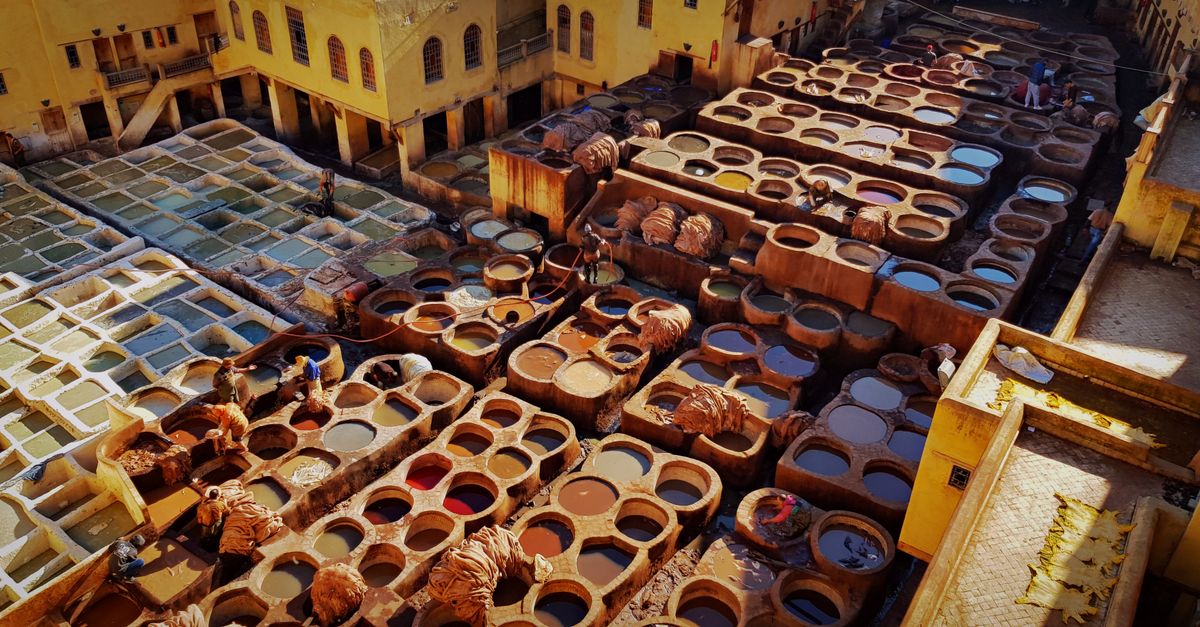
While Chouara attracts all the tourist attention, the smaller tannery of Sidi Moussa on the medina's northern side operates with even less tourist infrastructure and consequently with more of the rawness and authenticity that makes the leather-working tradition so compelling to observe. The Sidi Moussa tannery is half the size of Chouara but equally ancient, equally odoriferous, and visible from a single terrace connected to a leather shop that charges no obligatory purchase pressure.
The leather produced at Sidi Moussa is primarily used for the traditional babouche slipper — the pointed leather shoe that is the quintessential Moroccan footwear — rather than the bags and jackets that dominate Chouara's production. The babouche souk near Sidi Moussa sells slippers in every colour and size at prices far below the tourist shops near Bab Bou Jeloud: MAD 50–80 for a basic pair versus MAD 150–250 near the tourist entrance to the medina.
Access to Sidi Moussa tannery is from Rue Sidi Moussa, in the Douh neighbourhood north of the Qarawiyyin mosque. Ask a local for directions to "Sidi Moussa debbagha" (tannery) — the area is not signposted for tourists. The leather shop connected to the terrace is run by a third-generation leather worker who speaks French and basic English and will explain the tanning process without pressure to buy.
The walk from the Qarawiyyin to Sidi Moussa passes through some of the medina's most purely residential streets — laundry strung between houses, children playing football in dead-end alleys, the smell of bread from neighbourhood ovens. This is the medina that Fassi families actually inhabit, entirely removed from the tourist circuit and completely indifferent to it.
10. Ifrane's Alpine Village Day Trip
Sixty kilometres south of Fez in the Middle Atlas mountains, the town of Ifrane represents one of North Africa's most unexpected surprises: an Alpine Swiss village built entirely by the French in the 1930s as a highland resort for colonial officials wanting to escape the summer heat. The town's chalets, manicured parks, ski lodge architecture, and stone lion statue (carved by a German prisoner of war) sit at 1,664 metres altitude among cedar forests populated by Barbary macaques.
Ifrane is Morocco's coldest city — snow is common from November to March — and has Morocco's only ski resort (Michlifen, 12 km away) and a population of Barbary macaques (the same species as Gibraltar's famous apes) that live semi-wild in the surrounding cedar forest. The macaques are habituated to humans and will approach for food, though official guidelines discourage feeding as it disrupts their natural behaviour.
Ifrane is accessible by shared grand taxi from Fez's bus station near Bab Mahrouk for MAD 30 per person (1.5 hours), or by bus for MAD 25. The town itself has no significant monuments — the appeal is the extraordinary incongruity of the setting and the mountain air after the medina's intensity. The Barbary macaque colony in the forest above town (Cèdre Gouraud, 4 km from Ifrane) is best visited with a local guide for MAD 50–100.
Combine Ifrane with the medieval Middle Atlas city of Azrou (20 km south, MAD 8 by shared taxi) — a Berber market town with a weekly Tuesday souk selling rugs, pottery, and Middle Atlas honey directly from producers. The souk is one of the most authentic rural markets in the region and an hour there provides a completely different perspective on Moroccan commerce than anything available in Fez's medina.


