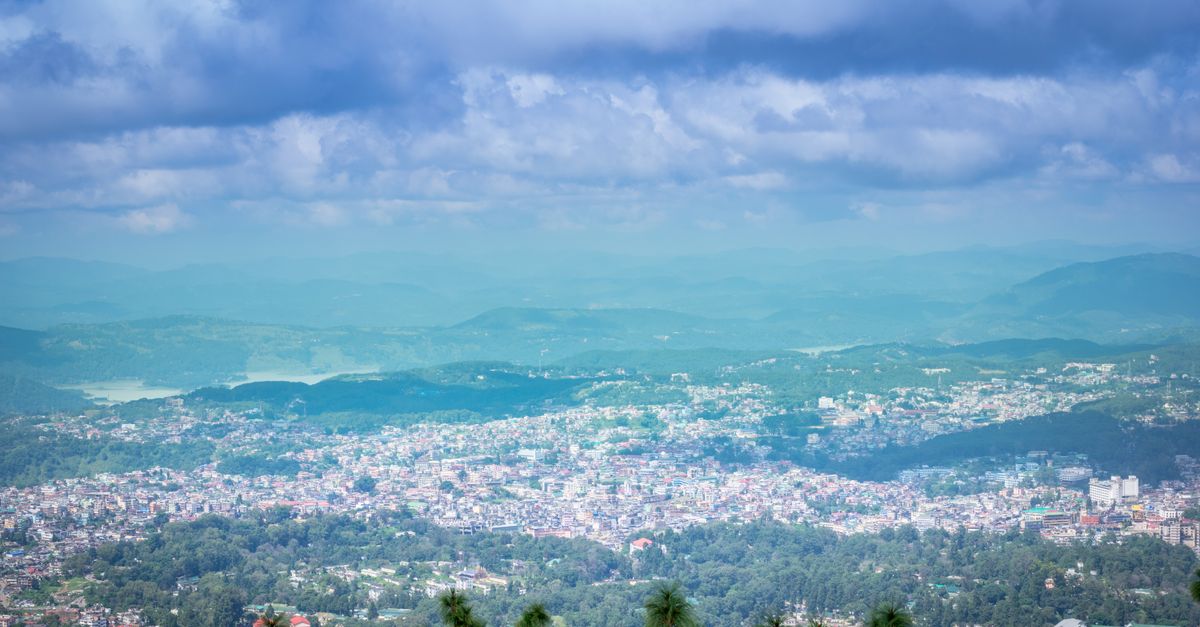
Ella is Sri Lanka's highland gem — a tiny hillside town where tea plantations cascade into misty valleys, blue trains cross the iconic Nine Arch Bridge, and distant Adam's Peak watches from afar. The legendary train journey from Kandy to Ella through tea country is rated among the world's most scenic railway experiences.

Nine Arch Bridge & Tea Estates
Morning: Hike to the Nine Arch Bridge (free, 20 minutes easy walk from town center). This elegant colonial-era stone viaduct arches gracefully across a jungle valley surrounded by tea bushes and coconut palms. Trains cross at approximately 9:15am and 3:45pm — check locally for exact schedules as they shift seasonally. The bridge framed by lush tropical vegetation with a blue train crossing above is Sri Lanka's most photographed and shared landmark image.
Afternoon: Tour a working tea factory — Uva Halpewatte or Newburgh Green Tea Factory (LKR 500-1,000 per person). Watch the complete process of withering, rolling, fermenting, and drying that transforms fresh green leaves into world-famous Ceylon tea. Taste freshly processed single-estate tea with panoramic valley views from the factory terrace. The surrounding emerald tea plantations with their neat rows of bushes covering the hillsides are perfect for leisurely walking.
Evening: Dinner on Ella's main street — a compact strip of guesthouses, restaurants, and shops. Kottu roti (roti bread chopped and stir-fried with vegetables and spiced meat, LKR 400-800) is Sri Lanka's signature street food — the rhythmic metallic chopping sound from kottu stalls is unmistakable and draws hungry crowds. Curd with treacle (thick buffalo milk yogurt drizzled with kithul palm syrup, LKR 200) is the essential sweet Ella dessert finish.
Little Adam's Peak & Ella Rock
Morning: Hike Little Adam's Peak (approximately 1 hour easy walk, free). The well-marked trail passes through manicured tea estates and rural farmland to a grassy summit with unobstructed 360-degree views of Ella Gap, the distant southern coastal plains, and the surrounding highland mountains. The morning light filtering through mist creates rewarding photographic conditions. The path is gentle, scenic, and suitable for all fitness levels.
Afternoon: Climb Ella Rock (3-4 hours round trip including rest stops, free). The more challenging hike follows railway tracks through a tunnel, then climbs through dense jungle to a cliff-edge viewpoint with perhaps the finest panoramic view in the entire Sri Lankan highlands. Hire a local guide (LKR 2,000-3,000) as the unmarked jungle trail can be genuinely confusing at several key junctions. The summit's sheer cliff edge offers dramatic photography.
Evening: Cooking class at one of Ella's family guesthouses (LKR 2,500-5,000 per person). Learn to prepare traditional Sri Lankan rice and curry with multiple vegetable curries, creamy dhal, spicy pol sambol coconut relish, and crispy papadums. Eat your own creations as dinner — Sri Lankan home cooking is deeply flavorful with fresh turmeric, aromatic curry leaves, pandan, and rich coconut milk forming the foundation of every dish.
Ravana Falls & Spice Gardens
Morning: Visit Ravana Falls (free admission), a dramatic 25-meter cascade named after the legendary demon king Ravana from the Indian epic Ramayana. The roadside waterfall is popular with locals for swimming in the natural rock pool at the base — join them for a refreshing dip. Continue to Ravana Cave (LKR 500) — a small cave system linked to the same Hindu mythology where Ravana is said to have hidden Princess Sita.
Afternoon: Visit a spice garden in the hills surrounding Ella (free guided tour, with purchases expected but not required). Ceylon cinnamon (the world's finest), green cardamom, black pepper vines, and fragrant clove trees grow in the rich highland soil. Knowledgeable guides explain traditional Ayurvedic medicinal uses of each plant. Fresh dried spice packets (LKR 500-2,000 per bag) make excellent authentic souvenirs to bring home from Sri Lanka.
Quick Tips
- Book the scenic Kandy-Ella train exactly 30 days ahead (LKR 1,500 for reserved second class seats by the window). Unreserved third class (LKR 240) is very cheap but extremely crowded with no guaranteed seats.
- Ella is small and entirely walkable — most hiking trails start directly from town. Tuk-tuks to further attractions like Ravana Falls cost just LKR 500-1,500 for a comfortable ride.
- January through March (dry season) offers the clearest mountain views for hiking and photography. Monsoon months bring frequent rain but lush green landscapes and significantly fewer tourists.
Practical Information
Ella is reached by the famous scenic train from Kandy (6-7 hours), Nuwara Eliya (2 hours), or Colombo (8 hours). The Kandy-Ella train should be booked 30 days in advance for reserved window seats. The town has ATMs, basic medical facilities, and international restaurants. Internet can be slow. Tuk-tuks are the local transport for destinations beyond walking distance. The town is very safe.
Best Times to Visit & Budgeting
The best visiting months are January through March and July through September when rain is minimal. The monsoon seasons (April-June and October-December) bring frequent showers. Ella is popular year-round — book accommodation ahead during peak season (December-March). Budget rooms start at LKR 2,000/night and comfortable guesthouses with valley views from LKR 5,000-10,000. The scenic train is the highlight — do not fly or drive to Ella if you can take the train.
| Travel Style | Daily Cost (LKR) |
|---|---|
| Budget | LKR 5,000-8,000 |
| Mid-Range | LKR 10,000-18,000 |
| Luxury | LKR 25,000-50,000 |
Day Trips from Ella
Ella's position in Sri Lanka's central highlands makes it an unusually productive base for day trips, with a cluster of significant attractions within 60 kilometres that would each justify a detour in their own right. The roads are slow and winding — a 30-kilometre journey often takes 90 minutes by tuk-tuk — but the journeys through tea country and cloud forest are themselves the experience.
Horton Plains National Park (45 kilometres west, LKR 3,905 entry for non-SAARC foreigners plus LKR 300 vehicle fee) is arguably the most dramatic highland landscape in Sri Lanka. The high plateau at 2,100 metres is one of the island's last remaining cloud forest ecosystems — a windswept moorland of stunted trees draped in hanging moss, endemic birds, and sambar deer grazing at roadsides. The signature attraction is World's End, a sheer escarpment dropping 880 metres in a near-vertical cliff face to the southern plains far below. Arrive before 8:30am as cloud rolls in reliably by late morning and completely obscures the view. The 9-kilometre circular trail past World's End and Baker's Falls takes three to four hours at a comfortable pace.
Nuwara Eliya, the former British hill station 50 kilometres northwest (LKR 800–1,500 by tuk-tuk or bus), is a wonderfully strange collision of Victorian England and Sri Lankan tea country. The post office, the Grand Hotel (built 1891), the golf course, and the gentlemen's club all survive intact, giving the town a convincing colonial time-capsule quality that is simultaneously absurd and charming. The surrounding Pedro Tea Estate (LKR 500, factory tour included) is one of the finest working factories to visit — the elevation here at 1,868 metres produces Nuwara Eliya's characteristically delicate, aromatic teas, considered by connoisseurs to be Sri Lanka's finest single-origin estate teas.
Buduruwagala rock temple (25 kilometres south of Ella near Wellawaya, LKR 500) rewards those willing to deviate from the standard highland circuit. Seven colossal Buddhist and Hindu figures are carved directly into a granite rock face in the jungle — the central standing Buddha at 15 metres tall is Sri Lanka's largest ancient stone figure. The site receives a fraction of the visitors that crowd Dambulla or Sigiriya, and on a weekday morning you may have it entirely to yourself except for a few birds and the caretaker monk.
Demodara Loop and the Nine Arch Bridge from below (walk from Ella, or take the train one stop to Demodara station) offers a completely different perspective on the railway infrastructure. At Demodara station, the railway performs one of the world's most audacious civil engineering tricks — the track spirals through a complete 360-degree loop, descending 30 metres within a circular tunnel, so that trains pass directly over themselves as they exit. The loop is visible from the hillside above the station and is best appreciated in the late afternoon when a Kandy-bound train makes the full corkscrew descent.


