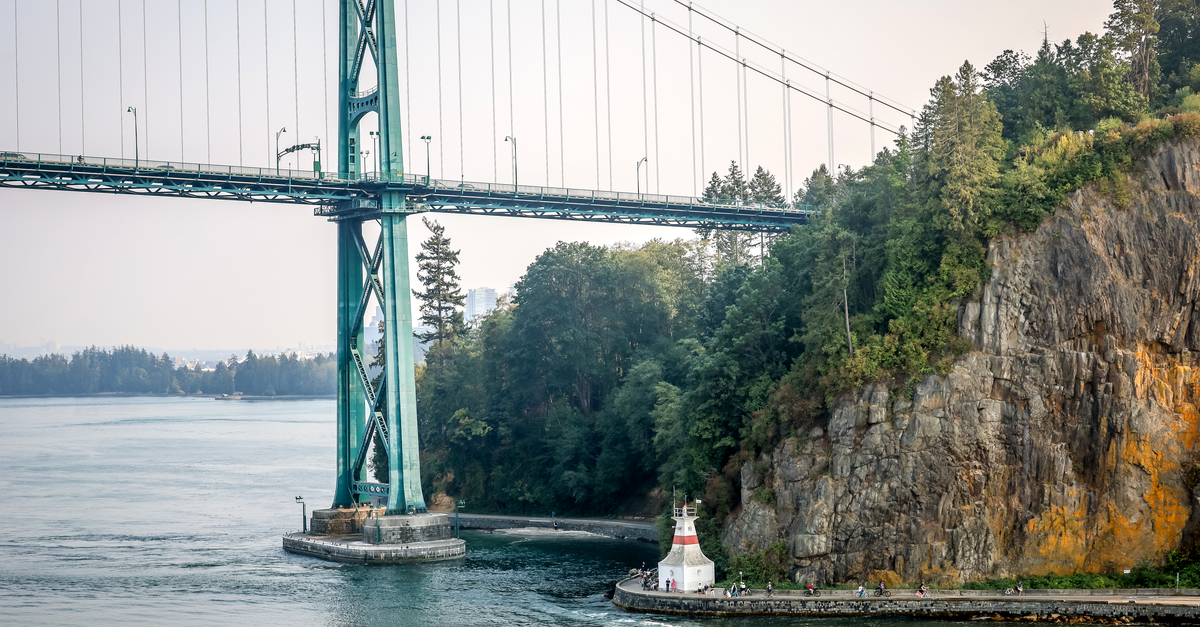
Vancouver's tourist identity is built on Whistler day trips, Stanley Park, and the Gastown cobblestones — an identity that the city markets competently and that visitors consume without realizing that the actual Vancouver exists in a much stranger, more interesting set of spaces. The city sits at the geographic intersection of rainforest, ocean, mountains, and one of the most complex immigrant populations in Canada, and that intersection produces neighborhoods, food cultures, and landscapes that are genuinely unlike anywhere else. The hidden Vancouver is not off the beaten path so much as it's one bus stop further than the tourist infrastructure points you.
This guide is for travelers who want to understand why Vancouverites are obsessively attached to a city that, from the outside, looks like a glass-condo skyline with a beautiful backdrop. The attachment comes from the specific quality of light on a clear January morning, from the oyster bars in the False Creek neighborhood, from the Gulf Islands an hour by ferry from Tsawwassen, and from the deep ravines and creek systems that cut through the urban fabric. These experiences are accessible, cheap or free, and almost completely untouched by tourism infrastructure.
Vancouver's transit system — SkyTrain, buses, and SeaBus — is excellent and covers the metropolitan area thoroughly. A Compass Card ($6) loads with credit and saves per-ride fees. Most neighborhoods are reachable by transit from downtown in 20–40 minutes. Cycling is excellent in the flat central areas; Mobi bike share (day pass $10) covers most of the inner city.

1. Marpole's Japanese Canadian History
Marpole, a residential neighborhood at the southern end of Vancouver, contains one of British Columbia's most significant and least acknowledged heritage sites: the Marpole Midden — a 4,000-year-old archaeological site of Musqueam Nation occupation, one of the largest ancient village sites on the Pacific Coast. A heritage marker at the site explains what was here; the midden itself extends under the surrounding streets and houses. Walking Marpole with awareness of this 4,000-year human timeline changes the experience of a neighborhood that otherwise appears simply residential.
Marpole was also the southern terminus of the Japanese Canadian fishing and farming communities before the forced relocation of 1942, when the Canadian government interned and dispossessed the entire BC Japanese Canadian population. The neighborhood's Japanese history is documented at the Japanese Canadian Cultural Centre in nearby Little Tokyo (East Vancouver), but the Marpole landscape contains traces of the community that was there.
Take the Canada Line SkyTrain to Marine Drive station — this is the center of Marpole. The heritage marker for the Marpole Midden is near the intersection of SW Marine Drive and Hudson Street. Walk the surrounding residential streets noting the mix of original Craftsman bungalows and newer development.
Free. Combine with the nearby Musqueam Cultural Centre (4 kilometers south) for Indigenous cultural context, or with a walk along the Fraser River dyke trail for views across the river to Richmond. Budget for food at the excellent Asian restaurants on 70th Avenue — particularly the Vietnamese and Chinese cafes that serve the neighborhood's multicultural community.
2. Commercial Drive's Community Hub
Commercial Drive — "The Drive" — between Venables Street and Broadway is Vancouver's most persistently community-oriented commercial street: the strip that has survived gentrification pressures by maintaining a mix of Italian delis, Portuguese chicken shops, Ethiopian restaurants, Caribbean bakeries, leftist bookshops, community gardens, and the infrastructure of the neighborhood's lesbian community that has centered here for decades. The Drive is most alive on Saturday mornings when the farmers market operates and when the cafés are full of people who appear to have nowhere else they need to be.
The Italian character of Commercial Drive dates to the postwar immigration wave of Italian Canadians from the late 1940s through 1960s; the subsequent waves of Portuguese, Caribbean, and Central American immigration layered additional food and cultural infrastructure onto the Italian base. The current multicultural commercial ecology is the result of 70 years of successive immigration.
Take the SkyTrain Expo Line to Commercial-Broadway, walk north along The Drive. The commercial core runs between Broadway and Venables — about 1.5 kilometers. Saturday mornings are best for the farmers market and café energy; any weekday afternoon is pleasant for exploring without crowds.
Budget $15–25 for a morning of grazing: espresso at one of the Italian cafes ($3–4), pastry from Fratelli Bakery ($3–5), lunch at Havana restaurant ($15–20). The Drive's Ethiopian restaurants (Nyala, Kokeb) offer excellent value dinners at $18–25 per person. Cafe Calabria on Commercial Drive has maintained the same Italian barista culture since 1978.
3. Iona Beach Regional Park's Quiet Coastline
Iona Beach Regional Park — accessed via the Iona Island causeway at the mouth of the Fraser River, adjacent to the Vancouver International Airport — is one of the strangest and most beautiful urban park experiences in Canada. Two jetties extend 4 kilometers into the Strait of Georgia, with the South Jetty flanked on one side by the open Pacific and on the other by the fresh water and sediment plume of the Fraser River. The contrast between fresh and salt water, visible as distinct color boundaries in the sea, is extraordinary. The jetty walk is flat, exposed to wind, and often very birdrichly populated — the park is one of BC's premier shorebird migration sites.
Iona is accessible via transit from Richmond Center (bus 401 to the airport area, then cycling or walking the causeway — the causeway road has a bike lane). The park is managed by Metro Vancouver and is free to visit. The view of the runway and airplanes landing from the jetty tip creates an unusual juxtaposition of aviation and wilderness.
Drive or cycle from Richmond city center — about 15 minutes by bike following the dyke trails. Limited transit (bus 401 to the airport area, then walking the 4km causeway). The park is free. Best in fall for shorebird migration; winter for raptors hunting the beach; spring for nesting birds on the island interior.
Free. Bring binoculars if you have them — the birding here is exceptional. Wind protection is essential year-round. Pack food; there are no facilities in the park. Combine with cycling the Richmond dyke trail network, which extends for kilometers along the Fraser and Strait of Georgia shorelines.
4. The Gulf Islands: Salt Spring Island Day Trip
The Gulf Islands between Vancouver Island and the mainland are one of the Pacific Northwest's most beautiful landscapes and most undervisited from Vancouver — partly because getting there requires a BC Ferries crossing from Tsawwassen or from Swartz Bay on Vancouver Island. Salt Spring Island, the largest, is reachable in about 2 hours from downtown Vancouver by transit and ferry ($25–35 round-trip depending on vehicle). The Saturday Market in Ganges village runs April through October and is the best farmers market in BC — local cheese, preserved foods, artisan products, and fresh farm produce from a community of 10,000 year-round residents on an island of extraordinary beauty.
Salt Spring Island has been an artist's community since the 1970s, and the population of ceramicists, painters, weavers, and writers has created a studio culture that is visible through the Studio Tour map available at island visitor centers. The olive orchards, lavender farms, and sheep pastures of the island's interior produce excellent local food products available at farm stands throughout the island.
Take transit to Tsawwassen Ferry Terminal (bus from downtown Vancouver), then the BC Ferries Tsawwassen–Long Harbour route to Salt Spring Island. Total journey: approximately 2–2.5 hours each way. Ferry: $19.80 adult foot passenger one-way. Saturday Market in Ganges: April–October, 8am–4pm.
Ferry: approximately $20 one-way foot passenger. Budget $25–40 for market shopping and lunch in Ganges. The Raven Street Market Café in Ganges serves excellent local food for $15–22 per person. A full day trip requires an early start — take the 7am ferry from Tsawwassen for a full day on the island.
5. Hastings-Sunrise's Italian and Japanese Heritage
The Hastings-Sunrise neighborhood east of Commercial Drive holds two distinct heritage layers: the Italian community around Hastings Street East that established itself in the 1950s, and the Japanese Canadian community of "Japantown" around Powell Street that was forcibly removed in 1942 and has never fully returned. The Powell Street Festival each August commemorates the Japanese Canadian community and the neighborhood's history; the Tonari Gumi Japanese Canadian community services office on Powell Street provides historical resources. The Italian layer is more visually present — the social clubs, the bocce courts, the Italian grocery stores along Hastings Street East, and the excellent Italian restaurants.
The Powell Street Japantown was one of North America's most significant Japanese Canadian communities before 1942, with Japanese-language newspapers, businesses, and cultural organizations operating in a dense four-block commercial core. The forced removal was one of Canada's most significant civil liberties violations — 22,000 people dispossessed and relocated to internment camps.
Take the 10 Granville bus to Hastings and Commercial, walk east along Hastings Street into Hastings-Sunrise. The Italian commercial strip is most concentrated between Commercial Drive and Nanaimo Street. Powell Street runs parallel two blocks south — walk it from Dunlevy to Hawks Avenue for the Japantown historical marker concentration.
Free to explore. Lunch at one of the Italian restaurants on Hastings East runs $15–25 per person. The Fratelli Bakery on Commercial Drive (covered above) extends into this territory. Budget $5–10 for coffee and pastry at one of the old-school Italian bars on Hastings.
6. Queen Elizabeth Park's Bloedel Conservatory
Queen Elizabeth Park sits atop Little Mountain — the highest point in the City of Vancouver proper at 167 meters — with panoramic views of the city, the mountains, and on clear days the peak of Mount Baker in Washington State. The park's formal gardens are well maintained and popular in spring bloom season. Less known is the Bloedel Conservatory at the summit — a triodetic dome housing tropical rainforest, desert, and intermediate climate zones with 500 plant species and 100 free-flying birds from 50 species. The free-flying parrots and tropical birds create an immediately disarming experience in a climate that is otherwise known for rain and grey skies.
The dome was built in 1969 as part of the park's development following Expo 67's architecture themes. The Vancouver Park Board has threatened to close it several times due to maintenance costs; community advocacy has kept it open. A visit supports its continued operation.
Take the 15 bus from downtown to Cambie Street and 33rd Avenue, walk uphill into the park. The Bloedel Conservatory is at the park summit. Open daily 10am–5pm; admission $7.24 adults. The park's formal gardens and viewpoints are free to access at all hours.
Conservatory admission $7.24 adults. Park entry free. The surrounding Cambie Street neighborhood has excellent independent restaurants — Seasons in the Park restaurant within the park itself has views and above-average food ($25–35 per person). Combine with the nearby VanDusen Botanical Garden (15 minutes walk, $14.65 admission) for a full afternoon of garden and nature.
7. The Fraser River Estuary at Boundary Bay
Boundary Bay Regional Park, at the US-Canada border south of Vancouver, protects a section of the Fraser River estuary that is one of the most important shorebird and raptor staging areas in North America. In winter, short-eared owls hunt the dyke tops at dusk while tens of thousands of dunlins wheel over the mudflats in coordinated aerial displays. In summer, the beach is warm and flat, ideal for families and shell-seekers. The 24-kilometer dyke trail along the bay's edge can be walked or cycled in full for an extraordinary half-day of scenery and wildlife. This is one of the most biodiverse places in BC and almost no tourists know it exists.
The Fraser River estuary — the delta system extending from Hope to the Strait of Georgia — was the resource base for the Musqueam, Tsawwassen, and other Coast Salish peoples for thousands of years. The delta's annual salmon runs, now significantly reduced from historic levels, remain one of the Pacific Northwest's most important ecological phenomena.
Drive south from Vancouver on Highway 99 to the Ladner area, then west along River Road and south to Boundary Bay Road. Boundary Bay Regional Park has parking at several points. The dyke trail is accessible at any parking area. Take the 620 bus from Bridgeport Station to Ladner, then the 606 to Boundary Bay for car-free access.
Free. Bring binoculars — the birding here rewards them significantly. Winter (November–March) offers the most spectacular raptor concentrations. Summer offers swimming at Centennial Beach. Combine with a seafood lunch in Steveston, the fishing village 20 minutes north along the river.
8. Granville Island's Production Districts
Granville Island is well-known for its public market and galleries, but most visitors miss the production side: the working studios, factories, and craft operations that occupy the island's non-market buildings and are open for walk-in visits. The Emily Carr University of Art and Design (moving to a new campus but still artistically influential on the island), the Net Loft building's artisan studios, the Granville Island Brewing taproom, and the glass studios, ceramics workshops, and fabric design operations scattered through the island's industrial buildings are all accessible without tickets or schedules. The market itself is best on weekday mornings when it operates for actual Vancouverites.
Granville Island was a federal government industrial island until the 1970s, when a community campaign converted it to mixed artistic, commercial, and light-industrial use. The conversion was designed to maintain working operations — the cement plant and net loft are still active — alongside the cultural programming, creating an unusual urban texture.
Take the Aquabus ferry from the south end of Hornby Street or the False Creek ferry from Science World — both connect to Granville Island ($5–6 one-way). Or walk from Kitsilano (20 minutes). The island is car-accessible but parking is extremely limited; ferry or walking is strongly recommended.
Market entry free. Studio visits free. Granville Island Brewing taproom: pints $7–9. Budget $20–35 for a market lunch of BC seafood, artisan cheese, and local produce. The kid-friendly Public Market Net Loft building has artisan shops worth browsing on the upper level.
9. Lynn Canyon Park: Free Suspension Bridge
The Capilano Suspension Bridge attracts 800,000 visitors per year and charges $65 admission. Lynn Canyon Park, 20 minutes east in North Vancouver, has a free suspension bridge over a canyon of almost identical drama, plus swimming holes fed by the Lynn Creek in summer, old-growth Douglas fir and western red cedar trails, and an ecology centre (free) with natural history programming. The canyon swimming in summer is legitimately extraordinary — natural pools carved in granite bedrock, frigid and clear, with cliff-jumping opportunities that the park staff tolerates at reasonable locations. This is the Vancouver locals know and the tourism industry has no financial interest in promoting.
Lynn Canyon's old-growth forest — some trees over 1,000 years old — provides the same ecological experience as the more famous Capilano area but without managed tourism infrastructure. The trails extend into Lynn Headwaters Regional Park to the north, where additional kilometers of forest walking are available at no cost.
Take the SeaBus to North Vancouver, then the 228 or 229 bus to Peters Road (Lynn Canyon stop). Or drive from North Vancouver via Lynn Valley Road. The park entrance and ecology centre are at 3663 Park Road. Free parking on-site. Suspension bridge and trails open daily 7am–9pm summer, 7am–7pm winter.
Free. The ecology centre is free and has excellent natural history displays. Swimming in summer requires appropriate footwear for the slippery granite. Budget for lunch at one of the Lynn Valley Diner or Pemberton Heights Coffee spots in the surrounding North Vancouver neighborhood.
10. Chinatown's Heritage Buildings and Night Market
Vancouver's Chinatown along East Pender Street between Carrall and Gore Avenues is North America's third-largest and contains a concentration of heritage buildings — the Classical Revival commercial buildings from the 1900s–1930s — of genuine architectural quality. The Sam Kee Building at 8 West Pender Street is listed in the Guinness World Records as the world's narrowest commercial building (1.8 meters deep), built in 1913 as an act of spite against the city that had expropriated most of the owner's lot. The Chinatown night market (weekends, June–September) on Keefer and Georgia Streets is a community institution with food stalls, merchandise, and live performances that draw the Chinese Canadian community from across the metropolitan area.
Vancouver's Chinatown developed in the 1880s as Chinese workers who built the Canadian Pacific Railway settled in the city. The community faced formal and informal racial discrimination — the Head Tax ($500, then $1,000 per person) and the Chinese Immigration Act of 1923 (which banned almost all Chinese immigration) — and built its cultural and commercial infrastructure in resistance to these conditions. The Dr. Sun Yat-Sen Classical Chinese Garden adjacent to the commercial district is the first authentic classical Chinese garden built outside China (admission $14 adults).
Walk from Gastown east along Hastings Street to Carrall, turn south to Pender — you're at the edge of Chinatown. Or take the SkyTrain to Stadium-Chinatown station. The night market is on Keefer Street west of Main Street, weekends June–September, evenings from 6pm. Dr. Sun Yat-Sen Garden at 578 Carrall Street is open daily.
Night market: free entry, food stalls $5–12 per item. Dr. Sun Yat-Sen Garden: $14 adults. Chinatown restaurant lunch specials: $10–16 per person. The Pink Pearl restaurant on East Hastings has served consistent dim sum since 1981 ($15–25 per person weekend morning).