
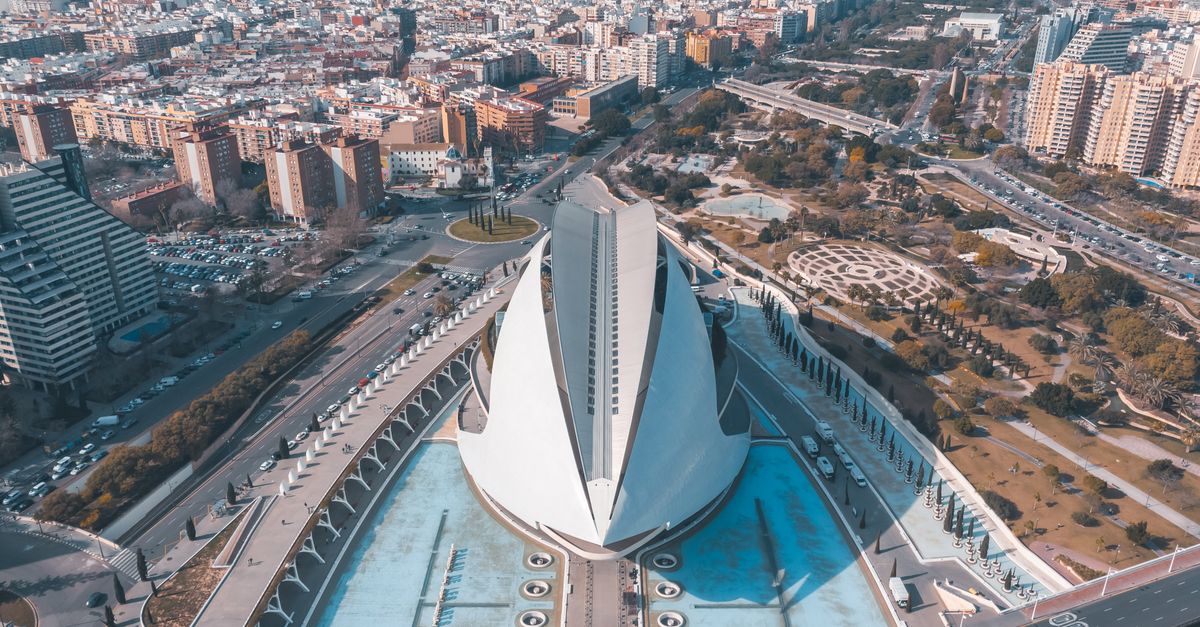
Valencia has spent years being underrated — which is exactly why it's now one of the best cities in Spain to visit. The tourists who come are mostly here for Las Fallas, the beach, and the Ciudad de las Artes y las Ciencias. Between those attractions lies a city of extraordinary food markets, a Gothic quarter that puts Barcelona's to shame, and neighbourhoods that are in the middle of one of Europe's most interesting urban transformations without yet being overrun.
This guide is for travellers who know that the real paella is cooked inland, not on the beachfront; who want to eat their way through the Ruzafa neighbourhood without anyone handing them a tourist menu; who are interested in the fact that Valencia has a functioning tram network, a converted riverbed turned into a park, and a medieval silk exchange that is a UNESCO World Heritage Site and often uncrowded.
Valencia is a city that rewards the traveller who shows up curious. The metro costs €1.50, the markets are extraordinary, and the food will make you question every paella you've eaten before.
1. Ruzafa Neighbourhood
Ruzafa (Russafa in Valencian) is the neighbourhood that Valencia's creative class colonised over the last decade — but unlike Barcelona's equivalent (El Born) or Madrid's (Malasaña), it hasn't yet been fully absorbed into the tourist circuit. It's a grid of late 19th-century streets in the south of the city centre, thick with independent coffee shops, natural wine bars, concept restaurants, vintage clothing stores, and a covered market that is one of the most beautiful in Spain.
The neighbourhood takes its name from an Andalusian Arabic word for garden — it was indeed a garden suburb of the Moorish city. In the 20th century it became a working-class immigrant neighbourhood (Moroccan, Chinese, South American), and traces of that multicultural past persist: you can buy Chinese groceries next to a craft beer bar, and the best falafel in the city is made by a Lebanese family three doors down from a pintxos bar.
Take the metro to Àngel Guimerà station or walk south from the old city — it's about 15 minutes from the Cathedral. Calle Cuba and Calle Sueca are the main axes, but wander the surrounding streets: Calle Puerto Rico, Calle Dénia, Calle Cádiz. The neighbourhood is most alive from 7pm onward; morning is better for the market.
The Mercat de Russafa, on Calle Cuba, has fresh produce stalls and a brilliant fish counter — arrive before 10am for the best selection. Nearby, El Rodamón is a natural wine bar open from noon that pours small-producer Spanish wines by the glass from €3.50. For coffee, Bluebell Coffee on Calle Dénia has some of the best single-origin espresso in the city.
2. Llotja de la Seda (La Lonja)
The Llotja de la Seda — the Silk Exchange — is one of the masterpieces of late Gothic architecture in Europe. Built between 1482 and 1533, its main trading hall contains eight twisted, helical stone columns rising to a soaring vaulted ceiling — an effect so apparently impossible for the period that it was considered miraculous by contemporaries. It's a UNESCO World Heritage Site. It's also, on most days, pleasantly uncrowded.
The Llotja was built at the height of Valencia's commercial power — the city was one of the wealthiest in the Mediterranean in the 15th century, and the silk trade was its engine. The building expressed that confidence: the main hall was designed to accommodate hundreds of merchants conducting transactions simultaneously, and the carved stonework of the facade is so detailed that scholars are still finding new scenes in it. The upper floor has a magnificent coffered wooden ceiling and an orangery on the terrace.
Find it on Plaza del Mercado, directly opposite the Central Market. Open Tuesday to Saturday 9:30am–7pm, Sunday and bank holidays 9:30am–3pm. Closed Monday. Admission €2 for adults; free on Sundays. The guided tour in English runs at 11am on weekends and is genuinely excellent — the guide explains the mercantile context that makes the building's ambition comprehensible.
The contrast of the Llotja with the Central Market opposite is one of Valencia's great urban experiences: medieval commerce across the plaza from 20th-century commercial abundance. Visit both in the same morning. The Llotja needs about 45 minutes to appreciate properly. Don't rush the upper room — the carved wooden ceiling there is just as extraordinary as the ground floor columns and gets far less attention.
3. Barrio del Carmen Evening
El Carmen is Valencia's oldest neighbourhood — the heart of the medieval walled city, its streets still following the Roman and Moorish street plan. By day it's atmospheric but busy with visitors. At night, roughly from 9pm until 2am on weekends, it becomes something else: a warren of bars and music venues packed with a young Valencian crowd that takes its nightlife seriously. The neighbourhood hosts some of Spain's best small music venues and the bar density is extraordinary.
The two medieval gates at either end of Barrio del Carmen — the Torres de Serranos to the north and the Torres de Quart to the west — frame the neighbourhood like a stage set. The lanes between them concentrate centuries of architecture: Romanesque churches, Renaissance mansions, Art Nouveau warehouses, and the occasional surviving piece of Roman wall. The street art is excellent; look for murals by local artists in the lanes off Calle Alta and Calle del Museo.
Walk north from the Cathedral along Calle Caballeros — Valencia's main medieval commercial street — to enter the neighbourhood. For evening bars, Calle Alta, Calle dels Cavallers, and the lanes around the Plaza del Tossal are the best hunting ground. La Trompeta, on Calle Quart, is a music bar that books excellent small jazz and indie acts. Café de las Horas, on Calle Conde Almodovar, is kitsch and baroque and wonderful.
Bar entry is typically free or €5–8 with a drink included for music venues. Beer from €2.50. The neighbourhood has several excellent cocktail bars — Manhattan on Calle Caballeros has been making classics since 1931. The lanes are well-lit but uneven underfoot; watch your step after midnight when the pavement cafes have emptied their share of empty glasses onto the cobblestones.
4. Jardí del Túria
In 1957, a catastrophic flood devastated Valencia and killed 81 people. The government's response was to divert the Turia river around the city, leaving a 9-kilometre dry riverbed running through the urban centre. Rather than build a motorway on it (the original plan), Valencia turned the entire riverbed into a linear park — a green lung that connects the historic centre to the Ciudad de las Artes y las Ciencias at the far eastern end. It's one of the most inspired pieces of urban planning in Europe.
The park is organised in sections, each designed differently: the western sections near the Torres de Serranos have football pitches and children's play areas; the central sections are planted with orange trees and formal gardens; the eastern sections, near the Calatrava buildings, are more architectural and designed for cycling and running. The whole 9 kilometres takes about two hours to walk from end to end — or 45 minutes on a rented city bike.
Access the park from any bridge crossing — there are many. The best entry points for visitors are near the Pont de Serrans (at the old city end) or the Pont de l'Exposició in the middle. Bike rental is available at numerous Valenbisi docking stations around the city; a 24-hour tourist pass costs €13.30 and includes unlimited 30-minute journeys.
The park is free and open at all hours. It's busiest on weekend mornings when the entire city seems to be cycling, jogging, or walking dogs along it. At dusk on weekdays it's peaceful — teenagers skateboarding in the bowls, old men playing chess, a man practising trumpet in an arch. The Gulliver playground at the eastern end (a climbable giant figure, made of metal and foam) is one of the most joyful pieces of public art in the city.
5. Mercado de Colón
The Mercat de Colón is a 1914 modernista market building in the upmarket Eixample neighbourhood — a soaring iron and brick structure with Art Nouveau tilework, stained glass, and a grand central nave. The original fresh food market closed decades ago; today the building is home to a food hall with a deliberately curated mix of Valencian food producers, a good bakery, a fine fish counter, and the best breakfast spot in the neighbourhood. The architecture alone justifies the trip.
The building was designed by Francisco Mora Berenguer and opened in 1916. It was one of the first large iron-framed structures in Valencia and shows strong influence from Brussels and Barcelona Art Nouveau movements. After decades of underuse, it was restored in the early 2000s and reopened as a gourmet market. The restoration is tasteful — the historic structure is intact, and the market units don't overwhelm it.
Find it on Calle Jorge Juan, in the Eixample neighbourhood south of the old city. Open daily from around 8am–11pm (individual stall hours vary). No admission charge. The morning is best for the fresh produce stalls; afternoon is better for sitting at the tables in the central nave with a coffee or a glass of horchata (the Valencian tiger-nut drink, which you should try here).
Horchata at the Mercat de Colón costs €2.50–3; it's served cold and goes exceptionally well with a farton (a long, sugary bread roll made for dipping). The market café serves excellent coffee and a breakfast plate for €6–8. On Sunday mornings, an informal vinyl record and antiquarian book market sets up outside — arrive before noon for the best finds.

6. Torres de Quart at Sunset
The Torres de Quart are the western gate of the medieval city — two massive cylindrical towers built in the 1440s, pocked with cannonball holes from the 1808 Napoleonic siege that were never repaired (a deliberate choice, apparently, to preserve the evidence). Unlike the more famous Torres de Serranos, the Quart towers have a less polished, more raw presence. And at sunset, they turn a deep gold that no photograph quite captures.
The towers are free to enter and climb — 360-degree views of the city rooftops from the top, and a direct look into Barrio del Carmen on the eastern side. The interior staircases are steep and unlit in places; bring a flashlight or phone torch. The battlements are intact and you can walk the full perimeter. It's one of the best free views in Valencia and is consistently overlooked in favour of the Cathedral bell tower.
Find the towers at Calle Guillem de Castro, on the western edge of the old city. Opening hours are roughly Tuesday to Saturday 10am–2pm and 4:30–8:30pm, Sunday 10am–2pm. Closed Monday. Admission is free. Come 30 minutes before sunset — the light on the surrounding streets from the top is extraordinary, and the city's background noise softens at that hour.
The cannonball holes are worth examining closely — the damage pattern tells the story of the 1808 siege better than any plaque. French artillery hit the towers from the west; you can trace the trajectory from the pattern of impacts on the stone. The area around the towers, on the outside of the old city, has a cluster of good bars and the excellent Mercado de Quart, a neighbourhood market that opens on Sunday mornings.
7. Albufera Natural Park
The Albufera is a freshwater lagoon about 10 kilometres south of Valencia — 21,000 hectares of wetland, rice paddies, and fishing villages that are the source of Valencia's paella rice and one of the most important bird habitats in Europe. Most visitors to Valencia never go. Those who do, by boat across the lagoon at sunset, often describe it as one of the finest natural experiences in Spain.
The lagoon was originally a bay that became enclosed by the gradual growth of a sandbar — a process that took centuries. The rice cultivation that now dominates the surrounding landscape was introduced by the Moors in the 8th century and has continued largely unchanged. The village of El Palmar, on an island in the lagoon, is the centre of the rice-growing culture and home to the best traditional paella restaurants.
Take bus 25 from Valencia's Alacant bus station — it runs every 30 minutes and takes about 45 minutes to El Palmar. Alternatively, rent a bike and cycle south along the coast road (about 12 kilometres). Boat trips on the lagoon can be arranged at El Palmar from €6 per person; go at sunset for the best light. The rice fields change colour dramatically by season — gold in September at harvest, flooded and reflective in winter, vivid green in spring.
Bird watching in the Albufera is exceptional: flamingos, purple herons, white storks, and in winter, enormous flocks of migratory ducks. Bring binoculars if you have them. The visitor centre at the lake edge has good free maps and information in English. Stay for lunch at El Palmar — the restaurants serve the best authentic Valencian paella on earth, rice grown in the fields you walked through to get there.
8. Bioparc Valencia at Opening Time
The Bioparc is not a hidden gem in the conventional sense — it's a major zoo — but the experience of visiting at 10am when it opens, before the school groups arrive, is genuinely remarkable. The design concept is immersive: no bars or glass between visitors and many animals, with moats, topography, and clever sight lines replacing traditional enclosures. The African savanna habitat is one of the finest zoo environments in Europe. The gorilla family is extraordinary.
The Bioparc opened in 2008 on the western edge of the Jardí del Túria. The design philosophy — called "zoo-immersion" — was developed in collaboration with ecologists and aims to recreate the sensory experience of actual African ecosystems as closely as possible. The vegetation is appropriate to each habitat zone; the sound design (bird calls, ambient noise) changes as you move between areas. It's the most thought-through zoo in Spain.
Take the metro to Nou d'Octubre station on line 1, then walk five minutes. Open daily from 10am; closing time varies by season (typically 6–9pm). Adult admission €23.50, children €18. The price is not cheap, but the quality of the experience and the animal welfare standards justify it. Book online to save €2 and avoid the ticket queue.
The first 90 minutes after opening, before the school groups arrive, are the best: you often have enclosure areas almost to yourself, and the animals are more active in the morning cool. The gorilla habitat is the emotional centrepiece — a family group with infants, visible at remarkably close range. The Madagascar habitat, with ring-tailed lemurs walking freely among visitors, is also exceptional. Plan three hours minimum.
9. Museo Nacional de Cerámica
Valencia has been a centre of ceramic production since the Moorish period — the Manises and Paterna traditions are among the oldest in Europe. The Museo Nacional de Cerámica (also called the González Martí Museum) is housed in the extravagant 18th-century Palacio del Marqués de Dos Aguas — a building with a facade so baroque it appears to be melting — and contains 5,000 years of ceramic history in one of the finest palace interiors in Spain.
The palace facade, carved by Ignacio Vergara in 1740–1744 from alabaster, is unlike anything else in Valencia. The two figures flanking the entrance door represent the Cabriel and Júcar rivers, their bodies dissolving into flowing water. Inside, the rooms are preserved as they were in the 18th century — the carriage gallery, the silk-hung state rooms, the private apartments — and the ceramic collection is distributed through them in a way that combines art history with architectural experience.
Find it on Calle del Poeta Querol, between the Cathedral and the train station. Open Tuesday to Saturday 10am–2pm and 4–8pm, Sunday 10am–2pm. Closed Monday. Admission €3; free Saturday afternoons and Sundays. The audio guide (€2 extra) is worth it for the palace history — the building itself is the first exhibit.
Allow two hours for a proper visit. The ceramic collection covers Valencian azulejo production, Hispano-Moresque lustre ware, and European porcelain from Meissen to Sèvres. The highlight for most visitors is the palace kitchen on the ground floor, fitted out in original 18th-century blue and white tiles and preserved entirely intact. The gift shop sells reproduction azulejos made in the traditional Manises style — far better quality than the tourist-market equivalents.
10. Mercat Central at 8am
The Central Market is Valencia's most famous — a 1928 modernista cathedral of food with 8,000 square metres of stalls under a tiled dome. Everyone recommends it; what fewer people tell you is to go at 8am before the tourist rush starts at 10am. At 8am it belongs to the city: market traders chatting between stalls, restaurant buyers loading crates of produce, old women picking through artichokes with the focused attention of art collectors examining brushwork.
The building was designed by Francesc Guardia Vial and Alexandre Soler March and completed in 1928. The main dome, at 30 metres high, is covered in coloured ceramic tiles — Valencia's architectural signature — and floods the interior with warm light on clear mornings. The cast-iron columns, the stained glass, and the central octopus weather vane are all worth examining closely. This is a working market that also happens to be a masterpiece of architecture.
Enter from Plaza del Mercado or Calle San Vicente. Open Monday to Saturday from 7:30am; stalls typically close by 2:30pm. The fishmongers open earliest; the vegetable and fruit stalls are in full swing from 8am; the prepared food stalls (orxateria, dried fruits, nuts, spices) open from 9am. No admission charge.
At 8am, most market bars are already open — the bar inside the market near the main entrance does a €1.90 café solo and the best bocadillo de jamón in the neighbourhood for €3.50. The fresh produce is priced for residents: a kilo of blood oranges (Valencia's most famous fruit, in season November–March) for under €2. Bring a canvas bag and buy enough for a picnic in the Jardí del Túria twenty minutes later.


