
Phuket Food Guide: Street Eats, Night Markets & Must-Try Dishes
Phuket's food scene is shaped by its position at the crossroads of Thai, Chinese, Malay, and Indian cooking traditions. The island's signature dishes — hokkien mee, moo hong, oh tao — reflect this mix, while classic Thai street food remains the backbone of every night market and roadside stall.
Eating well in Phuket is surprisingly cheap if you know where to look. Budget ฿150-300 per day eating at local spots, or ฿600+ if you mix in beachfront restaurants.
Must-Try Dishes
Pad Thai
Phuket's pad thai tends to be slightly sweeter than Bangkok's version, with more tamarind in the sauce. Street vendors wrap it in a thin egg crepe for ฿50-60. Look for stalls with high turnover — the noodles should be wok-fried to order, not sitting in a tray.
The best pad thai stalls are along Dibuk Road in Old Town and at Banzaan Fresh Market's food court near Patong. Avoid beachfront versions — they're triple the price and half the flavor.
Green Curry (Gaeng Khiao Wan)
Southern Thai green curry is fiercer than its central Thai counterpart. Phuket cooks use more bird's eye chilies and less coconut cream, producing a thinner, more intensely spiced curry. A plate over rice runs ฿50-70 at local rice shops.
Order it with chicken (gai) for the most common version, or pork (moo) for something meatier. Ask for "mai pet" if you want it less spicy, though most cooks will still make it hotter than you expect.

Moo Ping (Grilled Pork Skewers)
These marinated pork skewers are Thailand's ultimate grab-and-go snack. The meat is sweet from palm sugar and coconut milk, charred on small charcoal grills that dot every market and street corner. Four skewers with sticky rice costs ฿40-60.
Moo ping peaks in the early morning and late afternoon when vendors fire up fresh coals. The best ones have a slightly caramelized exterior with juicy, tender meat inside. If the skewers look dry or pale, move to the next stall.
Roti
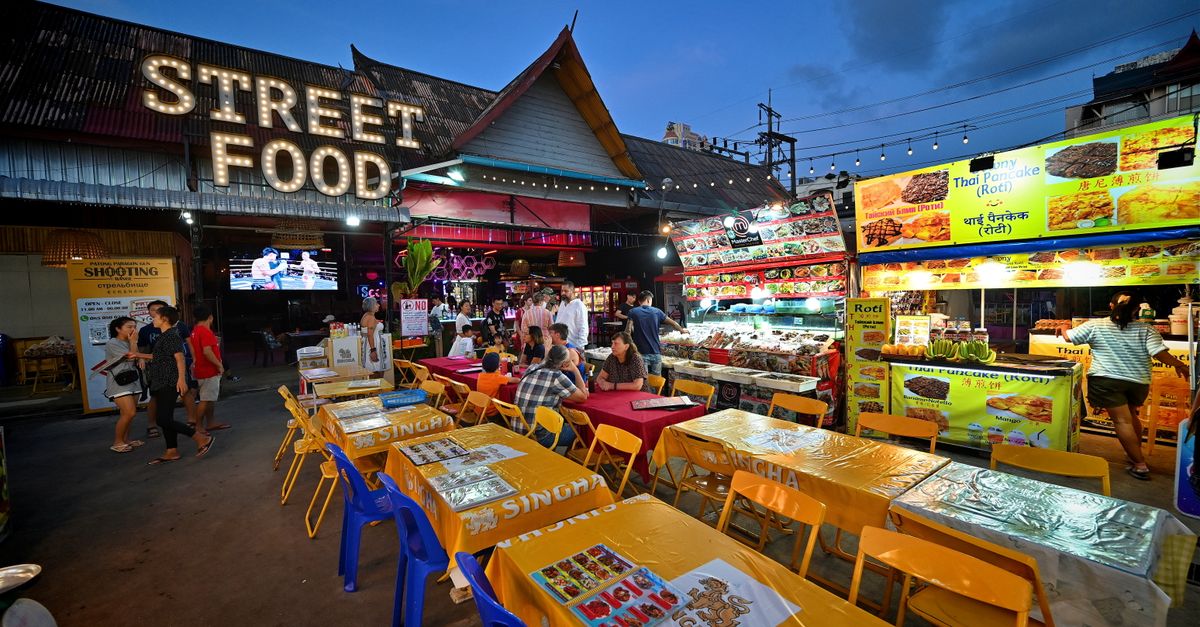
Phuket's roti tradition comes from its Muslim Malay community. The dough is stretched paper-thin, fried on a flat griddle, and folded with fillings. Sweet versions come with banana and condensed milk (฿40) or Nutella (฿50). Savory roti with curry dipping sauce is equally good and costs ฿30-40.
Watch the roti maker stretch the dough — it's half the experience. The best roti vendors are along the main road near Kata Beach and at the Chillva Market entrance.
Night Markets
Chillva Market
Open Thursday through Saturday evenings from 5-11 PM, Chillva Market is where young locals hang out. The market is built from converted shipping containers and has a festival atmosphere with live music and neon lights.
Food highlights include grilled seafood skewers (฿30-50), coconut ice cream (฿40), and Thai-style crepes with various fillings (฿35). The drink stalls sell fresh smoothies and Thai iced tea for ฿25-35. Come hungry — the portion sizes are generous and prices are local, not tourist-inflated.

Sunday Walking Street (Thalang Road)
Every Sunday from 4-10 PM, Phuket Old Town's Thalang Road closes to traffic and fills with food vendors, craft sellers, and street performers. This is the island's most photogenic market, set against pastel Sino-Portuguese shophouses.
The food stalls here lean traditional. Try the Hokkien noodles (฿50), deep-fried spring rolls (฿20 for three), and mango sticky rice (฿60). Local Phuket-style desserts like o-aew (a shaved ice treat with red beans and grass jelly) are worth seeking out at ฿30.
Other Markets Worth Visiting
Banzaan Fresh Market in Patong operates daily. The ground floor sells raw seafood — choose your fish, prawns, or crab, then take them upstairs to the food court where cooks will prepare them for ฿100-200 cooking fee. A full seafood dinner this way costs ฿300-500, far cheaper than any beachfront restaurant.
Naka Weekend Market (Saturday-Sunday, 4-9 PM) is Phuket's largest market, located off Chao Fa West Road. It sprawls with hundreds of stalls selling everything from clothes to electronics, but the food section at the center is the real draw. Grilled whole fish (฿100-150), som tam papaya salad (฿40), and fried chicken (฿50) are all excellent.
Where Locals Actually Eat
The cheapest and often best food in Phuket is at the no-name rice-and-curry shops scattered through residential areas. These restaurants display 8-10 pre-cooked dishes behind glass. Point at two or three, get them over rice for ฿40-60. They typically open 7 AM to 2 PM.
In Old Town, Kopitiam by Wilai on Thalang Road serves excellent Phuket-Chinese dishes including crab curry and mee hokkien at ฿80-150 per dish. It's popular with tourists now but the food quality remains high.
Drinks
Fresh fruit shakes are everywhere in Phuket, costing ฿30-50. Mango, pineapple, and watermelon are the most reliable choices. Thai iced tea (cha yen) with its distinctive orange color and sweetened condensed milk runs ฿25-35.
For beer, Chang and Singha bottles cost ฿50-60 at 7-Eleven versus ฿120-180 at beach bars. Buy from a convenience store and drink on the beach — there's no open container law on most Phuket beaches.
Food Tips for Phuket
| Item | Street/Market Price | Restaurant Price |
|---|---|---|
| Pad Thai | ฿50-60 | ฿120-180 |
| Green Curry + Rice | ฿50-70 | ฿150-250 |
| Moo Ping (4 skewers) | ฿40-60 | — |
| Seafood Dinner | ฿300-500 (market) | ฿800-2,000 |
| Fresh Fruit Shake | ฿30-50 | ฿80-120 |
| Beer (bottle) | ฿50-60 (7-Eleven) | ฿120-180 |
Breakfast Options
Thai breakfast culture revolves around savory dishes. Jok (rice porridge with minced pork and a soft-boiled egg, ฿30-40) and pa tong go (fried dough sticks dipped in sweetened condensed milk, ฿20) are the classic morning options at street carts. Look for vendors near temples and markets starting at 6 AM.
If you need a Western-style breakfast, guesthouses and tourist-area cafes serve toast, eggs, and coffee for ฿100-150. But the Thai options are cheaper, more interesting, and the best way to start eating like a local from day one.
Sweet Treats & Desserts
Phuket's dessert culture draws equally from Thai, Hokkien Chinese, and Malay traditions, producing a range of sweets that are unlike anything found elsewhere in Thailand. Many of these treats are sold only at specific markets or by specialist vendors who have been making the same recipes for decades.
Khanom tuay (steamed coconut pudding) is one of Phuket's signature desserts — small ceramic cups filled with sweet coconut cream on top and a slightly savory rice-flour layer beneath. The contrast between sweet and subtly salty is addictive. Find them at the Sunday Walking Street and at Banzaan Market for ฿10-15 per cup. Eat them warm, straight from the steamer, biting through the cream layer into the soft base.
O-aew is a Hokkien Chinese shaved ice dessert unique to Phuket's Old Town. It combines shaved ice, red beans, grass jelly cubes, and a tamarind-palm sugar syrup poured over the top. The result is cooling, lightly sweet, and unlike any dessert you'll find in Bangkok or Chiang Mai. Vendors set up near Ranong Road market and around Thalang Road from mid-morning. Expect to pay ฿30-40 per bowl.
Mango sticky rice (khao niao mamuang) is Thailand's most beloved dessert and Phuket does it well. The best versions use fragrant jasmine sticky rice steamed in coconut milk, topped with freshly sliced Nam Dok Mai mangoes and drizzled with thick coconut cream. At ฿60-80, it's both dessert and snack. Look for vendors at Chillva Market and the Sunday Walking Street, where the mangoes are cut to order rather than pre-plated.
For something uniquely Sino-Portuguese, try ba jang — sticky rice dumplings wrapped in bamboo leaves, filled with salted egg yolk, pork belly, and dried shrimp. They're a Phuket-Chinese specialty found mainly in Old Town bakeries during the Vegetarian Festival period, though some shops stock them year-round. One dumpling costs ฿40-60 and makes a substantial snack. Lim's Pastry on Phang Nga Road in Old Town is the most reliable source, open from 7 AM until they sell out.
See the full Phuket budget breakdown Plan your 3-day Phuket itinerary


