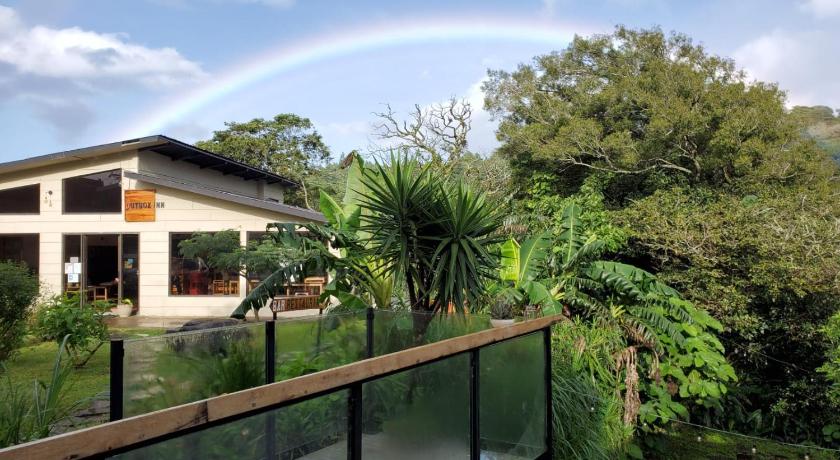
Monteverde's food culture is shaped by something rare in Central American tourism destinations: an intentional, principled food philosophy rooted in the community of Quaker pacifists who settled this cloud forest region in the 1950s and built a dairy cooperative that became one of Costa Rica's finest cheese-making operations. The Monteverde Cheese Factory (CASEM cooperative) and its successors established a food identity distinct from the tourist cliché — artisan cheese, cloud forest honey, locally grown coffee, and the extraordinary agricultural products of a microclimate zone where altitude, mist, and biodiversity produce ingredients of unusual intensity.
The food culture here is modest in scale and ambitious in quality — this is not a destination for sophisticated restaurant dining but for understanding where food comes from and how altitude, ecology, and community values translate into what appears on the table. Hearts of palm pulled from pejibaye palms growing in the cloud forest, fresh queso fresco made daily at the cooperative dairy, coffee grown in the shade of the forest canopy at 1,400 metres elevation — these are ingredients that speak specifically about this place and cannot be replicated elsewhere.
The best eating strategy in Monteverde is intentional — visit the cheese factory for a tasting before eating, take a coffee tour and taste the crop before drinking it, eat the hearts of palm where the pejibaye palms are visible from the window. This is food with geography, and the geography is as spectacular as anything in Central America.
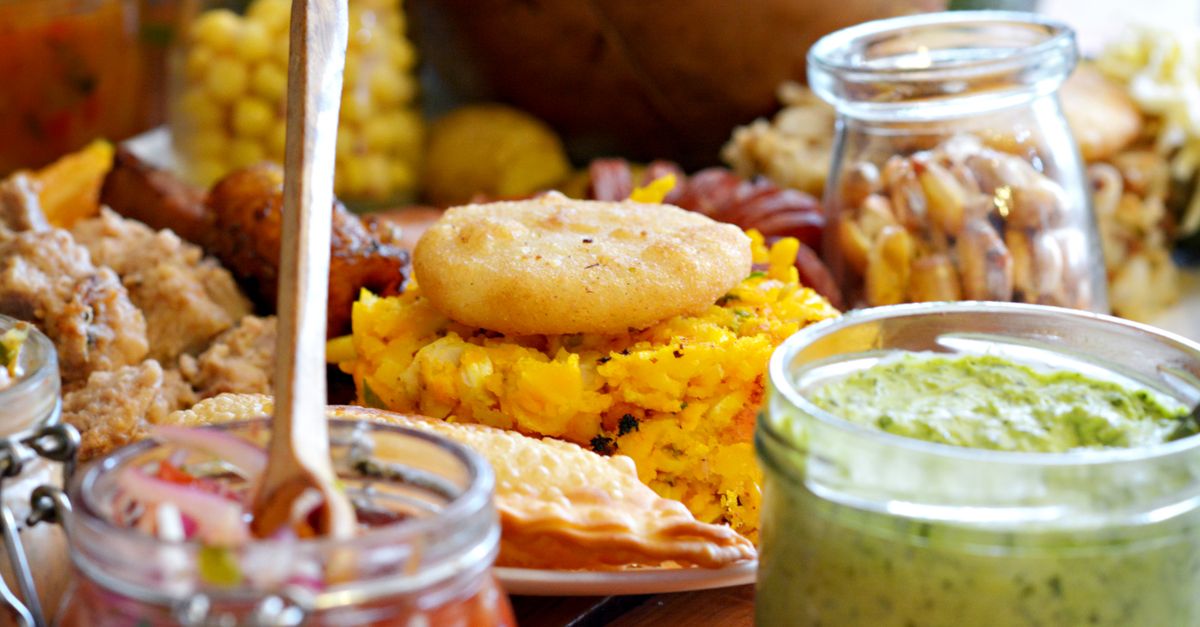
10 Must-Try Dishes in Monteverde
1. Hearts of Palm (Palmito de Pejibaye)
The hearts of palm available in Monteverde are not the canned, bland version familiar from salad bars worldwide — they are the fresh palmito (tender inner shoot) of the pejibaye palm (Bactris gasipaes), a native Costa Rican palm cultivated throughout the cloud forest highlands. Fresh palmito has a texture between an artichoke heart and a firm potato, with a delicate, slightly nutty-sweet flavour that the canning process destroys almost entirely. Eating fresh palmito in Monteverde is the food experience that most directly corrects a culinary misunderstanding.
Fresh palmito is typically served simply — sliced into rounds and tossed with lime juice, olive oil, and fresh herbs as a salad; grilled briefly over charcoal for caramelised edges; or incorporated into light soups and stews where its flavour can be appreciated without competition from strong-flavoured ingredients. The outer layers of the palm shoot (sold as the peeled inner cylinder of the heart) have a slight fibrous quality; the innermost core is the most tender and delicate. The flavour is genuinely subtle — mild but with a distinct identity that rewards slow, attentive eating.
El Jardín restaurant at the Monteverde Lodge on the main road between Santa Elena and the cloud forest reserve serves fresh palmito preparations with locally sourced ingredients in a setting overlooking the cloud forest. For a more casual encounter, the Tuesday and Friday farmers' market in Santa Elena village (the main town serving the Monteverde area) has vendors selling fresh-harvested palmito from local farms. Santa Elena is the commercial hub, 5km from the cloud forest reserve entrance.
Fresh palmito as a restaurant starter costs ₡2,500–₡5,000 (€4.50–€9). At the farmers' market, a whole palmito shoot (sufficient for multiple preparations) costs ₡1,000–₡2,500. Canned palmito is widely available and substantially cheaper — avoid it entirely in this context. The point of eating palmito in Monteverde is precisely the experience of the ingredient at its source and at its freshest, which transforms a supermarket condiment into a genuinely interesting food.
2. Queso Fresco and Artisan Cheese (Monteverde Cheese Factory)
The Monteverde Cheese Factory — established in 1953 by the Quaker community that founded the settlement — is one of Costa Rica's most important food production legacies. The cooperative dairy originally made cheese to utilise the milk of cows pastured on the cloud forest highlands; the enterprise grew into a significant regional producer of queso fresco, a mild Edam-style hard cheese, Gouda, and several other varieties that are distributed nationally. The quality of Monteverde cheese derives from the milk quality: highland cloud forest pasture produces milk with a richness and flavour complexity not found in lowland dairy operations.
The queso fresco (fresh white cheese) produced at Monteverde is the baseline product — mild, slightly salty, with a firm but creamy texture that works in both savoury and sweet applications. The aged Gouda-style cheese has more complexity — a slight nuttiness and the beginning of crystalline texture from the ageing process. The Edam-style semi-hard cheese (the original product of the cooperative) has a waxy, mild character with more flavour depth than commercial Edam. All are worth trying at the factory shop, where fresh samples are typically offered.
The Monteverde Cheese Factory (Fábrica de Quesos de Monteverde) is on the main road between Santa Elena and the cloud forest reserve — a recognisable yellow building with parking and a visitor shop open daily from early morning until late afternoon. The factory offers brief tours of the production facility (limited in scope but interesting for the context) and a tasting session at the shop. Arrive early morning if possible to see the daily production cycle. The cheese is also available at supermarkets in Santa Elena town.
Cheese at the factory shop costs ₡3,000–₡8,000 per portion depending on variety and size (€5.40–€14.40). A factory tour and tasting costs ₡2,000–₡3,000. Taking cheese home from Monteverde is entirely practical — the hard and semi-hard varieties travel well for several days at ambient temperature in cooler highland conditions. The factory provides vacuum-sealed packaging on request for longer travel. This is Costa Rica's finest artisan dairy product and should not leave Monteverde without being tasted.
3. Café de Altura (Cloud Forest Altitude Coffee)
The coffee grown at Monteverde's altitude (1,200–1,600 metres above sea level) is classified as Strictly Hard Bean (SHB) — the highest quality designation in Costa Rican coffee grading, indicating beans grown above 1,200m where the slower ripening at altitude produces denser, more flavourful coffee cherries. The cloud forest's specific conditions — consistent temperatures around 18–22°C, high humidity, misty mornings, and fertile volcanic soil — create a specific flavour profile in the resulting coffee: bright acidity, medium body, and aromatic complexity with floral and citrus notes that distinguish Monteverde coffee from lower-altitude Costa Rican production.
Coffee tours in Monteverde combine the agricultural education (visiting the shade-grown coffee plants, explaining the cherry-to-cup process, demonstrating the wet processing traditional in Costa Rica) with cupping sessions where the specific flavour characteristics of the altitude-grown coffee are explored. This is the most efficient and most engaging way to understand what makes Monteverde coffee specifically interesting rather than generically "good." The tour-and-tasting format makes coffee tourism both accessible and genuinely educational.
El Trapiche Coffee Tour is one of Monteverde's most established coffee tour operations — a working family farm offering 90-minute tours from the coffee plants through processing to cupping, with English-speaking guides. Don Juan Coffee Tour on the outskirts of Santa Elena is another well-regarded option with a slightly more casual approach. Both tours operate daily with multiple departure times from Santa Elena. Coffee retail from both tour operators is available at the tour conclusion — buying directly from the producing farm guarantees provenance and freshness.
A coffee tour costs ₡18,000–₡25,000 (€32–€45) per person including the tasting session. A 250g bag of freshly roasted single-origin Monteverde coffee from a tour farm costs ₡5,000–₡8,000. This is one of the best-value food experiences in Costa Rica — the educational component and the quality of the coffee tasting justify the tour cost entirely. Coffee from Monteverde makes an excellent gift — compact, distinctive, and an honest representation of the cloud forest terroir that people tend to buy at inflated prices in specialty coffee shops worldwide.
4. Gallo Pinto and Traditional Costa Rican Breakfast
The traditional Costa Rican breakfast at Monteverde's sodas operates identically to the rest of the country but with the specific Highland context — gallo pinto (rice and beans mixed with Lizano sauce), natilla (sour cream), fresh local cheese from the Monteverde cooperative, tortillas, and fresh eggs from cloud forest farm chickens. The eggs at altitude from truly free-range chickens fed on cloud forest vegetation have a deeper, more vivid yolk colour and a richer flavour that makes the standard plate considerably more interesting than its urban equivalents.
What distinguishes the Monteverde breakfast experience is the freshness and local sourcing of components that in lower-altitude tourist areas often arrive via distribution chains. The cheese is from the cooperative 5km away. The eggs are from the farm behind the soda. The natilla is from the local dairy. The difference in quality is perceptible and the price remains at typical soda levels — one of Monteverde's quiet food revelations. Add a cup of freshly brewed local coffee and this becomes one of Costa Rica's most complete breakfast experiences.
Soda La Familia in Santa Elena is a traditional family soda serving classic Costa Rican breakfasts with local ingredients at non-tourist prices. Restaurant Morpho's on the main street of Santa Elena serves a slightly more tourist-oriented breakfast with local-sourced components. Most of the cloud forest lodges serve breakfast included with accommodation — the quality at the better lodges (Monteverde Lodge, El Bosque Lodge) is notably good given their relationships with local farms and the Monteverde cheese cooperative.
A full traditional breakfast at a soda costs ₡3,500–₡6,000 (€6.30–€10.80). Lodge breakfasts included with accommodation typically represent good value when assessed as part of the room rate. Coffee at a traditional soda runs ₡500–₡1,000 per cup. The combination of gallo pinto with fresh Monteverde cheese and cloud forest-sourced eggs is a distinctly Monteverde version of Costa Rica's universal breakfast — recognisably the same dish as eaten anywhere in the country but qualitatively elevated by the local ingredient sourcing.
5. Pejibaye Palm Products
Beyond the hearts of palm, the pejibaye palm provides one of Central America's most nutritious and least-known starchy fruits. The pejibaye fruit itself — a small, orange-red drupe that grows in large clusters on the palm — is boiled until tender and eaten with mayonnaise as a street food throughout Costa Rica, particularly during the harvest season. The flavour is starchy and slightly sweet, somewhere between a chestnut and a dense potato, with a dry-firm texture that the mayonnaise lubricates. It is an acquired taste that most visitors either immediately enjoy or politely return to the plate.
In Monteverde, pejibaye flour (made from dried and ground pejibaye) appears in traditional breads, pancakes, and the occasional creative cooking by local restaurants interested in reviving pre-Columbian Costa Rican ingredients. The nutritional profile is impressive — pejibaye is rich in beta-carotene, protein, and complex carbohydrates — and the ancient Maya and pre-Columbian populations of Costa Rica used it as a primary caloric staple before Spanish colonisation introduced wheat and rice. Understanding pejibaye is understanding the pre-colonial food identity of this region.
Fresh boiled pejibaye is sold at the Santa Elena farmers' market from vendors who serve it hot in small bags with mayonnaise on the side. The Tuesday and Friday market has the most reliable pejibaye vendor. For pejibaye flour products, look at the natural food stores in Santa Elena town that stock artisan local food products. The Monteverde Cloud Forest Biological Reserve visitor centre has information about the traditional uses of forest plants including pejibaye in the educational displays.
A bag of 4–6 boiled pejibaye from a market vendor costs ₡500–₡1,000 (€0.90–€1.80). Pejibaye flour products at artisan food shops cost ₡2,000–₡5,000 depending on the product. This is worth trying as a cultural food experience rather than a culinary revelation — the flavour is interesting, the texture is distinctive, and the historical context (a food that sustained civilisations before the current food system) gives it meaning that justifies the tasting.
6. Casado with Local Variations
The casado at Monteverde's traditional sodas reflects the highland ingredient palette — the rice and beans are standard Costa Rican staples, but the protein options increasingly include trout raised in the cool highland streams, fresh palmito salad replacing the typical vegetable sides, and local cheese as an accompaniment rather than the conventional options. These local variations make the standard Costa Rican plate distinctly Monteverde in character while maintaining the familiar structure.
Highland trout (trucha de altura) appears on the casado menu at several Monteverde restaurants — the cool, oxygen-rich mountain streams produce trout with excellent flavour that is prepared simply, typically pan-fried with lemon and garlic. The combination of fresh mountain trout with rice, beans, palmito salad, and the ubiquitous fried plantain makes a casado that is both completely traditional in format and specifically local in content. This version of Costa Rica's national lunch plate best represents the Monteverde ingredient philosophy.
Restaurant Tramonti in the Santa Elena area serves an excellent trout casado using locally sourced highland trout with fresh vegetable accompaniments. Soda El Buen Sabor on the main street of Santa Elena is a more affordable option for a traditional casado with local variations. Both are walkable from the Santa Elena town centre. The trout farms along the road between Santa Elena and the cloud forest reserve occasionally sell directly from roadside stands — buy fresh trout for self-catering if your accommodation has kitchen facilities.
A trout casado at a restaurant costs ₡5,000–₡9,000 (€9–€16.20). At a soda, ₡3,500–₡6,000. This is slightly more expensive than a standard casado elsewhere in Costa Rica — the trout commands a small premium — but represents genuine value for the quality of the highland-raised fish. Order the trout specifically over the chicken or beef options to get the most Monteverde-specific version of Costa Rica's defining meal.
7. Chocolate and Cacao Products
Cacao grows naturally in the cloud forest zone of Costa Rica at Monteverde's altitude range, and the local cacao tour industry has developed around artisan chocolate production using organically grown cacao from the surrounding forest farms. The variety grown here is predominantly Theobroma cacao indigenous to Central America — a different genetic lineage from the West African varieties that dominate global commercial chocolate production, with distinct flavour characteristics (fruity, floral, complex) that reflect the cloud forest terroir.
The chocolate tours in Monteverde cover the full process from cacao pod to finished chocolate bar — fermenting, drying, roasting, grinding, and tempering — with tasting at each stage that transforms what sounds like a factory tour into a genuine sensory education. The cacao paste tasted before sweetening and tempering is particularly revelatory: intensely bitter, deeply flavoured, and complex in a way that commercial milk chocolate obscures entirely. The finished artisan chocolate made from local cacao during the tour is genuinely excellent.
Chocolate-N-Art at the Ranario (Frog Pond) complex in Santa Elena offers chocolate tours and chocolate art experiences. Ticofrut chocolate shop in Santa Elena town stocks locally produced chocolate bars from cloud forest cacao alongside other artisan food products. Several of the cloud forest lodges serve locally produced chocolate as part of their dessert menus, with the origin and farming method clearly communicated — the kind of farm-to-table transparency that Monteverde's food culture builds its identity on.
A chocolate tour costs ₡12,000–₡18,000 (€21.60–€32.40) per person including tastings and a sample to take home. A locally produced artisan chocolate bar at a shop costs ₡2,000–₡5,000. The tour is better value than simply buying the chocolate — the educational component of understanding fermentation, roasting, and tempering transforms the subsequent eating of Monteverde chocolate from pleasant to intellectually satisfying. The cacao farmers' context is part of what the price buys.
8. Cloud Forest Honey (Miel de Montaña)
The honey produced from bees foraging in Monteverde's cloud forest is among Costa Rica's most distinctive and least commercially accessible food products — the cloud forest biodiversity, with hundreds of flowering plant species at each altitude band, produces honey with a flavour complexity unachievable in monoculture agricultural areas where bees have access to a limited range of nectar sources. Cloud forest honey from Monteverde has been described as having tropical flower, guava, and passion fruit notes alongside the standard honey warmth — a genuine terroir product with the cloud forest's biodiversity encoded in the flavour.
Smaller producers in the Monteverde area use native stingless bees (meliponas) that produce a more acidic, thinner honey with an even more distinctive flavour profile than European honeybee honey — the native bee honey (miel de jicote) is a pre-Columbian Costa Rican tradition with historical and culinary significance that goes beyond simply eating honey. It is used in traditional medicine, fermented into a traditional honey wine, and treasured by local families as a rare, seasonal product that cannot be scaled for mass production.
The Tuesday and Friday farmers' market in Santa Elena has honey producers from the surrounding cloud forest farms. Local artisan food shops on the main street of Santa Elena stock Monteverde honey alongside other artisan products. The cloud forest lodges sometimes serve local honey alongside breakfast — ask specifically if the honey is local and from which producer to understand what you are tasting. Cloud forest honey is one of the most genuinely special food products available in Costa Rica and deserves more attention than it typically receives.
Cloud forest honey at a farmers' market costs ₡3,000–₡6,000 per 250g jar (€5.40–€10.80). Native stingless bee honey (miel de jicote) is rarer and more expensive — ₡5,000–₡10,000 for smaller quantities. This is the best possible Monteverde food souvenir — compact, genuinely unique, and an honest expression of the cloud forest's extraordinary biodiversity translated into flavour. Take home two jars: one to eat immediately, one to share with someone who will appreciate the story behind it.
9. Batidos de Frutas Tropicales (Tropical Fruit Smoothies)
The fruit smoothie culture at Monteverde's altitude is subtly different from the coast — the cloud forest's microclimate grows different fruits at different ripeness profiles than the lowland Pacific coast, and the combination of highland-grown strawberries (a Monteverde speciality) with tropical fruits from the lower surrounding areas creates batido combinations that are specifically of this elevation zone. Strawberries grown at Monteverde's altitude have a more intense flavour than coastal greenhouse varieties due to the colder nights that concentrate sugars during the ripening process.
The batido de fresa (strawberry smoothie) from highland-grown Monteverde strawberries is the most distinctive local version — a deep pink, intensely fragrant drink that tastes nothing like its supermarket strawberry equivalent. Combined with guanábana (soursop), maracuyá (passion fruit), or the sweet-sour cas fruit into a combination batido, these drinks represent Monteverde's fruit culture at its most distinct. The altitude also allows blackberries (moras) to grow wild around the cloud forest edges — wild mora batidos from self-picked fruit are a cloud forest-specific treat for those who walk the forest trails.
Every soda and café in Santa Elena serves batidos from locally sourced fruits. Soda La Familia and the cafés along Santa Elena's main street use highland-grown fruit for their smoothies. For the most adventurous fruit experience, ask at the farmers' market about wild forest fruits — vendors who work the surrounding cloud forest often bring unusual small-batch fruits to market that appear nowhere else in the conventional Costa Rican food system.
A fresh-made batido at a soda costs ₡1,500–₡3,000 (€2.70–€5.40). The strawberry version costs slightly more during the shoulder seasons when highland strawberries are less abundant. A batido de mora with local wild blackberries runs ₡2,000–₡3,500. These are among Monteverde's best food values — genuinely local, genuinely fresh, and available at prices far below what the same quality of fresh fruit drink costs in tourist-area beach restaurants elsewhere in Costa Rica.
10. Tres Leches Cake (Costa Rican Dessert Classic)
Tres leches cake — the Central American dessert standard of a dense sponge soaked in a mixture of evaporated milk, condensed milk, and heavy cream until saturated, then topped with whipped cream and sometimes cinnamon or fresh fruit — is made particularly well at Monteverde's lodge restaurants and Santa Elena cafés using the local dairy's high-quality milk products. The Monteverde Cheese Factory cooperative's cream and milk elevate a dessert that is excellent everywhere in the region to something notably better here, where the dairy quality makes the soaking liquid richer and the whipped cream topping more substantial.
The three-milk soaking process transforms the sponge from a light, airy cake into a dense, moist, liquid-saturated block that almost collapses under the weight of the cream absorbed. The flavour is intensely milky-sweet with vanilla warmth, and the whipped cream topping adds lightness to what would otherwise be cloying. Tres leches is a special-occasion and birthday dessert in Costa Rica — eating it at a Monteverde restaurant with locally produced dairy components makes it simultaneously familiar and specifically of this place.
Restaurant El Jardín at the Monteverde Lodge serves an excellent tres leches with local dairy products alongside the main menu. Panadería y Repostería (the bakery and pastry shop) in Santa Elena town makes fresh tres leches daily — their version, made with Monteverde cooperative cream, is particularly good. The Saturday market in Santa Elena sometimes has a cake vendor selling tres leches by the slice alongside other traditional baked goods.
A slice of tres leches at a restaurant costs ₡2,500–₡4,500 (€4.50–€8.10). At a bakery, ₡1,500–₡2,500. A whole cake from a bakery (sufficient for 8–10 people) costs ₡12,000–₡18,000. This is the appropriate dessert for the end of a Monteverde food day — after fresh palmito, local cheese, cloud forest coffee, and a trout casado, tres leches provides the sweet, dairy-rich closure that the preceding meal's protein-and-vegetable focus naturally invites.

Monteverde's Essential Food Neighborhoods
Santa Elena Town Centre is the practical food hub for the Monteverde area — the village of 3,000 residents that serves as the commercial and transport hub for the cloud forest tourism zone. The main street has sodas, supermarkets, bakeries, and the Tuesday/Friday farmers' market that concentrates local food products. The town is less tourist-oriented than the lodge area closer to the reserve and prices reflect this — a casado at a Santa Elena soda costs 30–40% less than the same meal at a cloud forest lodge restaurant. The bus terminal at the top of the village connects to Puntarenas and other transport hubs; the downhill road leads 5km to the reserve entrance.
The Monteverde Cheese Factory Area, on the main paved road between Santa Elena and the cloud forest reserve, is the centrepiece of the food production zone. The factory shop, the dairy farm attached, and the surrounding farms form the core of Monteverde's artisan food identity. Several small food businesses have developed in proximity to the factory — a coffee shop, a honey producer stand, and the Ranario complex that houses the chocolate tour operations. The 5km road between Santa Elena and the reserve is walkable in 60–75 minutes or easily traversed by taxi, offering the opportunity to stop at each of these food production points in sequence as a food-focused tour of the Monteverde agricultural landscape.
The Cloud Forest Reserve Edge, the area immediately around the biological reserve entrance, has a cluster of lodges and restaurants that serve the most sustainable and ecologically conscious food in the Monteverde zone. El Bosque Lodge, Monteverde Lodge, and the smaller cloud forest ecolodges in this area maintain relationships with local farmers, source from the cheese cooperative, and increasingly feature native Costa Rican ingredients (palmito, pejibaye, local cacao) on menus that would otherwise default to conventional Central American restaurant fare. The reserve entrance itself has a small café for lodge guests and day visitors.
Practical Eating Tips for Monteverde
Monteverde and Santa Elena are mid-range budget destinations by Costa Rican standards — slightly more expensive than lowland rural areas, slightly less expensive than Pacific coast resort towns. A full day of eating at local sodas and market stalls costs ₡8,000–₡15,000 (€14.40–€27). Including one food tour (coffee, chocolate, or cheese factory visit) adds ₡12,000–₡25,000. Lodge restaurant dining adds ₡7,000–₡15,000 per meal. The total daily food budget in Monteverde for a combination of local and visitor-oriented eating runs ₡25,000–₡50,000 (€45–€90) per person — comparable to a mid-range European destination rather than a cheap travel budget.
Altitude affects appetite in Monteverde more than most visitors expect — the 1,400 metres elevation and the cool, damp air of the cloud forest zone make the body work harder to maintain temperature, increasing caloric demand. Eat more than you think you need, particularly at breakfast before any outdoor activities. The coolness of Monteverde (average temperatures 15–22°C) makes hot dishes and warm drinks considerably more appealing than at the coast — embrace the gallo pinto, the hot coffee, and the cheese-enriched breakfast format rather than the fruit and cold drink culture of the beach destinations. Monteverde rewards those who dress for the altitude and eat for the climate.